“The people in the story are like the people in life, they don't get all the information. They have to make do with what they get.”
— A reflection on the nature of understanding and narrative.

Alice Munro (2014)
Genre
Literary Fiction
Reading Time
300 min
Key Themes
See below
Sign in to track this book
In 'Open Secrets,' Alice Munro explores the hidden lives of unconventional women across generations and continents, showing the quiet rebellions beneath seemingly ordinary lives.
Louisa, a young librarian from Jubilee, Ontario, volunteers at a military hospital during WWI. She meets Jack Agnew, a dying soldier, who asks her to deliver a letter to his fiancée, Mary. Louisa does so, forming a bond with Mary. Years later, Louisa marries Arthur Doud, a wealthy man from a prominent family, and moves to his isolated estate. After Arthur's death, Louisa cares for his mentally ill sister, Caroline. The story flashes back to Louisa's past, including a brief affair with a soldier named George, and a correspondence with a man named Richmond, who claims to have known Jack Agnew. Louisa's life is a series of quiet moments, often involving secrets and unexpected turns.
Dorrie, a woman living an ordinary life, tells her family's history, especially her mother and her mother's sister, Auntie Craze. Auntie Craze was known for her unconventional behavior and her alleged affair with a married man, Mr. Cross. Dorrie's mother was seen as more proper, though she also had her own hidden complexities. The story explores the family's past in rural Ontario, looking at the rules and expectations placed on women. Dorrie eventually reveals a secret about her own life: a deep, unacknowledged love for a man named Billy, who was actually her mother's lover and the real father of her youngest sister. The 'real life' of the title refers to the hidden currents and true motivations beneath the surface of respectability.
Charlotte, a Canadian woman traveling in Europe in the 1960s, is stranded in Albania after a bus accident. A local family takes her in, where she meets an elderly, mysterious woman who tells a story. The woman claims to have been a 'sworn virgin' in her youth, a tradition where a woman takes a vow of celibacy and lives as a man, gaining male privileges and avoiding marriage. However, her story shifts, revealing she was kidnapped and held captive, forced into servitude and sexual exploitation, disguised as an 'Albanian virgin' for her captors' amusement. Charlotte struggles to understand the woman's conflicting stories, questioning the line between folklore, personal trauma, and deception, leaving Albania with unease and unanswered questions.
In the summer of 1960, a group of teenage girls – Heather, Maureen, Joan, and others – go camping in the woods near their small town. They meet a reclusive older man named Mr. Gopnik, who lives alone in a cabin. The girls, curious and a little scared, begin to suspect something about him. They find strange objects around his property and hear disturbing noises. One day, while exploring, they find a hidden area where they discover a young woman, bound and gagged, held captive by Mr. Gopnik. The girls are terrified and flee, eventually reporting their discovery. The incident shatters their innocence and exposes dark currents beneath their peaceful community, leaving a lasting impression on their lives.
Janet, a middle-aged woman, thinks about her parents' marriage, especially her mother's mysterious personality and her father's quiet nature. Her mother, a spirited and somewhat reckless woman, loved driving and adventure, which led to a memorable trip on the Alaska Highway. Janet recalls her mother's flirtatious nature and her father's seemingly tolerant acceptance of it. The story explores the unspoken tensions and compromises within their relationship, and how her mother defied societal expectations for women of her generation. Janet pieces together memories and family stories, trying to understand her mother's desires and the depths of her parents' bond, which was both conventional and unorthodox.
Simon, a respected, educated man, marries Annie, a much younger, uneducated woman from a poor background, and brings her to live with him at a remote wilderness station where he works. Annie struggles to adapt to the isolation and the refined expectations of her new life. She gives birth to a son, but the marriage is tense and lacks understanding. Annie eventually has an affair with a local man, and later, in despair and possibly malice, she sets fire to their home. The story is told through multiple perspectives and shifting timelines, revealing the loneliness and desperation that can grow in isolation, and the devastating consequences of social and emotional disconnect.
Evelyn grows up with an unconventional mother who believes in spiritualism, UFOs, and other esoteric phenomena. Her mother's beliefs and behavior often cause Evelyn embarrassment and confusion, isolating her from her peers. As Evelyn matures, she has her own unsettling encounters, including an incident with a man who seems to be stalking her, and a disturbing sexual experience. The story weaves through Evelyn's childhood and adulthood, exploring perception, reality, and the impact of a parent's worldview on a child. Evelyn deals with her mother's legacy and the lingering sense of the uncanny in her own life, questioning what is real and what is imagined, and how much of her mother's 'otherworldliness' she has inherited.
Liza lives with her older lover, Ladner, in an unconventional arrangement. Ladner's ex-wife, Alma, is dying in a nearby nursing home, and Liza often visits her, forming a strange, complex bond. Alma, despite her illness, has a sharp, critical mind. The story explores the dynamics of this unusual love triangle and its emotional toll on Liza. One night, their property is vandalized by local teenagers, an act that seems random but deeply affects Liza. The vandalism acts as a catalyst, bringing to the surface unspoken resentments and anxieties within Liza and Ladner's relationship, and forcing Liza to confront the fragility of her own life and the destructive impulses present in both the world and within herself.
The Protagonist
Louisa evolves from a somewhat naive young woman to a resilient individual who finds her own form of agency and purpose in a world filled with secrets and unexpected turns.
The Protagonist/Narrator
Dorrie moves from being a chronicler of family history to a confessor of her own deeply personal and unconventional secret, revealing her own 'real life.'
The Protagonist
Charlotte's journey from a curious tourist to a woman deeply disturbed by the ambiguities and horrors she encounters, leaving her with a lasting sense of disillusionment.
The Antagonist
Mr. Gopnik remains a static, sinister figure whose actions reveal the darkness lurking in unexpected places.
The Protagonist/Narrator
Janet's arc involves a deepening understanding of her parents' complex lives, leading to a more mature acceptance of their individual choices and the nuances of their marriage.
The Protagonist
Annie's journey is a tragic descent into despair and destructive acts, fueled by isolation and a profound lack of understanding from her husband.
The Protagonist
Evelyn's arc involves coming to terms with her mother's eccentric legacy and acknowledging the presence of the uncanny in her own life, blurring the lines of her perceived reality.
The Protagonist
Liza moves from a state of quiet acceptance in her unconventional life to a confrontation with its fragility and the destructive forces both external and internal.
A main theme is that everyone has 'open secrets' – truths that are known or suspected but rarely acknowledged. Munro's characters often lead outwardly conventional lives while hiding complex inner worlds, desires, and past events. In 'A Real Life,' Dorrie's family history has unspoken affairs and parentage, while in 'Open Secrets,' the girls discover Mr. Gopnik's crime, a secret hidden in plain sight. Even Louisa in 'Carried Away' has her own quiet, intense affairs and correspondences that remain private. These hidden lives suggest that true understanding of individuals and communities often lies beneath appearances.
“People's lives, in a small town, are like a set of cards that everybody knows all the faces of. They're laid out in front of you, and you can't play any new ones.”
Munro explores the struggles of women navigating societal expectations and personal desires. Many of her female characters, especially in historical settings, push against the boundaries placed on them. Annie in 'A Wilderness Station' acts out in desperation against her constrained life, while Dorrie's mother and Auntie Craze in 'A Real Life' show different forms of independence. Louisa in 'Carried Away' quietly builds a life of meaning despite loss and social isolation. The 'Albanian Virgin' character, whether her story is true or not, embodies an extreme form of constraint and a desperate bid for a different kind of freedom. These stories highlight the resourcefulness of women in asserting their own agency, often through unconventional means.
“Women, then, were like plants kept in the shade, they got pale and they got long. They were always reaching for the light.”
Munro often blurs the lines between truth, perception, and memory, challenging the reader to figure out what is real. In 'The Albanian Virgin,' Charlotte struggles to reconcile the old woman's conflicting stories, leaving the truth uncertain. Similarly, in 'Carried Away,' Louisa's memories of Jack Agnew and the mysterious Richmond are pieced together, leaving gaps and questions. Janet in 'The Alaska Highway' reconstructs her parents' marriage through fragmented recollections, acknowledging the subjective nature of her understanding. This theme suggests that reality is often subjective and that personal histories are built from imperfect, sometimes contradictory, memories and stories, making definitive 'truth' hard to find.
“The past is not a package that you can simply unwrap and examine. It's more like a landscape, and your position in it changes.”
The geographical and social isolation experienced by many characters shapes their lives and decisions. Remote settings often increase personal struggles and lead to unconventional behaviors or dark secrets. Annie's despair and destructive actions in 'A Wilderness Station' are made worse by her extreme isolation. The girls in 'Open Secrets' discover Mr. Gopnik's crime in the secluded woods, a place where secrets can go unnoticed. Even Louisa's life on Arthur Doud's isolated estate in 'Carried Away' contributes to her quiet, introspective existence. This theme shows how environment can both nurture and constrain, revealing the human psyche's vulnerability and resilience when detached from broader society.
“What happens out here is not the same as what happens in town. It never is.”
Many stories feature characters, especially young women, who experience a loss of innocence, often through exposure to the harsh realities and hidden cruelties of the adult world. The teenage girls in 'Open Secrets' are changed by their discovery of Mr. Gopnik's captive, shattering their idyllic summer. Evelyn in 'Spaceships Have Landed' deals with unsettling encounters that erode her childhood perceptions of safety. Louisa's experiences during WWI and her later life in 'Carried Away' involve a gradual accumulation of loss and disillusionment, but also a quiet acceptance. This theme highlights the fragile nature of innocence and the often painful process of encountering the complexities and darkness in human experience.
“That was the end of summer, the end of the world they had known.”
Stories often jump between different time periods and perspectives.
Munro frequently employs non-linear narratives, moving back and forth in time within a single story. This device allows her to reveal information gradually, build suspense, and explore the long-term impact of past events on characters' present lives. For example, 'Carried Away' weaves together Louisa's experiences during WWI with her later life, showing how her youth shaped her future. This fragmented structure mirrors the subjective and often incomplete nature of memory, making the reader actively participate in piecing together the story's full picture and deeper meaning.
Characters experience sudden, profound understandings about themselves or others.
Many of Munro's stories build towards a moment of epiphany or a quiet, profound realization for the protagonist. These are often not dramatic, but rather subtle shifts in understanding that reframe past events or illuminate a hidden truth. Dorrie's confession about Billy in 'A Real Life' is a powerful example, completely altering the reader's perception of her family. Similarly, Janet's reflections in 'The Alaska Highway' lead to a deeper, more nuanced understanding of her parents' marriage. These moments serve as turning points, providing emotional and intellectual closure, even if the external circumstances remain unchanged.
The perspective through which the story is told may be biased, incomplete, or deliberately misleading.
Munro often uses narrators whose understanding or telling of events is colored by their own experiences, biases, or limited knowledge. The most prominent example is the elderly woman in 'The Albanian Virgin,' whose story of being a 'sworn virgin' is later revealed to be a possible fabrication or a distorted truth of a much darker experience. This device creates ambiguity and forces the reader to question the veracity of what is presented, highlighting the subjective nature of storytelling and the difficulty of truly knowing another person's reality. It underscores the theme of hidden secrets and the elusive nature of truth.
Subtle hints and withheld information create suspense and deepen meaning.
Munro masterfully uses foreshadowing and omission to build tension and encourage deeper engagement from the reader. Minor details or seemingly casual remarks early in a story often hint at later revelations or darker undercurrents. For instance, the initial descriptions of Mr. Gopnik in 'Open Secrets' are unsettling but don't immediately reveal the horror to come. By selectively withholding information, Munro creates a sense of mystery and invites the reader to actively participate in uncovering the full story, making the eventual revelations more impactful and resonant.
Symbolic elements that appear across stories, enriching thematic content.
Munro frequently employs recurring motifs that carry symbolic weight across different stories. Water, often lakes or rivers, can symbolize both freedom and danger, or the passage of time. Houses or specific rooms often represent domesticity, confinement, or the secrets held within. Letters, as seen in 'Carried Away,' serve as conduits for hidden desires, past connections, and the transmission of secrets across time and distance. These motifs are not necessarily plot-driving but deepen the thematic resonance, connecting individual stories to broader ideas about human experience, memory, and the hidden aspects of life.
“The people in the story are like the people in life, they don't get all the information. They have to make do with what they get.”
— A reflection on the nature of understanding and narrative.
“You had to get to a certain age, maybe, to realize that you could be changed by things, that your life could be altered, and you could still be yourself.”
— Exploration of personal transformation and identity.
“The past, which she had always thought of as a fixed thing, was instead a kind of fluid, a substance that could be shaped and reshaped by memory and desire.”
— A character's evolving perception of their personal history.
“It was not a question of being happy, but of being alive, and she was alive, in a way she had not been before.”
— A character experiencing a profound shift in their sense of existence.
“She had always believed that there were reasons for everything, but now she wondered if that was just a way of trying to make sense of things that had no sense at all.”
— Questioning the search for meaning in life's events.
“People's lives, she thought, were like houses. You lived in them for a while, and then you moved on, and someone else lived in them, and you never knew what they did inside.”
— A metaphor for the private and unknown aspects of human lives.
“It was the kind of knowledge that couldn't be spoken, only felt, a kind of hum beneath the surface of things.”
— Describing intuitive or unspoken understanding.
“What people called their past was really a story they told themselves, and they could change that story at any time.”
— Highlighting the subjective and constructed nature of personal history.
“There was a kind of freedom in not knowing, in having to make up your own mind about everything.”
— A character embracing ambiguity and personal agency.
“The things that happened to you were not always the things that made you who you were. Sometimes it was the things that didn't happen.”
— Reflecting on the influence of absence and unspoken events on identity.
“She had always thought of herself as a person who knew what she wanted, but now she saw that what she wanted was not always what she needed.”
— A character gaining self-awareness about desires versus necessities.
“The way people behaved was often a matter of what they could get away with, and what they thought they couldn't.”
— Observation on human behavior and perceived limitations.
“Life, she thought, was full of such small, precise adjustments, made without conscious thought, but leading to enormous changes.”
— Contemplating the cumulative effect of minor choices and actions.
Ready to see how well you understood this book? Take our interactive quiz with 10 questions.
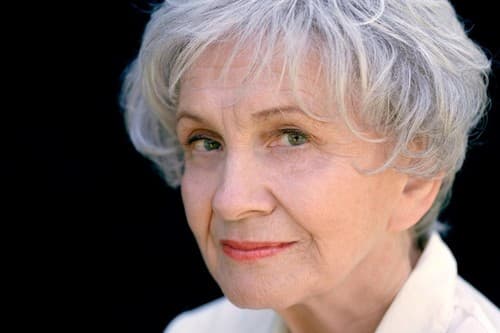
Alice Ann Munro is a Canadian short story writer who won the Nobel Prize in Literature in 2013. Munro's work has been described as revolutionizing the architecture of short stories, especially in its tendency to move forward and backward in time. Her stories have been said to "embed more than announce, reveal more than parade."







