“The city, no matter how much you might have it, is always larger than your grasp. It is always something to be discovered, to be explored, to be lost in.”
— Julius's musings on New York City while walking its streets.

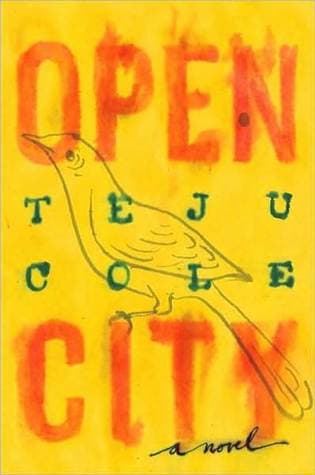
Teju Cole (2011)
Genre
Literary Fiction
Reading Time
360 min
Key Themes
See below
Sign in to track this book
A Nigerian doctor's walks through New York City become an exploration of identity, memory, and belonging, revealing his past and present.
Julius, a Nigerian-German psychiatry resident in New York City, takes long, solitary walks through Manhattan, often at night or on weekends. These walks help him cope with a recent breakup with his girlfriend, Moji, and the death of his grandmother. He feels detached and lonely, despite his professional life. During these walks, he watches the city's many people, thinks about history, politics, and culture, and has internal conversations. He often visits different neighborhoods like Chinatown, Harlem, and the financial district, finding comfort in the city's anonymity and the freedom it gives for self-reflection, even as he remains separate from others.
As Julius continues his city walks, he has several brief but important encounters. He meets a Haitian shoe-shine man in Grand Central Terminal, discussing Toussaint Louverture and Haitian history. Later, he talks with a young Ghanaian immigrant working at a newsstand, sharing thoughts on displacement and the immigrant experience. These short interactions often lead Julius to deeper thoughts about identity, diaspora, and the historical forces that shape individual lives. He also spends time in libraries and museums, engaging with art and literature, which adds to his internal world and gives context to his observations of the city and its people.
During one of his walks in Harlem, Julius meets Professor Farouq, a former university professor from Liberia. Their first conversation turns into a series of deeper talks about African history, colonialism, post-colonial struggles, and national identity. Farouq, a knowledgeable and clear-speaking man, shares his insights and experiences, giving Julius a different view of his own African heritage. These conversations are a rare time of sustained intellectual engagement for Julius, offering a break from his constant loneliness and letting him explore his thoughts on identity and belonging within a wider historical and political context.
Julius decides to travel to Brussels, supposedly for a medical conference, but he really wants to find Moji, his ex-girlfriend, who is studying there. His time in Brussels is like his New York walks; he explores the city without a plan, thinking about its colonial past, especially its connection to the Congo. He visits museums and historical sites, considering Belgium's imperial history. His search for Moji is hard, and he deals with unresolved feelings from their breakup, his loneliness growing in the foreign city. The trip becomes a journey into his own memories and worries, tied to the city's historical weight.
While in Brussels, Julius meets a Rwandan woman named Anneke. Their meeting quickly becomes an intimate, emotional connection. Anneke shares her experiences as a survivor of the Rwandan genocide, telling about the loss of her family and her displacement. Julius is deeply moved by her story, which connects with his own feelings of being an outsider and his thoughts on historical trauma. Their brief relationship, marked by shared vulnerability and understanding, gives Julius a moment of real connection, though it remains temporary, showing his ongoing difficulty with intimacy and belonging.
After returning to New York from Brussels, Julius's life mostly goes back to his previous pattern of solitary walks and internal thought. The strong connection with Anneke in Brussels fades, and his search for Moji is still unfinished. He continues his psychiatry residency, keeping a professional manner while his inner world remains a maze of thoughts and memories. The city is still his main companion, a large, indifferent background to his search for meaning and connection. His encounters continue to be brief, and a feeling of loneliness remains, despite his attempts to engage with the world around him.
Near the end of the novel, Julius talks with his colleague, Dr. Maillotte. During this discussion, Dr. Maillotte reveals that a former patient, a young woman, had accused Julius of sexual misconduct during their sessions. This news shocks Julius, who remembers nothing of such an event and strongly denies it. The accusation forces him to question his own memory and the possibility of unconscious actions or forgotten experiences. This unsettling disclosure destabilizes his carefully built identity and makes him question his entire story of self-reflection, leaving him with unease and self-doubt.
The Protagonist
Julius begins as a detached observer seeking solace in solitude, but his journey ultimately forces him to confront the unreliability of his own memory and the unsettling possibility of a hidden past.
The Supporting
Her absence serves as a catalyst for Julius's self-reflection and journey, rather than her own development.
The Supporting
Farouq primarily serves as a static character, offering wisdom and context to Julius.
The Supporting
Anneke provides a window into the depths of human trauma and resilience, prompting Julius's empathy.
The Supporting
Maillotte serves as a messenger, initiating Julius's final, most profound internal conflict.
The Mentioned
Static, providing a brief but significant intellectual exchange for Julius.
The Mentioned
Static, offering a momentary connection and shared perspective for Julius.
Julius's walks show his internal search for identity. As a Nigerian-German in America, he constantly moves between cultures. His thoughts on history, colonialism, and other immigrants' experiences (like Professor Farouq and Anneke) help him understand his place. The final revelation about the patient's accusation shatters his self-story, making him face the unsettling possibility that he does not fully know himself or his past actions. This ending challenges his identity.
“What is the city but a man, and what is a man but a city?”
Loneliness is a constant theme. Julius's solitude is both a choice and a burden. His walks try to manage his loneliness after his breakup and grandmother's death, but they also show his difficulty forming lasting connections. Even in busy New York and Brussels, Julius stays isolated, an observer rather than an active participant. His brief, intense connection with Anneke in Brussels offers a temporary break, but it reinforces how temporary his relationships are and his basic detachment.
“I was alone, and I was myself, and that was all I had.”
The novel explores how memory shapes our understanding of ourselves and history. Julius constantly thinks about personal memories (his relationship with Moji, his childhood in Nigeria) and historical memories (colonialism, the Rwandan genocide). Memory's reliability becomes central when Dr. Maillotte reveals the accusation against Julius. His complete lack of recall for this event questions the entire story, suggesting that memory can be selective, repressed, or unreliable, challenging the reader's trust in Julius as a narrator and in his self-knowledge.
“Memory is a land of which we are all exiles.”
Julius, as a Nigerian-German, deals with race and diaspora. His meetings with other immigrants, like the Haitian shoe-shine man and the Ghanaian newsstand worker, highlight shared experiences of displacement. His talks with Professor Farouq explore colonialism's historical and ongoing impact on Africa. His time in Brussels makes him confront Belgium's colonial history in the Congo, linking personal identity to wider historical stories of exploitation and power. The novel subtly explores being Black in Western societies, the weight of history, and the search for belonging across continents.
“To be an African in Europe or America is to live in a state of constant translation.”
New York City and Brussels are not just backgrounds; they are active parts of Julius's journey. The cities' streets, museums, and diverse populations trigger his internal thoughts and observations. The anonymity and vastness of these cities let Julius wander and reflect, acting as a mirror for his fragmented mind. The cities' histories, especially their colonial pasts, mix with Julius's personal history and his thoughts on identity, making the urban environment key to his self-discovery.
“The city was my companion, my confessor, my silent witness.”
The entire novel is narrated through Julius's unfiltered thoughts and observations.
The novel is presented as a continuous, meandering stream of consciousness from Julius's perspective. There is no traditional plot structure, but rather a flow of thoughts, memories, observations, and philosophical musings. This device allows readers direct access to Julius's complex inner world, his intellectual depth, and his emotional detachment. It immerses the reader in his subjective experience, making his final revelation about the accusation all the more unsettling as it challenges the reliability of the very consciousness through which the story has been told.
Julius's extensive, aimless walks through cities serve as the primary narrative structure.
Julius embodies the figure of the flâneur, a detached urban wanderer who observes society. His walks are not goal-oriented but are a means of processing his thoughts, memories, and emotions. The physical act of walking through diverse neighborhoods in New York and Brussels allows him to encounter different people, reflect on history, and engage in self-discovery. This device dictates the novel's episodic nature, as each encounter or observation triggers a new chain of thought, making the journey itself the central 'plot'.
Julius's memory and self-perception are called into question by a late-stage revelation.
While seemingly a highly intelligent and self-aware narrator for much of the novel, Julius is subtly revealed to be unreliable. The final accusation of sexual misconduct, which he vehemently denies and has no memory of, casts doubt on his entire narrative. This device forces the reader to re-evaluate all of Julius's preceding observations and self-reflections, suggesting that his conscious mind may be actively repressing or distorting crucial aspects of his past, thus deepening the novel's exploration of memory and identity.
Frequent references to literature, art, music, and history enrich Julius's inner world.
Julius's narrative is replete with allusions to classical music, literature (e.g., Mahler, Sebald, Conrad), art, and historical figures. These references are not merely decorative but are integral to Julius's intellectual landscape and his way of processing the world. They provide context for his reflections on identity, race, and history, demonstrating his erudition while also positioning him within a broader cultural and intellectual tradition, enriching the thematic depth of his observations and internal monologues.
“The city, no matter how much you might have it, is always larger than your grasp. It is always something to be discovered, to be explored, to be lost in.”
— Julius's musings on New York City while walking its streets.
“To be a flâneur is to be a student of the city, to see its inhabitants as characters in a vast, ongoing narrative.”
— Julius reflects on his habit of aimless wandering and observation.
“The past is not dead. It is not even past. We cut ourselves off from it at our peril.”
— Julius's internal monologue about history and its persistent influence.
“Loneliness, I have come to believe, is a state of being, not a temporary condition.”
— Julius's reflection on his prolonged solitude and its nature.
“New York is a city of layers, of palimpsests, where every new building rises on the ghosts of what came before.”
— Julius observing the urban landscape and its historical depth.
“Memory is a treacherous thing. It builds its own narrative, often ignoring the inconvenient truths.”
— Julius contemplating the unreliability of his own recollections.
“The city is a confessional, if you know how to listen. Its walls whisper secrets, its streets hum with untold stories.”
— Julius's perception of the city as a repository of human experience.
“What does it mean to be a stranger, truly? To be invisible, and yet to see everything?”
— Julius's thoughts on his own sense of detachment and observation.
“There are times when the only way to endure the present is to lose yourself in the past, or in the possibility of a future.”
— Julius's coping mechanism for dealing with his current emotional state.
“The world is full of people who are running from something, or toward something. And sometimes, they don't even know which.”
— Julius observing the hurried lives of others in the city.
“Language is a cage, but it is also a key. It can trap us, or it can set us free.”
— Julius's reflections on the power and limitations of words.
“Perhaps the greatest freedom is to be utterly anonymous, to drift through life unburdened by recognition.”
— Julius considering the appeal of his solitary and unnoticed existence.
“Grief is a strange beast. It does not always announce itself with tears. Sometimes it is a quiet, persistent ache.”
— Julius's internal experience of loss and sadness.
“Every person carries within them a library of stories, some told, many untold.”
— Julius's appreciation for the hidden depths of the people he encounters.
“The true measure of a city is not its skyscrapers, but the lives lived within their shadows.”
— Julius's focus on the human element of urban existence over its grand structures.
Ready to see how well you understood this book? Take our interactive quiz with 10 questions.

Biography coming soon.







