“Every year is a surprise. Every year is a gift. Every year is a new adventure, and every year I get to spend it with you.”
— Oona reflects on her unique life experience.

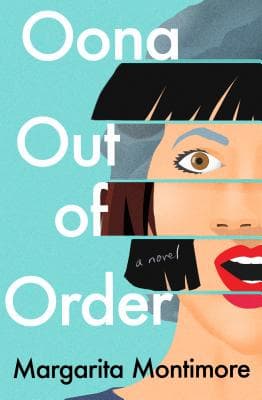
Margarita Montimore (2020)
Genre
Fantasy / Science Fiction
Reading Time
7-8 hours
Key Themes
See below
Sign in to track this book
Nineteen-year-old Oona Lockhart faints on New Year's Eve, only to awaken years later and discover she will live her life out of order, experiencing each year at a random age and forcing her to find meaning in a perpetually fragmented existence.
On New Year's Eve 1982, Oona Lockhart, nearly nineteen, is at a crossroads, torn between studying economics in London and pursuing music with her boyfriend, Dale, in Brooklyn. As the countdown to midnight begins at her mother Leah's party, Oona faints. She awakens in 2015, bewildered, to find herself in a luxurious apartment as a fifty-one-year-old woman. A kind stranger, Kenzie, informs her that she is Oona's assistant and explains Oona's unique condition: every New Year's Eve, she will randomly leap to another age in her life, experiencing her years out of chronological order. This first leap plunges a young Oona into the complexities of her future self's life, including a successful career and a beautiful home she doesn't recognize.
In 2015, Oona, still mentally 18, struggles to reconcile her youthful self with her 51-year-old body and the life she's inherited. Kenzie, her loyal and understanding assistant, helps her piece together her identity and responsibilities. Oona discovers that her future self maintains a detailed journal, providing insights into her past and future selves, including financial information, social connections, and personal notes on her experiences. This journal becomes Oona's lifeline, offering guidance and a sense of continuity amidst her temporal disarray. She learns about her philanthropic endeavors and the wealth she's amassed, a stark contrast to her youthful aspirations.
The next New Year's Eve, Oona leaps to 1995, finding herself as a twenty-eight-year-old, immersed in the club scene of New York City. This era is a stark contrast to her previous leap as a fifty-one-year-old. She meets and falls in love with Edward, an aspiring artist and fellow club-goer. Despite the initial thrill of this new, younger self, Oona grapples with the knowledge that she has a partner, Peter, in another timeline, and that her future self is not with Edward. This leap highlights the emotional challenges of her condition, as she forms intense connections knowing they are fleeting within her personal timeline.
Oona's most significant romantic relationship is with Peter, whom she meets in 1991 when she is 24. She experiences their courtship, marriage, and shared life in fragmented pieces across her various leaps. Peter is a constant, steady presence in her life, accepting her unique condition and providing unwavering support. Their love story is a central thread, demonstrating commitment and understanding despite the temporal disruptions. Oona often finds herself returning to Peter at different ages, cherishing their bond and the comfort he provides, even as she sometimes encounters him before they've formally met in her personal experience.
One of the most significant challenges Oona faces is experiencing the loss of loved ones out of chronological order. She leaps to a year where her mother, Leah, has already passed away, forcing her to grieve a loss she hasn't yet experienced sequentially. Similarly, she encounters moments where her childhood love, Dale, is no longer a part of her life, or she sees him as an older man, having missed significant portions of his life. These instances are particularly heartbreaking, as they deny her the natural progression of grief and the opportunity to say goodbye in a conventional manner, leaving her with a constant sense of temporal displacement and emotional disruption.
Despite the chaos of her condition, Oona learns to adapt and thrive. She uses her foreknowledge, gleaned from her journal, to make shrewd financial investments, securing her future wealth. This financial independence allows her to pursue philanthropic endeavors and live a life of comfort. Her out-of-order experiences give her a unique perspective on life, enabling her to make decisions with a wisdom beyond her current chronological age. She often finds herself in roles or situations that her younger self would never have imagined, learning new skills and developing unexpected passions, all while trying to maintain a coherent sense of self.
Oona's journal, while a vital guide, also presents a significant burden. She often knows about future heartbreaks, successes, and even the eventual passing of loved ones before they happen in her own subjective timeline. This foreknowledge creates a profound sense of isolation and a struggle with free will. For example, she knows she will marry Peter long before she meets him, and she knows the eventual outcome of many relationships and decisions. This burden of knowledge forces her to live with a constant awareness of what is to come, making it difficult to fully immerse herself in the present moment without the shadow of the future.
Every New Year's Eve, Oona undergoes the disorienting experience of leaping to a new, random age. This annual ritual becomes a defining characteristic of her life. Each leap requires a period of reorientation: understanding her current age, location, relationships, and financial status. Kenzie, and later other trusted individuals, often assist her in this process. Oona's journal is indispensable, providing the context she needs to navigate her new reality. This constant adaptation builds her resilience but also creates a fragmented sense of self, as she must continually integrate her past and future experiences into her present identity.
Oona's experience of motherhood is as unconventional as the rest of her life. She meets her adult son, Adam, before she experiences his birth or childhood. This creates a unique dynamic, as she must learn to be a mother to a grown man she barely knows, while simultaneously anticipating the joy and challenges of raising him in her future past. Her relationship with Adam, and her understanding of her role as a mother, evolves across her leaps. This non-linear experience of family strengthens her appreciation for her mother, Leah, and the lasting bonds that transcend time.
Throughout her life, Oona occasionally wonders about the origin of her condition, the 'why' behind her leaps. While she never discovers a definitive scientific or magical explanation, she gradually shifts from seeking answers to embracing acceptance. She learns to live fully in each moment, regardless of her chronological age or the knowledge of what's to come. Her journey is one of self-discovery and resilience, as she learns to piece together a coherent identity from her fragmented experiences, ultimately finding peace and purpose in her uniquely ordered life. She realizes that the 'how' and 'why' matter less than what she does with it.
After decades of leaping through time, Oona eventually experiences every year of her life. The narrative suggests a sense of completion as she approaches her actual final year. Having lived every age, she has a complete, albeit scrambled, understanding of her life's journey. This final phase is marked by a profound sense of wisdom and serenity, as she reconciles all her fragmented selves into a single, cohesive identity. She has loved, lost, triumphed, and endured, all out of order, but ultimately arriving at a place of deep understanding and acceptance of her extraordinary existence.
The Protagonist
Oona transforms from a bewildered young woman into a wise, accepting individual who learns to embrace her unique existence and find wholeness despite her fragmented timeline.
The Supporting
Kenzie remains a constant, reliable presence, evolving from an assistant to a trusted friend and almost a surrogate family member for Oona.
The Supporting
Peter consistently demonstrates his unwavering love and commitment to Oona, adapting to her condition without ever losing faith in their bond.
The Supporting
Leah's character primarily serves as a grounding force in Oona's youth and a source of profound love and grief across Oona's timeline.
The Supporting
Adam's character showcases the unique challenges and strengths of family bonds formed under extraordinary circumstances, always accepting of his mother's condition.
The Supporting
Edward serves as a vibrant, albeit temporary, love interest who helps Oona explore a different facet of her younger self.
The Mentioned
Dale's character remains largely static, representing Oona's past and the choices she considered before her life took its extraordinary turn.
The novel explores how our perception of time shapes our identity. Oona's experience of living her life out of chronological order forces her to constantly re-evaluate who she is. Each leap presents a new 'self' to integrate, challenging the linear narrative of self-development. She learns that identity is not a fixed point but a fluid collection of experiences, memories, and relationships, pieced together across different ages. This theme is central to Oona's internal struggle to maintain a coherent sense of self despite her fragmented existence.
“What if you were given a chance to experience your life out of order? Would you still be the same person?”
Despite the temporal chaos, the novel emphasizes the lasting power of love and human connection. Oona's relationship with Peter, her mother Leah, and her son Adam transcends her leaps, proving that deep bonds can withstand the most unusual circumstances. She learns to cherish moments of connection, knowing they are fleeting in her personal timeline but permanent in their emotional impact. The story suggests that true love is not bound by chronology, but by understanding, acceptance, and a willingness to adapt, as seen in Peter's unwavering devotion.
“Love, it turned out, was not something that faded with time, but something that deepened, even when time was out of order.”
A core message of the book is the importance of living fully in the present, even when burdened by knowledge of the future or memories of a past that hasn't happened yet. Oona's condition initially makes it difficult to fully commit to any given 'present,' as she knows what's coming or what she's missed. However, through her journey, she learns to appreciate each moment for what it is, finding joy and purpose regardless of her age or the impending leap. This theme encourages readers to find meaning in the now, rather than dwelling on the past or worrying about the future.
“The only way to live a life out of order was to live each moment as if it were the only one.”
Oona's journal provides her with foreknowledge of her own future and the lives of those around her. This knowledge is a double-edged sword: it allows her to make wise financial decisions and prepare for certain events, but it also creates a profound sense of isolation and grief. She often knows about losses before they occur in her subjective timeline, making it difficult to experience life's natural progression. However, this unique perspective also grants her wisdom and empathy, allowing her to appreciate life's fragility and beauty more deeply.
“To know what was coming was a curse and a blessing, a weight that pressed down on her every present moment.”
The novel explores the interplay between free will and destiny. While Oona's condition dictates the order of her life, she still makes choices within each 'present' year. Her foreknowledge from the journal sometimes influences these choices, but she also finds herself making decisions that diverge from what her future self might have done. This raises questions about whether our lives are predetermined or if we truly have agency. Ultimately, Oona finds that while the order of her life is fixed, her responses and personal growth are still her own.
“Even with all the answers in her journal, she still had to choose how to live the questions.”
Oona's involuntary, random jump to a different age each New Year's Eve.
This is the central fantastical element of the story. The annual leap serves as the primary driver of the plot, creating the novel's unique structure and Oona's central conflict. It disrupts linear narrative progression, forcing Oona and the reader to re-evaluate traditional understandings of time, identity, and personal history. The randomness of the leap prevents Oona from preparing fully, ensuring constant surprise and adaptation, making each new year a fresh challenge and a new opportunity for self-discovery.
A detailed journal maintained by Oona's future selves, providing crucial information and guidance.
The journal is a vital tool for Oona, acting as her memory, financial planner, and emotional anchor. It contains notes, reminders, and summaries from her future selves, allowing her to orient herself after each leap, understand her current circumstances, and even gain foreknowledge of future events. It functions as a meta-narrative device, providing exposition and internal consistency to Oona's fragmented life. While a source of comfort, it also creates the burden of knowing too much, forcing Oona to grapple with destiny and free will.
Oona's condition is never scientifically or magically explained.
The novel deliberately leaves the 'why' and 'how' of Oona's temporal leaps unexplained. This lack of explanation forces the focus onto Oona's emotional and psychological journey, rather than a scientific or fantastical quest for a cure or origin story. It grounds the fantastical premise in a relatable human experience, emphasizing adaptation and acceptance over scientific understanding. This device enhances the theme of embracing the present and finding meaning in an inexplicable reality, making Oona's condition a given rather than a problem to be solved.
The annual leap always occurs at the stroke of midnight on New Year's Eve.
This specific timing is more than just a plot point; it's symbolic. New Year's Eve inherently represents endings and beginnings, reflection on the past year, and anticipation of the next. For Oona, it's an amplified moment of transition, a literal reset button that propels her into a new stage of life. The recurring ritual underscores the cyclical nature of her condition and the constant theme of change and renewal, making the moment of transition a poignant and powerful marker in her fragmented life.
“Every year is a surprise. Every year is a gift. Every year is a new adventure, and every year I get to spend it with you.”
— Oona reflects on her unique life experience.
“The past is a foreign country. They do things differently there.”
— A common saying Oona finds particularly relevant to her life.
“It's not about what year it is, it's about who you are with.”
— Oona's realization about the importance of relationships over time.
“The only constant in life is change, but for Oona, change was the only constant.”
— Narrator's observation on Oona's unusual chronological journey.
“You can't live a life in order when your life isn't in order.”
— Oona grappling with the challenges of her disordered timeline.
“Age is just a number, but when your numbers are all mixed up, it makes things complicated.”
— Oona muses on the conventional wisdom of age.
“Every year she was a different person, but always, underneath it all, she was still Oona.”
— Exploring Oona's consistent core identity despite her changing circumstances.
“Sometimes the best way to move forward is to look back, even if you don't know when 'back' is.”
— Oona contemplating her past experiences.
“Love isn't bound by time. It just is.”
— Oona's understanding of enduring love.
“Life isn't a straight line. It's a tangled mess, and sometimes, that's where the beauty lies.”
— Oona's acceptance of her unconventional life path.
“What if the greatest adventure isn't knowing what comes next, but embracing the not knowing?”
— Oona's shift in perspective about her unpredictable future.
“We are all made of stories, and Oona's story was just told in a different order.”
— A reflection on the nature of personal narratives.
“You can't choose your years, but you can choose how you live them.”
— Oona's realization about agency within her unique situation.
“The heart has its own calendar, and it doesn't always align with the one on the wall.”
— Oona's emotional experiences often don't match her chronological age.
Ready to see how well you understood this book? Take our interactive quiz with 10 questions.







