“I may not have been born into a world of privilege, but I will make sure my children are.”
— Harry Clifton's early ambition to rise above his humble beginnings in Bristol.

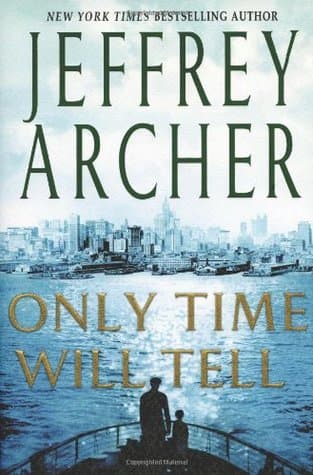
Jeffrey Archer (2011)
Genre
Thriller / Historical Fiction / Mystery
Reading Time
500 min
Key Themes
See below
Sign in to track this book
A dockworker's son in 1920s Bristol learns a secret about his parents, moving him from the shipyards to an elite school and forcing a choice between Oxford and WWII, all while questioning who he is.
The story begins in 1920 Bristol, England, with Harry Clifton, a working-class boy raised by his mother, Maisie, and his uncle, Stan. Harry believes his father, Arthur Clifton, died in the Great War. He spends his early years on the docks, learning the trade from Stan, who expects Harry to follow him. However, Harry shows intelligence and a love for reading, encouraged by his mother. His world is limited to the docks, but a chance meeting and a hidden talent for singing hint at a different future, setting him apart from his expected path.
A key moment comes when Harry, singing in a church choir, is heard by Hugo Barrington, a wealthy man. Impressed by Harry's voice and intelligence, Barrington arranges for Harry to take an entrance exam for St. Bede's, an exclusive boys' school. Harry passes and wins a scholarship, much to the initial concern of his working-class family, who fear he'll be an outsider. This scholarship brings Harry into a world of privilege and education he never imagined, contrasting sharply with his humble beginnings and challenging his sense of self.
At St. Bede's, Harry does well academically but faces snobbery and bullying from some wealthy classmates, especially Giles Barrington, Hugo's son. Despite this, Harry becomes good friends with Giles's sister, Emma Barrington, who sees his talent and kindness. Giles, at first hostile, later develops a complex rivalry and friendship with Harry. Harry's time at St. Bede's involves trying to fit in while staying true to his roots, and he continues to impress his teachers with his mind and character, solidifying his place in this new environment.
As Harry gets older, Maisie finally tells him the truth about Arthur Clifton's death. Arthur was not killed in the war but was murdered by another dock worker, Sefton, in a fight over stolen tea. Sefton was later hanged for the crime. This news shatters Harry's understanding of his past and his father's story, causing him great emotional pain. The truth is more brutal and complicated than the heroic story he had been told, making him question everything he thought he knew about his family's history.
During a school break, Harry, wanting to reconnect with his working-class background and earn money, takes a job as a steward on one of the Barrington shipping line's vessels, the SS Barrington. On board, he meets Hugo Barrington, who is traveling with his family. The close quarters and interactions highlight the class differences, but also allow Hugo to see Harry's hard work and character outside of school. Harry's experience on the ship further complicates his feelings about his identity and his connection to the Barrington family.
The most important revelation comes when Maisie, troubled by years of silence, confesses the truth about Harry's parents. Arthur Clifton was not Harry's biological father. Instead, Harry is the illegitimate son of Hugo Barrington, a secret Maisie had kept to protect Harry from scandal and to honor Arthur's memory. This shocking news changes Harry's world, explaining the mysterious scholarship and Hugo's repeated presence in his life. The confession forces Harry to rethink his entire life and his relationships with both the Cliftons and the Barringtons.
Knowing the truth, Harry confronts Hugo Barrington. Hugo first denies it, but Maisie's firm testimony and other evidence eventually make him admit it is possible. The news causes a huge upset in the Barrington family, especially for Lady Virginia, Hugo's wife, who is furious and threatens to disinherit Giles and Emma if they associate with Harry. The truth creates a lasting division, showing the class prejudice and the damaging effects of hidden secrets.
As Harry finishes school, he faces a major decision. He has won a scholarship to Oxford University, a sign of his academic talent and effort. However, World War II is approaching in Europe, and Harry feels a strong sense of duty to his country. He must choose between pursuing his education at Oxford or joining the Royal Navy to fight Germany. This decision sums up his personal struggles with identity, duty, and the changing world around him, setting the stage for future books.
Unable to accept the truth of his parents and the trouble it caused, and wanting to escape the coming war and expectations, Harry makes a drastic choice. He fakes his own death by switching identities with a dead American sailor, Tom Bradshaw, whose body is unidentifiable after a bombing. Harry, now 'Tom Bradshaw,' sails to New York City, hoping to start a new life and leave his complicated past behind. This desperate act marks a significant turning point, cutting his ties with his family and country.
Arriving in New York City as Tom Bradshaw, Harry tries to build a new life, free from his past. He finds work and tries to adapt to American culture, but the weight of his secret and his true identity constantly bothers him. His decision to take a new identity is an attempt to escape, but it also creates new problems and worries, as he deals with losing his old self and the uncertainty of his future. The novel ends with Harry in America, his fate unclear, and his true identity a carefully kept secret.
The Protagonist
Harry transforms from an innocent working-class boy to a young man grappling with a shattered identity, eventually choosing to forge a new path under a different name.
The Supporting
Maisie carries the secret of Harry's birth for years, eventually confessing the truth, leading to her emotional emancipation but also profound family conflict.
The Antagonist/Supporting
Hugo initially acts as a distant benefactor, then denies his paternity, eventually forced to confront the truth and the societal consequences.
The Supporting
Emma grows from a supportive friend to Harry to a young woman grappling with complicated feelings for her half-brother and the secrets of her family.
The Supporting
Giles evolves from Harry's schoolyard antagonist to a loyal friend, navigating the complexities of their shared family secret.
The Supporting
Stan initially resists Harry's educational path but eventually accepts and supports his nephew's ambition, remaining a steadfast family figure.
The Antagonist
Lady Virginia remains steadfast in her prejudice and social snobbery, becoming a formidable obstacle to Harry's acceptance and a source of conflict.
The Mentioned
Arthur's character serves as a catalyst for the initial mystery, his true fate and non-paternity revealing the deeper secrets of the Clifton family.
The novel explores Harry Clifton's struggle to understand who he is and where he belongs. Born into a working-class family but with the intelligence and background of the upper class, Harry constantly deals with his two identities. His journey from the Bristol docks to St. Bede's, and the discovery of his true parents, makes him question his name, his family, and his future. This theme is clearest when Harry is torn between the life his uncle Stan expects and the opportunities his scholarship offers, leading to his decision to take a new identity in America.
“I was told that my father was killed in the war.”
The sharp difference between life on the Bristol docks and the privileged world of the Barrington family is a main theme. Harry's scholarship to St. Bede's is a rare example of moving up in class, but it shows the huge barriers and prejudices that exist. Lady Virginia Barrington represents the snobbery of the upper class, while Stan Clifton represents the pride and doubt of the working class about such changes. The novel details the cultural differences, expectations, and judgments that come with crossing these social lines, showing how deep class distinctions are.
“A boy from the docks doesn't belong in a school like St. Bede's.”
The entire story is driven by a series of closely kept secrets, mainly Maisie's hiding of Harry's true father and the real events of Arthur Clifton's death. These secrets, kept for years with good intentions (to protect Harry or save a reputation), eventually unravel with terrible results, causing emotional pain, family divisions, and leading Harry to make life-changing decisions. The novel shows how secrets, no matter how well-intended, can twist identities and destroy trust, shaping the lives of many characters.
“Some secrets are best left buried, Harry. They only cause pain if they're dug up.”
Harry often faces a conflict between what he feels is his duty and what he wants for himself. This is clear in his initial struggle to leave the docks for school, his debate over joining the war or going to Oxford, and finally, his decision to take a new identity. He feels a duty to his family, his country, and his perceived background, but also a strong desire for self-determination and a life free from his past burdens. This inner conflict drives many of his most important choices throughout the book.
“He knew he had to make a choice, one that would define the rest of his life.”
Love, in its various forms—family, friendship, and romance—is a powerful force in the novel, but it often involves betrayal. Maisie's love for Harry leads her to betray the truth about his father. Hugo Barrington's past betrayal of his wife with Maisie leads to Harry's birth. The deep love between Harry and Emma is complicated by the discovery of their shared parentage. These examples show how love can motivate deception, and how betrayal, even when born from love, can cause deep and lasting harm.
“How could the one you loved most be the one who caused you the greatest pain?”
The central mystery surrounding Harry's biological father
This device drives the entire narrative. From the outset, Harry believes his father died in the war, but subtle clues and his unexpected scholarship hint at a deeper secret. The gradual revelation, first of Arthur Clifton's true fate and then of Hugo Barrington's paternity, creates suspense and continuously redefines Harry's identity and his place in the world. It serves as the primary catalyst for character development and plot progression, revealing the complex web of relationships and secrets.
A symbol of social mobility and a turning point for Harry
The scholarship to St. Bede's is a classic 'rags-to-riches' opportunity, acting as a crucial turning point for Harry. It physically moves him from the working-class docks into an elite world, forcing him to confront class differences and form new relationships. More than just an educational opportunity, it's a direct consequence of Hugo Barrington's lingering guilt and connection to Maisie, making it a subtle plot device for revealing the deeper truth about Harry's parentage much later in the story.
Harry's drastic decision to assume a new life in America
This device marks the climax of Harry's struggle with his identity and the secrets of his past. By switching places with the deceased American sailor, Tom Bradshaw, Harry attempts to erase his old life and escape the burdens of his true parentage and the looming war. This act creates a powerful cliffhanger, setting the stage for future novels by introducing a new layer of deception and uncertainty about Harry's future and how his past will inevitably catch up to him.
Historical backdrop shaping character decisions and plot events
The Great War serves as the initial misdirection regarding Arthur Clifton's death, while the impending Second World War acts as a major external force influencing Harry's choices. The threat of war creates a sense of urgency and duty, forcing Harry to consider his future beyond personal aspirations. It provides a historical context that grounds the personal narrative in larger global events, highlighting the sacrifices and decisions individuals faced during tumultuous times.
“I may not have been born into a world of privilege, but I will make sure my children are.”
— Harry Clifton's early ambition to rise above his humble beginnings in Bristol.
“Sometimes in life, the greatest risks bring the greatest rewards.”
— Giles Barrington's philosophy when making a crucial decision that could impact his future.
“Love, true love, is not about finding someone perfect, but about loving an imperfect person perfectly.”
— Maisie Clifton reflecting on her feelings for Harry despite their differing social statuses.
“The truth has a habit of revealing itself, no matter how deeply it's buried.”
— Detective Inspector Wetton's belief while investigating a complex case.
“A man's character is not judged by how he starts, but by how he finishes.”
— Old Mr. Clifton imparting wisdom to young Harry.
“War changes everything, even the things you thought were unchangeable.”
— Characters discussing the impact of World War I on their lives and society.
“Some secrets are best left undisturbed, for their unraveling can cause more harm than good.”
— A character contemplating whether to reveal a long-held family secret.
“Education is the only passport out of poverty.”
— Harry Clifton's firm belief in the power of learning to escape his social standing.
“Justice isn't always fair, but it's the best we have.”
— A legal professional discussing the limitations and realities of the justice system.
“The past is a foreign country; they do things differently there.”
— A character reflecting on the societal norms and prejudices of an earlier era.
“One cannot escape one's destiny, only delay it.”
— A philosophical musing on the intertwined fates of the main characters.
“It's not what you have, but who you are that truly matters.”
— A recurring theme emphasizing intrinsic worth over material possessions.
“Even the most carefully laid plans can be undone by a single, unexpected event.”
— A pivotal moment where a character's meticulously crafted scheme goes awry.
“Loyalty is a rare commodity, and worth more than gold.”
— Maisie Clifton expressing her appreciation for unwavering support.
Ready to see how well you understood this book? Take our interactive quiz with 10 questions.

Jeffrey Howard Archer, Baron Archer of Weston-super-Mare is an English novelist, life peer, convicted criminal, and former politician. Before becoming an author, Archer was a Member of Parliament (1969–1974), but did not seek re-election after a financial scandal that left him almost bankrupt.







