“My name is May Dodd and I am a prisoner. I have been offered a choice: life in an asylum, or a year as a bride to a Cheyenne warrior.”
— May Dodd introduces herself and the impossible choice presented to her at the asylum.

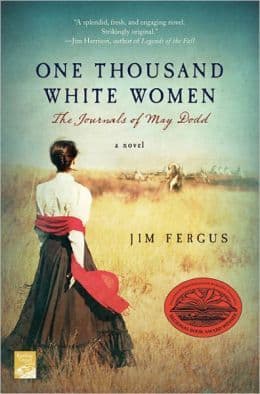
Jim Fergus (1996)
Genre
Historical Fiction
Reading Time
9-10 hours
Key Themes
See below
Sign in to track this book
Banished for 'lunacy,' socialite May Dodd volunteers for a secret 1875 government program, journeying with 999 other white women into the heart of the American West to marry Cheyenne warriors and chronicle a clash of cultures that will forever change her.
In 1875, May Dodd, a high-society woman from Chicago, is committed to a mental asylum by her wealthy family after falling in love with a man they deem socially unacceptable. While confined, U.S. government agents offer her a strange proposition: join a secret program called 'Brides for Indians.' The program, approved by President Ulysses S. Grant, aims to send one thousand white women to live among the Cheyenne, marry their warriors, and help them 'assimilate' into white culture. Facing a grim future in the asylum, May, despite her initial doubts, sees this as her only chance for freedom and a new life, even if it means leaving her child.
May joins a diverse group of women, including former prostitutes, pioneers, 'undesirables,' and adventurous souls, all part of the 'Brides for Indians' program. Led by Captain John Bourke, a sympathetic but dutiful military officer, they begin their difficult journey west by train and then by wagon. The journey presents challenges: harsh weather, rough land, and constant danger from the wilderness and hostile groups. During this time, May starts to form bonds with her fellow 'brides,' especially the outspoken Helen and the younger, naive Susie, as they share their stories and worries about their uncertain future among the Cheyenne.
After weeks of travel, the wagon train reaches a Cheyenne village. The first meeting is tense; both the white women and the Cheyenne warriors observe each other with curiosity and apprehension. The women are presented to tribal leaders, including Chief Little Wolf. Despite his initial hesitation and the skepticism of some of his people, he agrees to the arrangement, seeing it as a possible path to peace and survival for his tribe. The women are then 'assigned' to their new Cheyenne husbands, a process that is both confusing and frightening for many of them. May marries Chief Little Wolf, a powerful and respected leader, an arrangement that increases her status but also brings great responsibility.
Life in the Cheyenne village differs greatly from anything May and the other women have known. They must learn the Cheyenne language, adapt to different customs, and perform daily chores essential for survival, like tanning hides, preparing food, and setting up tipis. May, with her sharp observation skills and willingness to learn, gradually understands and appreciates the Cheyenne way of life. She sees the strong community bonds, the deep respect for nature, and the spiritual traditions of her new people. Despite the cultural shock and occasional difficulties, May finds a surprising sense of belonging and purpose, slowly shedding her Victorian ways and embracing her new identity as a Cheyenne wife.
May's relationship with Chief Little Wolf changes from a forced arrangement to a deep and loving partnership. She admires his wisdom, strength, and compassion, and he respects her intelligence and spirit. They develop real affection and understanding, overcoming language barriers and cultural differences. May also forms close bonds with Little Wolf's other wives, learning from them and finding sisterhood. She becomes a mother figure to his children and eventually has a child of her own, fully joining the Cheyenne family. This change marks a significant shift in May's view of happiness and fulfillment, far from her previous life in Chicago.
The harsh realities of frontier life become clear during a severe winter. Food becomes scarce, and the cold is constant, leading to illness and hardship for the entire village. May and the other women, now more used to Cheyenne ways, help significantly with survival efforts, showing their strength and resourcefulness. The shared struggle further strengthens the bonds between the white women and their Cheyenne families, breaking down remaining barriers and creating a deeper sense of community. This difficult period strengthens May's resolve and her commitment to her new life, highlighting the difference between the superficial comforts of her past and the deep challenges and rewards of her present.
The relative peace of the Cheyenne village is broken by growing conflicts. Rival tribes, especially the Pawnee, often target the Cheyenne, leading to skirmishes and raids. More importantly, white settlers and the U.S. Army's constant advance on their ancestral lands poses an existential threat. May witnesses the brutal realities of warfare and the constant fight for survival that defines the Cheyenne experience. She feels the fear and grief of losing loved ones in battle, deepening her empathy for her adopted people and strengthening her loyalty to them against outside threats, regardless of their origin.
As time passes, the 'Brides for Indians' program's initial promise begins to fall apart. The U.S. government, instead of genuinely seeking assimilation through peaceful means, appears to use the women to pacify and control the Cheyenne, with little regard for the women's well-being or the tribes' integrity. May and the other women realize they have been pawns in a larger political game, a realization that brings a sense of betrayal and disappointment. The government's true goal seems to be to weaken tribal resistance and gain land, rather than foster true integration or peace. This discovery fuels growing defiance among the white women.
Under increasing pressure from the U.S. Army, Chief Little Wolf and his band, including May and the other white women, must abandon their village and begin a desperate escape across the plains. Soldiers, led by Captain Bourke, pursue them relentlessly. Bourke is torn between his duty and his growing respect for the Cheyenne and the women. The flight ends in a brutal confrontation, a devastating massacre where many Cheyenne, including women and children, are killed. May experiences firsthand the horrific violence and injustice by the U.S. Army, a stark contrast to the 'civilizing' mission she was initially promised.
May, along with a few other survivors from the massacre, including Helen and Chief Little Wolf, escapes the carnage. They find refuge in remote areas, constantly moving to avoid further detection by the U.S. Army. The aftermath brings profound grief, loss, and a struggle for survival in a harsh land. May's journals show the strength of the human spirit and the lasting power of the bonds formed between the white women and the Cheyenne. The future remains uncertain, but May's identity has completely changed; she is no longer May Dodd of Chicago but a Cheyenne woman, forever shaped by her experiences and committed to her adopted people.
The Protagonist
May transforms from a sheltered, privileged woman into a strong, resilient, and deeply integrated member of the Cheyenne tribe, finding love and purpose in a world she never imagined.
The Supporting
Little Wolf struggles to lead his people through immense adversity, attempting to find peaceful solutions while ultimately resorting to desperate measures to ensure their survival.
The Supporting
Helen's initial cynicism gives way to a fierce loyalty to her Cheyenne family and a deep bond of friendship with May, demonstrating remarkable resilience.
The Supporting
Susie's initial innocence and fear gradually give way to a greater understanding and resilience, though her journey remains fraught with hardship.
The Supporting
Bourke's initial adherence to military duty evolves into a moral crisis as he witnesses the injustice and betrayal inherent in the government's policies towards the Cheyenne.
The Mentioned
N/A
The novel directly addresses the U.S. government's policy of forced cultural assimilation, showing its destructive nature. Presented as a way to 'civilize' the Cheyenne, the 'Brides for Indians' program ultimately becomes a tool for control and land acquisition. May's journey shows the beauty and strength of Cheyenne culture, leading her to question the idea of 'civilization' she once knew. This theme is clearly shown as May sheds her Victorian ways and embraces the Cheyenne way of life, demonstrating the richness of the culture the government tried to erase. This includes her adoption of their dress, language, and spiritual practices, and her fierce loyalty to her adopted people during the massacre.
“I have come to believe that the so-called savages are far more civilized than the men who claim to represent civilization.”
May Dodd's personal journey explores identity. Stripped of her former life and social standing, she must redefine herself in a completely unfamiliar environment. Her change from a sophisticated Chicago lady to a strong Cheyenne wife and mother is central to the story. This theme is explored through her adaptation to new customs, language, and the forming of deep emotional bonds with her Cheyenne family. The harsh realities of the frontier and the love she finds fundamentally change her sense of self. This culminates in her full embrace of her adopted identity, especially clear in her willingness to fight and suffer alongside the Cheyenne during their flight and the massacre.
“I am no longer May Dodd of Chicago. I am a Cheyenne woman now.”
Despite the forced nature of the marriages, the novel explores the unexpected emergence of real love and belonging. May's relationship with Chief Little Wolf grows into a deep and respectful partnership, challenging old ideas about arranged marriages and cultural differences. Beyond romantic love, the women find sisterhood among themselves and acceptance within their Cheyenne families, creating new communities in a desolate land. This theme is clear in May's affection for Little Wolf's children, her bond with Helen, and the community support during the harsh winter. All these contribute to her deep sense of belonging.
“I found love not in the gilded cages of Chicago, but in the vast, open heart of the prairie, with a man whose spirit was as free as the wind.”
The novel exposes the deep betrayal in the U.S. government's policies toward Native Americans. The 'Brides for Indians' program, initially presented as a kind gesture, is revealed to be a cynical manipulation. The white women also feel deep disappointment as they realize they are pawns in a larger political game, their lives sacrificed for a poorly conceived plan. This theme culminates in the brutal massacre, a clear representation of the government's broken promises and violent actions, shattering any remaining illusions about its 'civilizing' mission.
“We were not brides, but bait. Sacrifices on the altar of Manifest Destiny.”
The extreme conditions of the American frontier and the constant threat of violence force both the Cheyenne and the white women to show great strength. From the difficult journey west to the brutal winters and the relentless pursuit by the U.S. Army, characters like May and Helen show remarkable strength, adaptability, and a strong will to survive. This theme is central to the story as the characters face starvation, disease, and warfare, constantly finding ways to endure and protect their new families and communities against overwhelming odds, especially during the desperate flight and the aftermath of the massacre.
“We learned to live with hunger, with cold, with loss. We learned to live.”
The primary narrative is told through May Dodd's personal journals.
The entire novel is presented as May Dodd's personal journals, offering an intimate and subjective account of her experiences. This device immerses the reader directly into her thoughts, feelings, and observations, allowing for a deep understanding of her transformation and the cultural immersion. The journal format also lends an air of authenticity and historical veracity to the fictional narrative, making the extraordinary events feel more immediate and believable. It allows for reflection and introspection, detailing her changing perspectives on both white and Cheyenne cultures.
Official documents from Captain Bourke and others provide an external, contrasting perspective.
In addition to May's journals, the narrative includes occasional official reports, letters, and journal entries from Captain John Bourke and other government figures. This device provides a crucial counterpoint to May's personal narrative, offering an 'official' or external perspective on the 'Brides for Indians' program and the events unfolding. It highlights the vast disconnect between the government's intentions and the lived realities on the ground, revealing the political machinations and the moral dilemmas faced by those implementing the policy, such as Bourke's growing disillusionment.
Early cultural misunderstandings hint at future conflicts and betrayals.
From the very beginning, subtle and overt cultural clashes foreshadow the larger conflicts and betrayals to come. The initial awkwardness between the white women and the Cheyenne, the government's patronizing view of Native Americans, and the inherent flaws in the 'assimilation' program all hint at the tragic outcomes. For example, the initial 'gift' of women, while accepted, carries an underlying tension that suggests the deeper, unresolved issues of land and sovereignty, ultimately leading to violence and the massacre, rather than peaceful integration.
The central premise driving the plot and character development.
This fictional government program serves as the core plot device that sets the entire narrative in motion. It is the catalyst for May Dodd's journey, the gathering of the diverse group of women, and their subsequent integration into Cheyenne society. The program's controversial nature and its ultimate failure to achieve its stated goals drive the central conflict and theme of cultural assimilation versus preservation, creating the framework for all character interactions and major plot points, from the initial journey to the final tragic confrontation.
“My name is May Dodd and I am a prisoner. I have been offered a choice: life in an asylum, or a year as a bride to a Cheyenne warrior.”
— May Dodd introduces herself and the impossible choice presented to her at the asylum.
“We are a pitiful lot of women, but we are also a determined one. We have nothing to lose but our chains.”
— May reflects on the diverse and desperate group of women embarking on the 'Brides for Indians' program.
“The wind howls like a hungry wolf across the plains, and I feel as small and insignificant as a tumbleweed.”
— May describes the vast, intimidating landscape of the American West.
“I have learned that the heart can find love in the most unexpected places, even in the midst of savagery and sorrow.”
— May reflects on her growing affection for her Cheyenne husband, Little Wolf.
“They call us 'white women,' but we are becoming something else out here. We are becoming women of the plains, women of the wind.”
— May observes the transformation of the women as they integrate into Cheyenne life.
“To truly live, one must be willing to die. To truly love, one must be willing to lose.”
— A philosophical musing by May about the harsh realities of her new life.
“The white man's world is full of walls and rules. The Indian's world is full of sky and freedom.”
— May contrasts the contrasting values and lifestyles of the two cultures.
“Grief is a heavy blanket, but sometimes, beneath it, you can find a flicker of hope, a spark of resilience.”
— May reflects on dealing with loss and hardship in the Cheyenne camp.
“We came as captives, but we stayed as family. We came to civilize, but we were the ones who were changed.”
— May summarizes the unexpected outcomes of the 'Brides for Indians' program.
“There are some things a woman cannot unsee, cannot unfeel. And sometimes, those things make her stronger.”
— May reflects on the traumatic experiences she endures and how they shape her.
“The land itself has a memory. It remembers the buffalo, it remembers the wars, and it remembers us.”
— May's poetic observation about the enduring presence of the landscape.
“My journal is my only confidante, my only witness to this incredible, terrifying, beautiful journey.”
— May expresses the importance of her writing as a record of her experiences.
“We were sent to be a bridge between two worlds, and in doing so, we found a world of our own.”
— May reflects on the unique community formed by the white women and their Cheyenne families.
“Sometimes, the greatest acts of rebellion are simply to survive, to love, and to be truly, fiercely yourself.”
— A powerful summary of May's philosophy and the spirit of the women.
Ready to see how well you understood this book? Take our interactive quiz with 10 questions.

Biography coming soon.







