“It was the day the world stopped.”
— The very beginning, setting the stage for the EMP event.

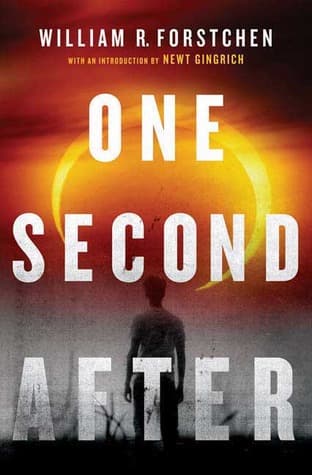
William R. Forstchen (2009)
Genre
Thriller / Science Fiction
Reading Time
7-8 hours
Key Themes
See below
Sign in to track this book
In a single devastating second, an EMP attack plunges a small American town into a desperate fight for survival, forcing a history professor to confront the brutal realities of a post-apocalyptic world and protect his family from chaos and starvation.
John Matherson, a history professor in the small town of Black Mountain, North Carolina, is preparing for a normal day. Without warning, all electronic devices abruptly stop working. Cars stop, lights go out, phones are silent, and his pacemaker-dependent daughter, Jennifer, is in immediate danger. There are no news reports. Initial confusion quickly turns to terror as it becomes clear this is not a local outage. A military jet flies over, then falls silent and crashes, confirming the catastrophic nature of the event. John, a former Army officer, immediately recognizes the signs of an Electro-Magnetic Pulse (EMP) attack, sending the United States back to a pre-industrial era and isolating communities like Black Mountain.
The immediate aftermath is chaos. People are stranded on highways, medical facilities are crippled without power, and food in grocery stores quickly becomes unavailable. John's priority is Jennifer, whose pacemaker needs electricity. Dr. Dan, the local physician, improvises a hand-cranked generator to power it intermittently, but it is a temporary solution. John quickly organizes a town meeting, using his military experience and community standing. He establishes a volunteer force, called the 'Patriots,' to secure the town, ration existing supplies, and establish basic defenses. The disaster's scale, with no communication from the outside world, leaves everyone grappling with uncertainty and fear.
As days turn into weeks, the reality of their isolation settles in. Food and fuel become critical. John, with the help of town manager Mike and Sheriff Randall, implements strict rationing. He converts the local supermarket into a distribution center. Gasoline is siphoned from abandoned cars and saved for essential services. The town faces its first major challenge when a group of desperate outsiders tries to raid the supermarket. This leads to a tense standoff that shows how fragile their new order is. John's leadership is tested, and the community begins to understand the harsh new rules of survival. Jennifer's health remains a constant worry, as the hand-cranked generator barely keeps her alive.
The situation worsens as word spreads of the town's organized efforts and remaining resources. A large, armed gang from outside the area, desperate for food and supplies, attacks Black Mountain. The Patriots, though poorly equipped, defend the town under John's command. The battle is brutal, with casualties on both sides, including several townspeople. The experience hardens the community. It forces them to confront the grim reality that they must kill to survive. This event changes the town from a collection of neighbors into a hardened, unified, and often ruthless, survivalist unit.
Just as the town begins to recover from the external attack, a new, more serious threat emerges: a virulent flu epidemic. Without modern medicine, antibiotics, or proper sanitation, the disease spreads rapidly through Black Mountain. Dr. Dan and the remaining medical staff are overwhelmed, unable to cope with the many sick and dying. The flu claims many lives, including John's own daughter, Jennifer, despite desperate efforts to keep her alive. The death toll is devastating, leading to widespread despair and further straining the town's limited resources, particularly for burials and care for the sick. The town's morale drops, and the future looks bleaker than ever.
Months after the EMP, a small, ragged group of federal troops, remnants of the U.S. Army, finally arrives in Black Mountain. Led by Colonel Cynthia Knox, they bring news of the wider devastation: the U.S. population has been greatly reduced, and a new, austere government has formed. Their arrival offers hope of order and protection, but it also brings harsh realities. The military confiscates all remaining food and fuel, citing national security and the need to consolidate resources. They impose strict laws, including mandatory conscription for young men and the immediate execution of looters. This shows the brutal new world order.
John, initially relieved by the arrival of federal authority, quickly becomes disillusioned by their methods. Colonel Knox's troops, though well-intentioned, are hardened and practical, operating under extreme pressure. They execute a young man caught stealing, a stark reminder of the new regime's severity. John is forced to confront the ethical dilemmas of survival under such conditions. He continues to advocate for his community, trying to balance cooperating with the military and protecting the town's remaining independence and resources. The military's presence, while providing security against external threats, also introduces new tensions and challenges for Black Mountain's residents.
As the story concludes, Black Mountain is under federal control, though it is a very decentralized and struggling federal government. The town has become an agricultural outpost, focused on growing food and maintaining basic services without modern technology. John, though grieving his lost daughter and the old world, continues to be a leader, helping to rebuild and adapt. The story ends with a sense of grim determination rather than full recovery. The survivors understand that the world has fundamentally changed. Their future will be one of perpetual struggle, relying on resilience, cooperation, and the lessons learned from their harrowing experience to forge a new, primitive existence.
The Protagonist
Transforms from an academic into a hardened survivalist leader, grappling with the moral compromises of a post-apocalyptic world while enduring immense personal loss.
The Supporting
Her struggle for survival drives much of the early plot, and her eventual death underscores the devastating human cost of the EMP.
The Supporting
Maintains her role as a supportive wife and mother, enduring profound grief while adapting to the harsh new world.
The Supporting
Matures rapidly from a typical teenager into a resourceful and resilient young woman, actively contributing to the family and town's survival.
The Supporting
Struggles to provide medical care in a pre-industrial world, facing overwhelming odds and personal sacrifice.
The Supporting
Transitions from a small-town sheriff to a key enforcer of survivalist law, adapting to the brutal demands of maintaining order.
The Supporting
Uses his administrative skills to manage town resources and logistics, adapting his role to the survival needs of the community.
The Supporting
Establishes a new, often brutal, federal authority, demonstrating the pragmatic and harsh realities of post-EMP governance.
The Supporting
Transforms from a young volunteer into a hardened defender of the community, demonstrating loyalty and courage.
The novel vividly shows how quickly modern society can collapse without electricity and technology. In seconds, the intricate web of infrastructure—transportation, communication, food supply, medicine—falls apart. This sends even a well-organized community into chaos and barbarism. This theme is clear from the immediate halt of all electronic devices, the rapid emptying of supermarket shelves, and the complete breakdown of distant communication. The ease with which a developed nation is sent 'back to the Dark Ages' is a stark warning about humanity's over-reliance on technology and the thin layer of order it provides.
““We had gone from a world where everything was available, to a world where nothing was, in less than a second.””
As the plot progresses, the inhabitants of Black Mountain must confront brutal realities to survive. This theme is shown by the town's change from a peaceful community to one that must kill to defend itself. This is seen in the confrontations with looters and gangs. Characters like John Matherson and his daughter Kim must shed their former lives and embrace harsh practicality. They make decisions that would have been unthinkable before the EMP. The death of Jennifer, a symbol of innocence and vulnerability, further shows the heavy price paid for survival and the permanent scarring of those who endure.
““The rules had changed. And we had changed with them.””
John Matherson's journey shows the immense burden of leadership in a crisis. He constantly faces impossible choices, balancing compassion with the need to make brutal decisions for the community's greater good. From rationing food and fuel to authorizing deadly force against intruders, John's actions show the moral compromises required to keep people alive. The arrival of federal troops under Colonel Knox, who imposes even harsher laws, further explores this theme. It shows how authority becomes increasingly authoritarian when there is widespread collapse and desperation.
““Sometimes, to save a few, you had to sacrifice many. That was the terrible equation of survival.””
Despite the horrific challenges, the novel emphasizes community and cooperation for survival. Black Mountain's ability to endure, even partially, comes from its residents' collective efforts to organize, share resources, and defend themselves. John's leadership is important, but it relies on the willingness of people like Sheriff Boggs, Dr. Dan, and the 'Patriots' to work together. This theme shows how human connection and mutual aid, even in their most basic forms, are essential for overcoming existential threats. This contrasts with the destructive individualism often seen in desperate outsiders.
““We were a town, yes, but we were also a family. And families stuck together, no matter what.””
A significant theme is the severe consequences of modern society's lack of preparedness for a catastrophic event like an EMP. The instant and widespread collapse shows how vulnerable a technologically dependent nation is. The story implicitly criticizes the complacency and ignorance about such threats. It suggests that a lack of foresight and adequate planning leads to unimaginable suffering and loss of life. John Matherson's prior military knowledge gives him an important, but limited, advantage. This shows that broader societal preparedness would have been necessary.
““We had built a society so dependent on the flick of a switch that when the switch went dead, so did we.””
The central catastrophic event that triggers the entire plot.
The EMP attack is the primary plot device, serving as the inciting incident that instantly plunges the United States into a pre-industrial state. It is a 'deus ex machina' in reverse, stripping away all modern conveniences rather than providing a solution. This device immediately establishes the high stakes and the premise of the entire novel, forcing characters to adapt to a world without electricity, communication, or modern transportation. Its suddenness and widespread impact create instant chaos and drive all subsequent conflicts and character development.
Narrative told through the eyes of the protagonist.
The story is told from the first-person perspective of John Matherson. This device allows the reader to experience the unfolding catastrophe, the emotional toll, and the difficult decisions directly through his eyes. It provides immediate access to his thoughts, fears, and moral dilemmas, making his leadership and personal losses more impactful. This perspective also limits the reader's knowledge to what John knows, contributing to the sense of isolation and uncertainty about the wider world, mirroring the characters' own experience.
A symbolic and literal ticking clock for Jennifer's survival.
Jennifer's pacemaker is a crucial plot device, acting as a constant, literal 'ticking clock' and a powerful symbol. It immediately establishes the dire stakes and the personal impact of the EMP. The desperate efforts to keep it powered drive much of John's early actions and underscore the medical vulnerability of modern life. Its eventual failure, despite all efforts, symbolizes the overwhelming power of the disaster and the brutal reality that some lives simply cannot be saved in the new world, highlighting the theme of loss of innocence and the limits of human ingenuity.
The town's improvised defense force.
The formation of the 'Patriots' militia is a plot device that represents the re-establishment of order and defense in a lawless world. It allows for organized conflict and showcases the community's collective resilience and willingness to fight for survival. This group's actions, from patrols to armed defense against raiders, drive the external conflict of the narrative and demonstrate the harsh new realities of self-preservation. It also highlights John's leadership and the transformation of ordinary citizens into hardened defenders.
“It was the day the world stopped.”
— The very beginning, setting the stage for the EMP event.
“The worst part, the absolute worst part, was the silence.”
— After the EMP, the lack of modern noise is profoundly unsettling.
“We were a nation of sheep, and the wolves were coming.”
— Referring to America's unpreparedness for a major disaster.
“The most dangerous thing in the world is a desperate man.”
— Reflecting on human nature and survival instincts in a collapse.
“In a world without, what is your value?”
— A doctor ponders the shift in societal value systems post-EMP.
“Hunger makes men do things they never thought they would.”
— As food shortages become critical, observing the degradation of morality.
“The greatest weapon we have is hope. The greatest enemy is despair.”
— Josh's internal struggle and leadership philosophy.
“We had traded our independence for convenience, and now we were paying the price.”
— Critique of modern society's reliance on technology.
“Every day was a victory, and every night was a battle.”
— Describing the constant struggle for survival against disease, hunger, and attackers.
“It wasn't about surviving anymore; it was about living.”
— A shift in mindset as characters try to rebuild some semblance of normalcy.
“The past was a luxury we could no longer afford.”
— Characters are forced to focus solely on the present and future.
“We were no longer Americans; we were survivors.”
— The EMP erases national identity in favor of a more primal one.
“The real enemy wasn't the Russians or the Chinese; it was ourselves.”
— Reflecting on internal conflicts and societal breakdown.
“Sometimes, the greatest strength is knowing when to ask for help.”
— Josh realizing the importance of community and collaboration.
Ready to see how well you understood this book? Take our interactive quiz with 10 questions.

Biography coming soon.







