“He was always at the mercy of the next thing, whatever it might be.”
— Describing Claude Wheeler's restless and indecisive nature early in the novel.

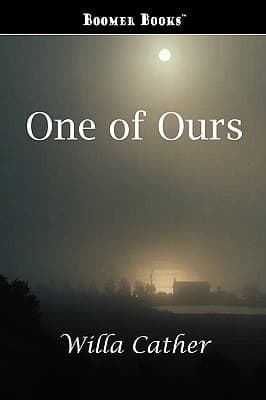
Willa Cather (1922)
Genre
Literary Fiction / Historical Fiction
Reading Time
600 min
Key Themes
See below
Sign in to track this book
A Nebraska farm boy, stifled by a loveless marriage and a world that offers no outlet for his idealism, finds his purpose and a sense of belonging in the Great War.
Claude Wheeler grows up on his father Nat Wheeler's prosperous, but emotionally barren, Nebraska farm. He feels alienated from his practical, materialistic father and his religious, distant mother. Unlike his older brother Bayliss, who embraces the farm's business, Claude is sensitive and idealistic, wanting something more than wealth. His attempts at intellectual pursuits and spiritual fulfillment often meet indifference or gentle ridicule from his family. He finds some comfort in his friendship with Ernest Havel, a Bohemian neighbor who shares his appreciation for music and literature, and in his visits to the Erlich family, German-American intellectuals who offer a glimpse into a more cultured life.
Claude attends Temple College, a small denominational school, hoping for intellectual stimulation and purpose. However, he quickly becomes disillusioned by the narrow curriculum and the hypocrisy he sees among some faculty and students. He struggles with his faith, finding the church's rigid doctrines unsatisfying and conflicting with his own thoughts. His pious roommate further highlights Claude's growing detachment from conventional religious life. He finds little genuine intellectual companionship and ultimately leaves college feeling more adrift, returning to the farm with his questions unanswered.
Back on the farm, Claude feels pressured to settle down. He meets Enid Royce, a seemingly pious young woman, through his mother's church. Despite his reservations and lack of romantic passion, they marry. Enid, however, is deeply committed to missionary work and her religious duties, dedicating most of her time to these. Their marriage quickly becomes a source of loneliness for Claude. Enid is physically and emotionally distant, often ill, and shows little interest in domestic life or understanding Claude's inner world. Their home life is cold and unfulfilling, further isolating Claude.
Enid's missionary work leads to her decision to take an extended trip to China. This departure, while for a noble cause, devastates Claude. He feels abandoned, and his last hope for a meaningful personal connection is shattered. With Enid gone, his life on the farm becomes even more unbearable. He feels a sense of futility, his days filled with farm work and the emptiness of his personal life. He struggles with despair, questioning his existence and feeling trapped. He longs for an escape, a purpose, anything to pull him out of his spiritual stagnation.
News of World War I in Europe reaches the quiet Nebraska plains, initially seeming distant. However, as America's involvement grows, the war begins to affect Claude. The conflict, with its grand scale and clear moral imperative, contrasts sharply with his small, stifling world. He sees it not just as a political struggle but as a chance for redemption, a cause worthy of sacrifice, and an escape from his misery. The idea of serving his country and participating in a global event ignites a spark within him, offering a potential answer to his deep yearning for meaning and belonging.
Driven by his newfound resolve, Claude enlists in the United States Army, much to his family's dismay, who see it as an unnecessary risk. He leaves the farm and begins training. Despite the hardships of military life, Claude finds a surprising sense of camaraderie and belonging among his fellow soldiers. The structured environment, clear objectives, and shared purpose give him a sense of direction he always lacked. He proves to be a dedicated and capable soldier, excelling in training and earning respect. The physical demands and mental focus of army life offer a welcome distraction from his past unhappiness.
Claude and his company embark on the long journey across the Atlantic to France. The voyage itself is significant for Claude. He is awestruck by the vastness of the ocean and the scale of the undertaking. He feels a sense of historical importance, recognizing he is part of a monumental global event. During the journey, he forms stronger bonds with his fellow soldiers, sharing stories and fears. He feels a growing sense of purpose and a connection to something larger than himself. The anticipation of combat, while daunting, is also intertwined with a feeling of finally reaching his destiny.
Upon arriving in France, Claude faces the realities of trench warfare. The mud, constant threat of death, psychological toll, and widespread destruction contrast sharply with his earlier romanticized notions of war. He witnesses immense suffering and loss. Yet, even amid the horror, Claude's idealism persists. He finds moments of connection with the French people, especially civilians, and develops an appreciation for French culture and history. He tries to maintain his humanity and compassion, often reflecting on the beauty of the European landscape and the resilience of its people, even as war rages around him.
Despite the constant danger and psychological strain, Claude shows courage and leadership in the trenches. He is not a reckless hero, but a thoughtful and empathetic officer who cares for his men. His calm demeanor under fire, his willingness to share in their hardships, and his sense of justice earn him the respect and loyalty of his company. He is promoted and given greater responsibilities, proving himself a natural leader. This recognition and the bond with his men solidify his sense of purpose and belonging, fulfilling a deep need that had gone unmet for so long.
Claude participates in a particularly fierce offensive. Leading his men with courage, he is at the forefront of the fighting. During the intense combat, Claude is mortally wounded. His death, while tragic, is shown as the culmination of his journey. He dies in service of a cause he believes in, surrounded by the men he led, having found the meaning and purpose he sought throughout his life. His sacrifice, though individual, is presented as part of a larger collective heroism, cementing his place as 'one of ours' – an American soldier who found his true self in the crucible of war.
The Protagonist
Claude transforms from a disillusioned, isolated farm boy into a purposeful and respected soldier, finding his true self and a sense of belonging through service and sacrifice in World War I.
The Supporting
Enid remains largely static, her unwavering commitment to missionary work defining her character and ultimately leading her to leave Claude for an extended trip to China.
The Supporting
Nat Wheeler remains largely unchanged, continuing his focus on farm prosperity and struggling to understand Claude's choices.
The Supporting
Mrs. Wheeler remains a consistent figure of religious conviction and maternal concern, though she never fully comprehends Claude's motivations.
The Supporting
Ernest Havel serves as an early intellectual guide for Claude but his direct influence diminishes as Claude leaves the farm.
The Supporting
Bayliss remains a steadfast figure of traditional farm values, representing the life Claude ultimately rejects.
The Supporting
The Erlich family serves as a temporary haven and intellectual inspiration for Claude, though their direct role diminishes as he moves on.
The Supporting
Frank Ellinger's role is to represent the collective experience of the soldiers and to deepen Claude's sense of camaraderie.
This is the novel's central theme. Claude Wheeler spends his early life feeling alienated and unfulfilled, searching for something beyond his family's materialistic values and his church's dogma. His experiences at college, his loveless marriage to Enid, and his farm life all fail to give him purpose. Only when America enters World War I does he find a cause worthy of his idealism and sacrifice, believing he has found his true calling and a reason to live and die. This theme is clear from his early philosophical thoughts on the farm to his ultimate sacrifice in France.
“He was always trying to make a connection, to find a place for himself in the scheme of things. But the world seemed to have no place for him, no work for his hands, no outlet for his heart.”
Claude's life is marked by alienation from his family, community, and even his country's values. He feels misunderstood by his practical father and pious mother, and isolated by his distant wife, Enid. His college experiences further disillusion him with conventional institutions. This theme highlights the struggle of an idealistic individual to find authentic connection and belonging in a world that often seems indifferent to his deeper yearnings. The war, ironically, provides the sense of belonging and purpose that peace had denied him.
“He felt that he had been born to no purpose, had been bred to no end. He looked out over the fields and saw nothing but work, and behind it, nothing but more work.”
Claude is an idealist, always striving for beauty, truth, and a higher purpose. However, he repeatedly faces a harsh and often disappointing reality. His dreams of intellectual fulfillment at college are dashed by its narrowness; his hopes for marital companionship are crushed by Enid's coldness; and even the war, while providing purpose, subjects him to brutality. This theme explores the struggle to maintain ideals when the world often falls short. Despite the grim realities of the trenches, Claude largely preserves his idealism, finding beauty and meaning even amid destruction.
“He knew, now, what it was to live; to be a man, to have a purpose, to be part of something great and terrible and beautiful.”
The novel explores what it means to be 'one of ours' – an American. For Claude, this identity is not found in wealth or quiet farm life, but in an act of national service and self-sacrifice. The war transforms him from a disaffected individual into a symbol of American courage and idealism. The book subtly critiques the materialistic aspects of American society while celebrating a certain strain of American heroism and the willingness to fight for larger ideals. His death, in service to his country, is presented as the ultimate affirmation of his American identity.
“He was a soldier now, and he had found his country. He was one of ours.”
Through Claude's experiences, Cather offers a subtle critique of restrictive and often hypocritical conventional religion and societal expectations. Claude finds little spiritual comfort in his mother's church or the denominational college. His marriage to Enid, driven by social pressure and religious piety, proves emotionally barren. The novel suggests that true spiritual fulfillment and purpose come not from adhering to strict social or religious norms, but from individual experience and a genuine connection to a larger, more meaningful cause, which for Claude, becomes the war.
“There was a God, he believed, but not the one preached in the country churches, not the one who demanded sacrifice of joy and beauty.”
A novel focusing on the psychological and moral growth of the protagonist from youth to adulthood.
One of Ours is a classic example of a Bildungsroman. The narrative meticulously traces Claude Wheeler's journey from his disillusioned youth on a Nebraska farm through his unfulfilling marriage and college experience, culminating in his transformation into a purposeful soldier during World War I. The core of the story lies in Claude's internal struggles, his search for identity, meaning, and belonging, and how his experiences shape his character and worldview. His development is marked by a series of revelations and disillusions that eventually lead him to find his place in the world, albeit through sacrifice.
The use of language or events that signify the opposite of what is stated or expected.
Irony is employed throughout the novel, particularly in Claude's life before the war. He comes from a prosperous family, yet feels spiritually impoverished. He seeks fulfillment in marriage and religion, only to find further alienation. The most profound irony is that Claude, who struggles so deeply with finding purpose in peace, discovers his true self and a profound sense of belonging in the brutal chaos of war. His death, while tragic, is presented ironically as the moment of his greatest fulfillment, a 'good death' in contrast to his 'meaningless life' before the war.
The Nebraska plains symbolize both opportunity and isolation, freedom and confinement.
The vast, open landscape of the Nebraska plains serves as a powerful symbol in the novel. Initially, it represents the promise of the American frontier and the family's prosperity, but for Claude, it becomes a symbol of his isolation and the emotional barrenness of his life. The endless fields, while providing sustenance, also represent a monotonous existence and a lack of intellectual stimulation. It is a place he longs to escape, symbolizing the limitations of his early life. His departure from the plains for the war signifies his breaking free from these symbolic confines and venturing into a larger world.
Characters who contrast with the protagonist to highlight particular qualities.
Several characters serve as foils to Claude. His brother, Bayliss, embodies the pragmatic, materialistic values that Claude rejects, highlighting Claude's idealism. Enid Royce, with her rigid piety and emotional coldness, serves as a foil to Claude's yearning for genuine connection and spiritual depth, emphasizing his disillusionment with conventional religion and marriage. These contrasting characters underscore Claude's unique sensitivities, his struggles, and his ultimate search for a different kind of fulfillment than those around him.
“He was always at the mercy of the next thing, whatever it might be.”
— Describing Claude Wheeler's restless and indecisive nature early in the novel.
“The world was a terribly exciting place. You had to take it as it came.”
— Claude's youthful optimism and desire for experience.
“It was as if he had been trying to read a great book, and had got only to the table of contents.”
— Claude's feeling of unfulfillment and unlived life before the war.
“He felt a profound, inarticulate kinship with all that was wild and untamed.”
— Claude's connection to nature and the Nebraska landscape.
“She was one of those women who are always taking up new things, and never doing anything with them.”
— Describing Enid Royce, Claude's wife, and her superficial interests.
“A man's life was like a river, always flowing, always changing, yet always the same river.”
— A reflection on the continuity and evolution of a person's life.
“He had always been a little out of step, a little behind or ahead of the music.”
— Another look at Claude's feeling of not quite fitting in with his surroundings.
“War was a great rectifier, a great equalizer. It made men brothers.”
— Claude's initial perception of the unifying power of war.
“He loved the feeling of being part of something vast and terrible and magnificent.”
— Claude finding a sense of purpose and belonging in the army during WWI.
“It was the first time in his life that he had known what he was doing, or why.”
— Claude's discovery of meaning and direction in his military service.
“The things that made him happy were not the things that made other people happy.”
— Highlighting Claude's unique desires and inability to conform to societal expectations.
“He had found his reason for being, and that was enough.”
— Claude's ultimate satisfaction with his role and experience in the war.
“That was the way life worked, always taking away something and giving something else.”
— A philosophical reflection on loss and gain in life, often in the context of war.
“There were dreams in the air, dreams that were going to be realized.”
— Reflecting the hopeful and ambitious spirit of the younger generation.
Ready to see how well you understood this book? Take our interactive quiz with 10 questions.
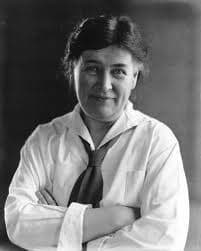
Willa Sibert Cather was an American writer known for her novels of life on the Great Plains, including O Pioneers!, The Song of the Lark, and My Ántonia. In 1923, she was awarded the Pulitzer Prize for One of Ours, a novel set during World War I.







