“The greatest prison people live in is the fear of what other people think.”
— Spoken by Stalin, reflecting on human nature and control.

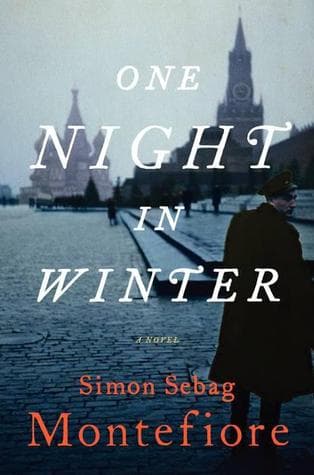
Simon Sebag Montefiore (2013)
Genre
Thriller / Historical Fiction / Mystery / Romance
Reading Time
12-15 hours
Key Themes
See below
Sign in to track this book
In post-WWII Moscow, the apparent suicide of two elite teenagers uncovers forbidden love, political intrigue, and betrayal, revealing the secrets of Stalin's rule.
On a snowy night in Moscow, December 1945, just after the war, two teenagers, Boris and Nina, are found dead on a bridge, dressed in 19th-century costumes. Boris is the son of Marshal Tolya Kolokolov, and Nina is the daughter of General Boris Izmailov. Both attend the elite School 110. Their deaths are officially called a double suicide, but the situation is suspicious. Josef Stalin takes a personal interest, ordering Colonel Sergo Mikoyan of the MGB to investigate what he calls 'The Children's Case.' This immediately alarms the privileged families of Moscow's elite, as their children become targets of the state's paranoid scrutiny.
Following Stalin's order, Sergo Mikoyan and his MGB agents begin arresting Boris and Nina's friends and classmates. These include Sasha, a charismatic and rebellious intellectual, his girlfriend Anna, and the sensitive Eva and her brother, Leo. The children face brutal interrogations, sleep deprivation, and psychological torture, meant to get confessions of anti-Soviet conspiracy. Under extreme pressure, many confess to made-up crimes, implicating friends and even their own parents. This shows the state's terrifying power to break even the most innocent.
Luba Izmailova, Nina's mother, is an MGB officer and a trusted agent of Lavrenty Beria, Stalin's secret police chief. Despite her professional ruthlessness, Luba is devastated by Nina's death. She struggles to balance her grief with her duty to the state. She must investigate the case herself, forcing her to consider that her daughter was involved in something subversive. Her investigation starts to uncover secrets about Nina's life that Luba, in her loyalty to the Party, had ignored. This suggests a darker side to the elite world she lives in.
Anna and Sasha are deeply in love, their passionate affair kept secret. This is a dangerous act in a society where personal lives are closely watched. Sasha, a brilliant and cynical poet, often expresses his disillusionment with the Soviet government through his verses, which he shares only with Anna. Their relationship is a symbol of defiance and authenticity amidst widespread fear and hypocrisy. As the Children's Case grows, their love becomes a risk, as any deviation from Party rules can be used against them. Their bond is tested to its limits under the MGB's pressure.
Eva, a sensitive and artistic young woman, finds comfort in painting and drawing. She often depicts scenes that subtly criticize the bland Soviet style. She is secretly in love with Sasha, which complicates her friendship with Anna. Eva's artistic expressions and emotional depth make her vulnerable in the oppressive climate. Her brother, Leo, is more pragmatic and less rebellious. He tries to protect her, but Eva's inner world is dangerous in Stalin's Russia, where individual expression is often seen as dissent. Her secret love for Sasha is a constant inner conflict.
The MGB's interrogations become more brutal and psychologically manipulative. Children are turned against each other, forced to sign false testimonies accusing their parents of anti-Soviet activities, often under threat to their loved ones. The goal is not truth, but confession and the exposure of perceived enemies. These forced confessions then justify more arrests and purges among adults. This shows how the Children's Case serves as a reason for Stalin and Beria to gain more power and remove rivals.
As the investigation continues, Luba and Sergo discover the complex and tragic truth behind Boris and Nina's deaths. They find that Boris and Nina were not romantically involved. Instead, they were part of a secret group of friends who had intellectual discussions, read forbidden literature, and felt disillusioned with the Soviet system. Their 'suicide' was a desperate act of rebellion, a pact to escape a world they felt trapped by. This challenges the initial idea of a simple love affair and suggests deeper, more widespread unhappiness among elite youth.
The coerced confessions of the children are used to arrest and interrogate their parents, many of whom are high-ranking Party officials, generals, and intellectuals. Marshal Kolokolov, Boris's father, and General Izmailov, Nina's father, are among those targeted. The case becomes a way for Stalin to remove perceived threats and gain absolute power, similar to the Great Purge of the 1930s. Families are broken apart, and careers are destroyed, showing the terrifying reach of Stalin's paranoia and the MGB's ruthlessness in carrying out his orders.
Luba, a loyal Party member and MGB officer, finds her faith in the system shaken as she sees the destruction caused by the Children's Case. Her grief over Nina's death conflicts with her professional duties, forcing her to face the moral compromises she has made. She begins to question the very principles she has lived by, experiencing a deep crisis of conscience as she sees innocent people, including her own family, destroyed by the system she helped build. Her loyalty to Beria and Stalin is severely tested.
Anna and Sasha, along with Eva, are among the main targets of the MGB. Sasha's rebellious poetry and independent thinking make him especially dangerous to the regime. Their love story, a symbol of individual freedom, is brutally suppressed. They face intense interrogations, and their fate is uncertain. Their strength and defiance against overwhelming state power highlight the human cost of totalitarianism and the tragic results for those who dare to love and think freely, even in private.
The MGB arranges a series of show trials for the accused children and their parents. The trials are a sham, with predetermined outcomes and forced confessions as the main evidence. Many of the accused are sentenced to long terms in the gulags, internal exile, or execution. The sentences serve as a warning to anyone considering dissent or independent thought. The Children's Case ends with a public display of Stalin's absolute power and the complete subjugation of justice to political goals.
After the Children's Case, many lives are permanently shattered. Survivors, both children and adults, are left with deep psychological scars, their faith in humanity and the state forever broken. The novel explores the long-term effects of such systemic terror, showing how fear and betrayal continue to haunt those who lived through it. The memory of Boris and Nina, and the many others who died or suffered, shows the devastating impact of totalitarianism on individual lives and the collective mind of a nation. The shadows of the case linger for decades.
The Protagonist
Anna transforms from a naive lover into a survivor hardened by loss, yet retaining her core humanity and defiance.
The Protagonist
Sasha remains defiant and principled, ultimately paying the price for his independent thought and love.
The Supporting
Luba's unwavering loyalty to the Party is severely tested, leading to a profound crisis of conscience and a questioning of her life's work.
The Supporting
Sergo, initially a loyal instrument of the state, gains a deeper, albeit cynical, understanding of the regime's manipulative tactics.
The Supporting
Eva's artistic spirit is challenged, and she experiences profound heartbreak and disillusionment, but her inner world remains a sanctuary.
The Antagonist
Stalin remains a constant, unchanging force of terror and manipulation, reinforcing his power through the case.
The Antagonist
Beria solidifies his position as a ruthless enforcer, demonstrating his unwavering loyalty to Stalin's terror.
The Mentioned
Boris's death is the inciting incident, and his true character is revealed posthumously through the investigation.
The Mentioned
Nina's true motivations and character are unveiled posthumously, driving much of Luba's personal and professional journey.
The novel shows how totalitarianism corrupts every part of society, from personal relationships to the search for truth. The MGB's use of torture, false confessions, and show trials demonstrates how the state values political control over justice and human rights. The Children's Case itself is a fabrication, a tool for Stalin to remove perceived enemies, illustrating how fear maintains power. Even private thoughts and feelings become dangerous, as shown by Sasha's poetry and the children's intellectual discussions, which are seen as subversive. The widespread paranoia and betrayal force individuals to compromise their morality, breaking apart families and destroying trust.
“In this country, the only crime is not to confess.”
Love, especially forbidden love, is a strong act of resistance against the state's dehumanizing forces. Anna and Sasha's passionate, secret affair represents a desire for authenticity and individual freedom in a society demanding conformity. Their love is a refuge from pervasive fear and hypocrisy, but it also makes them vulnerable. Similarly, Eva's unrequited love for Sasha and her artistic expression are private acts of defiance. The novel suggests that even in the darkest times, human connection and emotional truth can last, though often at a terrible cost. These relationships show the resilience of the human spirit against immense oppression.
“Love was the only thing that belonged to them, the one thing the Party could not touch.”
The 'Children's Case' is a brutal removal of innocence, as teenagers face the harsh realities of Stalinist terror. The children's naive idealism and intellectual curiosity are twisted into evidence of anti-Soviet conspiracy. They are forced to betray friends and even their own parents, leading to deep moral trauma. This theme is central to the tragedy, showing how the regime targets and corrupts the next generation, destroying their trust in adults and institutions. The betrayals, both forced and willing, spread through families and friendships, leaving lasting scars on survivors and showing the moral decay inherent in a police state.
“They were just children, but the state devoured them anyway.”
The novel explores the blurred lines between truth and lies, especially within the Soviet propaganda machine. The official story of the Children's Case is a fabricated conspiracy, serving political goals rather than finding facts. Confessions are extracted through torture, not genuine guilt. Characters, especially Luba and Sergo, struggle to find the truth amidst layers of deception and fear. This theme shows how totalitarian regimes manipulate information to control populations, creating an environment where objective truth is hard to find and dangerous. The personal truths of love and rebellion contrast sharply with the state's manufactured reality.
“Truth was whatever Comrade Stalin decreed it to be.”
A fabricated conspiracy used as a pretext for political purges.
The 'Children's Case' serves as the central inciting incident and a powerful symbol of Stalinist terror. It is a politically motivated fabrication, using the deaths of two teenagers as a pretext to launch a wider purge of high-ranking officials and intellectuals. This device allows the author to explore the arbitrary nature of justice in a totalitarian state, where truth is secondary to political expediency. It also provides a framework for examining the corruption of innocence and the devastating impact of state paranoia on individual lives and families.
Secret romantic relationships that become acts of defiance and vulnerability.
The forbidden love between Anna and Sasha, and Eva's unrequited love for Sasha, serve as crucial plot devices. These relationships offer moments of human connection and authenticity in an oppressive world, providing emotional depth and high stakes. Their secrecy makes them dangerous, as any deviation from Party orthodoxy can be used against the characters. This device highlights the conflict between individual desire and state control, showing how even the most private emotions can be politicized and punished, making the characters' choices resonate with greater tragic weight.
Brutal and psychologically manipulative interrogations used to extract false confessions.
The MGB interrogations are a key plot device, driving the narrative forward by revealing character and escalating the stakes. They are not aimed at uncovering truth but at breaking individuals and extracting confessions that fit a predetermined narrative. This device vividly portrays the psychological and physical torment inflicted by the state, demonstrating the insidious methods of totalitarian control. The interrogations force characters to make impossible choices, leading to betrayals, false accusations, and the destruction of lives, emphasizing the regime's power to corrupt and destroy.
The dictator's direct involvement in the case, driving its ruthlessness.
Stalin's personal interest in the Children's Case is a crucial plot device that establishes the gravity and ruthlessness of the investigation. His direct orders ensure that the MGB pursues the case with maximum brutality and without regard for justice. This device underscores the absolute power of the dictator and his pervasive paranoia, making him the ultimate antagonist. It also explains why high-ranking officials are targeted, transforming a seemingly isolated incident into a widespread political purge that affects the entire Moscow elite.
“The greatest prison people live in is the fear of what other people think.”
— Spoken by Stalin, reflecting on human nature and control.
“Love is not a decision, it's a feeling. If we could decide who we loved, it would be much simpler, but much less true.”
— Sasha expressing his understanding of love to Anna.
“In the Soviet Union, everyone was equal, but some were more equal than others.”
— A common cynical observation about the realities of Soviet society, though not a direct quote from a character, it encapsulates the book's setting.
“A secret is only a secret if it is kept from everyone, including yourself.”
— Exploring the psychological burden of secrets in a totalitarian regime.
“History is written by the victors, but the truth is often whispered by the defeated.”
— A reflection on the nature of historical narrative within the Soviet system.
“Hope is a dangerous thing in these times, but without it, we are truly lost.”
— Anna contemplating the necessity and peril of hope during the purges.
“To be truly free, you must first be free of fear.”
— A character's internal thought on the ultimate form of liberation.
“The past is never dead. It's not even past.”
— Reflecting on how historical events and personal traumas continue to influence the present.
“Betrayal is the currency of survival in this city.”
— Describing the moral compromises forced upon individuals in Moscow during the purges.
“Even in the darkest night, there are always stars, if you know where to look.”
— A hopeful sentiment offered amidst the prevailing gloom and danger.
“Truth is a luxury few can afford, and fewer still dare to speak.”
— Highlighting the dangers of honesty under a repressive regime.
“The human heart, even in the coldest winter, still yearns for warmth.”
— A metaphorical reflection on enduring human desires despite harsh circumstances.
“Sometimes, doing nothing is the most dangerous thing of all.”
— A character realizing the cost of inaction in a rapidly changing and perilous environment.
“Every revolution devours its own children.”
— A historical observation frequently brought to mind by the purges and the fate of early Bolsheviks.
Ready to see how well you understood this book? Take our interactive quiz with 10 questions.

Biography coming soon.







