“Perhaps there is a monster in all of us, and love is just the way we let it out.”
— Jules reflects on the nature of love and the queens' darker sides.

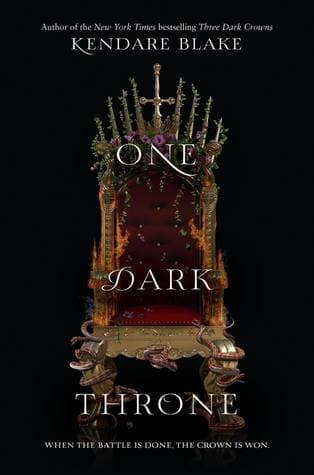
Kendare Blake (2017)
Genre
Fantasy / Young Adult / Romance
Reading Time
300 min
Key Themes
See below
Sign in to track this book
As the Ascension Year begins, three queen sisters—a newly empowered poisoner, a secretly gifted elemental, and a targeted naturalist—must navigate betrayal, hidden talents, and deadly attacks in their fight to the death for Fennbirn's single dark throne.
After the Quickening, Fennbirn island is in chaos. Mirabella, the elemental, processes the news that her sisters, Arsinoe and Katharine, survived. She feels guilty about trying to kill them, especially after her powers caused a massive storm. Meanwhile, Arsinoe, the naturalist, hides with Billy and Jules. She struggles with the discovery that she is a poisoner, not a naturalist. She fears this secret, knowing it could disqualify her from the throne. Katharine, the poisoner, has returned to the Black Council's mansion, stronger and immune to poisons, a change from her previous weak state. She is haunted by the presence of dead queens within her, a secret she keeps from everyone, even her closest advisors, Pietyr and Genevieve.
Arsinoe, Billy, and Jules travel to the mainland, seeking a way to fake her naturalist gift. They find a hidden community of naturalist loyalists trying to revive the diseased forest. Arsinoe secretly uses her new poisoner abilities, experimenting with plants and toxins, hoping to create a convincing illusion of being a naturalist. Jules, her loyal companion, notices the changes in Arsinoe's abilities but remains protective. Arsinoe feels isolated by her secret, knowing that if it's discovered, she will be deemed an imposter and a threat to the island's power balance.
Katharine's advisors, Pietyr and Genevieve, are both surprised and wary of her sudden resurgence. She shows an uncanny resilience to poison and an unsettling coldness, often speaking with a wisdom beyond her years. It is gradually revealed that Katharine is possessed by the spirits of past poisoner queens who died during their Ascension years. These queens guide her, whisper to her, and grant her their combined strength. This possession gives her immense power but also threatens to erase her own identity, turning her into a puppet of the deceased monarchs.
Mirabella, burdened by guilt, retreats to the Temple, where she struggles with her duties as the elemental queen. She is reluctant to kill her sisters, especially after the trauma of the Quickening. Her elemental powers are volatile, mirroring her emotional state, and she accidentally causes minor disturbances. Joseph, a priest at the Temple and Mirabella's secret lover, tries to comfort her, but he also urges her to fulfill her destiny. Mirabella begins to question Fennbirn's ancient traditions, wishing for a way to break the cycle of violence and allow all three sisters to live, despite knowing it's forbidden.
While Arsinoe, Billy, and Jules are on the mainland, assassins sent by the Black Council ambush them. The attack is brutal, and though they fight them off, Billy is gravely injured. This event strengthens Arsinoe's resolve to become stronger and protect herself and her friends. It also fuels her resentment towards the system that forces sisters to kill each other, reinforcing her desire to find a way to survive without murder. Jules, in the moment, shows unusual strength, hinting at her own latent powers.
Under the influence of the dead queens, Katharine begins to assert her authority within the Black Council. She makes shrewd political decisions, often surprising her advisors with her newfound cunning and ruthlessness. She publicly demonstrates her resilience to poison, solidifying her image as a formidable queen. Pietyr is impressed and disturbed by her transformation, while Genevieve sees it as a sign that Katharine is becoming the queen they always wanted. Katharine, guided by the ancient spirits, starts to actively hunt for her sisters, believing it is her destiny to claim the throne.
Unable to reconcile her conscience with the demands of the Crown, Mirabella makes a drastic decision. With Joseph's help, she escapes the Temple and sets out to find Arsinoe. Her goal is not to kill her sister, but to warn her and possibly form an alliance against Katharine, whose strength has become alarming. Mirabella believes that by working together, they might find a way to defy tradition and survive. Their journey is dangerous, as they are now fugitives, seen by the Black Council as a direct challenge to the Ascension.
Mirabella and Joseph eventually find Arsinoe, Billy, and Jules on the mainland. The reunion is tense but filled with relief, as the sisters, despite their circumstances, still share a bond. Arsinoe reveals her true poisoner gift to Mirabella, who is shocked but understanding. However, their brief moment of rest is shattered when more assassins attack them, this time sent by Katharine. The fight is fierce, and the sisters are forced to use their powers defensively. During the chaos, Jules shows her own formidable, previously unknown, warrior abilities.
After the attack, Jules must confront her powerful, unique gift: the ability to manifest animalistic traits and strength. She realizes she is a warrior, a rare and ancient gift thought long extinct on Fennbirn. Fearing what this means for her and the sisters, and determined to understand her origins, Jules decides to leave the group temporarily. She sets off on her own, seeking answers about her heritage and the true nature of her gift, leaving Arsinoe distraught but understanding of her friend's urgent quest for self-discovery.
Katharine, guided by the dead queens, brings her forces to the mainland, determined to eliminate her sisters. Mirabella and Arsinoe, along with Billy and their naturalist allies, prepare for battle. The conflict is brutal, with both sides suffering losses. Mirabella's elemental powers are unleashed, creating a devastating storm, while Arsinoe uses her poisoner abilities with skill. Katharine, powered by the spirits, is a formidable opponent, seemingly impervious to harm. The fight highlights the contrast between the sisters' approaches to power and survival.
During the battle, Pietyr, torn between his loyalty to Katharine and his feelings for Mirabella, faces a moral choice. He witnesses Katharine's ruthlessness and the extent of her possession, which disturbs him. When Mirabella is in danger, Pietyr makes a quick decision to intervene, betraying Katharine and aiding Mirabella's escape. This act puts him in opposition to the Black Council and the queen he served, but also reaffirms his own sense of right and wrong, even in the face of ancient traditions.
In the aftermath of the battle, Arsinoe, seeking guidance, consults the Oracle. The Oracle delivers a cryptic prophecy, hinting at a power beyond the three traditional gifts and a hidden truth about the island's history. The prophecy suggests that the true queen might not be found through traditional means. Feeling desperate and cornered, and fearing for Mirabella's safety, Arsinoe makes a shocking decision: she sacrifices herself by jumping into the Breccia, the sacred pit, hoping to end the Ascension and save her remaining sister from Katharine's wrath, believing her death will fulfill a part of the prophecy.
Mirabella is devastated by Arsinoe's apparent death, believing her sister sacrificed herself to save her. Her grief intensifies her elemental powers, causing a massive, uncontrollable storm across the island. The loss strengthens her resolve to confront Katharine and end the brutal cycle of the Ascension once and for all. She no longer seeks to avoid killing, but to avenge Arsinoe and protect the island from Katharine's increasingly dangerous reign. Joseph stands by her, offering support as she channels her sorrow into fierce determination.
With Arsinoe presumed dead and Mirabella in retreat, Katharine declares herself the Queen Crowned. The Black Council celebrates her victory, but her triumph is bittersweet. The dead queens within her become more dominant, their voices louder, their control more absolute. Katharine struggles to maintain her own identity, feeling herself slowly being erased. Her victory feels hollow, and the dark power that granted her the throne now threatens to consume her entirely, hinting that her reign may be short-lived or come at a terrible cost to her soul.
The novel concludes with Arsinoe's fate uncertain after her jump into the Breccia, leaving a question of her survival. Meanwhile, Jules returns, having discovered more about her warrior gift and its ancient origins on Fennbirn. She is no longer just a loyal friend but a powerful force, ready to play a role in unfolding events. Her return, along with the ambiguous ending for Arsinoe, sets the stage for further conflict, suggesting that the battle for the crown is far from over and that new, unexpected powers are rising to challenge the established order.
The Protagonist/Antagonist
From a frail, vulnerable queen, Katharine transforms into a formidable, ruthless ruler, but at the cost of her own identity, becoming a vessel for the spirits of past queens.
The Protagonist
Arsinoe grapples with her true poisoner gift, learns to wield it, and ultimately makes a selfless sacrifice, challenging the traditional path to the throne.
The Protagonist
Mirabella moves from conflicted obedience to defiant rebellion, choosing alliance and protection over traditional rivalry, and embracing her power for defense.
The Supporting
Jules transforms from a loyal best friend into a powerful, self-aware warrior, embracing her unique and ancient gift.
The Supporting
Pietyr's loyalty shifts from unwavering support of Katharine to a moral dilemma, leading him to betray his queen for the sake of his conscience and past affections.
The Supporting
Billy remains a steadfast and supportive presence, demonstrating unwavering loyalty and love for Arsinoe despite the escalating dangers.
The Supporting
Joseph evolves from a supportive priest into an active accomplice, prioritizing his love for Mirabella over the strictures of the Temple.
The Supporting
Genevieve remains a consistent force of ambition and loyalty to the poisoner faction, reinforcing the traditional power structures.
The novel explores the conflict between Fennbirn's ancient, brutal traditions and the individual desires and moral compasses of the queens. Mirabella struggles with the expectation to kill her sisters, ultimately defying the Temple to seek an alliance with Arsinoe. Arsinoe, discovering her true gift, grapples with the pressure to conform or find her own path to survival. Even Katharine, though empowered by tradition, loses her individual will to the collective spirits of past queens. The story questions whether tradition is right, especially when it demands such a high price in lives and personal identity, as seen in Mirabella's agonizing decision to escape the Temple and Arsinoe's ultimate sacrifice.
“Perhaps the island did not want a queen with a pure gift. Perhaps it wanted a queen who would simply survive.”
Each sister goes on a journey of self-discovery. Arsinoe deals with the revelation of her true poisoner gift, forcing her to redefine who she is and how she will survive. Katharine's identity is slowly eroded and overwritten by the spirits of past queens, raising questions about what remains of her true self. Jules discovers her unique warrior gift, leading her on a quest to understand her heritage. Mirabella, by choosing compassion over duty, redefines her role as a queen. This theme highlights the struggle to maintain one's true self amidst external pressures and unexpected revelations, shown by Arsinoe's desperate attempts to fake a naturalist gift while secretly honing her true powers.
“She was not the queen they expected. She was not the queen she thought she was. She was something else entirely.”
Despite being forced into a deadly competition, the complex bond of sisterhood persists and is tested. Mirabella's refusal to kill her sisters and her attempt to form an alliance with Arsinoe show this connection. Conversely, Katharine's actions, driven by the dead queens, represent the ultimate betrayal of that bond. The emotional toll of this forced conflict is clear, especially in Mirabella's grief over Arsinoe's presumed death. The story explores the pain of loving someone you are meant to kill, and the impact of betrayal within the closest of familial ties, particularly when Mirabella and Arsinoe are forced to defend themselves against Katharine's assassins.
“How could she kill a sister she had loved? How could she kill a sister who had once loved her?”
The novel examines different aspects of power and what it means to lead. Katharine's power comes from possession and ruthless ambition, leading to a tyrannical, yet effective, style of leadership. Mirabella's power is elemental and tied to compassion, leading her to question the traditional, violent path to the throne. Arsinoe's power is initially hidden, forcing her to rely on cunning and resourcefulness. The story suggests that true leadership might not be in force or inherited gifts, but in resilience, adaptability, and the ability to inspire loyalty. The contrast between Katharine's forceful takeover and Mirabella's reluctant leadership highlights the different ways power can manifest and be used.
“The crown was not a prize. It was a burden, a curse, a cage.”
Sacrifice is central, particularly with Arsinoe's decision to jump into the Breccia to protect Mirabella and end the Ascension. This act of selflessness contrasts with the brutal demands of survival within the competition. Characters constantly weigh the cost of survival against their moral compasses and their relationships. Mirabella sacrifices her safety and standing by fleeing the Temple, while Pietyr sacrifices his loyalty to Katharine to save Mirabella. The story explores whether survival at any cost is truly living, or if some sacrifices are necessary for a greater purpose, as seen in Arsinoe's desperate final act.
“Some things were worth dying for. Some people were worth dying for.”
A sacred, mysterious pit tied to the island's magic.
The Breccia is a deep, sacred pit on Fennbirn, believed to be a source of the island's magic and a place of ancient power. It is rumored to be where the goddesses of Fennbirn sleep. Arsinoe's decision to jump into the Breccia serves as a major plot twist and a cliffhanger, leaving her fate ambiguous. It functions as a catalyst for future events, potentially altering the rules of the Ascension and hinting at deeper, unexplored magical elements within the island's lore. Its mysterious nature suggests that the island itself holds secrets far beyond the understanding of its inhabitants.
Katharine's body becomes a vessel for the spirits of past poisoner queens.
This device explains Katharine's sudden and alarming transformation from weak to powerful. The spirits of deceased poisoner queens, who died during their own Ascension years, inhabit and empower Katharine, granting her their collective knowledge, strength, and ruthlessness. This possession not only makes her a formidable antagonist but also serves as a source of internal conflict for Katharine, as her own identity slowly erodes. It raises questions about the true nature of power and the cost of ambition, making Katharine both a victim and a villain.
A cryptic foretelling that guides and misleads characters.
The Oracle delivers a cryptic prophecy to Arsinoe, hinting at a power beyond the three traditional gifts and a hidden truth about Fennbirn's history. This device introduces an element of destiny and foreshadowing, suggesting that the established rules of the Ascension may not be absolute. It motivates characters to seek answers and make drastic decisions, even if the meaning of the prophecy remains unclear. It serves to deepen the mystery of the island and its magic, suggesting a larger, overarching plan at play.
Characters discover unexpected or suppressed magical abilities.
This device drives much of the character development and plot progression. Arsinoe's discovery of her true poisoner gift, rather than her assumed naturalist one, is central to her journey. More significantly, Jules's revelation of her ancient warrior gift introduces a completely new element to the magic system of Fennbirn, challenging the long-held belief that only three gifts exist. These hidden powers create unexpected strengths and weaknesses, forcing characters to adapt and revealing deeper layers to the island's magical history, promising future conflicts and alliances.
“Perhaps there is a monster in all of us, and love is just the way we let it out.”
— Jules reflects on the nature of love and the queens' darker sides.
“You can only be betrayed by someone you trust.”
— Mirabella grapples with a betrayal from someone close to her.
“There are always choices. Even when it feels like there are none.”
— Katharine faces a difficult situation and is reminded of her agency.
“It is a heavy crown, even for those who want it most.”
— A general observation about the burden of ruling, particularly for the queens.
“Fear is a powerful motivator. It can make you do things you never thought possible.”
— Arsinoe observes the effects of fear on her own actions and others'.
“Sometimes, the only way to save someone is to let them go.”
— A character makes a heartbreaking decision for the well-being of another.
“The strongest poisons are often the sweetest.”
— Katharine considers the deceptive nature of power and influence.
“What is a kingdom without a queen to rule it, or a queen without a kingdom to claim?”
— Reflecting on the symbiotic relationship between ruler and realm.
“Even the most beautiful things can hide the darkest secrets.”
— Exploring the hidden darkness beneath a seemingly perfect facade.
“Love does not always conquer all. Sometimes, it just makes the defeat harder to bear.”
— A somber reflection on the limits of love in the face of insurmountable odds.
“To be remembered, you must first be feared.”
— A cynical view on legacy and the path to achieving lasting recognition.
“There is no true victory without sacrifice.”
— Characters realize that their goals come at a significant cost.
“The island has a way of taking what it wants, no matter how much you fight.”
— A recognition of the island's powerful, almost sentient, influence over its inhabitants.
Ready to see how well you understood this book? Take our interactive quiz with 10 questions.

Biography coming soon.







