“Crazy is a word people use to describe things they don't understand.”
— Delphine reflects on her mother's behavior and the label others give her.

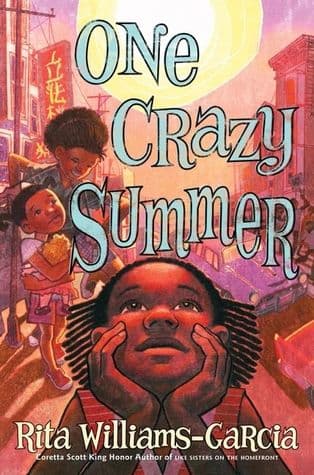
Rita Williams-Garcia (2010)
Genre
Children's / Historical Fiction / Young Adult
Reading Time
240 min
Key Themes
See below
Sign in to track this book
In the summer of 1968, three Brooklyn sisters go to Oakland to live with their estranged poet mother, where they attend a Black Panther summer camp and learn about family, identity, and a changing nation.
Eleven-year-old Delphine Gaither, along with her younger sisters Vonetta and Fern, flies from Brooklyn, New York, to Oakland, California, to spend a month with their mother, Cecile. They have not seen her in seven years. Their father, Papa, and grandmother, Big Ma, sent them, hoping Cecile would take responsibility for her children. Delphine, always responsible, carries a list of instructions from Big Ma and tries to manage her often-fighting sisters. When they arrive, Cecile greets them coldly and distantly, making it clear she does not want them there. She drives them to her small, sparsely furnished house, which also holds her printing press, and tells them they will attend a summer camp run by the Black Panthers.
Cecile's house is not what the girls expected. It is full of printing equipment, and she barely notices their needs. She insists they call her Cecile, not 'Mama.' Her main concern is her poetry and printing. The next morning, she sends them to the People's Center, the local Black Panther headquarters, for their free breakfast program and summer camp. Delphine is cautious, having heard bad things about the Panthers, but she wants to protect her sisters. At the center, they meet Sister Mukumbu and Brother Zeke, who run the program, and learn about the Panther's ideas of community service and self-determination. This is very different from Cecile's detached parenting.
Days at the People's Center become the girls' routine. They get free breakfast, learn about Black history, civil rights, and the Black Panther Party's Ten-Point Program. Delphine is at first doubtful and careful, especially when Brother Zeke teaches them about self-defense and 'the black fist.' Vonetta enjoys the attention and songs, while Fern, the youngest, quietly takes everything in, often drawing. They meet other children, including Hirohito, a Japanese boy, and begin to understand the Panthers' commitment to their community, providing food, education, and medical care. This challenges the negative ideas Delphine heard in Brooklyn.
Delphine tries to understand Cecile, who spends her evenings locked in her printing room. One night, Delphine hears Cecile recite a poem, showing deep emotion she rarely displays. Cecile is a poet and printer, using her press to create revolutionary pamphlets and her own verses. Delphine also notices a locked cabinet and a jar of pennies Cecile saves. It becomes clear that Cecile's coldness comes from a deep pain and a wish for independence, possibly related to her own mother's disapproval of her art and her past relationship with Papa, which she saw as limiting. Delphine starts to put together parts of her mother's history.
Fern, the youngest, becomes close with Hirohito, a quiet boy often at the People's Center. They spend time together, and Hirohito gives Fern a small, plastic doll. This doll becomes Fern's favorite toy. One day, the doll disappears, upsetting Fern greatly. Delphine, trying to find it, suspects Cecile or someone at the center. The incident shows Fern's vulnerability and the sisters' need for stability and comfort in their new surroundings. The doll is eventually found, relieving Fern and showing Delphine that even small acts of kindness, like Hirohito's gift, mean a lot to her youngest sister.
The Black Panthers hold a large rally, and the girls, along with Sister Mukumbu and Brother Zeke, attend. At the rally, Delphine sees the power and passion of the Panther movement. During the event, Cecile, who rarely leaves her house, appears, surprising Delphine. Here, Delphine learns more about her mother's past: Cecile had a difficult relationship with Big Ma, who did not like her poetry and free spirit. Cecile says she left Brooklyn because she felt stifled and unappreciated, especially after Big Ma threw out her poetry. This helps Delphine understand Cecile's ongoing bitterness and her need for creative expression.
As the summer goes on, the Black Panther Party announces a special rally at the People's Center. Sister Mukumbu encourages the children to prepare performances. Vonetta, always wanting attention, and Fern, surprisingly, want to participate. Delphine, despite her early hesitation, helps them prepare a poem. They perform a poem about the Black Panther Party and their Ten-Point Program, which Delphine helps adapt. The performance is a success, filling the girls with a sense of accomplishment and pride. It marks a moment in their journey, showing how they have joined the community and found their voices, even Delphine, who usually stays in the background.
After the rally, Delphine talks to Cecile about her past, putting together the story of Big Ma throwing out Cecile's poetry. Cecile confirms this painful memory, explaining that Big Ma saw her poetry as 'nonsense' and destroyed her work, leading to her decision to leave. Delphine also asks about the jar of pennies Cecile keeps. Cecile says the pennies are money she saved to buy a ticket to leave Brooklyn, a sign of her strong desire for freedom. This conversation, though hard, creates a small opening in Cecile's emotional wall, giving Delphine a deeper understanding of her mother's long-held anger and her wish for independence.
One evening, while the girls are at Cecile's house, the police raid the house, looking for Cecile and her printing press, which they think is used for illegal materials. Cecile, expecting this, has a plan. She tells Delphine to take her sisters and hide in a secret compartment she built into the house. The girls, scared but trusting their mother, follow her instructions. They escape through a hidden passage, showing Cecile's cleverness and her deep, though hidden, protective feelings for her children. The incident is a frightening experience for the girls, confirming their understanding of the dangers Cecile faces as an activist and artist.
After the raid, Cecile, with the help of the Black Panthers, arranges for the girls to return to Brooklyn earlier for their safety. Before they leave, they have a farewell. Cecile gives each girl a small, personalized gift: a drawing from Fern, a poem from Vonetta, and a piece of her own poetry for Delphine, showing her love in her own way. Delphine, still wanting a traditional mother, leaves Oakland understanding Cecile's struggles, her dedication to her art, and her quiet strength. The experience has matured Delphine and given her sisters a broader view of the world, preparing them for their return to Big Ma and Papa.
The Protagonist
Delphine transforms from a rigid, rule-following child to a more understanding and empathetic young girl, gaining a deeper perspective on her mother and the world.
The Supporting
Vonetta learns to channel her desire for attention into positive self-expression and finds a sense of belonging in the Black Panther community.
The Supporting
Fern, initially shy and dependent, blossoms slightly, finding comfort in new friendships and subtly expressing herself through art.
The Supporting
Cecile remains largely unchanged in her core beliefs but subtly reveals her protective instincts and a deeper, albeit unconventional, love for her daughters.
The Supporting
Big Ma's character remains off-page, but her influence on Delphine is significant, and her past actions are central to Cecile's backstory.
The Supporting
Papa's arc is off-page; his primary role is to initiate the girls' journey to Oakland.
The Supporting
Sister Mukumbu consistently provides a stable and educational presence, acting as a mentor figure for the girls.
The Supporting
Brother Zeke maintains his role as an empowering and educational figure, consistently advocating for Black self-determination.
The Supporting
Hirohito consistently offers quiet companionship and kindness, especially to Fern.
The novel shows how Delphine, Vonetta, and Fern deal with their identities in Oakland. Delphine questions her early ideas about her mother and the Black Panthers, finding a more complex understanding of both. Cecile, through her poetry, shows her identity as an artist and an independent woman, separate from traditional mother roles. The girls, especially Delphine, learn to see themselves not just as Big Ma's well-behaved granddaughters, but as individuals who can handle a complex world and form their own opinions. Their time in Oakland makes them confront who they are and who they want to be.
“It’s hard to tell what’s good and what’s bad. Sometimes what’s bad has some good in it, and sometimes what’s good has some bad.”
Family is central, going beyond traditional structures. The Gaither sisters are sent to a mother who is emotionally distant, making them find a sense of belonging within their sisterly bond and the Black Panther community. Cecile's own struggle for belonging, having felt rejected by her mother (Big Ma), explains her detached behavior. The People's Center, with its shared meals and purpose, offers a different kind of family—one built on mutual support and shared ideas. The girls learn that family can be redefined and that love, even from an unconventional mother like Cecile, can be shown in unexpected ways.
“Cecile was our mother, but Big Ma was our everything.”
The novel introduces the Black Panther Party in a balanced way, challenging simple ideas. Through the girls' eyes, readers see the Panthers not just as radical figures, but as community organizers providing services like free breakfast and education. Delphine's early fear and suspicion change to an understanding of the Panthers' dedication to empowering their community and fighting for civil rights. The story shows the importance of speaking out against injustice and the courage needed for activism, as seen in Cecile's work as a revolutionary printer and poet.
“The Black Panther Party wasn’t just about Huey Newton and Bobby Seale and Eldridge Cleaver. It was about the people, too. The everyday people.”
The relationship between the Gaither sisters and Cecile challenges common ideas of motherhood. Cecile is not a nurturing, traditionally loving mother; she is an artist and activist strongly dedicated to her independence. Her love is shown through small actions, like providing shelter during the raid, ensuring their safety, and giving them personalized gifts at the end. Delphine learns to look past the lack of hugs and 'I love yous' to understand Cecile's unique way of caring for her children, which comes from her own painful experiences and desire for self-expression. It shows that motherly love can appear in different and unexpected forms.
“She wasn’t going to hold me or tell me she loved me. That wasn’t her way. But she was giving me something else.”
Art, especially poetry and printing, is a strong force in the novel. Cecile's poetry is her life, how she expresses her pain, defiance, and identity. Big Ma destroying her poetry is a trauma that drives Cecile away. The printing press is not just a tool for Cecile's art but also for the Black Panthers' message of revolution and empowerment. The girls themselves use art through their performance at the rally and Fern's drawings, finding their voices and a sense of purpose. Art is both a personal outlet and a tool for social change.
“Poetry is a gift, a language that can’t be spoken with words.”
The girls' limited understanding of the world serves as a lens for discovery.
The Gaither sisters, particularly Delphine, arrive in Oakland with a limited and often naive understanding of the world, shaped by their Brooklyn upbringing and Big Ma's conservative views. This naivete acts as a plot device, allowing the author to introduce complex themes of racism, activism, and unconventional family dynamics through their process of discovery. Their initial misinterpretations and gradual understanding allow the reader to learn alongside them, making the political and social issues accessible and relatable. Delphine's detailed observations highlight the contrasts between her expectations and the reality of Oakland.
Symbols of Cecile's emotional distance and past trauma.
Cecile's locked printing room and her jar of pennies serve as powerful symbols throughout the narrative. The locked room represents her emotional guardedness and her fierce dedication to her art and independence, keeping her past and true feelings hidden from her daughters. The jar of pennies, initially a mystery to Delphine, is eventually revealed to be her escape fund, symbolizing her desperate desire for freedom from a stifling life. These devices build suspense and curiosity, prompting Delphine to seek answers and ultimately leading to a deeper understanding of her mother's complex character and motivations.
A structural and thematic framework for understanding the Panthers' mission.
The Black Panther Party's Ten-Point Program serves as a recurring structural and thematic device. It is introduced early in the girls' time at the People's Center and is regularly referenced during their lessons. This program provides a clear framework for understanding the Panthers' goals and activities, helping to demystify the organization for both the characters and the reader. It allows the author to present the Panthers' community-focused initiatives (like free breakfast and education) in an organized way, countering negative stereotypes and emphasizing their commitment to social justice and self-determination for the Black community.
A symbol of childhood innocence, comfort, and vulnerability.
Fern's doll, Miss Patty P. Cake, is a recurring symbol throughout the story. It represents the children's lingering innocence and their need for comfort and familiarity in a confusing and often harsh new environment. The doll's disappearance causes significant distress for Fern, highlighting her vulnerability and the sisters' reliance on small comforts. When Hirohito gives Fern a new doll, it symbolizes the kindness and community they find at the People's Center. The doll acts as a touchstone for Fern's emotional state and a reminder of the fragility of childhood amidst adult struggles.
“Crazy is a word people use to describe things they don't understand.”
— Delphine reflects on her mother's behavior and the label others give her.
“I was eleven going on twelve, but I felt like I was a hundred.”
— Delphine describes her sense of responsibility and maturity.
“You don't need a mother to be a mother.”
— Delphine realizes her role in caring for her sisters despite their absent mother.
“The Black Panthers aren't about hate. They're about love for our people.”
— A character explains the Panthers' mission to the sisters.
“Sometimes you have to be a little bit crazy to make a change.”
— Delphine considers the bold actions of the Black Panthers.
“We were three girls with one suitcase and a whole lot of attitude.”
— Delphine describes arriving in Oakland with her sisters.
“Freedom isn't just a word. It's a feeling.”
— Delphine reflects on the empowerment she experiences in Oakland.
“Mama is a poem I will never finish writing.”
— Delphine expresses her complex feelings about her mother.
“You can't judge a book by its cover, but you can judge a person by their actions.”
— Delphine learns to assess people based on what they do, not appearances.
“In Oakland, the air smelled like revolution.”
— Delphine describes the atmosphere of 1968 Oakland.
“Being brave doesn't mean you're not scared. It means you do it anyway.”
— Delphine encourages her sister Vonetta during a tense moment.
“We came for a mother, but we found a movement.”
— Delphine summarizes their summer's unexpected outcome.
“Sometimes the quietest people have the loudest minds.”
— Delphine observes her sister Fern's thoughtful nature.
“Home isn't always a place. Sometimes it's a feeling you carry with you.”
— Delphine reflects on what home means after her summer in Oakland.
Ready to see how well you understood this book? Take our interactive quiz with 10 questions.

Biography coming soon.

Dan Gemeinhart
4.5

Kate O'Hearn
4.4

Jeanne Birdsall
4.4

Jen Wang
4.4
Wendelin Van Draanen
4.3

John Marsden
4.3

Chris Van Allsburg
4.3
Jennifer A. Nielsen
4.2