“Hatred is like a disease. It infects those who harbor it, and it seeks to infect others.”
— Ben Solomon reflecting on the nature of prejudice and its spread.

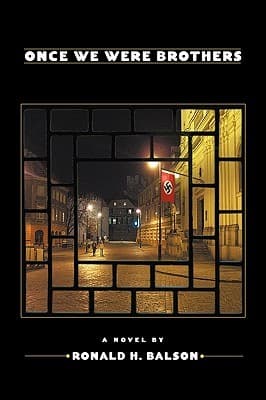
Ronald H. Balson (2010)
Genre
Historical Fiction / Mystery
Reading Time
10-12 hours
Key Themes
See below
Sign in to track this book
A respected Chicago philanthropist is publicly unmasked as a Nazi SS officer by a Holocaust survivor, forcing a young attorney to unravel a sixty-year-old betrayal that began in war-torn Poland.
The story begins at a Chicago gala where Elliot Rosenzweig, a respected and wealthy philanthropist, is being honored. An elderly man named Ben Solomon confronts Rosenzweig, publicly accusing him of being Otto Piatek, a Nazi SS officer. Rosenzweig denies the accusations, calling Solomon a delusional old man. Solomon is removed from the event. Despite public skepticism and Rosenzweig's denial, Solomon believes he has found the man who betrayed his family and killed his loved ones in Poland decades ago. He seeks legal help to bring Rosenzweig to justice.
Ben Solomon asks Catherine Lockhart, a young attorney at a Chicago law firm, to take his case against Elliot Rosenzweig. Catherine is hesitant because of the defendant's status and the lack of clear evidence, but Ben's strong belief and his past story move her. Ben explains that 'Otto Piatek' was an orphaned German boy his family took in and raised as their own in the Polish village of Chrzanów before the war. He says Otto, whom they loved like a brother, later betrayed them to the Nazis. Despite the challenge, Catherine agrees to represent Ben, aiming to find the truth and seek justice for him and his family.
As Catherine begins her investigation, Ben Solomon starts to tell his life story, beginning with his childhood in Chrzanów, Poland. He describes a close Jewish family and community, and the happiness of growing up with his younger sister, Hannah. He remembers the arrival of Otto Piatek, a young German orphan, taken in by his kind parents. Otto quickly became like a brother to Ben, sharing their home and lives. They went to school together, played, and grew up side by side. Ben stresses the strong bond they shared, making the later betrayal harder to understand. This time in his life, though with the coming war, was full of warmth and family love.
The peace of Chrzanów ends with the German invasion of Poland in 1939. Ben describes the quick and harsh occupation, the new anti-Jewish laws, and the increasing persecution of Jewish people. Otto, being German, increasingly liked Nazi ideas and promises of power. He started to distance himself from the Solomon family, becoming more aggressive and nationalistic. The family felt a growing unease as Otto's loyalties changed, and he began to use his German background, even joining the Hitler Youth. This time marks the start of the family's breakup, as the war forced Otto to choose between his adoptive Jewish family and his German identity and the appeal of the Nazi regime.
The situation in Chrzanów quickly got worse for the Jewish community. Ben recounts his family's forced move into the crowded and dirty ghetto. To his shock, Otto Piatek, now an SS officer, was there and actively involved in enforcing Nazi policies. Ben saw Otto become a cruel persecutor, taking part in roundups and taking Jewish property. The final betrayal came when Otto, using his position, directly oversaw the Solomon family's removal from their home and their forced march into the ghetto, showing no care for the family who raised him. This act confirmed Ben's belief that Otto was a monster.
Life in the Chrzanów ghetto was a daily fight for survival. Ben, his parents, and his younger sister, Hannah, faced hunger, disease, and constant fear. Ben describes the terrible conditions, random violence, and the threat of deportation. During one brutal 'aktion' or roundup, Hannah was separated from the family. Ben, feeling guilty and needing to find her, searched for her within the chaotic ghetto. He used every resource he could find, risking his life to try and find his sister, showing his strength and family love amidst horror. His parents were later taken away and killed.
Ben finds Hannah, who is very sick and hidden in a cellar. He plans to smuggle her out of the ghetto and into hiding. With the help of kind non-Jewish Poles, he gets Hannah out, but their escape is short. An SS patrol led by Otto Piatek stops them. Otto recognizes them. Instead of helping, he turns them over, ensuring Hannah's capture and likely death. Ben escapes the immediate situation but is forced to watch Hannah being taken away, a moment that affects him forever and drives his lifelong quest for justice against Otto, whom he believes condemned his sister to death.
After losing Hannah and his parents, Ben escapes the ghetto during another chaotic 'aktion.' He faces great difficulties, hiding in forests and relying on strangers, until he leaves Poland. He goes to a Displaced Persons camp and later moves to the United States. In America, he works hard, builds a business, and raises a family. Despite his new life, the trauma of the Holocaust and the memory of Otto Piatek remain with him. He spends his later years finding Otto, sure that the man responsible for his family's destruction must face consequences, no matter how much time has passed.
Back in Chicago, Catherine and Ben get ready for their legal fight. Rosenzweig, with a strong legal team, uses his influence and money to discredit Ben, portraying him as a confused, vengeful old man. The media mostly supports Rosenzweig, seeing him as a victim of a false accusation. Catherine faces pressure from her firm and the public. She and her investigator, Liam Taggart, begin the hard task of gathering evidence from decades ago, traveling to Poland to search for records and witnesses. The challenge is great, as many documents were destroyed, and memories have faded, making identifying 'Otto Piatek' very hard.
Catherine and Liam travel to Chrzanów, Poland, and other places, carefully searching for any sign of Otto Piatek and the Solomon family. They interview elderly survivors, check archives, and visit historical sites. Their investigation finds fragmented but convincing evidence: old photographs, school records, and stories from people who remembered the German orphan taken in by the Solomons and his change into an SS officer. They find witnesses who remember the Piatek family and the war, slowly building a case that links Elliot Rosenzweig to Otto Piatek. The journey is emotionally hard, as they see the past's horrors firsthand.
The civil trial begins in Chicago, getting much media attention. Ben Solomon, despite his age, gives strong and emotional testimony, telling his experiences and his certainty that Rosenzweig is Otto Piatek. Rosenzweig's defense team, however, presents a detailed alibi. They provide documents, witnesses, and a story that says Rosenzweig was a young boy who moved to the United States before the war's end, living a different life with no connection to Nazi Germany. They accuse Ben of misidentification and making up his story, using the passage of time and the difficulty of proving identity after so many decades, questioning Ben's reliability.
Just as the defense seems to be winning, Catherine and Liam find a key piece of evidence: a photograph from a Nazi youth camp showing a young boy who looks like both the young Otto Piatek and a younger Elliot Rosenzweig. More importantly, they find a witness who, under questioning, reveals a distinct scar on Otto Piatek's hand, matching a scar on Rosenzweig. With this proof, Rosenzweig has to testify. Under Catherine's questions, his carefully built story starts to fall apart. He begins to reveal details only Otto Piatek would know, confirming Ben's accusations and showing his true identity and his deception.
Cornered and with his identity exposed, Elliot Rosenzweig confesses to being Otto Piatek. He admits to working with the Nazis, betraying the Solomon family, and taking part in the atrocities during the Holocaust. His confession is a shocking moment, showing his lifelong deception and the evil he committed. The jury finds in favor of Ben Solomon, holding Rosenzweig responsible for his past actions. While it is a civil judgment, not criminal, it gives Ben a strong sense of justice. The verdict shocks the community, exposing a respected figure's hidden past and confirming the power of truth.
After the trial, Elliot Rosenzweig faces public shame and possible further legal action. Ben Solomon, though still carrying the pain of his past, finds some peace and closure. His lifelong search for justice is fulfilled, and his family's memory, especially Hannah's, is honored. Catherine Lockhart, having won against great odds, has shown her legal skill and found a deeper purpose in her work. The case affects her deeply, shaping her understanding of justice, strength, and the human spirit. The story ends with a thought about remembering history and pursuing truth, no matter how hard or long the journey.
The Protagonist
From a traumatized survivor haunted by the past, Ben finds vindication and a measure of peace through the pursuit and achievement of justice.
The Protagonist
Catherine transforms from a cautious attorney into a determined advocate, finding purpose and confidence in pursuing justice for historical wrongs.
The Antagonist
From a seemingly untouchable figure, he is exposed, his carefully constructed life crumbling as his true identity and heinous past are revealed.
The Supporting
Liam helps uncover critical evidence, evolving from a professional colleague to a trusted partner and romantic interest for Catherine.
The Supporting
Her tragic fate remains a constant, driving force for Ben's pursuit of justice, ensuring her memory is honored.
The Supporting
Their initial act of compassion sets the stage for the central betrayal, and their ultimate sacrifice fuels Ben's quest.
The Supporting
He impartially oversees the trial, ensuring legal process is followed and justice is ultimately served.
The main theme is the pursuit of justice for historical crimes, specifically the Holocaust. Ben Solomon's lifelong effort to make Otto Piatek/Elliot Rosenzweig accountable shows the lasting need for victims to see wrongdoers held responsible, even decades later. The novel asks if justice can truly be served through a civil trial for wartime crimes and questions the moral need to seek truth regardless of personal cost. Catherine Lockhart's dedication to Ben's case shows the legal system's part in addressing deep moral wrongs.
““Justice, Ben, is not about vengeance. It's about truth. And sometimes, the truth is all we have left.””
The novel explores identity, especially how it can be changed and used for deception. Elliot Rosenzweig lives a carefully built life under a false identity, hiding his true self as Otto Piatek for decades. This raises questions about whether a person can escape their past and how a new identity can hide terrible acts. Ben Solomon's steady recognition of Otto, despite physical changes and time, highlights the lasting marks of character and memory. The theme also touches on the loss of identity felt by Holocaust survivors who had to rebuild their lives.
““How could a man live with such a lie, for so long, and still appear to be human?””
At the story's center is Otto Piatek's betrayal of the Solomon family, who raised him. This betrayal is personal and also represents the wider betrayal faced by Jewish communities during the Holocaust. The novel examines human cruelty when loyalty is abandoned for power and ideology. It also suggests that forgiveness is impossible for such calculated acts, especially from Ben's view, whose search for justice shows the unforgivable nature of Otto's actions.
““He was my brother. We broke bread together. He slept in my bed. And then he watched them take my family away.””
The story relies on the power of memory, both individual and shared, to reconstruct historical events. Ben Solomon's clear memories are the main source of information, stressing the importance of survivor testimony in keeping the truth of the Holocaust alive. The challenges Catherine and Liam face in finding supporting evidence show how easily history can be hidden or denied. The novel stresses the moral need to remember and face difficult historical truths to prevent them from happening again, stating that the past, no matter how far away, still affects the present.
““The past is never truly past, Ben. It's always there, waiting for us to remember.””
The Holocaust is not just a historical background but a force that continues to shape the characters' lives, especially Ben Solomon's. The novel explores the long-term psychological and emotional scars on survivors, showing how trauma can drive a lifelong search for meaning and justice. It shows how past atrocities affect generations, influencing personal choices and societal understanding. The trial itself brings the horrors of the Holocaust into a current setting, ensuring its lessons and victims are not forgotten.
““The war ended, but for us, the survivors, it never truly ended. It lived inside us.””
Alternating between Ben Solomon's past and Catherine Lockhart's present-day investigation.
The novel employs a dual narrative structure, weaving together Ben Solomon's first-person account of his childhood in pre-war Poland and his experiences during the Holocaust with Catherine Lockhart's present-day third-person perspective as she investigates Rosenzweig. This structure allows the reader to experience the historical events directly through Ben's eyes, providing emotional depth and context, while simultaneously following the legal thriller elements of Catherine's investigation. The alternating timelines build suspense and gradually reveal the connections between the past and present, making the eventual confrontation all the more impactful.
Ben Solomon's initial portrayal as potentially unreliable due to age and trauma.
Initially, Ben Solomon is portrayed by the media and Rosenzweig's defense as a potentially unreliable narrator due to his advanced age, the trauma he experienced, and the decades that have passed since the events. This device creates initial doubt for Catherine and the reader, building suspense as she tries to verify his claims. It highlights the challenges of prosecuting historical crimes and the ease with which powerful individuals can discredit victims. Ultimately, Ben's memory is proven to be remarkably accurate, turning the device on its head to emphasize the enduring power of survivor testimony.
Elliot Rosenzweig's meticulously crafted facade concealing his true Nazi past.
The core mystery of the novel hinges on Elliot Rosenzweig's hidden identity as Otto Piatek. This device creates immense tension and drives the plot as Catherine and Liam work to peel back layers of deception. Rosenzweig's double life, as a respected philanthropist and a former Nazi perpetrator, highlights the unsettling possibility of evil hiding in plain sight and the lengths to which individuals will go to escape their past. It forces the characters and the reader to question appearances and delve deeper into the nature of identity and morality.
A key piece of visual evidence that links Rosenzweig to Otto Piatek.
A specific photograph from a Nazi youth camp serves as a crucial plot device in the climax of the novel. Visual evidence, especially from decades past, is incredibly powerful in historical investigations. This photograph provides a tangible link, corroborating Ben's memories and offering a visual connection between the young Otto Piatek and the older Elliot Rosenzweig. Its discovery and presentation in court act as a turning point, making it difficult for Rosenzweig to continue his denials and ultimately leading to his confession. It symbolizes the undeniable power of historical records.
“Hatred is like a disease. It infects those who harbor it, and it seeks to infect others.”
— Ben Solomon reflecting on the nature of prejudice and its spread.
“The past is never truly dead. It is not even past. It is always with us, shaping who we are.”
— Ben Solomon discussing the lasting impact of historical events on individuals.
“Justice is not always swift, nor is it always easy, but it is always worth fighting for.”
— Ben Solomon's resolve in pursuing the truth and seeking justice for past crimes.
“Some memories are like a stain. No matter how hard you try to wash them away, they remain.”
— Ben Solomon grappling with traumatic memories from his childhood during the war.
“Evil triumphs when good men do nothing. That is a lesson we must never forget.”
— Ben Solomon's argument for active resistance against injustice.
“Forgiveness is a complicated thing. It's not about forgetting, but about finding a way to live with what happened.”
— Ben Solomon contemplating the difficulty and necessity of forgiveness in the face of immense suffering.
“There are some truths that are too painful to speak, but even more painful to keep silent.”
— Ben Solomon considering the burden of unspoken truths and their impact.
“The human spirit is resilient. It can endure unimaginable hardship and still find a way to hope.”
— Ben Solomon observing the enduring strength of survivors despite their past experiences.
“Sometimes, the greatest acts of courage are not on the battlefield, but in the quiet moments of everyday life.”
— Ben Solomon reflecting on the different forms of bravery exhibited by ordinary people.
“A lie, no matter how small, can grow into a monster that devours everything in its path.”
— Ben Solomon's warning about the destructive power of deceit and its consequences.
“Love, even in the darkest of times, can be a beacon that guides us through the storm.”
— Ben Solomon's thoughts on the enduring power of love amidst suffering and loss.
“We are all products of our history, but we also have the power to shape our future.”
— Ben Solomon emphasizing individual agency despite the influence of the past.
“To forget is to allow the same mistakes to be made again. Memory is our shield.”
— Ben Solomon's conviction about the importance of remembering historical atrocities.
“The bonds of family, whether by blood or by choice, are stronger than any force that seeks to break them.”
— Ben Solomon reflecting on the deep connection and loyalty he shares with his adopted brother, Otto.
Ready to see how well you understood this book? Take our interactive quiz with 10 questions.







