“There was a time when she thought she could outrun her name, outrun the whispers, but the river always brought them back.”
— Early in the story, reflecting on Margo's past and reputation in the community.

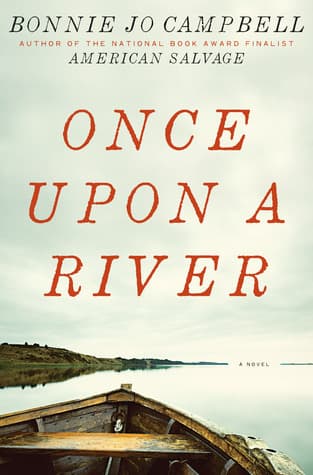
Bonnie Jo Campbell (2011)
Genre
Historical Fiction / Young Adult
Reading Time
9-12 hours
Key Themes
See below
Sign in to track this book
A rifle-toting teen, complicit in her father's death, navigates the treacherous Stark River in rural Michigan, an odyssey of survival and self-discovery as she hunts for her vanished mother and confronts the true cost of her choices.
Sixteen-year-old Margo Crane lives a secluded life on the Stark River in rural Michigan with her father, Bernard. One evening, two local men, one of whom Margo had an earlier encounter with, confront Bernard over a past grievance. During the struggle, Bernard's rifle accidentally discharges, killing him. Margo, who was present and complicit in the sense that she did not intervene and even held the rifle for a moment, is terrified. Fearing legal repercussions and the judgment of the community, she decides to escape. She gathers a few essential supplies, a biography of Annie Oakley, and takes her father's boat, embarking on a journey down the Stark River, leaving behind the only home she's ever known.
Margo adapts quickly to life on the river. She is an expert hunter and fisher, using her rifle and knowledge of the wilderness to survive. She encounters various characters along her journey, some offering help, others posing threats. She maintains a fierce independence, often keeping her true identity and the circumstances of her father's death a secret. Her primary goal is to find her mother, Lottie, who abandoned the family years ago. Margo often reflects on her mother's absence, hoping the river will eventually lead her to Lottie.
As Margo travels, she repeatedly encounters men who view her as vulnerable or as an object. She is propositioned, harassed, and even physically threatened. Her rifle becomes her most crucial defense. She is forced to use it to ward off attackers, sometimes firing warning shots, other times directly confronting those who would harm her. These encounters harden Margo, reinforcing her distrust of strangers and her resolve to protect herself at all costs. She learns to read intentions quickly and to act decisively in self-preservation.
Margo eventually finds a makeshift community of outcasts living along the riverbanks. She is taken in by a family, initially finding a sense of belonging and protection. However, this refuge proves to be temporary and complicated. The family, particularly the patriarch, has its own set of rules and dangers. Margo's independence and her skills with a rifle are both respected and seen as a threat by some members. She experiences a brief period of stability but soon realizes that even within this community, she must remain vigilant and ultimately continue her solitary journey.
Throughout her journey, Margo clings to the hope of finding her mother, Lottie. She collects fragments of information, rumors, and old stories about her mother's whereabouts. Each clue, no matter how small, fuels her determination. She believes that reuniting with Lottie will provide answers and a sense of closure, perhaps even a new home. This quest is a driving force, pushing her further downriver and through increasingly challenging situations, as she grapples with the idealized image of her mother versus the reality of her abandonment.
Margo encounters a solitary, older man who also lives off the river. He is a skilled outdoorsman and respects Margo's abilities. They form an uneasy alliance, sharing resources and knowledge. While he offers a degree of companionship and protection, Margo remains wary, never fully trusting anyone after her experiences. This relationship highlights Margo's struggle to balance her need for connection with her deep-seated independence and fear of vulnerability. She learns valuable lessons about survival from him but never fully lets down her guard.
As Margo travels further, the past begins to catch up to her. News of her father's death and her disappearance has spread. Law enforcement, specifically Sheriff Dillard, becomes aware of her and the circumstances. Margo realizes that she cannot outrun the law forever. This creates a constant undercurrent of tension and fear, forcing her to be even more cautious and to consider the long-term implications of her actions. The threat of capture looms large, pushing her towards a confrontation with her past.
Amidst the constant struggle and danger, Margo experiences moments of genuine peace and connection. She finds solace in the natural beauty of the river and the wilderness. She also forms a bond with a young boy, perhaps the closest she comes to a genuine, unburdened relationship. These moments are fleeting but crucial, offering glimpses of a different life and reminding her of the simple joys she has sacrificed for her survival and quest. They highlight her underlying humanity and capacity for tenderness despite her hardened exterior.
After months of searching, Margo finally tracks down her mother, Lottie. The reunion, however, is far from the idealized vision Margo held. Lottie has built a new, seemingly ordinary life, entirely separate from her past. She is not the strong, independent woman Margo imagined, nor is she eager to embrace the daughter who reminds her of a life she left behind. Margo is confronted with the harsh reality of her mother's choices and the disillusionment that comes with understanding her mother's true character.
With her mother found and the law closing in, Margo faces a critical juncture. Sheriff Dillard finally catches up to her, bringing the full weight of her past actions to bear. Margo is forced to confront the consequences of her father's death and her subsequent flight. She must make a choice about her future: continue to run and live as an outcast, or face the legal system and whatever punishment awaits her. This decision marks the culmination of her journey of self-discovery and the price she is willing to pay for her freedom.
Ultimately, Margo chooses to face the consequences of her actions. She cooperates with Sheriff Dillard, recounting the events of her father's death. While the legal outcome is uncertain, her decision represents a significant shift from self-preservation to a nascent form of responsibility. She begins to understand that true freedom is not just about physical escape but about confronting one's past. The river, which was her escape, now becomes a symbol of her journey towards a more settled, albeit still independent, future, where she can reconcile with her identity.
The Protagonist
Margo evolves from a naive, survival-driven fugitive to a young woman who understands the importance of responsibility and the complex nature of freedom, accepting the consequences of her choices.
The Supporting
Bernard's character is explored through Margo's memories and the consequences of his actions, revealing his flaws and the lasting impact he has on his daughter.
The Supporting
Lottie's character remains largely static, serving as a catalyst for Margo's journey and a symbol of the disillusionment that can come with finding idealized figures.
The Supporting
Dillard's arc is largely external, as he represents the force of justice closing in, eventually offering Margo a chance at redemption.
The Supporting
Star's character provides a temporary anchor for Margo's emotional development, allowing her to express empathy and receive innocent affection.
The Supporting
The river is a constant force that witnesses and enables Margo's transformation, providing both sanctuary and hardship.
The novel explores the theme of survival, both physical and emotional. Margo's connection to the natural world and her skills as a hunter and fisher are central to her ability to exist independently on the Stark River. She must constantly adapt to harsh conditions, find food, and defend herself against threats. This theme is evident from the moment she flees after her father's death, relying solely on her wits and her rifle. Her journey is a story of human resilience in the face of extreme adversity, highlighting the raw, primal instincts necessary to endure.
“She knew the river. She knew what it would give up, and what it would take.”
Margo's flight down the river is initially an act of seeking freedom from the law and societal expectations. However, the novel complicates this notion, showing that true freedom is more complex than mere escape. While Margo enjoys the unfettered existence of the river, she is also bound by the constant need for self-preservation, the pursuit of her mother, and the looming shadow of her past. Her journey ultimately leads her to question whether true freedom can be found in isolation or if it requires confronting responsibility and accepting the consequences of one's actions, as seen in her final decision to face the law.
“The river was freedom, but freedom was also a kind of prison.”
Margo's journey is a coming-of-age story. At sixteen, she is thrust into an adult world of violence, responsibility, and independence. Living on the river forces her to shed any remaining innocence and forge a strong, often hardened, identity. She grapples with the legacy of her parents, the abandonment by her mother, and the circumstances of her father's death, all of which shape who she becomes. Her quest to find her mother is also a quest for self-discovery, as she tries to piece together her own fragmented sense of self through her family's history. By the end, she has transformed from a girl reacting to circumstances into a young woman making deliberate choices about her future.
“She was learning what it meant to be alone, and what it meant to be herself.”
The Stark River and its surrounding wilderness contrast with the encroaching world of civilization. Margo thrives in the wild, understanding its rhythms and dangers, while feeling alienated and threatened by settled communities and their laws. The novel explores the tension between these two worlds: the primal, untamed existence where survival skills reign supreme, and the ordered, rule-bound society. Margo's internal conflict often mirrors this external one, as she struggles to reconcile her wild spirit with the demands of human society, particularly when she must interact with others or face the law.
“The river was her church, her school, her home. The outside world was a different country.”
Nature, specifically the Stark River, is both a nurturing force and a dangerous, unforgiving entity. It provides Margo with food, shelter, and a path to escape, fostering her unique skills and independence. However, it also presents challenges: harsh weather, isolation, and the constant threat of wild animals and the unknown. The river mirrors Margo's own journey — beautiful yet brutal, offering freedom but demanding constant vigilance. It is a powerful, almost sentient, backdrop that shapes every aspect of Margo's existence and her understanding of life and death.
“The river gave, and the river took. It was a fair master.”
Margo's physical journey down the Stark River mirrors her internal transformation.
Margo's odyssey down the Stark River is a classic journey motif. Each bend in the river, each new encounter, and each change in scenery reflects a stage in her psychological and emotional development. The river itself serves as a linear progression, pushing her forward, forcing her to adapt, and ultimately leading her to a confrontation with her past and a decision about her future. The physical distance she covers is directly proportional to the internal growth she experiences, turning her flight into a quest for self-discovery.
Margo's rifle represents her independence, protection, and connection to her father.
The rifle is a potent symbol for Margo. Initially, it is her father's, connecting her to him and his legacy of self-sufficiency. It becomes her primary tool for survival, providing food and protection, thus symbolizing her fierce independence and ability to defend herself in a dangerous world. It also represents a burden, as its use can lead to further complications and violence. The rifle embodies both Margo's strength and the perilous nature of her existence, highlighting her capacity for both creation (hunting) and destruction (defense).
A book Margo carries, symbolizing female strength, skill, and the pursuit of legend.
Margo carries a biography of Annie Oakley throughout her journey. This book serves as a symbolic guide and inspiration. Annie Oakley, a legendary sharpshooter, embodies female strength, skill, and an ability to thrive in a male-dominated world – qualities Margo herself possesses and must cultivate. The biography offers Margo a connection to a historical figure who navigated similar challenges of independence and public perception, reinforcing Margo's own identity as a skilled markswoman and a woman forced to make her own way.
Changes in the river and wildlife subtly hint at upcoming challenges or emotional states.
The natural environment frequently foreshadows events or reflects Margo's internal state. A sudden storm might precede a violent encounter, or the appearance of certain animals could hint at a period of peace or danger. The changing seasons and the river's currents often mirror the flow of Margo's journey, suggesting both inevitability and unpredictability. This device deepens the connection between Margo and her environment, making the natural world an active participant in her story rather than a mere backdrop.
“There was a time when she thought she could outrun her name, outrun the whispers, but the river always brought them back.”
— Early in the story, reflecting on Margo's past and reputation in the community.
“The river took what it wanted, and it gave back what it pleased, never minding who was hurt or helped in the process.”
— A recurring theme highlighting the indifferent power of nature.
“A girl could be a lot of things, but she couldn't be nothing. Not in this world.”
— Margo's internal monologue about finding her place and purpose.
“Some truths were like stones in the river, always there, even if you couldn't see them through the murky water.”
— Reflecting on hidden family secrets and the past.
“She learned to read the river like a book, its currents and eddies telling stories only she understood.”
— Margo developing her deep connection and understanding of the river.
“Grief was a heavy coat, and sometimes Margo felt she'd been wearing it her whole life.”
— Margo's ongoing struggle with loss and sorrow.
“Hope was a tricky thing, a flickering candle in a strong wind, but Margo clung to it fiercely.”
— Despite hardships, Margo maintains a sense of hope for the future.
“The river always had a way of sorting things out, one way or another, even if its justice was harsh.”
— Margo's belief in the river's role in resolving conflicts or revealing truths.
“You couldn't escape who you were, not really. The river would always bring you back to yourself.”
— Margo's realization about self-acceptance and destiny.
“There was a wildness in her, a river-born spirit that wouldn't be tamed.”
— Describing Margo's untamed and independent nature, linked to her upbringing.
“Love was a dangerous current, capable of carrying you away or drowning you entirely.”
— Margo's reflections on the complexities and risks of love.
“Every bend in the river held a new secret, a new possibility, if you were brave enough to look.”
— Margo's adventurous spirit and willingness to explore the unknown.
“The hardest part of leaving was knowing you might never truly come back to the person you were.”
— Margo contemplating the transformative nature of her journey and decisions.
Ready to see how well you understood this book? Take our interactive quiz with 10 questions.

Bonnie Jo Campbell is an American author known for her unflinching portrayals of rural working-class life. Her novel "Once Upon a River" was a finalist for the National Book Award and explores themes of resilience and survival. Campbell's writing is celebrated for its raw honesty and vivid prose.







