““I have never seen anyone so happy to be going to school,” he said. “You will be a good teacher, Jane.””
— Rosalie's father speaking to her about her eagerness for education.

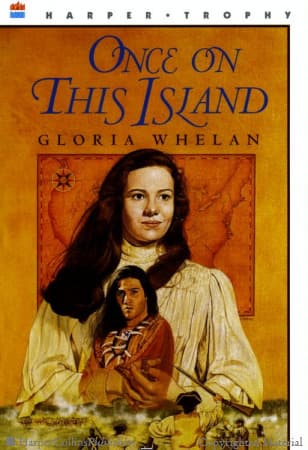
Gloria Whelan (1995)
Genre
Children's / Historical Fiction / Young Adult / Romance
Reading Time
240 min
Key Themes
See below
Sign in to track this book
During the British occupation of Mackinac Island in the War of 1812, a young girl named Mary cares for her family's farm and waits for her father to return.
Mary O'Shea, twelve, lives peacefully on Mackinac Island in the summer of 1812. She helps her father, Patrick, with fishing and farming, and spends time with her younger siblings, Rion, ten, and Annie, eight. They are close with their neighbors, the La Framboise family, especially Mary's best friend, Angelique. Mary often sees the busy fur trade and the island's varied community, including British soldiers and Native Americans. Her main concern is improving her fishing skills and enjoying the island's beauty, unaware of the coming conflict that will soon disrupt their peace and test their strength.
Rumors of war between America and England begin to spread across Mackinac Island. Patrick O'Shea, a strong American patriot, talks about the rising tensions with other islanders. The mood changes from carefree summer days to underlying worry. Mary hears quiet talks about possible British attacks and the island's vulnerability. The close-knit community, once focused on trade and daily life, now faces an uncertain future. Mary feels a growing unease, sensing that their familiar lives are about to be changed by forces beyond their control, affecting her family directly.
The fears become real when the British launch a surprise attack and capture Fort Mackinac. Afterward, Patrick O'Shea decides to leave the island and join the American forces on the mainland, believing it is his duty to fight for his country. He gives Mary, as the oldest, the job of caring for Rion and Annie and managing their small farm. Mary is heartbroken and scared by her father's leaving but understands his choice. She promises to be strong, though the weight of her new duties immediately settles on her young shoulders, marking a big change in her childhood.
With their father gone, Mary, Rion, and Annie struggle to keep their farm running under British rule. British soldiers are stationed on the island, and supplies become scarce. Mary, despite her inexperience, takes charge of the home, tending the garden, fishing, and trying to keep her younger siblings fed and safe. Winter is especially harsh, with little food and the constant threat of British patrols. Mary learns to be clever and tough, often relying on the kindness of neighbors like the La Framboises, who share what little they have. The children face loneliness and fear, wishing for their father to return.
One day, while looking for food in the woods, Mary finds a wounded American soldier, Jonathan, hiding from the British. He is hurt and hungry. Despite the great risk, Mary's kind nature makes her help him. She secretly brings him food and medicine, caring for his wounds in a hidden spot. This brave act puts her family in serious danger if the British find out. Jonathan, thankful for her help, shares war stories and his hopes for an American victory, becoming a symbol of her father's cause and a secret source of hope for Mary.
Mary continues to secretly care for Jonathan, bringing him supplies and learning more about the war and the world outside Mackinac. A quiet bond forms between them, built on trust and shared hope for an American victory. She finds clever ways to avoid British patrols, often using her knowledge of the island's hidden paths and the cover of darkness. Rion and Annie, though not fully aware of Jonathan, sense Mary's secret trips and help by distracting others or providing small comforts. This dangerous secret adds another layer of stress to Mary's already difficult life.
The British rule becomes harsher, and soldiers increase their search for American supporters and runaways. Mary's fear of being discovered grows as patrols get closer to their farm. She has several close calls, almost being caught while bringing food to Jonathan. The children live in constant worry, knowing that if Jonathan is found, or if their help to him is revealed, they could face severe punishment from the British. Mary's cleverness and quick thinking are constantly tested as she tries to protect Jonathan and keep her family safe from suspicion, showing the constant danger they face.
As Jonathan regains his strength, he decides to try escaping the island to rejoin the American forces. Mary, knowing the island's waters and local boats, helps him plan his departure. Under the cover of darkness and a thick fog, she helps him reach a small boat and sail for the mainland. Their goodbye is bittersweet, as Mary is sad to see him go but relieved that he is safe and has a chance to fight for their cause. Jonathan promises to remember her bravery and dedication, leaving Mary with new purpose and hope.
After Jonathan leaves, life on the island continues under British rule. Mary, Rion, and Annie face another hard winter, marked by scarcity and longing. They continue to manage their farm as best they can, relying on each other and their neighbors' decreasing generosity. Mary often looks across the lake, imagining her father and Jonathan fighting for American freedom. She holds onto the hope that the war will end soon and her father will return safely. Her experiences have matured her, but the emotional cost of separation and uncertainty weighs heavily on her.
Finally, after what feels like a very long time, news reaches Mackinac Island that the War of 1812 has ended with the Treaty of Ghent. A wave of relief washes over the islanders, though the future is still uncertain. The British prepare to leave, and the American flag is again raised over Fort Mackinac. Mary and her siblings are overjoyed at the thought of peace, but their greatest hope is for their father to return. The island slowly begins to return to its pre-war life, but the scars of occupation and conflict remain for many.
One day, as spring arrives, Mary sees a familiar figure approaching their farm. It is her father, Patrick O'Shea, returning home from the war. The reunion is emotional and joyful. Mary, Rion, and Annie rush to hug him, overwhelmed with relief and happiness. Patrick, though tired from his experiences, is very proud of his children and how strong they were in his absence. He sees how much Mary has grown and matured, taking on adult duties. The family is finally whole again, ready to rebuild their lives on Mackinac Island.
With Patrick's return, the O'Shea family begins to heal and rebuild. The island itself is recovering from the war, and life slowly gets back to normal. Mary, though no longer solely responsible for the farm, carries the wisdom and strength from her wartime experiences. She has changed from a carefree girl into a mature young woman capable of great courage and cleverness. The family looks forward to a future of peace and prosperity, cherishing their reunion and the lasting spirit of Mackinac Island, forever changed by what they went through.
The Protagonist
Mary transforms from a dependent child into a resilient and responsible young woman, capable of making life-or-death decisions and protecting her family.
The Supporting
Patrick's arc is largely off-page, but his return signifies the end of conflict and the restoration of family unity.
The Supporting
Rion matures from a playful boy into a more responsible and observant young man, understanding the gravity of their situation.
The Supporting
Annie, while remaining young, learns to cope with fear and separation, finding comfort and strength in her siblings.
The Supporting
Jonathan recovers from his wounds and successfully escapes to rejoin the American forces, symbolizing resilience and the ongoing fight for freedom.
The Supporting
Angelique remains a steadfast friend, her character arc supporting Mary's journey through loyalty and shared experience.
The Antagonist
The British soldiers' presence defines the conflict and challenges faced by the protagonists, their eventual withdrawal marking the end of occupation.
This theme is central to Mary's journey as she and her siblings must adapt to life without their father under British rule. Mary's cleverness in finding food, tending the farm, and secretly helping Jonathan (Scene 5, 6) shows her great ability to endure and protect her family. The harsh Mackinac winters and dwindling supplies constantly test their survival, showing the human spirit's strength in hardship. The whole family, even young Annie, learns to cope with fear and uncertainty, showing collective strength during the war.
“She was no longer a child who could run to her father for help. She was the one who had to help.”
The War of 1812 suddenly ends Mary's carefree childhood. Her father's departure (Scene 3) forces her to take on adult duties, managing the farm and caring for her younger siblings. Her secret mission to help Jonathan (Scene 5, 6) further speeds up her maturity, as she handles dangerous situations with courage and skill. This theme explores how unusual circumstances can force a young person to grow up quickly, making hard choices and facing tough realities that remove the simplicity of youth, yet build inner strength.
“The war had taken her father, but it had given her a strength she never knew she possessed.”
The theme of patriotism is clear through Patrick O'Shea's choice to leave his family and fight for America (Scene 3). This act of duty, though painful, inspires Mary and gives purpose to her own risky actions, such as helping Jonathan, an American soldier (Scene 5, 6). The O'Shea family's strong loyalty to the American cause, even under British rule, highlights a deep belief in their country's ideals. This theme explores the sacrifices people make for their beliefs and the sense of national identity during conflict.
“He was fighting for a country that was not yet fully formed, but for a dream that was strong in his heart.”
The O'Shea family's strong bonds are a key source of strength throughout the war. Mary's protection of Rion and Annie, and their reliance on each other, helps them endure their father's absence and the hardships of occupation (Scene 4). Support from neighbors like the La Framboise family (Scene 4) also shows the importance of community in a crisis. This theme emphasizes how family love and the support of a close community can provide comfort, practical help, and emotional strength when facing outside threats and isolation.
“They were alone, but they were together, and that was all that mattered.”
Hints of future events, creating suspense.
Foreshadowing is used early in the novel to build suspense around the impending war. Whispers of conflict and discussions among the adults on Mackinac Island (Scene 2) alert the reader and Mary to the looming threat before the actual British attack. This device creates a sense of unease and prepares the reader for the drastic changes that will soon impact Mary's life, making her father's departure and the British occupation feel inevitable rather than sudden, adding to the narrative's dramatic tension.
The island represents both sanctuary and vulnerability.
Mackinac Island itself serves as a powerful symbol. Initially, it represents Mary's peaceful, idyllic childhood and a sanctuary from the outside world (Scene 1). However, with the onset of war and British occupation, it transforms into a symbol of vulnerability, isolation, and the loss of freedom (Scene 4). The island's strategic importance makes it a target, reflecting how even remote places can be deeply affected by global conflicts, and how a place of comfort can become a place of confinement and danger.
Mary's hidden actions create tension and highlight her bravery.
The act of Mary secretly aiding Jonathan (Scene 5, 6) is a significant plot device. This secret keeping generates constant tension and danger for Mary and her family, as discovery by the British would have severe consequences. It forces Mary to be resourceful, cunning, and brave, accelerating her maturity. The secret also creates a unique bond between Mary and Jonathan, emphasizing trust and shared risk, and underscores the moral complexities of war where acts of kindness can be deemed treasonous.
Patrick's departure drives Mary's character development and the plot's central conflict.
Patrick O'Shea's decision to leave for war (Scene 3) is a crucial plot device. His absence creates the central conflict for Mary and her siblings, forcing Mary into a leadership role and initiating her coming-of-age journey. It symbolizes the disruption of family and security caused by war, and his eventual return (Scene 11) signifies the resolution of the conflict and the restoration of familial order, giving the narrative a clear beginning, middle, and end regarding the family's trials.
““I have never seen anyone so happy to be going to school,” he said. “You will be a good teacher, Jane.””
— Rosalie's father speaking to her about her eagerness for education.
““There is a way to make the bad things go away,” she said. “You must think of something good, something beautiful.””
— Madame Dubois offering advice to Rosalie.
““The island is part of me,” Rosalie said. “I will always come back.””
— Rosalie expressing her deep connection to her homeland.
““Sometimes,” her mother said, “the things we want most are the things we have to work hardest for.””
— Rosalie's mother giving her a life lesson.
““Learning is like light,” Madame Dubois said. “It chases away the darkness.””
— Madame Dubois emphasizing the importance of education.
““It is not enough to dream,” her father told her. “You must make your dreams happen.””
— Rosalie's father encouraging her to take action.
““The sea gives and the sea takes away,” Rosalie’s grandmother always said.”
— A common saying on the island, reflecting the islanders' relationship with the sea.
““You can leave the island, but the island never leaves you.””
— A poignant reflection on the lasting impact of one's home.
““A good story is like a good meal,” Madame Dubois said. “It nourishes the soul.””
— Madame Dubois discussing the power of storytelling.
““Even in the smallest life, there is courage.””
— Rosalie reflecting on the quiet bravery of everyday people.
““Love is like the tide,” her grandmother said. “It comes and goes, but it always returns.””
— Rosalie's grandmother offering wisdom about love.
““We are all connected, like the roots of the banyan tree.””
— Rosalie pondering the interconnectedness of people and nature.
““To truly see a place, you must see it with your heart.””
— Rosalie's personal philosophy on understanding her surroundings.
““The future is not something you wait for; it is something you make.””
— Rosalie's proactive approach to her life and destiny.
Ready to see how well you understood this book? Take our interactive quiz with 10 questions.

Dan Gemeinhart
4.5

Kate O'Hearn
4.4

Jeanne Birdsall
4.4

Jen Wang
4.4

Wendelin Van Draanen
4.3

John Marsden
4.3

Chris Van Allsburg
4.3
Jennifer A. Nielsen
4.2