“There are no monsters in the world, not really. Not unless you count the ones we make ourselves.”
— Evie reflects on the true nature of evil and fear.


Anna Carey (2012)
Genre
Children's / Historical Fiction / Young Adult
Reading Time
6-7 hours
Key Themes
See below
Sign in to track this book
In a dystopian New America, Eve must navigate treacherous cities, shocking secrets, and impossible choices to rescue the boy she loves and confront a deadly future she never imagined.
Eve has found safety in Califia, a community only for women, founded by Anna. She lives with her friends, Arden and Clara, and trains as a healer, trying to forget her past. Despite Califia's peace, Eve is haunted by leaving Caleb wounded outside the city gates. She constantly worries about him and struggles to embrace her new life, feeling guilty and longing for him. Califia's strict rules, especially about men, create an inner conflict for Eve, making her question what freedom and safety truly mean.
One day, while in the healing gardens, Eve receives a coded message from a mysterious source. It says Caleb is in grave danger, held captive by the Governor of The New America. This message, delivered by an unexpected ally, breaks Eve's peace. Despite the risks and Califia's strict rule against leaving, Eve knows she cannot abandon Caleb. Driven by love and loyalty, she decides to defy Anna and the community's rules, resolving to embark on a dangerous journey to rescue Caleb, no matter the consequences.
Leaving Califia's safety, Eve returns to The New America's desolate and dangerous lands. Her journey is risky; she navigates bandit-filled areas and avoids the Governor's soldiers. Despite her efforts, Governor's soldiers ambush and capture Eve. Instead of a prison camp, she is taken to the heavily fortified City of Sand, the capital of The New America. This unexpected turn fills Eve with dread, as she realizes she is now closer to the power she tried to escape.
In the City of Sand, Eve is not imprisoned but given a new identity. She is forced to live among the 'Ladies of the City,' young women trained to be companions to the Governor's elite. She receives fine clothes, good food, and a comfortable room, a contrast to her old life. Despite the outward appearance of privilege, Eve sees this as another form of captivity. She is watched constantly and must pretend to comply while secretly looking for information about Caleb and a way to escape. The City of Sand's luxury hides a sinister control and manipulation.
While living in the City of Sand, Eve notices similarities between herself and the Governor's daughter, Clara (not her Califia friend). Through secret investigations and overheard talks, Eve uncovers a shocking secret: she is the Governor's biological daughter, abandoned as a child. This revelation completely changes her understanding of her identity and past. The Governor, realizing who she is, plans to integrate her into his family and the political structure of The New America, forcing Eve to face a future she never imagined.
Amidst her personal discoveries, Eve's main concern remains Caleb. Through quiet inquiries and watching the guards, she eventually learns Caleb is alive, held in a high-security prison within the City of Sand. This knowledge gives Eve a renewed sense of purpose and urgency. Caleb's closeness, though he is still out of reach, strengthens her resolve to escape and reunite with him. She begins to carefully plan their escape, knowing their lives depend on her success.
Realizing she cannot escape alone, Eve forms an alliance with Leah, a sympathetic servant in the Governor's household. Leah, unhappy with the Governor's rule, agrees to help Eve in exchange for safe passage out of the City of Sand. Together, they plan to free Caleb from prison and then escape the heavily guarded city. The plan is complex and dangerous, requiring precise timing and exploiting weaknesses in the city's security. They gather supplies and scout escape routes, knowing one mistake could mean their end.
The night of the escape arrives, full of tension. Eve, with Leah's help, gets into the prison and finds Caleb. Their reunion is brief and emotional, quickly overshadowed by the need for action. As they try to navigate the prison and avoid patrols, they are detected. Alarms sound, and soldiers are sent to catch them. Eve, Caleb, and Leah must fight their way through the city, facing armed guards and the Governor's strong defenses. The escape becomes a desperate struggle to survive.
During their frantic escape, Eve, Caleb, and Leah are cornered. In a moment of extreme danger, Eve faces an impossible choice: she can ensure Caleb's escape, possibly meaning her own recapture, or try a joint escape with a higher risk of all being caught. The Governor, now aware of her identity, offers her a way out—a position of power by his side—if she abandons Caleb. Torn between her love for Caleb and the safety of all, Eve makes a selfless and agonizing decision to create a diversion, allowing Caleb and Leah to escape while she faces the consequences.
Eve's diversion works, creating enough chaos for Caleb and Leah to slip away from the City of Sand. However, the Governor's forces recapture Eve. Her fate is left unclear, though her position as the Governor's daughter complicates her punishment. The book ends with Caleb free, but burdened by Eve's sacrifice and determined to find a way to rescue her. Eve, trapped again, faces an uncertain future in the City of Sand, where she must deal with her father's manipulative plans and the harsh realities of her new identity. The fight for freedom and reunion continues.
The Protagonist
Eve transforms from a girl seeking mere survival into a woman willing to make profound sacrifices for love and freedom, while also grappling with the shocking truth of her lineage.
The Supporting
Caleb endures severe hardship and imprisonment, remaining a beacon of hope for Eve, and ultimately gains freedom through her sacrifice.
The Antagonist
The Governor solidifies his role as the primary antagonist, revealing a surprising personal connection to Eve that he attempts to exploit for his own gain.
The Supporting
Anna remains a steadfast leader of Califia, embodying the principles of the community, and indirectly challenges Eve's personal loyalties.
The Supporting
Arden remains a consistent and supportive friend to Eve, providing a sense of community before Eve's departure.
The Supporting
Leah transitions from a background servant to an active participant in the escape, finding her own path to freedom alongside Caleb.
The Supporting
Clara remains a supportive friend within the Califia community, representing the life Eve leaves behind.
The Mentioned
Clara's existence and resemblance to Eve serve as a key plot device for revealing Eve's true parentage.
Love, especially romantic love, drives Eve's every action. Her decision to leave Califia's safety to rescue Caleb, and ultimately her choice to sacrifice her own freedom for his, are central to the story. This theme explores the idea that true love requires selflessness and great personal risk. It shows when Eve makes the 'desperate choice' at the end, putting Caleb's freedom first even if it means her own recapture, reflecting sacrifices made for love in classic stories.
“She would find him. She had to. Because without him, even Califia felt like a prison.”
Eve's journey is a continuous search for where she belongs and who she is. From her sheltered life in Califia, where she feels like an outsider because of her longing for Caleb, to the shocking discovery of her parents in the City of Sand, Eve struggles with her identity. Learning she is the Governor's daughter forces her to reconcile her past as an orphan and rebel with a future she never imagined. This theme questions whether identity comes from birth, choice, or circumstance, and how one navigates a world where origins are constantly redefined.
“Everywhere I go, I'm someone else. But I'm still me, aren't I?”
The novel explores the tension between individual freedom and group security. Califia offers security but with strict rules and isolation from the outside world, especially for men. The City of Sand offers a different kind of 'security' through luxury and control, but at the cost of personal freedom. Eve's decision to leave Califia for Caleb shows she values personal freedom and love over group safety. The story asks what true freedom involves and what price people will pay for it, contrasting different societies that try to provide one at the expense of the other.
“Safety isn't freedom. It's just a different kind of cage.”
Despite being repeatedly captured, Eve keeps a rebellious spirit against oppressive forces. Her actions, from defying Anna's rules to planning an escape from the Governor's capital, are acts of resistance against The New America's established order. Califia's existence is a collective act of rebellion. This theme highlights the courage needed to challenge powerful systems and the various forms resistance can take, whether through open defiance or subtle subversion. Leah's help from within the Governor's household also shows this theme, proving that resistance can come from unexpected places.
“They can lock you up, but they can't lock up your spirit.”
The primary objective that drives the protagonist's actions.
Caleb's capture and imprisonment serve as the central MacGuffin for Eve's journey. While Caleb is a fully developed character, his specific state of peril is the initial catalyst that forces Eve to leave Califia and propels her into the main conflict of the story. Without the message of his danger, Eve would likely have remained in Califia, thus preventing the plot from unfolding. His rescue is the overarching goal that dictates Eve's movements and decisions, even as other plot elements, like her parentage, are revealed.
A sudden, shocking discovery about a character's true origins.
The discovery that Eve is the Governor's biological daughter is a pivotal plot device that dramatically shifts the stakes and dynamics of the story. This revelation not only redefines Eve's identity but also complicates her escape attempts and her relationship with the primary antagonist. It creates internal conflict for Eve and introduces a new layer of psychological manipulation by the Governor, transforming a simple escape narrative into one with profound personal and political implications. This device raises questions about destiny versus choice.
A character who secretly aids the protagonist from within the antagonist's ranks.
Leah, the sympathetic servant in the City of Sand, functions as a crucial hidden ally. Her presence allows Eve to gain vital information, navigate the complex social structures of the Governor's household, and ultimately orchestrate the escape. Without Leah's inside knowledge and willingness to take risks, Eve's chances of freeing Caleb and escaping the heavily guarded city would be significantly diminished. This device highlights the idea that even in oppressive systems, there are individuals willing to fight for freedom from within.
A seemingly safe haven that proves to be restrictive or temporary.
Califia initially appears to be a safe and peaceful sanctuary for Eve, a stark contrast to the dangers of The New America. However, it functions as an unreliable sanctuary because its strict rules and isolation ultimately clash with Eve's personal loyalties and desires. It cannot hold her, as her love for Caleb compels her to leave. This device highlights the theme of freedom versus security, demonstrating that even a well-intentioned refuge can become a different kind of prison if it stifles individual agency or connection.
“There are no monsters in the world, not really. Not unless you count the ones we make ourselves.”
— Evie reflects on the true nature of evil and fear.
“Hope is a dangerous thing, but sometimes it's all you have.”
— Evie contemplates the precariousness of hope in a bleak world.
“The past is a ghost. You can't fight it, you can only outrun it.”
— Evie considers the lasting impact of past events and the struggle to move on.
“Sometimes the bravest thing you can do is just keep breathing.”
— A quiet observation on resilience in the face of overwhelming odds.
“When everything is gone, what do you have left? Yourself. And maybe that's enough.”
— Evie muses on self-reliance and inner strength amidst loss.
“A secret is a heavy thing. It can weigh you down more than any chains.”
— Evie considers the burden of carrying unspoken truths.
“The world doesn't care if you're good or bad. It just keeps turning.”
— A stark realization about the indifference of the world to individual struggles.
“You can build walls, but you can't build them around your heart.”
— Evie reflects on the vulnerability of emotions despite attempts at protection.
“Even in the darkest places, there's always a flicker, if you look hard enough.”
— A hopeful thought about finding light in despair.
“Fear can make you do terrible things, and it can make you strong.”
— Evie observes the dual nature of fear as both destructive and motivating.
“Every choice you make, no matter how small, leads you somewhere new.”
— Evie considers the cumulative effect of decisions on one's path.
“Silence can be a weapon, but it can also be a comfort.”
— Evie reflects on the multifaceted nature of quietness.
“Sometimes the only way to find out who you are is to lose everything you thought you were.”
— Evie undergoes a journey of self-discovery through profound loss.
“The future is a blank page, waiting for you to write on it.”
— A forward-looking perspective on agency and the potential for new beginnings.
Ready to see how well you understood this book? Take our interactive quiz with 10 questions.

Dan Gemeinhart
4.5

Kate O'Hearn
4.4

Jeanne Birdsall
4.4

Jen Wang
4.4

Wendelin Van Draanen
4.3

John Marsden
4.3

Chris Van Allsburg
4.3
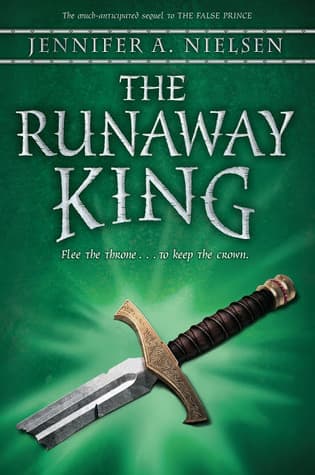
Jennifer A. Nielsen
4.2