“Magic, it turned out, was not a gift you were given. It was a choice you made.”
— Tamsin's realization about the nature of her powers and destiny.

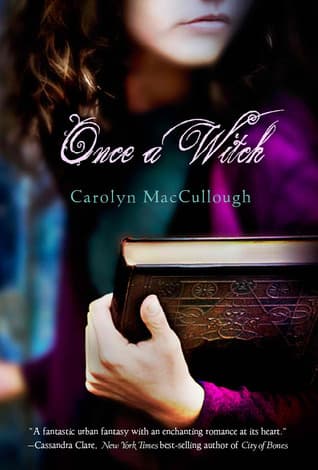
Carolyn MacCullough (2009)
Genre
Fantasy / Young Adult / Romance
Reading Time
290 min
Key Themes
See below
Sign in to track this book
A witch with no magic, mistaken for her powerful sister, goes on a dangerous time-travel quest for a lost item. She soon finds her own strong power and uncovers a family secret that could ruin everything.
Seventeen-year-old Tamsin Greene is different from the rest of her powerful witch family. Her grandmother said she would be very talented at birth, but Tamsin has never shown any magic. She spends most of her time at boarding school in Manhattan, trying to live a normal life. But summers make her return to her family's magic bookstore in upstate New York. Her older sister, Rowena, is a strong witch, and her younger sister, Violet, shows early talents. This makes Tamsin's lack of magic feel even more isolating. Tamsin often feels like a disappointment to her grandmother and an outsider in her own family, wishing for a different life.
One evening, Tamsin is alone in the family's bookstore when a handsome young man named Gabriel appears. He is a professor from NYU. He mistakes Tamsin for her powerful sister Rowena and asks for her help finding a family heirloom: a compass stolen over a century ago. Tamsin is drawn to the rare attention and the chance to feel important, even if under false pretenses. She agrees to help him. She likes Gabriel's charm and the excitement of the secret quest, even though she knows she lacks the magic to help. This choice starts a series of events she cannot control.
Tamsin begins her 'search' for the compass, pretending to have magic. While trying to scry, she has a clear, confusing vision of a historical scene with a young woman and an old man. This is her first real hint of magic, though she does not fully understand it. Gabriel, who has been surprisingly patient, tells her more about the compass: it is a powerful item that can travel through time. He explains it was stolen from his family, the Thornes, by a Greene ancestor, and he needs it back to stop a huge magic problem. Tamsin feels a growing worry about Gabriel and his quest.
With Gabriel's help, Tamsin uses the little information from her vision to activate the compass, sending them back in time to 1893. They arrive in the busy streets of New York City, where they find the magical world of the past. Their goal is to find the compass before it is stolen from Gabriel's ancestor. Tamsin struggles in this new time, relying on Gabriel's knowledge and quick thinking. She starts to see the compass's great power and the seriousness of their mission, feeling more and more out of her depth.
In 1893, Tamsin and Gabriel sneak into the Thorne family estate. There, they see what happened before the compass disappeared. They learn it was not stolen by a random thief, but by a Greene witch named Elara, Tamsin's great-great-aunt. Elara was in a forbidden relationship with a Thorne. Her actions came from desperation and a wish to protect her loved ones. Tamsin starts to question Gabriel's story, realizing that her family's history, and the Thornes', is much more complex and less clear than she thought. The past is not simply good versus evil.
As they continue their time travels, Tamsin learns more about the old fight between the Greene and Thorne families. She finds out that the compass, a strong time-traveling item, was first made by the Thornes but was wanted by the Greenes for its great power. Elara's initial theft was complex, not just mean. Tamsin also starts to see her own special connection to this history. Her visions get stronger, guiding her to specific moments in the past, hinting at a power within her that goes beyond simple magic. This power is directly linked to the compass itself and to time.
Gabriel's true nature begins to show. He becomes more harsh and tricky in his search for the compass, willing to hurt others and ignore the results of changing time. Tamsin realizes that Gabriel is not just trying to get a family item; he plans to use the compass's power for his own gain, possibly breaking apart time and magic. His charm now seems like a cover for a dangerous goal. Tamsin feels betrayed and is torn between her first attraction to him and her growing fear of his plans.
Through her visions and the help of an old Greene ancestor, Tamsin finally understands her real power. Her grandmother's prophecy was not about normal magic, but about her special ability to change time. She is a 'time witch,' a rare and strong gift that lets her connect with the past and future. She can use the compass as part of her own power. This discovery explains why she lacked traditional magic and her deep connection to the compass, which reacts only to her touch. She is not a disappointment, but something new and powerful.
Knowing her true abilities, Tamsin confronts Gabriel. He tries to take the compass and use its full power, threatening to rewrite history for his benefit. A magic and time battle happens, with Tamsin using her unique time-changing skills. She realizes that the compass is not just an object but a way for her own power to work, and she must stop Gabriel from using it without control. This fight tests her bravery and her new understanding of herself, forcing her to make hard choices to protect the timeline and her family's past.
Tamsin eventually wins against Gabriel, using her time magic to outsmart and beat him. She does not destroy the compass but understands its delicate balance. She uses her power to put the compass where it can do the least harm, keeping the timeline stable. By accepting her unique gift, Tamsin finds her place in her family, not as a witch without magic, but as a witch with a rare and strong power. She returns to her own time, changed forever, having accepted who she truly is and the great responsibility that comes with it.
The Protagonist
Tamsin transforms from an insecure, magic-less witch into a confident, powerful time witch who embraces her unique abilities and heritage.
The Antagonist
Gabriel's true, power-hungry nature is gradually revealed, solidifying his role as the primary antagonist.
The Supporting
Rowena remains a steadfast, supportive figure, representing the established magical world Tamsin initially feels alienated from.
The Supporting
Violet's character remains consistent, embodying the vibrant, magical future of the Greene family.
The Supporting
Her character provides the initial catalyst for Tamsin's journey and later offers cryptic guidance.
The Mentioned
Her past actions and motivations are gradually revealed, adding depth to the family history and Tamsin's understanding.
The Mentioned
His character serves as a historical anchor for the plot, illustrating the original conflict.
Tamsin's main problem is her identity as a witch without magic. She always feels not good enough and overshadowed by her talented family. Her journey through time makes her face these doubts and eventually find that her 'lack' of magic is actually a special and strong gift. She learns that real power comes from inside and that accepting who she truly is, even if it goes against family expectations, is key to her growth. This is clear when she realizes her grandmother's prophecy was not about normal magic, but about her natural ability to change time, a power unique to her.
“Maybe being different wasn't a flaw, but a strength waiting to be uncovered.”
The Greene and Thorne families are connected by a complex, centuries-old feud that started with the theft of the time-traveling compass. Tamsin's journey shows that the family histories are more complex and less clear than she first thought. She uncovers secrets, forbidden loves, and desperate acts that shaped the present. The story explores how past actions, even those of ancestors, can deeply affect future generations, and how understanding these past events is important for healing and moving forward. The discovery of Elara Greene's real reasons for taking the compass is a good example of this complex past.
“History isn't always what they tell you it is. Sometimes, the truth is a lot messier, a lot more human.”
The time-traveling compass is a strong symbol of power. The story looks at how appealing it is and the dangers of using it wrongly. Gabriel wants to use its power for his own gain, willing to trick and endanger others. This shows how unchecked ambition can corrupt. In contrast, Tamsin learns to use her new time magic responsibly, understanding the delicate balance of cause and effect and the importance of protecting the timeline. Her fight with Gabriel is a battle over the right way to use great power, emphasizing that real power comes with big moral duties.
“With such power comes a terrible choice: to mend or to break, to preserve or to rewrite.”
Tamsin's first attraction to Gabriel is based on his charm and the approval he gives her. But this quickly turns to betrayal as his true, manipulative nature is revealed. This personal betrayal reflects the historical betrayals and forbidden loves that caused the Greene-Thorne feud, such as Elara Greene's romance with a Thorne. The theme explores how complex relationships are, how trust can be broken, and how love, both romantic and family, can lead to both good and bad actions. Tamsin's journey forces her to tell the difference between real connection and planned manipulation.
“He offered me what I thought I wanted, but the price was everything I truly needed.”
A magical artifact that allows travel through time and is central to the plot.
The compass is the primary plot device, serving as both the object of Gabriel's quest and the catalyst for Tamsin's journey. It enables the time travel necessary for Tamsin to uncover her family's history and her own powers. Crucially, it's not just a tool; it's intricately linked to Tamsin's unique time magic, responding to her in ways it doesn't for others. Its existence and the feud surrounding it drive the entire narrative, forcing Tamsin into dangerous situations and ultimately leading to her self-discovery.
Grandmother Greene's prediction about Tamsin's extraordinary talent.
The prophecy made by Grandmother Greene at Tamsin's birth sets up Tamsin's initial insecurity and the central mystery of her 'missing' magic. It creates a powerful expectation that Tamsin feels she cannot fulfill, driving her desire to prove herself. The eventual twist—that the prophecy refers to her unique time manipulation rather than conventional magic—is a major reveal that redefines Tamsin's identity and provides a satisfying resolution to her internal conflict, making the prophecy a powerful narrative hook and reveal.
Tamsin's involuntary glimpses into historical events.
Tamsin's visions are her first manifestation of magic and serve as crucial clues for navigating the past. These fragmented, disorienting glimpses initially confuse her but gradually become clearer and more purposeful, guiding her to specific moments and figures in history. They not only advance the plot by providing information necessary for time travel but also symbolize Tamsin's burgeoning time-witch abilities and her deep, innate connection to the flow of time. They are a direct manifestation of her unique power.
A centuries-old magical conflict between two powerful families.
The long-standing feud between the Greene and Thorne families provides the historical backdrop and much of the conflict for the story. It establishes the stakes for retrieving the compass and frames Gabriel's motivations. By delving into its origins, Tamsin discovers that the feud is not a simple good-versus-evil narrative but a complex tapestry of love, betrayal, and power struggles. This device adds depth to the world-building and highlights how past grievances can echo through generations, influencing present-day actions and identities.
“Magic, it turned out, was not a gift you were given. It was a choice you made.”
— Tamsin's realization about the nature of her powers and destiny.
“The past was a stubborn thing. It clung to you, no matter how far you ran.”
— Tamsin reflecting on the inescapable history of her family and the witches' pact.
“Love was a dangerous magic, more potent than any spell.”
— Tamsin's growing feelings for Ben and the complications they bring.
“Sometimes, the only way to save something was to let it go.”
— A difficult decision Tamsin faces regarding her relationship or a magical artifact.
“Every secret had its price, and the longer it was kept, the higher the cost.”
— The consequences of the hidden history of the witches and the pact.
“Fear was a powerful illusion, but it was still just an illusion.”
— Tamsin confronting her anxieties about her powers and the challenges ahead.
“A witch's true power wasn't in her spells, but in her will.”
— A lesson Tamsin learns about the source of her magical strength.
“The world was full of magic, if you only knew where to look.”
— An observation about the hidden enchantment in everyday life, or a mentor's advice.
“Some bonds were stronger than any curse, forged in blood and time.”
— Referring to family ties or the ancient pact that binds the witches.
“To deny your nature was to deny your power.”
— Tamsin's struggle with accepting her identity as a witch.
“Even the darkest night eventually gives way to dawn.”
— A moment of hope amidst a difficult struggle or a prophecy.
“History wasn't just stories; it was a living, breathing thing that shaped the present.”
— Tamsin's understanding of how ancient events impact her current life.
“The greatest battles weren't fought with swords or spells, but within the heart.”
— Tamsin's internal conflict regarding her loyalties and desires.
“Not all monsters looked like monsters. Some wore charming smiles.”
— Tamsin's realization about a deceptive character in the story.
Ready to see how well you understood this book? Take our interactive quiz with 10 questions.







