““One did not tell a lady she was not going to a ball. One simply did not.””
— Lady Lucinda Astley's internal thoughts about her brother's attempt to prevent her attendance.

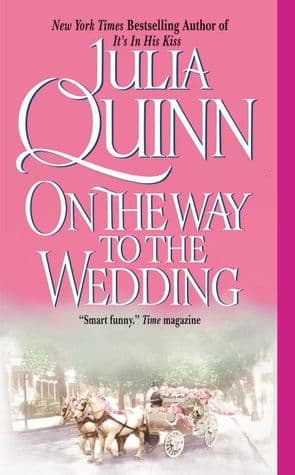
Julia Quinn (2006)
Genre
Historical Fiction / Romance
Reading Time
700 min
Key Themes
See below
Sign in to track this book
A Bridgerton's quest for instant true love goes hilariously awry when he falls for the wrong woman, only to realize his perfect match is the practical best friend he enlisted to help, now inconveniently engaged to another.
Gregory Bridgerton, the youngest Bridgerton brother, believes in love at first sight. He attends a house party at Lady Roberta St. Clair's home, determined to find his soulmate. He sees Miss Hermione Watson and is instantly smitten, convinced she is the woman he will marry. However, Hermione loves John Stirling, the Earl of Kilmartin's younger brother, who is not a suitable match. Hermione's best friend, Lady Lucinda 'Lucy' Abernathy, is a practical and observant woman. She notices Gregory's infatuation and Hermione's lack of interest. Lucy worries about Hermione's future with John and decides to help Gregory pursue Hermione, hoping to steer her friend away from a bad marriage.
Lucy is skeptical about Gregory's 'love at first sight' claims at first, but she begins to help him pursue Hermione. She tells Gregory about Hermione's schedule, interests, and offers advice on how to impress her. During these secret meetings, Gregory and Lucy spend a lot of time together, getting to know each other better. Gregory starts to like Lucy's sharp wit, intelligence, and kind nature. He finds himself drawn to her practicality and humor. Eventually, they discover that Hermione and John Stirling have secretly eloped, which leaves Lucy and Gregory surprised and unexpectedly close.
Hermione's elopement with John Stirling leaves Gregory feeling foolish and a bit heartbroken. More importantly, it makes him face his true feelings. He realizes that his 'love at first sight' for Hermione was an illusion, a romantic ideal he put onto her. The woman he has truly come to care for, the one who makes him laugh and challenges him, is Lucy. He misses her company, her advice, and her presence. He understands that his affection for Lucy is deeper and more real than anything he felt for Hermione. He decides to tell Lucy his feelings and pursue a relationship with her.
When Gregory finally tells Lucy his feelings, he learns a devastating truth: Lucy is engaged to Lord Haselby. Her uncle, Lord Macclesfield, arranged the engagement years ago, and Lucy feels she must honor it. This news crushes Gregory, who had just found clarity in his emotions. Lucy, despite her own growing feelings for Gregory, explains that she cannot break her engagement due to her uncle's strict nature and her family's difficult financial situation, which depends on the marriage. This creates a big problem for them, as Lord Macclesfield is known for being stubborn and traditional.
Gregory does not want to lose Lucy, so he bravely confronts Lord Macclesfield, Lucy's powerful uncle and guardian. He explains his love for Lucy and asks that the engagement to Lord Haselby be broken. However, Lord Macclesfield is a man who keeps his word and sees the engagement as a binding contract. He dismisses Gregory's romantic ideas, saying duty and family honor are more important than fleeting emotions. He refuses to release Lucy from the engagement, leaving Gregory feeling helpless and frustrated. His hopes for a future with Lucy seem ruined by her uncle's stubbornness and societal expectations.
Just when all hope seems lost, Lord Macclesfield is in a serious carriage accident. He cannot oversee the wedding preparations or enforce his will. This incident gives Gregory and Lucy an important chance. With her uncle in bed, Lucy is temporarily free from his direct control. Gregory sees this as his opportunity to pursue Lucy more openly and to try and convince her to choose him, despite the existing engagement. The accident, while sad, gives them a brief, valuable break from the upcoming wedding to Lord Haselby.
With Lord Macclesfield's condition uncertain and the wedding date coming soon, Lucy and Gregory make a desperate plan. If her uncle does not recover enough to attend and approve the wedding, they will elope and marry in secret. This arrangement is risky; it would go against custom and possibly cause a scandal, but it is their only hope of being together. Lucy, despite being practical, is willing to take this risk, having fully admitted her love for Gregory. They spend time together, strengthening their bond and preparing for the drastic step they might have to take, all while hoping for a miracle that would allow her uncle's recovery to make their path simpler.
Just as Gregory and Lucy prepare for their secret elopement, Lord Macclesfield makes an unexpected and rather miraculous recovery. To their dismay, he is well enough to attend and personally oversee Lucy's wedding to Lord Haselby. His recovery shatters their plans for a quiet, secret marriage, as he remains determined to see Lucy wed to Haselby. The problem of her uncle's will, which they thought was gone, now stands more firmly in their way than ever, making their situation feel even more desperate. Wedding preparations resume with new energy, and Lucy feels trapped.
The wedding day arrives, and Lucy, in her bridal gown, feels deep despair. Gregory, however, refuses to give up. He arrives at the church, determined to stop the wedding. He confronts Lord Macclesfield and Lord Haselby, making a passionate, public declaration of his love for Lucy and asking them to release her. He appeals to Lucy directly, urging her to choose her own happiness. The scene is tense and dramatic, with society's expectations clashing against the strong emotions of true love. Gregory's heartfelt words resonate with some of the wedding guests, causing gossip and sympathy.
Just as it seems Gregory's plea will not work, Lord Haselby surprisingly steps in. Overwhelmed by the public scene and perhaps moved by Gregory's sincerity and Lucy's clear distress, Lord Haselby makes a shocking confession: he loves another woman, a governess named Miss Clara Finch, and has secretly been seeing her. He admits that he entered into the arranged marriage out of duty but cannot go through with it. This revelation publicly shames Lord Macclesfield but frees Lucy from her engagement. The scandal is huge, but Lucy is finally free to choose her own path and her own love.
With Lord Haselby's confession, the wedding is called off, and Lucy is finally free. Lord Macclesfield, humiliated but with no justification, can no longer force Lucy into a marriage she does not want. Gregory, overjoyed, immediately proposes to Lucy, who accepts without hesitation. They marry shortly after, surrounded by Gregory's loving family, the Bridgertons. Lucy, the practical woman who once tried to match Gregory with another, finds her own happy ending with the man who taught her what love truly means. Their journey, filled with unexpected turns and problems, ends in a joyful union built on real affection and mutual respect.
The Protagonist
He evolves from a naive romantic pursuing an ideal to a man who recognizes and fights for a deep, genuine love based on true compatibility.
The Protagonist
She transforms from a dutiful woman resigned to her fate to a courageous individual who chooses love over obligation.
The Supporting
She remains consistent in her love for John, ultimately choosing her heart's desire over societal expectations through elopement.
The Antagonist
He remains a static character, a symbol of societal pressure, but is ultimately outmaneuvered by fate and the actions of others.
The Supporting
He moves from a dutiful, passive participant in an arranged marriage to a man who bravely chooses love, even at great personal cost.
The Supporting
He remains consistent in his love for Hermione, successfully pursuing his heart's desire through elopement.
The Supporting
She remains a consistent source of wisdom and support, having already found her own true love and now guiding her children.
The Mentioned
Her unseen presence acts as a catalyst for a major plot twist, allowing for the resolution of the central conflict.
The novel challenges Gregory's initial belief in love at first sight. He is instantly smitten with Hermione, but he discovers his true, deeper feelings for Lucy develop over time through shared experiences, wit, and real connection. This theme explores the difference between an idealized, superficial attraction and a mature, lasting love built on compatibility and understanding. Gregory's journey makes him redefine what 'the one' truly means, moving from an instant spark to a deep, developed affection. This is clear when he realizes his feelings for Lucy after Hermione's elopement.
“He'd thought he'd known what love was. He'd seen Hermione and known, in that very instant, that she was the one. But he'd been wrong. Terribly, utterly wrong. Because it wasn't Hermione who made his heart sing. It was Lucy.”
This theme is important to Lucy's story. She feels bound by duty and honor to uphold her arranged engagement to Lord Haselby. This decision is heavily influenced by her uncle, Lord Macclesfield, and her family's financial situation. Her growing desire for Gregory directly conflicts with this duty. The novel explores the societal pressure on women to make good matches versus the desire for personal happiness and love. Lucy's internal struggle and eventual choice to defy her uncle, even if only through Lord Haselby's confession, show the tension between these opposing forces.
“Her duty was clear. Her honor was clear. But her heart… her heart was anything but clear.”
The story highlights the importance of individual choice, especially for women, in a society that often dictated their paths. Lucy initially feels she has no choice about her marriage. However, through Gregory's support and Lord Haselby's unexpected actions, she gains control over her own future. Hermione also makes a choice by eloping with John Stirling. The climax, where Lord Haselby's confession frees Lucy, shows that even with strict societal rules, individuals can and should choose their own happiness.
“He would not let her sacrifice her happiness for duty. Not when he knew he could make her happy.”
The Bridgerton family's strong love and support for Gregory are a consistent theme. Lady Violet, in particular, encourages Gregory to follow his heart and comforts him during his romantic difficulties. This contrasts with Lucy's more isolated situation under her strict uncle, Lord Macclesfield. A strong, loving family allows Gregory the freedom and confidence to pursue his desires, while Lucy's lack of such a supportive network initially traps her. Ultimately, Lucy finds her place within the supportive Bridgerton family.
“His mother would understand. She always did. She believed in love, just as he did.”
Gregory's initial infatuation with Hermione serves to misdirect the reader and Gregory himself.
The entire opening of the novel, with Gregory's fervent belief that Hermione Watson is 'the one,' acts as a classic red herring. The reader is led to believe that the story will be about Gregory winning Hermione, only for it to be revealed that Hermione is in love with someone else, and Gregory's true affections lie with Lucy. This device cleverly sets up the core conflict and allows for the unexpected development of Gregory and Lucy's relationship, making Gregory's eventual realization more impactful and earned.
Lucy's arranged betrothal to Lord Haselby creates the central conflict and tension.
Lucy's pre-existing engagement to Lord Haselby, orchestrated by her formidable uncle, is the primary external obstacle preventing Gregory and Lucy from being together. This device fuels the narrative tension, forcing Gregory to overcome seemingly insurmountable societal and familial barriers. It creates a sense of urgency and desperation, especially as the wedding date approaches, and highlights the clash between personal desire and societal duty. The dramatic resolution of this obstacle provides the novel's climax.
The reader is often aware of Lucy's true feelings for Gregory before he fully recognizes them.
Dramatic irony is employed as the reader often perceives Lucy's growing affection for Gregory before Gregory himself does, and certainly before he acknowledges his own feelings for her. This creates a layer of anticipation and empathy for Lucy's predicament. Similarly, the reader might suspect Lord Haselby's disinterest in Lucy or his secret love before it is revealed, adding to the tension and setting up the dramatic reveal at the altar.
The expectation of a runaway bride is present, but the resolution comes from an unexpected source.
While Lucy is trapped in an unwanted marriage, the classic 'runaway bride' trope is invoked but ultimately subverted. There is the expectation that Lucy might elope with Gregory, or that Gregory will physically stop the wedding. However, the resolution comes not from Lucy running away, but from Lord Haselby's unexpected confession at the altar. This twist adds surprise and shifts the agency, giving Lord Haselby a moment of unexpected courage and subverting the more traditional romantic hero rescue.
““One did not tell a lady she was not going to a ball. One simply did not.””
— Lady Lucinda Astley's internal thoughts about her brother's attempt to prevent her attendance.
““Love wasn't a choice. It was a compulsion.””
— Gareth St. Clair's reflection on his feelings for Hyacinth Bridgerton.
““A man could have a hundred secrets, but he could only have one true heart.””
— Gareth's musings on his father's secrets and his own capacity for love.
““Sometimes, the most dangerous thing you could do was nothing at all.””
— Gareth's realization as he considers the inaction of his father and grandfather.
““It was a truth universally acknowledged that a single man in possession of a good fortune, must be in want of a wife. It was also a truth universally acknowledged that a single woman in possession of a good fortune, must be in want of a husband. But what about the poor souls who had neither?””
— Hyacinth Bridgerton's playful and witty internal monologue, referencing Jane Austen.
““He had never understood the female fascination with flowers. They died. They wilted. They smelled nice for a while, and then they smelled like death.””
— Gareth's cynical thoughts on flowers, contrasting with Hyacinth's appreciation.
““You can only truly know someone when you have seen them at their worst.””
— Hyacinth's observation about understanding people, particularly in difficult situations.
““The problem with secrets was that they always found a way to come out.””
— Gareth's reflection on the inevitability of his family's secrets being revealed.
““She was a force of nature, and he, Gareth St. Clair, was about to be swept away.””
— Gareth's internal acknowledgment of Hyacinth's powerful personality and his growing feelings.
““One did not simply walk into a gentleman's study and demand to see his private papers, unless one was a Bridgerton.””
— Hyacinth's humorous internal justification for her audacious behavior.
““Happiness was a choice. It was a deliberate act.””
— Lady Danbury's advice to Hyacinth, emphasizing agency in one's emotional state.
““Sometimes the greatest treasures were not made of gold or jewels, but of words.””
— Hyacinth's realization while deciphering Gareth's grandmother's diary.
““He had never known a woman who could make him laugh so much, and that, he realized, was the most dangerous thing of all.””
— Gareth's internal thought about Hyacinth's effect on him, acknowledging his vulnerability.
““A lady never gossiped. Unless, of course, it was truly fascinating gossip.””
— Hyacinth's cheeky internal rule regarding social norms.
Ready to see how well you understood this book? Take our interactive quiz with 10 questions.

Biography coming soon.







