“Sometimes I think being different is the loneliest feeling in the world.”
— Bri reflects on her struggles with identity and fitting in.

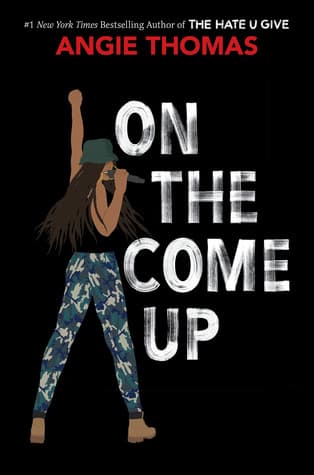
Angie Thomas (2019)
Genre
Young Adult
Reading Time
9 hours 30 min
Key Themes
See below
Sign in to track this book
Sixteen-year-old Bri has to use her father's rap legacy to save her family from eviction, all while finding her own voice in a world of lyrical battles.
Sixteen-year-old Bri Jackson, an aspiring rapper and daughter of the late underground legend Lawless, gets ready for her first big rap battle at the Ring. Her aunt Pooh, who is her manager, and her best friends Malik and Sonny support her. Bri performs well but loses. The excitement ends quickly when Bri goes home and finds her mother, Jay, has lost her job. This puts their family in worse financial trouble. Her older brother Trey works two jobs, and Jay struggles with sadness and bills. Bri feels the weight of her family's unstable situation in Garden Heights, which makes her want to succeed in rap even more.
Bri is upset by her family's problems and a racist incident at school where security guards Mr. Evans and Long question her about selling candy. She uses her anger to write a new song. With Sonny's help on the beat and Malik's encouragement, she records 'On the Come Up' at a local studio. The song is raw and angry, describing her experiences with poverty and racism, including a line about 'gats in the garden.' When the song becomes popular online, it causes problems, especially at Midtown School of the Arts, where the school thinks the lyrics are a threat. Bri is suspended, which further separates her from the school and her mother, who does not understand her daughter's art.
As Bri's song gets more attention, she learns that her Aunt Pooh is selling drugs to make money, a secret Pooh tries to hide. This news bothers Bri, reminding her of the dangers her father and other family members faced. Jay and Trey confront Pooh about her drug dealing. This leads to a tense family talk where Pooh says she is desperate to help the family financially. Despite their pleas, Pooh continues, believing it is her only choice. The family tries to find a lawyer to help Pooh with an old charge, showing the systemic problems many in their community face.
Bri gets noticed by Supreme, her late father Lawless's former manager, who now runs a big record label. Supreme sees potential in Bri and offers her a record deal, promising fame and money. However, he pressures her to act more aggressive, like a 'gangsta,' believing that sells. He also tricks her into signing a contract that gives him a lot of control over her music and image. He suggests she needs to distance herself from her current friends, especially Sonny, whom he calls an amateur producer. This offer gives Bri a moral problem, making her think about how much of herself she will change for success.
During an interview, Bri's honest answers about her life and problems are twisted by the interviewer. This leads to critics online calling her a 'fake thug.' This public criticism affects Bri deeply, making her question who she is and if she is being real. Instead of defending her, Supreme tells her to embrace the 'thug' image, seeing it as a way to sell her music. He pressures her to record a new, even more aggressive song, 'Might as Well.' This further separates her from Sonny and Malik, who feel she is losing herself and giving up her true artistic voice for money. Bri feels torn between being true to herself and getting the success her family badly needs.
Bri's relationship with Sonny becomes more difficult as he feels ignored and unappreciated by Supreme, who dismisses his production skills. Malik, worried about Bri's changing personality and Supreme's bad influence, also shares his concerns. Jay, still looking for a job and dealing with the family's money problems, tries to guide Bri but often feels pushed away by her daughter's growing independence and the appeal of the music business. These tensions lead to arguments, leaving Bri feeling alone despite her growing music career. She struggles with the pressure to support her family while keeping her honesty and relationships.
Supreme's manipulative actions get worse. He quietly ruins Bri's relationships and pushes her further into the made-up 'thug' image. He tries to separate her from her loyal friends, especially Sonny, by making him feel bad about his skills. The family's situation gets worse when Aunt Pooh is arrested for drug possession. This is a big blow that makes Bri feel very guilty and responsible. This event, along with the threat of eviction, makes Bri even more desperate to succeed in rap. This makes her more likely to fall under Supreme's control, even as she starts to see how harmful his influence is and the compromises she is making.
Realizing how much Supreme has manipulated her and the harm it is doing to her relationships and her spirit, Bri decides to take control of her story. She confronts Supreme, rejecting the 'thug' persona he forced on her. With Sonny's help, who creates a new beat, and Malik's help writing, Bri gets ready for a new rap battle. She is determined to perform as her true self. In a powerful, emotional performance, she raps about her real experiences, her family's problems, the pressures she faced, and her journey to accepting herself. She wins the battle, not just against her opponent, but against the expectations and stereotypes put on her.
After her winning rap battle, Bri makes up with her mother, who says she is proud of her daughter's strength and honesty. She fixes her relationships with Sonny and Malik, making their bond and shared artistic vision strong again. While the family's money problems are not immediately solved, Bri's new confidence and clear sense of self give them hope. She decides to keep making music, but on her own terms, free from Supreme's unfair contract. The novel ends with Bri embracing who she is: Bri Jackson, an artist with a strong voice, ready to face life's challenges and her career with honesty and her community's steady support.
The Protagonist
Bri transforms from an angry, impressionable teenager into a self-assured artist who learns to define success on her own terms, embracing her authentic voice over commercial expectations.
The Supporting
Jay learns to trust Bri's artistic path and the strength of her voice, moving past her own fears to support her daughter's authentic self.
The Supporting
Trey remains a steadfast and supportive anchor for his family, demonstrating unwavering commitment and practical wisdom.
The Supporting
Aunt Pooh's desperation leads her to dangerous choices, ultimately resulting in her arrest, but her unwavering support for Bri remains a constant.
The Supporting
Malik remains a steadfast and morally centered friend, providing unwavering support and critical perspective to Bri as she navigates her journey.
The Supporting
Sonny experiences artistic betrayal and frustration but ultimately reconnects with Bri to reaffirm their creative partnership based on authenticity.
The Antagonist
Supreme acts as a catalyst for Bri's self-discovery, his manipulative tactics ultimately pushing her to reject his influence and embrace her authentic voice.
The Mentioned
Lawless's legacy initially pressures Bri to conform but ultimately helps her understand the importance of authenticity and self-preservation.
This theme looks at Bri's fight to define herself among outside pressures. At first, Bri deals with her father Lawless's legacy and the 'thug' image the music business, especially Supreme, tries to put on her. Her song 'On the Come Up' is an honest expression of her truth, but her school and the media misinterpret and use it against her. Bri learns to tell the difference between her real self and the image people want to sell. This ends with her deciding to rap her true story, even if it means saying no to fame. The book asks who gets to define a young Black artist and shows the danger of letting others control one's story.
““I’m not a thug. I’m a rapper. There’s a difference.””
The novel clearly shows the difficult realities of poverty and unfair systems in a community like Garden Heights. Bri's family constantly faces eviction and hunger, and her mother losing her job pushes them to their limit. This desperation drives Bri's ambition in rap, as she sees it as her only way out of their situation. The lack of opportunities and the criminalization of survival methods (like Aunt Pooh selling drugs or Bri selling candy at school) show the systemic problems faced by poor and working-class Black families. The book questions the idea of the American Dream, showing how for many, the 'dream' needs great sacrifice, compromise, or even dangerous choices.
““Funny how everybody wants to talk about how you can just pull yourself up by your bootstraps, but nobody wants to acknowledge that some people don’t have boots.””
Hip-hop is both Bri's escape and her battleground. It is a strong way for her to express her anger, pain, and experiences with racism and poverty. However, the novel also shows how rap, especially from Black artists, is often misunderstood and seen as bad by mainstream society and institutions. Bri's lyrics in 'On the Come Up' are seen as threatening by her school, leading to her suspension. This shows how artistic expression can be controlled and treated as a crime. The theme also looks at how hip-hop is used for money, where honesty is often traded for a manufactured, marketable image, forcing artists to fit stereotypes.
““Sometimes you gotta be able to laugh at the pain, or you’ll drown in it.””
Despite their problems, the Jackson family and their close community in Garden Heights are the foundation of Bri's life. The loyalty among Bri, her mother, Trey, and Aunt Pooh is strong, even when arguments and hard choices strain it. Her best friends, Malik and Sonny, give important support and artistic help, acting as her moral guides. The community supports each other in times of trouble, showing strength and mutual help. The theme highlights that while outside forces try to divide and define, the strength of family and community bonds is necessary for survival and self-discovery.
““Family ain’t always blood, but the ones you love are.””
A recurring narrative structure that serves as a crucible for Bri's artistic and personal growth.
Rap battles are central to the plot, serving as pivotal moments for Bri's character development and narrative progression. They are not just competitions but arenas where Bri tests her skills, expresses her emotions, and confronts her fears. Her initial battle loss fuels her ambition, while her final, triumphant battle represents her reclaiming her authentic voice and identity. These battles allow Bri to literally 'speak her truth' in a public forum, showcasing her lyrical prowess and emotional vulnerability. They also highlight the competitive and often brutal nature of the hip-hop world she aspires to join.
A symbolic and literal turning point that encapsulates Bri's struggles and aspirations.
The song 'On the Come Up' is more than just a track; it's a plot device that drives much of the narrative. Its creation stems from Bri's immediate frustrations and desperation, making it a raw, authentic expression. The song's viral spread and subsequent misinterpretation by the school and media serve as a catalyst for major conflicts, including Bri's suspension and the public's perception of her. It forces Bri to confront the power of her words and the responsibility that comes with them, ultimately pushing her to fight for her own narrative against those who seek to define her.
A powerful, guiding, and sometimes suffocating presence that influences Bri's path.
Bri's deceased father, Lawless, acts as a significant symbolic and narrative device. His legacy as an underground rap legend creates both inspiration and immense pressure for Bri. She constantly measures herself against his achievements and struggles, leading her to initially embrace a 'thug' image she believes will honor him and help her succeed. His past association with Supreme and the dangers of street life also serve as a cautionary tale. Lawless's legacy forces Bri to grapple with her own identity, ultimately realizing she must forge her own path rather than simply following in his footsteps.
A vivid and realistic backdrop that shapes characters' experiences and opportunities.
Garden Heights is more than just a location; it's a character in itself, functioning as a plot device that defines the characters' struggles and motivations. The neighborhood's socioeconomic realities—poverty, systemic racism, limited opportunities, and the ever-present threat of violence and criminalization—directly impact Bri's family and her drive to 'make it.' It provides the context for Jay's job loss, Aunt Pooh's drug dealing, and Bri's experiences with racial profiling at school. The setting emphasizes that Bri's personal struggles are deeply intertwined with broader societal issues, making her ambition not just a personal dream but a fight for survival and dignity for her community.
“Sometimes I think being different is the loneliest feeling in the world.”
— Bri reflects on her struggles with identity and fitting in.
“My voice is my weapon. My voice is my power.”
— Bri's realization about the strength of her rap talent.
“People see what they want to see. They hear what they want to hear.”
— Bri comments on how others misinterpret her actions and lyrics.
“The world ain't giving nothing to nobody. You gotta take it.”
— Bri's mother advises her about ambition and opportunity.
“I'm not a stereotype. I'm a person.”
— Bri defends herself against racial and social assumptions.
“Sometimes the hardest thing and the right thing are the same.”
— Bri faces a moral dilemma in her career choices.
“You can't let fear stop you from doing what you love.”
— Bri encourages herself to pursue rapping despite obstacles.
“Home isn't a place. It's the people who make you feel like you belong.”
— Bri reflects on family and community support.
“Words have power. They can build you up or tear you down.”
— Bri learns about the impact of her lyrics and others' words.
“Success ain't just about money. It's about staying true to yourself.”
— Bri debates the meaning of success in the music industry.
“The system is designed to keep us down, but we don't have to let it.”
— Bri discusses systemic issues with friends or family.
“Every scar tells a story. Every struggle makes you stronger.”
— Bri reflects on her personal growth through hardships.
“You don't have to be loud to be heard. Sometimes silence speaks volumes.”
— Bri observes quiet strength in herself or others.
“Dreams are worth fighting for, even when the world tries to crush them.”
— Bri perseveres in her pursuit of a rap career.
Ready to see how well you understood this book? Take our interactive quiz with 10 questions.

Angie Thomas is an American young adult author, best known for writing The Hate U Give (2017). Her second young adult novel, On the Come Up, was released on February 25, 2019.