“There are some things in this world just can't be fixed, no matter how much you want to.”
— Birdie's reflection on the unchangeable aspects of life and fate.

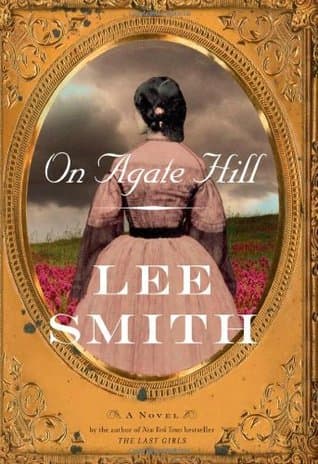
Lee Smith (2006)
Genre
Historical Fiction
Reading Time
360 min
Key Themes
See below
Sign in to track this book
Orphaned by war, Molly Petree leaves a ruined North Carolina plantation for a half-century journey of love, betrayal, and a murder trial, only to be drawn back to the same ruins that shaped her.
The story begins with Molly Petree's early life on the crumbling Agate Hill plantation after the Civil War. Orphaned and mostly left alone, Molly is a spirited child who finds comfort and adventure in the ruins, collecting various items. She lives with her elderly, often-absent grandfather, Silas Petree, and Mammy, a former slave who offers what little care and advice Molly receives. The house is a decaying reminder of a lost time, filled with ghosts and memories, shaping Molly's independent nature. She spends her days exploring, making up stories, and dreaming of a life beyond Agate Hill, hinting at her future departure.
One day, a well-dressed, mysterious man named Mr. Petree arrives at Agate Hill. He claims to be a distant relative and a benefactor from Molly's father's past. He offers to take Molly from the decaying plantation and give her an education and a new life. Despite her strong connection to the land and the few people left, Molly, wanting more, agrees to go. This sudden departure is a major turning point, moving her from her wild life to a world of formal schooling and social expectations, though she keeps her rebellious spirit.
Mr. Petree enrolls Molly in Miss Theodora's Seminary for Young Ladies, a refined school where she is expected to learn proper manners, academics, and accomplishments. Initially, Molly struggles with the strict rules and social norms, often clashing with other girls and teachers due to her upbringing. However, her intelligence and spirited nature become clear. She excels in her studies, especially literature and music, and starts to attract attention. Here, she becomes friends with several girls, including the more reserved Clara, who contrasts with Molly's fiery personality.
During her time at the seminary, a charismatic traveling preacher, Reverend Paul, visits the school, captivating the students with his sermons. Molly, drawn to his passion and intelligence, finds herself deeply attracted to him. Their connection is intense and immediate, leading to a passionate, though brief, affair. This experience shapes Molly, introducing her to the complexities of love and desire, and leaving a lasting impression on her understanding of relationships. The affair ends with Reverend Paul's departure, leaving Molly with both excitement and heartbreak.
After leaving the seminary, Molly faces the expectation of marriage. She meets Dr. Walter, a respectable, older physician, and agrees to marry him. This marriage is more about convenience and social expectation than passionate love, though Dr. Walter genuinely cares for Molly. They settle into a comfortable, if somewhat dull, life. Molly becomes a mother, raising her children within her new social status. Despite the stability, Molly's independent spirit often chafes against domesticity and the expectations placed on her as a doctor's wife, hinting at her restless nature.
Years into her marriage, Molly's passionate nature reawakens when she meets Professor Stone, a younger, intellectually stimulating man. Their connection is immediate and intense, similar to the passion she felt for Reverend Paul. They begin a secret affair that brings Molly great joy and significant risk. This affair directly challenges the social norms and expectations of her marriage and community. It is a time of intense emotional and intellectual awakening for Molly, but it also sets the stage for future trouble, as secrets in small towns rarely stay hidden.
Molly's affair with Professor Stone is eventually discovered, leading to public scandal and social exclusion in her community. The revelation shatters her respectable life and marriage. In the chaos, Professor Stone is found dead under mysterious circumstances. Molly is accused of his murder, beginning a legal battle that becomes a public spectacle. This period tests Molly's strength, forcing her to face the results of her choices and society's harsh judgment. The trial becomes a central focus, with Molly's past and character scrutinized.
Molly undergoes a widely publicized murder trial for Professor Stone's death. The proceedings are full of drama, social prejudice, and the exposure of intimate details of her life. Despite the overwhelming odds and the community's judgment, Molly remains composed and dignified. Through her strong will, her defense's efforts, and perhaps a lack of conclusive evidence, she is acquitted of the charges. While legally free, the experience leaves a permanent mark on her, forever changing how she sees herself and her place in the world.
After the acquittal and social exclusion, Molly has nowhere else to go. She makes the unexpected decision to return to Agate Hill, the place of her wild childhood. The plantation is even more dilapidated than she remembered, a reflection of her own life's journey. This return is not one of defeat, but of seeking refuge and perhaps closure. She confronts the ghosts of her past, the memories of her family, and the enduring spirit of the land that shaped her. It's a full-circle journey, bringing her back to her origins.
Molly spends her later years on Agate Hill, slowly rebuilding not just the house but also her own life. She lives a solitary existence, reflecting on her past loves, losses, and adventures. She continues to collect objects, write in her diaries, and compile the mementos that tell her life story. This period is one of quiet thought and acceptance. She finds peace and wisdom in her solitude, reconnecting with the land and her true self, free from social expectations and judgment. She becomes a keeper of stories, both her own and those of Agate Hill.
The Protagonist
Molly transforms from a wild, unkempt child into a sophisticated woman who experiences passionate love, public scandal, and deep loss, eventually returning to her origins to find peace and self-acceptance.
The Supporting
He serves as a catalyst for Molly's departure from Agate Hill, enabling her transformation but remaining largely static himself.
The Supporting
Mammy provides a stable, grounding presence in Molly's childhood, remaining a symbolic link to her origins.
The Supporting
He introduces Molly to passionate love, acting as a catalyst for her emotional awakening but exits her life relatively quickly.
The Supporting
Dr. Walter provides Molly with social stability and a family, but his conventional nature ultimately cannot contain her restless spirit.
The Supporting
He serves as a catalyst for Molly's most scandalous affair and subsequent murder trial, driving the central conflict of the latter half of the book.
The Supporting
Clara serves as a foil to Molly's wild nature, highlighting the societal expectations Molly often defies.
The novel explores memory and the lingering weight of the past, especially the Civil War and the antebellum South. Agate Hill itself is a decaying monument to a lost era, and Molly's childhood is shaped by its ruins and the stories of those who lived there. Her collection of objects—diaries, letters, bones—shows this theme, as she carefully preserves fragments of history. Molly's journey, even when far from Agate Hill, is always shadowed by her origins, and her eventual return directly confronts her personal and family history, seeking understanding and reconciliation.
“The past was not a story told, but a box of secrets, a scattered collection of bones and buttons and old letters, to be sorted and wondered over.”
Molly Petree's life is a constant negotiation between her desire for freedom and the strict social expectations placed on women in the late 19th and early 20th centuries. From her wild childhood to her passionate affairs and her murder trial, Molly consistently defies conventions. Her choices about love, marriage, and self-expression often lead to judgment and scandal. The novel explores the limited options available to women seeking intellectual and emotional fulfillment beyond domestic life, and Molly's struggle to create an identity true to herself, even if it means living outside accepted norms.
“She wanted a life that was her own, not one stitched together from the expectations of others.”
A central theme is the exploration of different kinds of love and the powerful, often disruptive, force of passion and desire in a woman's life. Molly experiences various types of love: the intense connection with Reverend Paul, the practical affection with Dr. Walter, and the intellectually and physically passionate affair with Professor Stone. The novel shows the complexities and consequences of these desires, especially when they conflict with moral and social rules. Molly's pursuit of emotional and physical fulfillment drives her, leading to both joy and suffering.
“Love was a wild thing, not to be tamed or reasoned with, and she had always known it.”
The narrative itself is built around Molly's own storytelling, as she compiles her life's experiences through diaries, letters, and collected objects. This highlights how individuals create their own narratives and make sense of their lives. Molly is not just living a story; she is actively creating and curating it. This theme also extends to how society tries to define her, particularly during the murder trial, where different versions of her story are presented. Ultimately, Molly's return to Agate Hill allows her to reclaim her narrative and find meaning in her fragmented past.
“Every life was a story, and she was the one who had to write hers down, to make sense of the tangled threads.”
The use of Molly's personal writings to reveal her inner life and narrative.
Molly's diaries, letters, and other personal writings are woven throughout the narrative, providing intimate access to her thoughts, feelings, and experiences. This device allows the reader to hear Molly's unfiltered voice, offering a subjective and deeply personal perspective on events that might otherwise be presented through an omniscient narrator. It also serves to build her character, showing her intellectual curiosity and her desire to document her own life. The collected nature of these documents also reinforces the theme of memory and the construction of one's own story.
A symbolic setting reflecting decay, memory, and Molly's origins.
The Agate Hill plantation functions as more than just a setting; it is a powerful symbol throughout the novel. In Molly's childhood, it represents the decay of the old South, the lingering ghosts of the past, and her wild, untamed nature. Its ruins mirror her own orphaned state and lack of conventional upbringing. Her departure from it signifies her journey into the wider world, and her eventual return marks a full-circle arc, symbolizing a confrontation with her origins, a search for peace, and a reclamation of her true self, stripped of societal artifice. It is a place of both desolation and deep personal connection.
Physical artifacts that serve as anchors to memory and narrative fragments.
Molly's habit of collecting various objects—marbles, rocks, dolls, bones, newspaper clippings—from her childhood and throughout her life is a significant plot device. These mementos are not merely trinkets; they are tangible links to specific memories, people, and events. They provide sensory detail and serve as narrative prompts, allowing Molly (and the reader) to piece together her fragmented past. This device reinforces the theme of memory, the weight of the past, and the idea that a life can be understood through its accumulated fragments, much like a historical archive.
“There are some things in this world just can't be fixed, no matter how much you want to.”
— Birdie's reflection on the unchangeable aspects of life and fate.
“You never know what's going to happen next, do you? That's the truth of it.”
— Birdie contemplating the unpredictable nature of life's events.
“Love is a funny thing. It can lift you up so high, and then it can drop you so low.”
— Birdie's musings on the dual nature of love's power.
“Every life is a story, and some stories are just stranger than others.”
— Birdie's overarching view on the unique and often bizarre narratives of human existence.
“Memory is a tricky thing. It shows you what it wants to show, and hides the rest.”
— Birdie reflecting on the subjective and selective nature of memory.
“The past ain't ever really past, is it? It just keeps on coming around.”
— Birdie's realization that historical events and personal traumas continue to influence the present.
“Sometimes you just have to make your own way, even if nobody understands it.”
— Birdie's determination to forge her own path despite societal expectations.
“There's a lot of beauty in the world, if you just stop and look for it.”
— Birdie finding moments of solace and appreciation amidst her hardships.
“Secrets are like heavy stones, they weigh you down whether you know it or not.”
— Birdie understanding the burden of unspoken truths and hidden pasts.
“You can't go back, but you can always go forward. That's what Mama always said.”
— Birdie recalling her mother's advice on moving past difficulties.
“The mountains hold their own stories, if you listen close enough.”
— Birdie's connection to the Appalachian landscape and its hidden narratives.
“Sometimes the biggest adventures are the ones you never planned.”
— Birdie reflecting on the unexpected turns her life has taken.
“It's a wonder how much a body can endure, and still keep on going.”
— Birdie's observation on human resilience in the face of adversity.
“Every person leaves a mark, whether they mean to or not.”
— Birdie considering the lasting impact individuals have on each other and the world.
Ready to see how well you understood this book? Take our interactive quiz with 10 questions.

Biography coming soon.







