“The trouble with you, Mort, is that you're a romantic. You think life is a story, with a beginning, a middle, and an end.”
— Death speaking to the protagonist, Mort, about his view of existence.

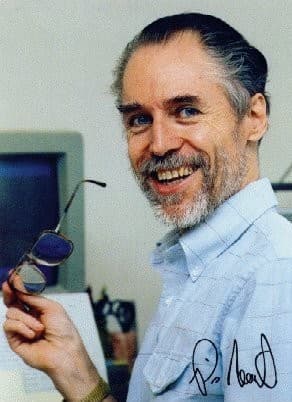
Piers Anthony (1983)
Genre
Fantasy / Science Fiction
Reading Time
6-8 hours
Key Themes
See below
Sign in to track this book
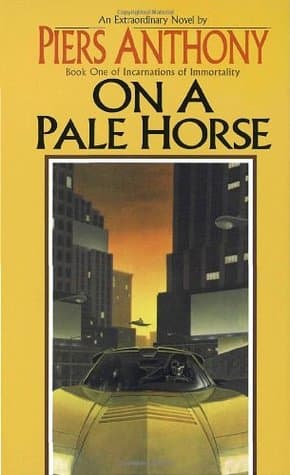
After accidentally killing Death, Zane becomes Thanatos, riding his pale horse/limo Mortis to weigh souls and escort them to their eternal reward, all while battling Satan's plans to control the woman he loves.
Zane, a bitter photographer, thinks about suicide after his wife, Luna, leaves him. He meets a mysterious old man, who says he is Death, also known as Thanatos. In anger, Zane shoots Death with a stolen gun, only to find that killing Death means becoming him. The old Death, tired of his job, had subtly guided Zane to this act. Zane's first duty is to reap a young girl's soul, which he fumbles through, helped by the now spirit-like former Death, who acts as his guide. He receives Mortis, a pale horse that also turns into a limousine, and the scythe, symbols of his new office. Zane struggles to understand his new role, suddenly responsible for all mortal lives and deaths.
Zane, now Thanatos, starts to get used to his new powers and duties. He finds he can see souls' 'auras,' measuring their good and evil. Unlike his predecessor, who often sent souls to Purgatory, Zane, with his unique view as a former mortal, tries to make clear judgments, sending souls directly to Heaven or Hell based on their life's balance. He uses his power to ease suffering during dying, often appearing as a comforting presence to those near death. This kind approach quickly earns him a reputation among the other Incarnations of Immortality, who are both curious and wary of the changes he brings to the cosmic balance. He also learns to control time and space, making his job very efficient.
Zane is called to a meeting of the Incarnations of Immortality: Time (Chronos), Fate (Clotho, Lachesis, Atropos), War (Mars), and Nature (Gaea). He learns about the delicate balance of power among them, and the rules for their interactions with mortals and each other. The Incarnations are a diverse and powerful group, each representing a basic part of existence. Chronos, old and wise, offers advice, while Mars views Zane's kind approach with doubt. Zane struggles to assert his authority and understand the political details of this cosmic council. He also discovers that Luna, his estranged wife, is a witch, a mortal with magic, which further complicates his personal feelings and his understanding of the supernatural world.
Satan, the Incarnation of Evil, becomes interested in Zane's sudden rise to power. He sees Zane's kindness and love for Luna as possible weaknesses. Satan begins to manipulate events to trap Luna, who, as a witch, has significant magical potential. He appears to Luna in different forms, offering her power and knowledge, subtly corrupting her choices and drawing her deeper into his influence. Satan's ultimate goal is to force Zane to either neglect his duties as Thanatos or sacrifice Luna. This creates a deep personal conflict for Zane, as he struggles with his professional responsibilities and his lasting love for his wife.
As Luna falls further under Satan's control, Zane realizes he must act. He makes the dangerous journey to Hell, a place of torment, to confront Satan directly. He travels through the dangerous landscapes and meets various demons, using his powers as Thanatos to protect himself. His goal is not only to rescue Luna but also to understand Satan's full plan. In Hell, Zane sees the suffering of lost souls and the evil nature of evil, strengthening his commitment to his role. He learns that Satan intends to use Luna's magic to upset the cosmic balance, possibly making her the new Incarnation of Evil, or at least a powerful pawn in his larger plan.
Zane's direct action in Hell and his attempts to save Luna draw the attention of the other Incarnations. He is brought before a cosmic court, led by Chronos, and accused of overstepping his bounds and interfering with the natural order. The Incarnations discuss what Zane's actions mean, especially his change from the traditional methods of Thanatos. Mars is particularly critical, arguing that Zane's kindness is a weakness. Zane defends his choices, arguing for mercy and the chance for redemption, even in the face of evil. This trial forces Zane to explain his beliefs and justify his unique approach to death, solidifying his identity as the new Thanatos.
The climax of Zane's journey involves a direct fight with Satan. The Devil, having fully corrupted Luna, uses her as a shield and a weapon against Zane. Satan tries to break Zane's spirit and force him to give up his love for Luna, or his duties as Death. Zane, however, uses his understanding of souls and his innate kindness to appeal to the good that still exists within Luna, however faint. He fights Satan in a complex battle, not just of physical power, but of ideas and emotional manipulation. Zane's ability to see beyond the surface and understand the subtleties of good and evil is his greatest weapon against Satan's absolute evil.
During the intense fight, Luna, influenced by both Satan's corruption and Zane's steady love, must make a choice. She struggles with the power Satan has offered her versus the real connection she shares with Zane. Her decision is important, as it directly affects the cosmic balance. Ultimately, Luna rejects Satan's influence, choosing love and redemption over power and darkness. This act frees her from Satan's control and weakens his hold on the mortal realm. Her choice also shows the lasting power of free will, even against overwhelming cosmic forces, and shows Zane's impact on those he meets.
With Luna's choice, Satan's plan fails, and he is forced to retreat, his power lessened. Zane, having successfully navigated the challenges and upheld his duties while saving Luna, secures his position as Thanatos. The other Incarnations acknowledge his unique and effective approach. Luna, having gone through a difficult experience, is not entirely unchanged, but she is free from Satan's influence and chooses to stay with Zane. Their relationship is redefined, now bound by cosmic responsibilities and shared experiences. Zane continues his work as Death, now with a deeper understanding of life, death, and the eternal struggle between good and evil, his kindness a defining part of his reign.
Zane fully accepts his role as Thanatos, understanding it is a lifelong commitment. He has changed from a cynical mortal to a kind and effective Incarnation. His relationship with Luna, who now understands his cosmic duties, deepens, and she becomes an important part of his life, giving him a connection to humanity and a purpose beyond his divine responsibilities. The novel ends with Zane continuing his work, riding Mortis across the world, reaping souls with his unique mix of justice and mercy. He has found a way to balance his mortal past with his immortal present, showing that even with ultimate power, humanity and love can last and even grow.
The Protagonist
Zane transforms from a despairing mortal to a powerful, compassionate, and effective Incarnation of Death, finding purpose and love in his eternal role.
The Supporting
Luna navigates temptation and manipulation, ultimately choosing love and redemption over power, solidifying her bond with Zane.
The Antagonist
Satan attempts to corrupt Luna and undermine Zane, but is ultimately thwarted, though his evil endures.
The Supporting
The former Death successfully passes on his mantle, finding his long-sought rest and guiding his successor.
The Supporting
Chronos observes and guides Zane, ensuring the cosmic balance is maintained despite the changes Zane brings.
The Supporting
Mortis remains a constant and loyal companion to Zane throughout his transformation.
The Supporting
Mars challenges Zane's methods, representing the traditional, less compassionate view of the Incarnations.
The Supporting
Gaea maintains her role as the Incarnation of Nature, providing a naturalistic perspective to the cosmic events.
The novel redefines death not as a grim figure, but as a necessary and potentially kind process. Zane, as the new Thanatos, brings a human element to his divine role, easing pain and making clear judgments for souls rather than sending them to Purgatory. This theme explores how empathy can change even the most absolute duties. Zane's ability to end suffering before ending life (as seen in his early reaps) and his desire to understand each soul's journey changes the traditional view of Death.
“Death, I discovered, was not a monster, but a necessary mercy, if only it were wielded with care.”
A main conflict involves how much mortals and even Incarnations can use free will in a universe seemingly ruled by fate and cosmic roles. Zane's first act of killing Death, though manipulated, is an act of defiance. Luna's choice to reject Satan's power, despite strong temptation, is a strong assertion of free will. The Incarnations themselves, while embodying cosmic forces, still make choices that affect the universe, showing the tension between predestination and individual action. This is clear in Zane's trial, where his 'deviations' are discussed.
“Even an Incarnation, it seemed, could choose a different path, though the threads of fate were strong.”
Zane's lasting love for Luna is a strong motivator and a source of hope throughout the story. His journey into Hell and his fight with Satan are mainly driven by his desire to save her. Luna's eventual freedom from Satan's influence shows love's power to overcome evil and temptation. This theme suggests that even in a cosmic struggle, personal connections and emotional bonds can hold great power, influencing the balance between good and evil. Their reconciliation means a deep redemption for both characters.
“Love, even for an Incarnation, was a tether to humanity, a weakness to exploit, or a strength to wield.”
The novel directly addresses the cosmic balance between good and evil, shown by the Incarnations. Zane's role as Thanatos is to judge souls and send them to Heaven or Hell, directly affecting this balance. Satan's plans aim to tip this balance towards evil, while Zane's kind approach, surprisingly, brings a new kind of justice that the other Incarnations must adapt to. The story constantly explores the shades of morality, suggesting that good and evil are not always absolute, and that an individual's choices contribute to the larger cosmic balance.
“Every soul weighed, every choice made, shifts the scales, however subtly.”
Zane's transformation into Thanatos highlights the great responsibility that comes with cosmic power. he struggles with the ethical questions of his judgments, how his actions affect the living and the dead, and the political details of interacting with other Incarnations. His journey is about learning to use his new abilities responsibly, not just for personal gain, but for the greater cosmic good. This theme is explored through his initial clumsiness and his eventual skill, showing the growth needed to truly embody such a powerful role.
“The power was absolute, but the judgment, I realized, was mine alone to bear.”
Anthropomorphic personifications of fundamental cosmic forces.
These are beings like Death (Thanatos), Time (Chronos), Fate (Clotho, Lachesis, Atropos), War (Mars), Nature (Gaea), and Evil (Satan). They serve as the primary movers and shakers of the universe, embodying fundamental concepts and maintaining a delicate cosmic balance. Their interactions, alliances, and conflicts drive much of the overarching plot and provide the framework for the rules of this magical universe. They represent the ultimate powers that govern existence, and their very presence defines the world Zane inhabits.
Symbols and tools of Thanatos's office.
The scythe is not merely a weapon but a tool for reaping souls and a symbol of Death's authority. Mortis, the pale horse, is both Zane's loyal steed and a magical vehicle capable of transforming into a limousine. These items are integral to Zane's identity as Thanatos, enabling him to perform his duties and navigate the various realms. They represent the traditional iconography of Death but are recontextualized with Zane's modern sensibilities, bridging the ancient and the contemporary.
Zane's unique ability to perceive the balance of good and evil in individuals.
This is a specific power Zane acquires as Thanatos, allowing him to 'read' the spiritual essence of individuals, seeing their accumulated good and evil. This ability is crucial for his role in judging souls and sending them to Heaven or Hell, bypassing Purgatory. It serves as a narrative device to externalize the internal moral state of characters and provides Zane with the information necessary to make his definitive judgments, emphasizing his compassionate yet decisive approach to death.
A formal assembly of Incarnations to judge transgressions.
This plot device is a formal meeting or court where the Incarnations of Immortality convene to address significant deviations from cosmic law or challenges to the balance of power. It provides a structured setting for Zane to defend his actions, for the rules of the universe to be debated, and for the political dynamics between the Incarnations to be highlighted. The tribunal serves as a moment of reckoning and validation for Zane's new approach to death, forcing him to articulate his philosophy.
“The trouble with you, Mort, is that you're a romantic. You think life is a story, with a beginning, a middle, and an end.”
— Death speaking to the protagonist, Mort, about his view of existence.
“There are nine other Incarnations. Each an office. Each a power. Each a responsibility. Each a job.”
— The concept of Incarnations is introduced, explaining the various cosmic roles.
“I am Death. It's a job. Someone has to do it.”
— The protagonist, Mort, grappling with his new role as Death.
“If you really want to screw up the universe, try to change the past. It never works out well.”
— A warning about the dangers of temporal manipulation.
“Love is a choice, not a feeling. It's a commitment.”
— A philosophical discussion on the nature of love.
“The universe is not fair. It just is.”
— A stark realization about the indifferent nature of existence.
“Every action has an equal and opposite reaction, especially in magic.”
— Explaining the fundamental laws of magic and consequence.
“Even Death can have a heart, if he chooses to use it.”
— Reflecting on the humanity within the role of Death.
“The greatest power is not to destroy, but to create.”
— A discussion on the true nature of power.
“Sometimes the best way to win is to refuse to play the game.”
— A strategic insight into avoiding conflicts.
“Mort, you have a talent for making things complicated. It's almost an art form.”
— Someone commenting on Mort's tendency to overthink situations.
“The realm of magic is not about what is, but what can be.”
— Defining the essence and potential of magic.
“To truly live, one must first confront death.”
— A profound statement on the relationship between life and death.
“You can't save everyone, Mort. But you can save someone.”
— A lesson in accepting limitations while still striving to do good.
Ready to see how well you understood this book? Take our interactive quiz with 10 questions.
Biography coming soon.







