“Omertà, the code of silence, was more than just a tradition; it was the very air they breathed, the unseen force that held their world together.”
— Describing the pervasive nature of the Omertà code within the mob's operations.

Mario Puzo (2000)
Genre
Thriller / Historical Fiction / Mystery
Reading Time
450 min
Key Themes
See below
Sign in to track this book
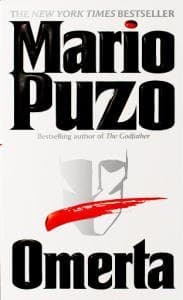
Orphaned and adopted into the Aprile crime family, Astorre Viola, the seemingly unassuming horseman, must embrace his carefully cultivated destiny as the last Don's true heir amidst a violent power vacuum and betrayals from within and without.
The novel opens with the assassination of Don Raymonde Aprile, the last great American Mafia Don, while he is having dinner with his family and close associates. The shooting, by a masked gunman, causes shockwaves in the underworld and the legitimate world where the Aprile children, Nicole, Valerie, and Marc, live their lives. FBI agent Kurt Cilke, who has investigated the Aprile family for years, is assigned to the case. Astorre Viola, Don Aprile's adopted nephew who has lived a quiet life raising horses in Sicily, is summoned by the family to attend the funeral and take his place as the new head of the family. Astorre, though seemingly mild-mannered, has a deep sense of loyalty and a hidden understanding of the Don's plans.
Upon his arrival in New York, Astorre Viola is greeted by the Aprile children and the family's consigliere, Timmona Love. While the children focus on their grief and their legitimate careers — Nicole as a film producer, Valerie as a lawyer, and Marc as a professor — Astorre quietly observes the situation. He understands that the Don's murder was not random but a challenge to the family's power. He learns about the Don's legitimate holdings, particularly his involvement in the global drug trade through a pharmaceutical company, and the wealth he accumulated. Astorre, under his unassuming exterior, starts to figure out the motives and people behind his uncle's death, all while appearing to be a simple horse breeder.
FBI Agent Kurt Cilke, an investigator with a personal connection to the Aprile case, leads the federal investigation into Don Aprile's murder. He knows about the Don's past and the family's move into legitimate businesses. Cilke is in a difficult position, as he had a secret arrangement with Don Aprile to protect the Don's legitimate interests in exchange for information and peace. This arrangement now puts him at risk, especially with the murder drawing scrutiny. He also deals with internal political pressure and the incompetence of some local NYPD detectives, including the corrupt duo of Detective Monteleone and Detective Corrupto, who care more about personal gain than justice.
Astorre Viola continues to play the role of the quiet, unassuming nephew. He attends meetings, listens, and offers seemingly naive suggestions, all while gathering information. He identifies key figures within the Aprile organization, such as Timmona Love, and assesses their loyalty and capabilities. He also learns about the Don's hidden fortune, stored in Swiss bank accounts, and the complexities of the legitimate drug trade operation. Astorre's patience is a key part of his strategy, letting his enemies make mistakes while he prepares his counter-attack. He avoids direct confrontation, choosing subtle manipulations and intelligence gathering.
The investigation, by both the FBI and Astorre's own inquiries, starts to point to a new adversary: Steel Rubenstein, a ruthless South American drug kingpin. Rubenstein, who had partnered with Don Aprile in the legitimate pharmaceutical business, is suspected of orchestrating the Don's murder to take over the entire operation and remove competition. He is a man of wealth and power, operating freely in both the legitimate and criminal worlds. His ambition and disregard for traditional Mafia codes make him a dangerous and unpredictable enemy, setting the stage for a clash with Astorre.
Nicole Aprile, the film producer, initially tries to distance herself from the family's criminal past. However, her father's will and the ongoing investigation force her to become more involved. She learns about the family's legitimate pharmaceutical business and its connection to the drug trade, which disturbs her. Her growing involvement makes her a target for Steel Rubenstein, who sees her as a way to gain control of the Aprile assets. Nicole's vulnerability and her desire to protect her family, despite her dislike for the criminal underworld, put her in a difficult position, forcing Astorre to act to ensure her safety.
After assessing the situation and confirming Steel Rubenstein's involvement, Astorre Viola orchestrates his first act of calculated vengeance. He targets Rubenstein's key lieutenants and assets, showing a ruthless efficiency that hides his earlier quiet demeanor. These actions are not just revenge but strategic moves to destabilize Rubenstein's empire and send a clear message. Astorre uses his network and his understanding of the underworld, learned from Don Aprile, to carry out these operations with precision. This marks a turning point, showing Astorre as a force capable of protecting the Aprile legacy.
The corrupt NYPD detectives, Monteleone and Corrupto, continue to bungle the murder investigation, mainly for their own financial gain. They extort money and provide misinformation, further complicating matters for both the FBI and Astorre. Astorre, seeing their harmful influence, decides to deal with them directly. He sets up a meeting that exposes their corruption and ensures their removal from the case, neutralizing a local threat and clearing the path for his larger plans. This incident further solidifies Astorre's control and shows his willingness to remove obstacles, no matter their position.
Astorre Viola plans and executes the final confrontation with Steel Rubenstein. He uses deception, strategic alliances, and direct action to dismantle Rubenstein's drug empire and eliminate him. Astorre uses information about Rubenstein's weak points and exploits his greed and arrogance. The climax involves a series of orchestrated events that lead to Rubenstein's downfall, ensuring that the Don's killer is brought to justice and the Aprile family's legitimate businesses are secured. Astorre's actions show his mastery of the 'Omerta' code, combining loyalty, intelligence, and ruthless efficiency.
With Steel Rubenstein eliminated and the Aprile family's financial empire protected, Astorre Viola solidifies his position as the new Don. He ensures that the Aprile children, Nicole, Valerie, and Marc, can pursue their legitimate lives without further threats. He secures their inheritance and the fortune left by Don Aprile, ensuring the family's continued prosperity and influence. Astorre, having fulfilled his duty and avenged his adoptive father, embraces his destiny as the guardian of the Aprile legacy, embodying the spirit of Omerta and the world of the Mafia, in a more modern, subtle form.
The Protagonist
Astorre transitions from a seemingly quiet, innocent nephew to the powerful, decisive Don, fulfilling his destiny and avenging his adoptive father.
The Supporting/Catalyst
Though deceased at the start, his influence and meticulous planning continue to shape the narrative, guiding Astorre's actions.
The Supporting
Nicole moves from denial of her family's true nature to understanding and accepting its complexities, eventually finding love and security with Astorre.
The Antagonist/Supporting
Cilke struggles with his professional duty versus his secret loyalty to Don Aprile's memory, ultimately coming to terms with the limitations of the law.
The Antagonist
Rubenstein rises as a formidable new criminal power only to be systematically dismantled and ultimately destroyed by Astorre Viola.
The Supporting
Timmona Love remains a steadfast pillar of loyalty, transitioning his counsel from Don Aprile to Astorre.
The Supporting
Valerie maintains her professional distance while grappling with the implications of her family's past.
The Supporting
Marc remains largely outside the direct conflict, representing the family's successful transition into legitimate society.
The Supporting/Antagonist
Monteleone's corrupt actions lead to his eventual downfall and removal from the investigation by Astorre.
The central theme is Don Aprile's planning for his legacy and the succession of power. He prepares Astorre Viola, not one of his biological children, to inherit the family's true power and responsibility, ensuring its survival and avenging his death. This theme looks at chosen family versus bloodline, and how a patriarch's foresight affects future generations. Astorre's actions are almost entirely about fulfilling the Don's unspoken will, showing the lasting power of a carefully built legacy.
“"He was a man who loved his family, but he loved honor more. And Astorre would give him the honor he deserved."”
The code of Omerta, or silence and honor, is central to the story. While Don Aprile's children live legitimate lives, Astorre embodies this code, seeking justice for his adoptive father's murder through traditional, violent means. The theme looks at the tension between this old code of honor and modern legal systems. Astorre's actions come from deep loyalty and a commitment to avenging a wrong, showing that for some, honor is more important than legality and personal safety. The silence kept by those loyal to the Aprile family shows this code.
“"Omerta was not just a word, it was a way of life, a code that bound men more tightly than any chain."”
Mario Puzo explores how organized crime adapted to modern times by investing in legitimate businesses, especially pharmaceuticals. Don Aprile moved his empire successfully, making it hard for law enforcement like Kurt Cilke to prosecute. This theme shows the growing sophistication of criminal groups and the moral issues when illegal profits fund legal ventures. Steel Rubenstein's attempt to take these legitimate assets further shows how these worlds are connected, where power and money flow easily between them, making it hard to tell good from bad.
“"The Don had taught him that the true power lay not in the guns, but in the money. And the money was now legal."”
The novel is about Astorre's quest for justice and vengeance for Don Aprile's murder. This theme looks at the difference between legal justice, pursued by the FBI, and the personal, often violent, justice sought within the Mafia. Astorre's actions are a deliberate and systematic removal of his enemies, not just for revenge but to restore the family's honor and secure its future. The story suggests that in certain worlds, vengeance is a necessary form of justice, upholding a different kind of moral order.
“"He would make them pay. Not with money, but with blood. That was the Omerta."”
Astorre's character arc is tied to his identity as Don Aprile's chosen successor, even though he is adopted. He deals with his role as a quiet horse breeder versus the ruthless enforcer he was trained to be. The Aprile children also struggle with their identity—successful professionals tied to a criminal lineage. This theme explores how one's family history, by blood or by choice, shapes who they are and where they belong, forcing characters to confront their heritage and accept or reject the expectations placed upon them.
“"He was Astorre Viola, the horseman. But he was also Astorre Aprile, the Don's chosen son."”
Don Aprile's meticulous plans and influence guide the plot even after his death.
Despite being murdered in the opening scene, Don Raymonde Aprile's presence and influence permeate the entire novel. His carefully laid plans for succession, his hidden wealth, and his secret training of Astorre Viola dictate the actions and motivations of many characters. This device creates a sense of the Don's enduring power and foresight, making him a posthumous puppet master. Astorre's entire mission is to execute the Don's unspoken will, demonstrating the long reach of a powerful patriarch even from beyond the grave, and adding a layer of mystery to the unfolding events.
Astorre's quiet, unassuming demeanor masks his true capabilities and intentions.
Astorre Viola's initial portrayal as a simple, gentle horse breeder from Sicily is a deliberate façade. This narrative device lulls both the reader and the antagonists into underestimating him, making his eventual reveals of ruthless intelligence and strategic violence more impactful. It allows him to gather information, observe his enemies, and plan his moves without drawing suspicion. This contrast between his outward appearance and his inner strength is a classic Puzo trope, highlighting the deceptive nature of power and the element of surprise in the underworld.
The pharmaceutical company serves as a cover and source of immense wealth for the Aprile family.
The pharmaceutical company, initially a legitimate venture, serves as a crucial plot device that blurs the lines between legal and illegal activities. It is the source of the Aprile family's immense wealth and a key target for Steel Rubenstein, driving much of the conflict. This device highlights the evolution of organized crime, demonstrating how traditional criminal families adapted by investing in seemingly respectable industries, thereby complicating law enforcement's efforts and creating new vulnerabilities and opportunities for power struggles.
FBI Agent Cilke's secret past deal with Don Aprile creates internal conflict and plot complications.
FBI Agent Kurt Cilke's secret arrangement with Don Aprile is a significant plot device. It introduces a moral and ethical dilemma for a law enforcement officer, creating internal conflict and complicating the official investigation. This device highlights the nuanced and often compromised reality of fighting organized crime, where lines between good and evil are blurred. Cilke's compromised position provides narrative tension and allows for a deeper exploration of the complex relationships between the law and the underworld, influencing his decisions and actions throughout the story.
“Omertà, the code of silence, was more than just a tradition; it was the very air they breathed, the unseen force that held their world together.”
— Describing the pervasive nature of the Omertà code within the mob's operations.
“There are some men who don't deserve to be killed. There are some men who don't deserve to live.”
— Raymonde Santadio reflecting on the moral complexities of his business.
“The greatest trick the devil ever pulled was convincing the world he didn't exist. The greatest trick a good don ever pulled was convincing the world he was just an ordinary businessman.”
— Sharing insight into the public perception and hidden power of a mob boss.
“Loyalty was a currency, more valuable than gold in their world, and betrayal was the quickest path to ruin.”
— Explaining the importance of loyalty within the criminal underworld.
“Every man has a price, but some men pay it with their soul.”
— Discussing the corrupting influence of power and money.
“Revenge is a dish best served cold, but justice, sometimes, needs to be immediate and fiery.”
— A character contemplating the different approaches to retribution.
“He understood that fear was a tool, but respect was a foundation.”
— Don Aprea's philosophy on leadership and control.
“The past is never dead. It's not even past.”
— Referring to the enduring legacy of family history and past actions.
“In their world, trust was a luxury, and suspicion a necessity.”
— Describing the constant state of vigilance required in the criminal life.
“A man who cannot protect his family is no man at all.”
— A central tenet of the family's code of honor and duty.
“Power doesn't corrupt. It reveals.”
— A character's cynical view on the true nature of individuals when given authority.
“Money was just a way of keeping score. The real game was power.”
— Highlighting the ultimate motivation behind the characters' actions.
“There are no accidents in this life, only consequences.”
— A fatalistic view on the interconnectedness of events and choices.
“He knew that silence could be a weapon, a shield, and sometimes, a tomb.”
— Reflecting on the multifaceted nature of Omertà.
Ready to see how well you understood this book? Take our interactive quiz with 10 questions.
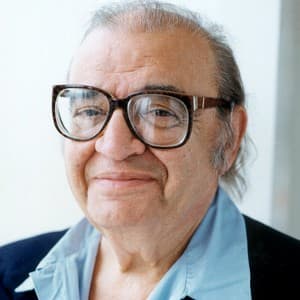
Mario Francis Puzo was an American author and screenwriter. He wrote crime novels about the Italian-American Mafia and Sicilian Mafia, most notably The Godfather (1969), which he later co-adapted into a film trilogy directed by Francis Ford Coppola. He received the Academy Award for Best Adapted Screenplay for the first film in 1972 and for Part II in 1974. Puzo also wrote the original screenplay for the 1978 Superman film and its 1980 sequel. His final novel, The Family, was released posthumously in 2001.







