“Please, sir, I want some more.”
— Oliver asks for more gruel at the workhouse.

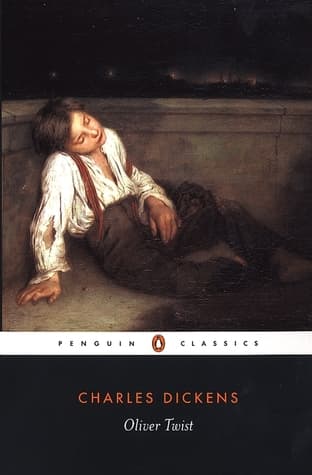
Charles Dickens, 查尔斯·狄更斯 (1939)
Genre
Historical Fiction
Reading Time
1200 min
Key Themes
See below
Sign in to track this book
In 19th-century London, orphan Oliver Twist escapes the workhouse only to be caught by Fagin's gang, exposing the city's harsh reality through memorable characters.
Oliver Twist is born in a workhouse in a nameless English town; his mother dies after his birth. She is unknown, leaving Oliver an orphan without identity. He spends his first nine years with Mrs. Mann at a baby-farm, where children suffer from neglect and abuse. At nine, Oliver moves to the parish workhouse, run by Mr. Bumble. Conditions are bad there, with little food and harsh treatment. One evening, hungry, Oliver asks for 'more.' This request shocks the workhouse board and leads to him being offered as an apprentice.
After asking for more food, Oliver is apprenticed to Mr. Sowerberry, an undertaker. He is treated slightly better than at the workhouse but still endures taunts from Noah Claypole, another charity boy, and neglect from Mrs. Sowerberry. Noah insults Oliver's dead mother, making Oliver angry. This leads to Mr. Bumble severely beating him. Unable to stand the abuse and insults about his mother, Oliver decides to run away. He walks for days towards London, hoping for a better life.
After a difficult walk, Oliver arrives in London, tired and hungry. He meets Jack Dawkins, the Artful Dodger, who seems friendly and offers him a free place to stay. Dodger takes Oliver to the dirty home of Fagin, an old criminal who leads a gang of young pickpockets. Oliver, innocent, does not know what Fagin's 'business' is. He is welcomed, fed, and housed, thinking he has found a safe place, unaware he is in a thieves' den and being prepared for crime.
Oliver soon goes with the Artful Dodger and Charley Bates on a 'job.' He watches them pickpocket an old gentleman's handkerchief. When the victim, Mr. Brownlow, realizes he has been robbed, Oliver, surprised and innocent, runs away. He is mistakenly chased and arrested. In court, a bookseller who saw the real crime steps in, clearing Oliver's name. Mr. Brownlow, seeing Oliver's innocence and illness, feels sorry for him. He takes Oliver to his home, giving him a comfortable bed, food, and real kindness—something Oliver has never known. This offers Oliver a chance at a respectable life.
Oliver's short time of happiness at Mr. Brownlow's house ends suddenly. Fagin, worried Oliver might expose his gang, asks Bill Sikes to recapture the boy. Oliver is ambushed by Nancy, Sikes's mistress, and Sikes himself while running an errand for Mr. Brownlow. They force him back to Fagin's den. Despite Nancy's brief sympathy for Oliver, Sikes and Fagin make her help. Oliver is again imprisoned, his hopes for a good life gone, and he faces Fagin's bad influence, being prepared for more serious crimes.
Fagin and Sikes plan to use Oliver in a burglary of a country house. Sikes needs a small boy to fit through a window and forces Oliver to help. During the break-in, Oliver, scared of committing a crime, tries to warn the people inside. A servant shoots him, and Sikes and Toby Crackit leave him for dead in a ditch. Wounded and confused, Oliver stumbles to the house they tried to rob. The owners, kind Mrs. Maylie and her adopted niece Rose, feel sorry for the injured boy. They nurse him back to health, believe his story, and offer him a safe, loving home, giving him the family affection he has always wanted.
While Oliver lives peacefully with the Maylies, a bad man named Monks appears, secretly working with Fagin. Monks wants to ruin Oliver's reputation and keep him a criminal. It is slowly revealed that Monks benefits from Oliver's downfall, as Oliver's good character would threaten Monks's inheritance. Monks, whose real name is Edward Leeford, is Oliver's half-brother. He plans to destroy any proof of Oliver's true parents. He specifically looks for a locket and ring that belonged to Oliver's mother, which would prove Oliver's identity and claim to money.
Nancy, despite her criminal life and loyalty to Bill Sikes, feels deep sympathy for Oliver. She overhears Fagin and Monks's plan to harm Oliver and secretly contacts Rose Maylie, telling her about Monks's scheme and Oliver's true parents. She arranges a secret meeting on London Bridge with Rose and Mr. Brownlow to share information. However, Fagin, suspicious of Nancy, has the Artful Dodger spy on her. Dodger tells Fagin what he saw, and Fagin tells Bill Sikes. Angry at what he sees as betrayal, Sikes brutally murders Nancy in a drunken rage. This shocking act shows his extreme violence and the bad nature of their criminal world.
Nancy's murder shocks London's criminal world and the public. People are outraged, and a large search for Bill Sikes begins. The information Nancy gave Rose and Mr. Brownlow proves very helpful. Mr. Brownlow confronts Monks, making him confess the truth about Oliver's past. Monks reveals that Oliver is his half-brother, the legitimate son of their father, Edwin Leeford, and Agnes Fleming. Monks had tried to hide Oliver's birth and inheritance by making him a criminal. The locket and ring, thought lost, are found, confirming Oliver's identity and his claim to a large fortune.
Justice comes for the criminals. Bill Sikes, hunted by police and an angry crowd, accidentally hangs himself while escaping across a rooftop. His dog, Bull's-eye, howls below. Fagin is arrested, tried, and sentenced to death for his many crimes. He dies in fear and despair in Newgate Prison. With the criminal group gone, Oliver's future is safe. Mr. Brownlow formally adopts him and becomes his loving guardian. Rose Maylie is revealed to be Oliver's aunt, his mother's sister, further strengthening his family ties. Oliver finally finds the loving home, family, and respect he has always wanted, leaving his difficult past behind.
The Protagonist
From a helpless victim of circumstance, Oliver ultimately finds his true identity, family, and a life of love and respectability.
The Antagonist
Fagin remains a villain throughout, ultimately meeting his demise on the gallows, unrepentant.
The Supporting
Mr. Brownlow, initially a benevolent stranger, becomes Oliver's devoted guardian and a key figure in unraveling his past.
The Antagonist
Sikes remains a destructive force, ultimately meeting a violent and self-inflicted end.
The Supporting
Nancy's initial complicity gives way to courageous self-sacrifice, tragically leading to her death.
The Supporting
The Dodger remains a committed criminal, eventually transported to Australia for his crimes.
The Supporting
Rose, initially a kind benefactor, discovers her familial connection to Oliver and becomes a crucial part of his new life.
The Antagonist
Monks's relentless pursuit of Oliver's downfall ultimately leads to his exposure and ruin.
The Supporting
Mr. Bumble, initially an oppressive authority, loses his position and fortune, experiencing the very poverty he inflicted on others.
Dickens uses 'Oliver Twist' to show the harshness of poverty and the failures of the Victorian Poor Law. The workhouse, run by hypocritical officials like Mr. Bumble, is shown as a place of hunger, abuse, and moral decline, not charity. The novel shows how system problems push children into crime, as with Fagin's gang, and how the rich often ignore or do not care about the poor. Oliver's path from the workhouse to the criminal world and then to a loving home shows how social class can be arbitrary and highlights the need for kindness.
“Please, sir, I want some more.”
A main theme is the constant fight between good and bad, especially inside people. Oliver Twist, despite being born poor and exposed to bad things in Fagin's den, keeps his natural goodness and moral purity. This contrasts sharply with characters like Fagin, Bill Sikes, and Monks, who represent pure evil. The novel suggests that while outside events can shape people, an inner moral sense can resist even the worst influences. Characters like Mr. Brownlow and Rose Maylie show the power of kindness and forgiveness against widespread evil.
“The boy is a child of the devil. He has the gallows written on his face.”
Oliver's search for who he is and where he belongs drives much of the story. Born without a name and an orphan, he spends his early life as an anonymous 'pauper.' His journey to London and his meetings with Mr. Brownlow and the Maylies are all about finding a place where he is loved and accepted. The discovery of his true parents and his connection to the respectable Leeford and Fleming families gives him a real identity and a rightful place in society, fulfilling his wish for family and removing the shame of his birth.
“He was a child of the workhouse; a pauper; an orphan; that was a hard name.”
Dickens strongly criticizes the hypocrisy in Victorian society, especially among those in power. Mr. Bumble and the workhouse board, who talk about morality and charity, are shown to be cruel and self-serving. The novel also shows the strict class divisions, where a person's birth decides their future, and moving up in society is almost impossible without unusual events. The big difference between the dirty slums and the comfort of Mr. Brownlow's home highlights the large gap between the rich and the poor, and the moral failures of those who keep such inequalities.
“The law is a ass—a idiot.”
London, especially its dirty parts, represents corruption and moral decay. When Oliver arrives, he is immediately pulled into Fagin's criminal group, showing how the city can trap and corrupt innocent people. The dark alleys, pubs, and thieves' dens represent a moral wilderness where violence and bad behavior thrive. While the city offers chances, it also has great dangers, especially for the vulnerable and orphans, pulling them into crime and despair.
“The streets were filled with people, and the noise and bustle were immense.”
Unlikely encounters and timely interventions drive key plot developments.
Dickens frequently employs coincidence to advance the plot and bring characters together. Examples include Oliver mistakenly being arrested by Mr. Brownlow, the very man who turns out to be his future guardian; Oliver stumbling upon the Maylie household during the burglary, which leads to his rescue; and Nancy overhearing Monks's plot. While sometimes criticized as a 'deus ex machina,' these coincidences serve to highlight the forces of fate and providence at play, ensuring that Oliver's inherent goodness is ultimately rewarded and his true identity revealed, allowing for a resolution that might otherwise be impossible.
Character names often reflect their nature or role in the story.
Dickens skillfully uses character names to symbolize their traits or circumstances. 'Oliver Twist' itself suggests a twisted, unfortunate fate. 'Mr. Bumble' evokes a bumbling, self-important, and ineffectual authority figure. 'Fagin' is a name associated with deceit and manipulation. 'Sikes' sounds harsh and violent, reflecting his brutal character. These names are not merely labels but contribute to the reader's understanding and perception of the characters, reinforcing their roles within the narrative and Dickens's social commentary.
Exaggerated emotions, clear moral distinctions, and dramatic events to evoke strong reader response.
The novel heavily utilizes melodrama, characterized by heightened emotions, clearly defined good and evil characters, and sensational events. Oliver's repeated escapes from danger, the dramatic rescue by Mr. Brownlow, Nancy's courageous sacrifice, and Sikes's violent end are all melodramatic elements. This style was popular in Victorian literature and theatre, allowing Dickens to create suspense, evoke strong empathy for Oliver, and emphasize the moral lessons he wished to convey about social injustice and the triumph of virtue over vice. It ensures a clear emotional impact on the reader.
Characters that highlight the qualities of another through contrast.
Dickens uses various foil characters to emphasize Oliver's unique purity. The Artful Dodger and Charley Bates, for instance, serve as foils to Oliver. They are also orphaned boys from similar backgrounds, but they readily embrace a life of crime, highlighting Oliver's unwavering innocence and resistance to corruption. Similarly, the benevolent Mr. Brownlow and Rose Maylie act as foils to the cruel Fagin and Sikes, showcasing the stark contrast between compassion and depravity, and providing a moral framework against which Oliver's journey is measured.
“Please, sir, I want some more.”
— Oliver asks for more gruel at the workhouse.
“Some people are nobody's enemies but their own.”
— Mr. Bumble reflects on human nature.
“It is because I think so much of warm and sensitive hearts, that I would spare them from being wounded.”
— Rose Maylie expresses her compassion.
“Dignity, and even holiness too, sometimes, are more questions of coat and waistcoat than some people imagine.”
— Narrator comments on societal appearances.
“There is a passion for hunting something deeply implanted in the human breast.”
— Narrator observes human tendencies.
“It is a world of disappointment: often to the hopes we most cherish, and hopes that do our nature the greatest honour.”
— Narrator reflects on life's hardships.
“The sun—the bright sun, that brings back, not light alone, but new life, and hope, and freshness to man—burst upon the crowded city in clear and radiant glory.”
— Description of London at dawn.
“Men who look on nature, and their fellow-men, and cry that all is dark and gloomy, are in the right; but the sombre colours are reflections from their own jaundiced eyes and hearts.”
— Narrator criticizes pessimistic views.
“We need be careful how we deal with those about us, when every death carries to some small circle of survivors, thoughts of so much omitted, and so little done.”
— Reflection on mortality and regret.
“It is a melancholy truth that even great men have their poor relations.”
— Narrator comments on social disparities.
“The memories which peaceful country scenes call up, are not of this world, nor of its thoughts and hopes.”
— Description of the countryside's effect.
“There are books of which the backs and covers are by far the best parts.”
— Narrator's witty observation on literature.
“Let it be enough to say, that the old lady was, for the time being, thoroughly tired of being a widow, and had set her heart on being a married woman.”
— Description of Mrs. Corney's ambitions.
“The boy had no friends to care for, or to care for him.”
— Narrator describes Oliver's loneliness.
Ready to see how well you understood this book? Take our interactive quiz with 10 questions.
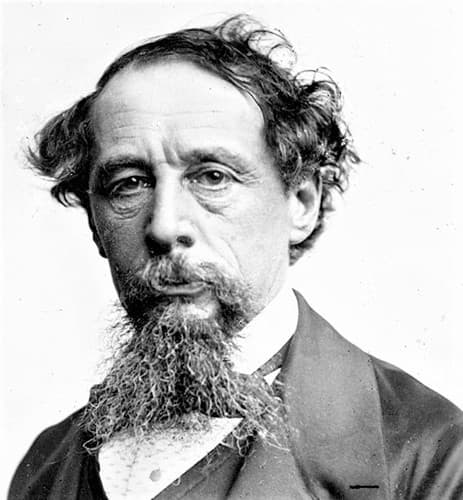
Charles John Huffam Dickens was an English writer and social critic who created some of the world's best-known fictional characters and is regarded by many as the greatest novelist of the Victorian era. His works enjoyed unprecedented popularity during his lifetime and, by the 20th century, critics and scholars had recognised him as a literary genius. His novels and short stories are widely read today.
Biography coming soon.







