“And that's how I know for sure that my Old Yeller was the smartest dog a fella ever had.”
— Travis reflecting on Old Yeller's intelligence and loyalty.

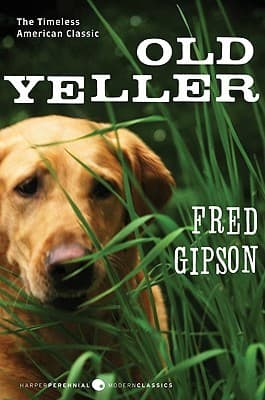
Fred Gipson (1920)
Genre
Children's / Historical Fiction / Young Adult
Reading Time
120 min
Key Themes
See below
Sign in to track this book
On the Texas frontier, a young boy's initial dislike for a thieving stray named Old Yeller turns into a deep bond of love and courage, as the dog becomes a vital protector, teaching the boy about loyalty and sacrifice.
Fourteen-year-old Travis Coates is left in charge of his family's homestead in the Texas Hill Country during the 1860s. A large, yellow stray dog appears. Travis initially dislikes the dog, finding him ugly and a problem. The dog, later named Old Yeller by Little Arliss, Travis's younger brother, is a clever thief. He steals meat from the family's smokehouse and even bacon from Mrs. Searcy. Travis tries to get rid of him many times, even setting a trap, but Old Yeller's cleverness makes him hard to stop. Despite Travis's efforts, Little Arliss quickly forms a strong bond with the dog, making it impossible for Travis to truly drive Old Yeller away.
Travis's dislike for Old Yeller lessens after a scary event. Little Arliss, despite warnings, goes too close to a creek and tries to catch a bear cub. This makes the cub's mother, a large she-bear, charge at Arliss. Old Yeller, without hesitation, bravely attacks the much larger bear, drawing its attention away from the boy. His fierce barking and biting distract the bear long enough for Travis, alerted by the noise, to arrive with his gun and shoot the bear. He saves Arliss's life. This brave act deeply changes Travis's opinion of Old Yeller, turning his dislike into respect and, later, deep affection.
After showing his loyalty and bravery, Old Yeller becomes a core part of the Coates family. He helps Travis with various chores around the homestead, showing intelligence and a willingness to work. He helps herd the family's cattle, keeping them in line and preventing them from straying. He also helps Travis with hog-marking, a dangerous task, by expertly catching and holding the wild hogs. Old Yeller's presence makes Travis's responsibilities easier and provides security and companionship, especially with Papa still away on the cattle drive to Abilene. The family comes to rely on him for protection and help.
With food supplies low, Travis goes on a hunting trip to get meat for the family. Old Yeller goes with him, proving to be a skilled hunting dog. During their journey, they meet Bud Searcy and his granddaughter, Lisbeth, who are traveling through the area. Lisbeth carries a puppy, a pup from Old Yeller's family. Bud Searcy, a talkative old man, shares news and gossip from the outside world. He also sees Old Yeller's skills firsthand, further confirming the dog's reputation as an exceptional animal. This meeting provides a brief link to the larger world outside their isolated home.
A serious threat appears when rabies begins to spread among the local wildlife. Travis learns from Bud Searcy that several animals in the area have caught the disease, making the frontier even more dangerous. One evening, a rabid wolf attacks the family's cow. Old Yeller, true to his protective nature, fiercely defends the cow and the family, fighting brutally with the wolf. Travis, hearing the commotion, rushes out and shoots the wolf, but not before Old Yeller is bitten many times. The family is relieved the wolf is dead, but a deep fear settles over them about Old Yeller's health, as rabies is almost always deadly.
After the wolf attack, Travis, still shaken, needs to mark some wild hogs. Old Yeller, despite his injuries, tries to help. During the dangerous task, a particularly aggressive hog charges Travis, goring him in the leg. The injury is severe, leaving Travis unable to move and in great pain. Old Yeller, even while wounded himself, continues to protect Travis, barking and snapping at the hog. Mama, with the help of Lisbeth, who has come to stay, manages to tend to Travis's wound, but his recovery is slow and hard. This incident shows the harsh realities and constant dangers of frontier life.
With Travis recovering from his injury, the family focuses on Old Yeller. Mama, having seen rabies before, knows the symptoms and the inevitable outcome. They carefully watch Old Yeller for any signs of the deadly disease. Days turn into weeks, filled with hope and dread. Old Yeller seems to be recovering from his physical wounds, but the family knows that the rabies virus has a long incubation period. The emotional toll on Travis is huge; he desperately wants his beloved dog to be well, but the grim reality of the situation weighs heavily on the entire household.
The family's worst fears come true when Old Yeller begins to show clear signs of rabies. He starts to act strangely, his eyes become glassy, and he acts aggressively, even towards Mama. He snarls and snaps at her, a sharp contrast to his loyal and gentle nature. Mama confirms their fears, explaining that there is no cure and that Old Yeller must be put down to protect the family from infection. This task falls to Travis, as he is the man of the house. It is the most painful decision he has ever faced, a true test of his maturity and love for his family.
With a heavy heart and tears, Travis takes his rifle. He leads Old Yeller away from the house, trying to stay calm for his family. The act itself is painful. Travis, who had come to love Old Yeller more than any other creature, is forced to shoot his loyal companion. The sound of the gunshot echoes through the quiet woods, a final, brutal end to the dog's life and a deep loss for Travis. He buries Old Yeller and returns to the house, completely devastated and struggling with the emotional weight of his actions.
After Old Yeller's death, Travis is overcome with grief and despair. He withdraws, unable to forget his beloved dog and the painful memory of what he had to do. Mama, understanding his pain, tries to comfort him, reminding him of Old Yeller's bravery and the need for his sacrifice. Eventually, Papa returns home from the cattle drive. He brings a sense of calm and understanding. He gently reminds Travis about life's cycle and the importance of moving forward. He also brings a new puppy, a pup from Old Yeller's family, given to them by Bud Searcy's granddaughter, Lisbeth. This new puppy, though small and untrained, begins to spark hope in Travis, reminding him of Old Yeller's spirit and the chance for new beginnings.
The Protagonist
Travis transforms from a resentful boy into a responsible, emotionally mature young man who makes difficult, selfless decisions for his family's safety.
The Supporting
Old Yeller transforms from an unwanted stray into an indispensable and beloved family member, ultimately sacrificing himself for their safety.
The Supporting
Mama remains a steadfast pillar of strength and compassion, guiding her children through hardship.
The Supporting
Arliss remains a source of childhood innocence and affection, largely shielded from the deeper grief by his age.
The Supporting
Papa returns to offer crucial emotional closure and guidance to Travis, affirming his son's growth.
The Supporting
Bud Searcy primarily serves as a narrative device, providing information and connecting the family to the wider frontier community.
The Supporting
Lisbeth's primary role is to bring a new puppy, symbolizing hope and continuity, to Travis.
The novel shows Travis's journey from boyhood to manhood. Left in charge of his family, he takes on huge responsibilities, from getting food to protecting his younger brother and mother. His initial dislike for Old Yeller grows into deep affection and a strong understanding of sacrifice. The act of shooting Old Yeller, though heartbreaking, marks his true coming of age. It forces him to make a difficult, adult decision for his family's greater good. This theme is central to his character's development, showing his growth under pressure.
“A boy doesn't have any business bawling. A man can cry, but a boy can't.”
The deep, unconditional love and loyalty between Old Yeller and the Coates family, especially with Travis and Arliss, is a main theme. Old Yeller's constant devotion shows through his brave acts of protection, from saving Arliss from the bear to defending the family from the rabid wolf. This theme highlights the strong bond between humans and animals and how that bond can provide comfort, security, and even shape character. The deep grief Travis feels after losing Old Yeller shows the depth of this love, making his sacrifice even more touching.
“He was the best dog a boy ever had.”
The harsh realities of life on the Texas frontier in the 1860s are always present. The family faces threats from wild animals, the constant struggle for food, and the danger of disease, especially rabies. The story honestly shows the brutal need for survival, where life is often short and hard decisions must be made. Old Yeller's death from rabies, a tragic but unavoidable event, is a stark reminder of the unforgiving environment and the sacrifices needed to survive.
“Living in the wild like we did, we were used to animals getting hurt, and getting sick, and dying.”
The theme of sacrifice is central to the story, ending with Travis's difficult decision to kill Old Yeller. Old Yeller himself makes many sacrifices, risking his life to protect the family. However, Travis's ultimate sacrifice of his beloved dog for the safety of his mother and brother is the most profound. It illustrates the painful truth that love sometimes demands the hardest choices. True responsibility often involves enduring great personal loss for the well-being of others. The story explores the deep emotional impact of such a loss.
“I loved him, but I had to kill him.”
Hints at future dangers, particularly the threat of rabies.
Foreshadowing is used effectively to build tension and prepare the reader for the tragic climax. Early mentions of hydrophobia spreading in the area through Bud Searcy's gossip, and Mama's knowledge of the disease, subtly hint at the looming danger. This creates a sense of dread and inevitability, making Old Yeller's eventual infection and Travis's heartbreaking decision more impactful because the possibility has been established, intensifying the emotional weight of the events as they unfold.
The new puppy symbolizes hope, continuity, and healing.
The puppy, given to Travis at the end of the story, serves as a powerful symbol. It represents the continuity of life, the passing of a legacy (being Old Yeller's offspring), and the possibility of healing after profound loss. While it doesn't replace Old Yeller, it offers Travis a tangible connection to his beloved dog and a reason to look forward. It symbolizes that even after immense tragedy, life goes on, and new bonds can be formed, helping Travis to move past his grief and embrace new beginnings.
Travis's journey from boy to man through hardship and responsibility.
This entire narrative structure functions as a classic coming-of-age journey for Travis. He is thrust into adult responsibilities, faces life-or-death situations, and is forced to make mature, difficult decisions. Each challenge, from managing the farm to fighting wild animals and ultimately sacrificing his dog, contributes to his development. The story is designed to illustrate his transformation from a boy who resents the stray dog to a young man capable of profound love and immense sacrifice, showcasing his growth through adversity.
“And that's how I know for sure that my Old Yeller was the smartest dog a fella ever had.”
— Travis reflecting on Old Yeller's intelligence and loyalty.
“He wasn't much to look at, but he was pure dog, and he was mine.”
— Travis describing Old Yeller's appearance but emphasizing his ownership and value.
“It wasn't a pretty sight, but it was a sight that made a man feel like he could lick the world.”
— Travis witnessing Old Yeller bravely fighting off an animal to protect the family.
“Sometimes it takes a lot of nerve to do what's right.”
— Mama talking to Travis about making difficult decisions.
“I tried to swallow, but my throat was all swelled up and dry.”
— Travis's emotional reaction to a difficult and tragic event.
“A man's got to do what a man's got to do.”
— Papa's advice to Travis about facing responsibilities.
“He just stuck with us, no matter what.”
— Travis observing Old Yeller's unwavering loyalty to the family.
“It was a real shock, seeing him that way, all tore up and growling.”
— Travis seeing Old Yeller after a dangerous encounter, revealing the dog's ferocity.
“I was scared, too, but I knew I had to do it.”
— Travis facing a frightening task that he knows is necessary.
“But a fella can't keep a dog that's gone rabid.”
— Travis's heartbreaking realization about Old Yeller's condition.
“He was just a big old yeller dog, but he was the best friend I ever had.”
— Travis's final reflection on Old Yeller's impact on his life.
“It was just a part of living, out here in the brush.”
— Travis accepting the harsh realities of frontier life.
“You can't let your heart run away with your head.”
— Mama advising Travis to think rationally in emotional situations.
“He was always there, wagging his tail, ready to go.”
— Travis remembering Old Yeller's constant presence and enthusiasm.
Ready to see how well you understood this book? Take our interactive quiz with 10 questions.

Biography coming soon.
Dan Gemeinhart
4.5

Kate O'Hearn
4.4

Jeanne Birdsall
4.4

Jen Wang
4.4
Wendelin Van Draanen
4.3

John Marsden
4.3

Chris Van Allsburg
4.3
Jennifer A. Nielsen
4.2