“Old Mother West Wind came down from the Purple Hills in the rollicking, frolicking way she has.”
— The opening lines describing Old Mother West Wind's arrival.

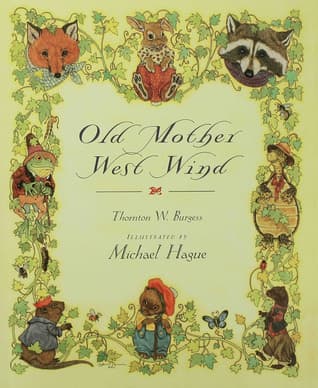
Thornton W. Burgess (1910)
Genre
Fantasy / Children's
Reading Time
90-120 min
Key Themes
See below
Sign in to track this book
Join Old Mother West Wind as she brings generations of children into the Green Forest, where Peter Rabbit, Jimmy Skunk, and Reddy Fox teach lessons about nature and friendship.
The story begins with Old Mother West Wind, a strong yet gentle figure, who lives in the sky. She decides it is time to bring her children down to the Green Meadows for a visit. These children are the Merry Little Breezes, personified winds, who want to play and explore the world below. Old Mother West Wind carefully guides them, explaining the rules of the Green Meadows and reminding them to be gentle with the creatures living there. This first arrival sets the scene for the Breezes' adventures and interactions with the animals.
One day, Peter Rabbit, known for being mischievous and curious, decides to explore beyond the safe Briar-patch. He goes into Farmer Brown's garden, a place he knows he should avoid. While eating some crisp lettuce, he is surprised by Bowser the Hound, Farmer Brown's dog. Peter is terrified and barely escapes, using all his speed and cleverness to get back to the Briar-patch. This incident teaches Peter a valuable, though scary, lesson about the dangers of not following rules and going into forbidden places.
Jimmy Skunk, proud of his strong defense, finds himself in a difficult situation. He meets Reddy Fox, who is always looking for food. Jimmy, sure he can scare away any predator, uses his spray. However, the wind, one of Old Mother West Wind's Merry Little Breezes, changes direction unexpectedly, carrying the scent back toward Jimmy himself. He ends up smelling as bad as, if not worse than, Reddy Fox. This incident, while funny, shows the two-sided nature of Jimmy's defense and the unpredictable parts of nature.
Grandfather Frog, a wise and old resident of the Smiling Pool, is known for his loud voice and his love of storytelling. He often gathers the younger animals around him, including Jerry Muskrat and Bobby Coon, to tell stories of his youth and old times. These stories are often exaggerated, full of grand adventures and close calls, to the delight and occasional doubt of his audience. He uses his experiences to share lessons, though sometimes indirectly, about the ways of the Green Meadows and its inhabitants.
Paddy the Beaver is a hardworking and busy creature, always at work. He is shown carefully building and keeping up his dam and lodge in the Laughing Brook. The other animals, like Sammy Jay and Reddy Fox, often watch his tireless efforts, sometimes with admiration, sometimes with a bit of confusion at his constant work. Paddy's dedication to his home and his beaver community shows an example of hard work and the importance of creating a safe environment, showing the natural order and the different roles animals play.
Reddy Fox, always a clever hunter, is constantly looking for food. He uses various strategies to try and catch his prey, often focusing on Peter Rabbit or Jerry Muskrat. He shows his intelligence by trying to guess their movements, set traps, or use disguises. While he does not always succeed, his persistent efforts show the predator-prey dynamics of the Green Meadows. His attempts often lead to close escapes for the smaller animals, adding suspense and excitement to the story.
Bobby Coon, a clever and resourceful raccoon, is often found by the water's edge, especially the Laughing Brook. He is shown as a skilled fisherman, patiently waiting and using his nimble paws to catch fish and other water creatures. His fishing trips are usually peaceful, reflecting his calm and observant nature. He often shares his catches with his friends or simply enjoys the quiet of the brook, showing a different side of the animal world where food is found through skill and patience rather than aggressive hunting.
Danny Meadow Mouse, a small and often shy creature, often finds himself in dangerous situations because of his size. One such time involves a close call with Hooty the Owl, a silent and powerful night predator. Danny's quick reflexes and ability to hide in the thick grass of the Green Meadows allow him to narrowly escape Hooty's talons. This episode highlights the constant danger faced by smaller animals and their need to rely on their natural instincts and environment for survival, emphasizing how fragile life is in the wild.
Throughout the stories, Old Mother West Wind's Merry Little Breezes are shown playing and interacting with the environment. They rustle leaves, whisper through trees, and playfully tug at the animals' tails. Sometimes their play causes minor disruptions, like scattering Jimmy Skunk's scent or making Peter Rabbit's fur stand up. However, they also bring refreshing coolness on a hot day and help spread seeds, showing their vital role in the ecosystem and their generally kind, if sometimes mischievous, nature under their mother's watchful eye.
Sammy Jay, the noisy and observant blue jay, acts as the unofficial news-spreader of the Green Meadows. He is always the first to know what is happening and is not afraid to share his observations, often loudly. He reports on Reddy Fox's latest hunting attempts, Peter Rabbit's close calls, and Grandfather Frog's statements. While his gossip can sometimes be annoying, he also provides important information for the other animals, showing how the community is connected and the role of communication, even if it is a bit gossipy.
From time to time, Old Mother West Wind steps in or offers advice, either directly to her children, the Merry Little Breezes, or indirectly through her influence on the weather. She makes sure her children learn to be gentle and responsible, guiding them in their interactions with the animals. She is a kind, overseeing force, reminding everyone of nature's balance and the importance of kindness. Her quiet presence and occasional direct advice serve as a moral guide for the Green Meadows, ensuring that lessons are learned and harmony is kept.
As the stories continue, a repeated theme is the natural order and cycle of life in the Green Meadows. Predator and prey live together, though with natural tension. Animals like Peter Rabbit learn caution, while Reddy Fox continues his hunts. The Merry Little Breezes play their part in shaping the environment. The book ends with a sense of continuous flow, where each animal has its place and purpose, and life goes on, guided by nature's rhythms and the watchful eye of Old Mother West Wind, ensuring the ecosystem's ongoing balance.
The Protagonist/Guiding Force
She remains a constant, wise, and benevolent force, serving as a stable moral compass for the Green Meadows.
The Supporting/Protagonist in his own stories
Peter learns lessons about caution and listening to warnings through his narrow escapes from danger.
The Antagonist
Reddy remains a consistent character, always hunting but rarely succeeding due to his prey's cleverness or intervention from nature.
The Supporting
Jimmy remains confident in his natural defense, occasionally learning about its limitations or unintended consequences.
The Supporting
Grandfather Frog remains a fount of stories and wisdom, never changing in his role as the venerable storyteller.
The Supporting/Protagonists in their own stories
They learn to balance their playful nature with responsibility and gentleness under Old Mother West Wind's guidance.
The Supporting
Jerry consistently demonstrates caution and resourcefulness in evading predators.
The Supporting
Bobby remains a steady, resourceful character, providing an example of clever survival.
The book consistently shows the balance within the Green Meadows ecosystem. Predators like Reddy Fox chase prey like Peter Rabbit, but the smaller animals often escape due to their cleverness or speed, keeping a natural balance. Old Mother West Wind, as a higher power, ensures this balance is not overly disturbed. The Merry Little Breezes, while sometimes mischievous, also play a vital role in the environment, showing how all elements, big and small, help the natural world stay in harmony. This theme is clear in Reddy Fox's constant hunts and Peter Rabbit's narrow escapes.
“For even in the Green Meadows, where all seemed peaceful, there was always the game of hide-and-seek between those who hunted and those who were hunted.”
Many stories teach about listening to advice and understanding the results of one's actions. Peter Rabbit, for example, repeatedly gets into trouble by going into Farmer Brown's garden, learning about danger through scary experiences. Jimmy Skunk's incident with his own spray teaches him about the unpredictable nature of the wind. These episodes show how characters, especially the younger or more impulsive ones, grow by facing the direct outcomes of their choices, often guided by the indirect wisdom of elders like Old Mother West Wind or Grandfather Frog.
“A lesson learned in fright is a lesson not easily forgotten.”
The Green Meadows is shown as a community where all animals, despite their different roles (predator, prey, observer), are connected. Sammy Jay spreads news, Grandfather Frog tells stories, and Old Mother West Wind oversees them all. One character's actions often affect others, whether it is Reddy Fox's hunting attempts creating tension or the Merry Little Breezes influencing the environment. This theme highlights that no creature lives alone and that the community's well-being depends on the interactions and behaviors of its individual members, creating a sense of shared existence.
“Every little breeze, every tiny creature, had its part to play in the big, beautiful story of the Green Meadows.”
Throughout the book, Burgess celebrates the simple beauty of the natural world. Descriptions of the Green Meadows, the Smiling Pool, and the Laughing Brook create a sense of wonder. The personification of natural elements like the wind (the Merry Little Breezes) and the detailed observations of animal behaviors encourage readers to appreciate the magic and complexity of their surroundings. The author's gentle storytelling creates a sense of respect for nature, showing it as a place of adventure, learning, and inherent charm, making the reader feel part of its peaceful scenes.
“The Green Meadows stretched out, a carpet of emerald, dotted with flowers of every hue, beneath the watchful eye of Old Mother West Wind.”
Giving human qualities to animals and natural elements.
The primary plot device is the extensive use of personification. Animals like Peter Rabbit, Reddy Fox, and Jimmy Skunk think, speak, and behave with human-like motivations, emotions, and dialogues. Old Mother West Wind and her Merry Little Breezes are personified natural forces. This device makes the natural world relatable and accessible to young readers, allowing complex ecological interactions and moral lessons to be conveyed through engaging character narratives. It transforms the Green Meadows into a lively, character-driven world.
Stories that convey ethical teachings or practical wisdom.
Many of the individual tales within the book function as fables. Each episode, such as Peter Rabbit's adventures in Farmer Brown's garden or Jimmy Skunk's self-inflicted predicament, contains a clear moral lesson about caution, consequences, or understanding one's place in the world. These lessons are gently woven into the narrative, making them digestible for children without being overly didactic. The stories subtly guide readers towards an understanding of responsible behavior and the natural order of things.
The consistent use of the same characters and locations.
The book utilizes a consistent cast of characters (Peter Rabbit, Reddy Fox, Grandfather Frog, etc.) and a fixed setting (the Green Meadows, Smiling Pool, Laughing Brook). This creates a cohesive and familiar world for the reader, allowing for deeper character development and a stronger sense of community. The recurring nature of the characters and their interactions reinforces the themes of balance and interconnectedness within the ecosystem, building a rich, continuous narrative tapestry across different stories.
Attributing human characteristics to animals.
Similar to personification, anthropomorphism is central to the narrative. The animals not only speak but also exhibit human-like reasoning, social structures, and emotional responses. They worry, scheme, boast, and learn, making their experiences directly comparable to human life. This device allows the author to explore complex themes like curiosity, fear, cunning, and wisdom through the actions of the animals, making the stories resonate deeply with children and helping them understand human nature through an animal lens.
“Old Mother West Wind came down from the Purple Hills in the rollicking, frolicking way she has.”
— The opening lines describing Old Mother West Wind's arrival.
“The Merry Little Breezes were her children, and they were the dearest, sweetest, funniest little people that ever were.”
— Introducing the Merry Little Breezes, companions to Old Mother West Wind.
“Why, if it wasn't for the sun, there wouldn't be any day, and if there wasn't any day, how could the little birds sing?”
— Peter Rabbit pondering the importance of the sun.
“Never mind, little friend, there are plenty of berries for all if only you are patient.”
— Old Mother West Wind reassuring a hungry creature.
“You see, when you stop to think about it, there are a great many things in this world that are much more important than just having a good time.”
— A moral lesson being subtly conveyed.
“He was a very busy little fellow, and he always had something to do.”
— Describing a industrious character, likely Peter Rabbit or Jimmy Skunk.
“It is always best to be polite, even to those who may not be polite to you.”
— A lesson on good manners.
“The best way to make friends is to be one.”
— A simple truth about friendship.
“There are always new things to learn, if only we keep our eyes and ears open.”
— Encouraging observation and learning.
“A good laugh is sunshine in a house.”
— A proverb about the joy of laughter.
“It is not always the biggest and strongest who are the wisest.”
— A lesson about inner qualities over physical ones.
“Every little thing has its place and its purpose in the great big world.”
— Reflecting on the interconnectedness of nature.
“And so, with a skip and a hop and a jump, away he went, as happy as could be.”
— Describing a joyful animal character's movement.
“For you see, kindness is like a little seed; if you plant it, it will surely grow.”
— An analogy for the power of kindness.
Ready to see how well you understood this book? Take our interactive quiz with 10 questions.
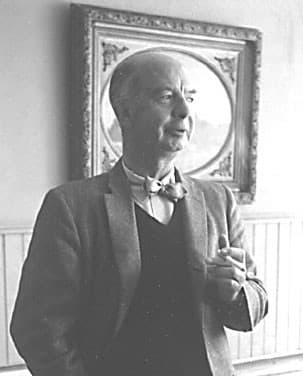
Biography coming soon.







