“You have brains in your head. You have feet in your shoes. You can steer yourself any direction you choose.”
— Opening lines encouraging self-direction and potential.

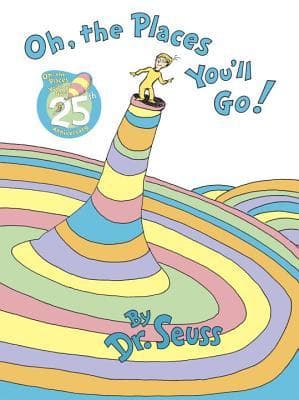
Dr. Seuss (1990)
Genre
Fantasy / Children's / Young Adult
Reading Time
5 min
Key Themes
See below
Sign in to track this book
Take a fun trip through life's ups and downs, using Dr. Seuss's rhyming advice to find the great potential within you to handle any path you choose.
The book starts by talking directly to a young, unnamed character, wishing them well as they get ready for a big journey. The narrator immediately sets a tone of encouragement and endless possibilities, saying the character is 'off to Great Places!' and has 'brains in your head' and 'feet in your shoes.' The first scene is bright and full of promise, with the character at a crossroads, ready to pick a path. The narrator stresses the power of choice and the excitement of taking the first step into the unknown, urging the character to decide which way to go without delay, as the world waits to be explored.
As the journey begins, the character has times of easy progress and quick success. They find themselves on 'high-flying Spleeds' and 'up-a-long streets,' where everything seems to go right. The narrator describes these times as when the character will easily 'win the race' and be 'ahead of the game.' These early successes are shown as joyful and easy, with the character flying above crowds and getting much praise. This part shows the first excitement and confidence that often come with new starts, supporting the idea that skill and effort can lead to early wins.
After the first successes, the story moves to show the sure challenges and problems that come up on any life journey. The character is warned about 'bumpy rides' and 'lonely roads.' The narrator describes times when paths might become confusing, leading to 'confused' situations where 'you can get all hung up in a prickle-ly perch.' These problems are not shown as failures but as important parts of the journey, needing strength and careful choices. The tone stays encouraging, but with a real understanding that not all paths will be smooth.
A big problem shown is the "Waiting Place," a symbolic spot where people get stuck, waiting for things to happen to them instead of making things happen. The narrator describes different kinds of waiting: 'waiting for a train to go or a bus to come,' 'waiting for the wind to fly a kite,' or 'waiting around for a Yes or No.' This part clearly shows the frustration and lack of movement of being in limbo, a place where 'everyone is just waiting.' It gives a strong warning against doing nothing and tells the character to actively look for answers instead of just accepting things.
The narrator strongly advises the character to leave the "Waiting Place." This escape needs bravery and self-reliance, as the character must decide to go forward even when the path is unclear or scary. The message is clear: 'NO! That's not for you!' The character is reminded of their natural abilities and encouraged to make their own choices, even if it means going into 'more un-lonesome-some places.' This turning point shows the importance of taking action and wanting to overcome inaction, telling the character to take back control of their future.
As the journey goes on, the character is warned about finding 'lonely places' and 'frightening places.' These are times when 'things can happen that just aren't much fun.' The pictures show dark, winding paths and isolated settings, symbolizing feelings of fear, doubt, and being alone. The narrator admits that the character might feel 'all alone,' a common human feeling. Despite these possible feelings, the main message stays one of strength, reminding the character that even in the darkest times, they have the inner power to keep going and find their way out.
Through the journey, the narrator stresses the constant need to make choices. The character will find many forks in the road, some leading to easy paths, others to hard ones. The advice is to 'step with care and great tact' and 'remember that Life's a Great Balancing Act.' This shows the responsibility that comes with freedom, as each choice has results. The character is told to consider options, trust their feelings, and be ready for what happens, good or bad, knowing that every choice shapes their path forward.
Despite outside problems and inner doubts, the main message is about the character's natural strength. The narrator repeats that the character has 'brains in your head' and 'feet in your shoes' and can 'steer yourself any direction you choose.' This supports the idea that real success comes from inside, from using one's own wisdom, courage, and effort. The journey shows the character's growing strength as they learn to deal with the world on their own and with confidence.
Near the end of the journey, the narrator happily says the character will succeed. 'And will you succeed? Yes! You will, indeed! (98 and ¾ percent guaranteed).' The character is imagined reaching 'high-flying Kites' and 'getting up high' with a feeling of achievement and happiness. This part goes back to the first promise of great places, confirming that despite all the ups and downs, the character's hard work will lead to great accomplishments. The journey continues, with new goals always possible, meaning a life of ongoing growth and discovery.
The book ends by saying that life's journey never stops, full of endless chances and ongoing adventures. The character is left understanding that they will keep facing new problems and finding new places. The last lines repeat the message of self-reliance and life's exciting, unexpected nature: 'So be your name Buxbaum or Bixby or Bray / Or Mordecai Ali Van Allen O'Shea, / You're off to Great Places! Today is your day! / Your mountain is waiting. So... get on your way!' It's a strong goodbye, celebrating each person's unique path and the promise of a life well-lived.
The Protagonist
Starts as a hopeful beginner, faces challenges, learns to overcome stagnation and fear, and ultimately achieves success through self-reliance.
The Supporting
Remains a constant source of wisdom and encouragement, evolving from a celebratory well-wisher to a realistic guide and ultimately a triumphant affirmation of the protagonist's success.
The Mentioned
They remain static, serving as a foil to the dynamic journey of the protagonist.
The book is about finding out who you are and what you can do as you go through life. The character, who starts with no clear identity, is told to use their 'brains in your head' and 'feet in your shoes' to make their own way. This idea shows up as the character learns to make choices, get past problems, and trust their own judgment, finally creating their unique path. The focus on individual action and going into the unknown highlights how identity is formed through experience.
“You have brains in your head. You have feet in your shoes. You can steer yourself any direction you choose.”
A main idea is the importance of continuing through hard times. The book does not avoid talking about 'lonely places' or 'frightening places' and the scary 'Waiting Place.' But it always tells the character to push through these problems, reminding them, 'you'll find the bright places where the Boom Bands are playing.' This idea is important for getting the reader ready for life's sure difficulties, showing that success often comes after getting past trouble and not giving up.
“You'll get mixed up, of course, as you already know. You'll get mixed up with many strange birds as you go. So be sure when you step. Step with care and great tact and remember that Life's a Great Balancing Act.”
Life is shown as a big, unexpected journey with many paths and decisions. The narrator constantly reminds the character about the choices they will face, from 'up-a-long streets' to 'bumpy rides.' This idea highlights that life is an active process of choosing, navigating, and changing. The book celebrates the freedom to pick one's direction while also acknowledging the responsibility and possible difficulties that come with those choices, making the journey itself the main symbol for existence.
“You're on your own. And you know what you know. And YOU are the guy who'll decide where to go.”
Despite talking about possible dangers and sad moments, the book keeps a very hopeful tone. It tells the character that they will succeed ('98 and ¾ percent guaranteed') and encourages a positive view of the future. This idea is clear in the bright pictures and the happy words used to describe wins, supporting the belief that with courage and effort, a good and successful life is possible. It's a message meant to give confidence and a positive attitude toward what's next.
“And will you succeed? Yes! You will, indeed! (98 and ¾ percent guaranteed.)”
Engaging the reader personally through a direct conversational tone.
The entire book is written in the second person, directly addressing the reader with 'You.' This device creates an immediate and intimate connection, making the advice and narrative feel personal and relevant to each individual reading it. It positions the narrator as a wise, encouraging mentor speaking directly to the reader, fostering a sense of involvement and ownership over the journey described. This technique makes the universal themes feel specifically tailored to the reader's own life experiences and future endeavors.
Life's progression represented as a literal travel experience.
The central plot device is the metaphor of a physical journey to represent the entire course of one's life. 'Great Places,' 'up-a-long streets,' 'bumpy rides,' 'the Waiting Place,' and 'frightening places' are all symbolic locations and experiences that stand for life's successes, challenges, stagnation, and fears. This extended metaphor allows complex abstract concepts about life, choices, and perseverance to be understood through concrete, imaginative imagery, making them accessible to a wide audience, particularly children.
Using consistent poetic structure to enhance memorability and engagement.
Dr. Seuss's signature use of anapestic tetrameter (two unstressed syllables followed by a stressed syllable) and consistent AABB rhyme scheme is a core plot device. This rhythmic and rhyming structure makes the text highly engaging, memorable, and fun to read aloud. Beyond entertainment, it helps to convey complex ideas simply and effectively, embedding the life lessons within a catchy, almost chant-like narrative that resonates with readers long after the book is closed. It also contributes to the whimsical and encouraging tone.
A symbolic location representing periods of inaction and stagnation.
The 'Waiting Place' serves as a powerful symbolic setting within the metaphorical journey. It is a specific, detailed description of a state of being rather than a physical location, where individuals are stuck in inertia, waiting for external forces to dictate their next move. This device functions as a cautionary tale, highlighting the dangers of passivity and the importance of taking initiative. Its vivid portrayal makes the abstract concept of procrastination and indecision tangible and impactful, urging the protagonist (and reader) to actively choose their path.
“You have brains in your head. You have feet in your shoes. You can steer yourself any direction you choose.”
— Opening lines encouraging self-direction and potential.
“You're off to Great Places! You're off and away!”
— Celebratory send-off at the beginning of the journey.
“And when things start to happen, don't worry. Don't stew. Just go right along. You'll start happening too.”
— Advice on embracing opportunities without anxiety.
“You'll get mixed up, of course, as you already know. You'll get mixed up with many strange birds as you go.”
— Acknowledging the confusion and unexpected encounters in life.
“And will you succeed? Yes! You will, indeed! (98 and 3/4 percent guaranteed.)”
— Famous humorous assurance of success with a quirky statistic.
“I'm sorry to say so but, sadly, it's true that Bang-ups and Hang-ups can happen to you.”
— Warning about inevitable setbacks and obstacles.
“You can get so confused that you'll start in to race down long wiggled roads at a break-necking pace.”
— Describing the frantic, directionless rush when overwhelmed.
“All alone! Whether you like it or not, alone will be something you'll be quite a lot.”
— Reflection on the solitude that accompanies personal journeys.
“On and on you will hike. And I know you'll hike far and face up to your problems whatever they are.”
— Encouragement to persevere through long-term challenges.
“You'll come down from the Lurch with an unpleasant bump. And the chances are, then, that you'll be in a Slump.”
— Describing the fall after a high and the resulting low period.
“Un-slumping yourself is not easily done.”
— Acknowledging the difficulty of recovering from a slump.
“Kid, you'll move mountains!”
— Confident exclamation of the reader's future achievements.
“So be sure when you step. Step with care and great tact and remember that Life's a Great Balancing Act.”
— Advice on navigating life's complexities with mindfulness.
“And never mix up your right foot with your left.”
— Playful reminder to stay coordinated and focused.
Ready to see how well you understood this book? Take our interactive quiz with 10 questions.
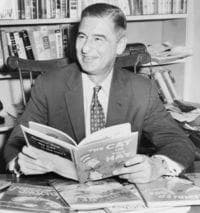
Dr. Seuss, born Theodor Seuss Geisel, was a beloved American children's author and illustrator. He is renowned for his imaginative tales and whimsical rhymes, including iconic works like 'The Cat in the Hat,' 'Green Eggs and Ham,' and 'Oh, the Places You'll Go!'. His unique style and memorable characters have made him a staple in children's literature for generations.







