“Happy ever after, it turns out, isn't a destination at all. It's a journey, and you have to keep moving.”
— Oliver's realization about the nature of love and fairy tales.

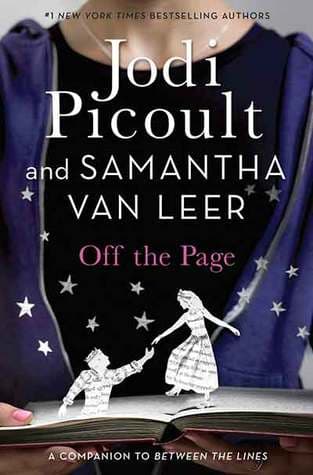
Jodi Picoult (2015)
Genre
Fantasy / Young Adult / Romance
Reading Time
7 hours 30 min
Key Themes
See below
Sign in to track this book
A fairytale romance literally leaps from the pages of a book when a prince falls for a real girl, forcing them to defy the universe itself to write their own ending.
Delilah, a high school student, feels like an outsider and finds comfort in reading. Her favorite book is a classic fairy tale about Prince Oliver, a charming royal cursed to live within its pages. Delilah often sketches Oliver in her notebook, imagining him outside his fictional world. One day, while drawing, she experiences a strange sensation, and Oliver speaks to her from the pages. This initial interaction leaves Delilah thrilled and confused, questioning her sanity and reality. She tries to keep this a secret, but talking to her dream prince is too strong to resist.
After several secret conversations with Delilah, Prince Oliver reveals his desire to experience the real world. Delilah, initially hesitant because his request seems impossible, eventually finds a way. Through her drawings, a shared wish, and a magical kiss through the page, Oliver steps out of the book and into Delilah's bedroom. He is disoriented by the new environment and the lack of magic he is used to. Delilah is overwhelmed by his physical presence and the immediate responsibility of hiding a fictional prince from her family and friends.
Oliver's transition into the real world is difficult. He is unfamiliar with modern conveniences like cars, electricity, and even casual clothing. His formal speech and chivalrous manner stand out dramatically in Delilah's high school. Delilah tries to teach him about contemporary culture, often with comical results. He struggles with understanding technology and social norms, leading to several embarrassing moments for Delilah. Despite these challenges, their bond deepens as Delilah tries to protect him and help him blend in, while Oliver is fascinated by the complexities of her world.
As Oliver spends more time in Delilah's world, their initial friendship grows into a deep and undeniable romance. They share tender moments, exploring their feelings for each other despite the impossibility of their situation. Delilah's best friend, Jasmine, becomes suspicious of Delilah's secret behavior and the mysterious new boy in her life. Oliver, meanwhile, starts to experience the real world's emotions and challenges, including jealousy and insecurity. Their love story, while magical, is constantly shadowed by the knowledge that Oliver does not truly belong in this world.
Delilah becomes increasingly concerned about Oliver's presence. She researches the author of the fairy tale, a reclusive and elderly woman named Althea, hoping to find answers or a solution. Delilah manages to contact Althea, who is shocked and angry to learn that her character has left the book. Althea reveals that she has been aware of Oliver's growing awareness within the story and disapproves of Delilah's actions, believing it will disrupt the balance of both worlds. She warns Delilah of dire consequences if Oliver remains in the real world.
As Althea warned, Oliver's absence from his story begins to have catastrophic effects. Delilah notices that the pages of her fairy tale book are becoming blank, and the characters within it are fading away. Oliver himself starts to experience strange symptoms — moments of pixelation, temporary disappearances, and a weakening connection to the real world. This physical manifestation of his fading existence creates a sense of urgency for Delilah and Oliver, forcing them to confront the reality that their love may be jeopardizing Oliver's entire existence and the world he came from.
Faced with the undeniable evidence of his fairy tale world's collapse, Oliver makes the painful decision that he must return. He understands that his personal happiness cannot come at the cost of his entire world and the lives of the characters within it. Delilah is heartbroken but recognizes the necessity of his choice. They share a poignant conversation about their love and the impossibility of their situation, acknowledging the deep connection they have formed despite the magical barriers between them. The weight of this decision hangs heavily over both of them.
Despite Oliver's decision to return, Delilah is unwilling to give up completely. She believes there must be a way for them to be together without sacrificing his world. Together, they revisit Althea, hoping the author can provide a solution. Althea, initially resistant, is moved by their genuine love and Delilah's determination. She reveals a hidden possibility: if the story is rewritten to include Oliver's departure and return, and if a new ending can be crafted that allows for their connection, it might work. This sparks a glimmer of hope for the couple.
Delilah and Althea begin the difficult task of rewriting the fairy tale. Delilah, using her artistic talent and deep understanding of Oliver's character, helps Althea craft a new narrative that explains Oliver's absence and allows for his return, while also subtly incorporating the possibility of his continued connection to Delilah. This process is emotionally taxing, as they must carefully balance the original story's integrity with their desire for a happy ending for Oliver and Delilah. Oliver watches, hopeful yet anxious, as his destiny is literally rewritten before his eyes.
With the rewritten ending complete, the time comes for Oliver to return to his story. It is a tearful farewell between him and Delilah, filled with promises of finding each other again. Oliver steps back into the pages, and the book's world slowly restores itself. Delilah is left with a profound sense of loss but also a renewed hope. The story now concludes with Oliver's return, hinting at a future where he might, eventually, find a way to bridge the gap between their worlds permanently, or at least visit Delilah. The ending is bittersweet, leaving room for a potential reunion.
After Oliver's departure, Delilah is changed. She no longer feels like an outsider and has found confidence in her ability to shape her own destiny. She continues to draw and write, now with a deeper understanding of storytelling's power. While Oliver is physically gone, their connection remains, sustained by the rewritten narrative and their shared love. Delilah finds new purpose in her art, believing that her creativity can keep the magic alive and, perhaps, eventually bring Oliver back to her, or allow her to visit him. She embraces her unique experience and the enduring hope for their future.
The Protagonist
Delilah transforms from a shy, isolated reader into a confident, proactive individual who learns to harness her creativity to shape her own destiny and fight for what she believes in.
The Protagonist
Oliver evolves from a two-dimensional story character into a self-aware individual who makes a selfless sacrifice for his world while holding onto hope for a future with Delilah.
The Supporting
Althea transitions from a rigid guardian of her story to a compassionate facilitator, using her power as an author to help forge a new, hopeful narrative for her characters.
The Supporting
Jasmine largely remains a steady, grounding force for Delilah, providing friendship and a connection to the 'normal' world, even if she can't understand the magical events.
The Mentioned
As a fictional character, King Theodore's arc is tied to the stability of his story, fading and restoring with Oliver's presence and absence.
The novel explores how stories shape our lives and how imagination can go beyond reality. Delilah's deep connection to Oliver's fairy tale allows her to literally bring him to life, showing how a reader's engagement with a narrative can transform. The act of drawing and rewriting the story by Delilah and Althea highlights the creative agency involved in crafting and reimagining narratives, suggesting that stories are not static but living entities that can evolve with belief and intent. This theme is central to Oliver's existence and the solution to their predicament.
““Sometimes, the only way to get your happy ending is to write it yourself.””
At its core, the book is a romance about a love that defies the most impossible boundaries: those between fiction and reality. Delilah and Oliver's relationship challenges the idea that love must adhere to conventional limits. Their love is not just a feeling but a force capable of altering worlds and destinies. Their struggle to be together, despite the dangers and sacrifices, emphasizes that true love can bridge any divide, even when faced with the literal disintegration of an entire fictional world, as seen when Oliver's world begins to fade.
““Maybe the greatest adventures happen off the page.””
Both Delilah and Oliver go through journeys of self-discovery. Oliver, a fictional character, gains awareness and grapples with the question of his own reality and purpose outside his predetermined narrative. He learns what it means to be 'real' and to make choices. Delilah, initially an insecure outsider, finds her voice and strength through her love for Oliver and her active role in rewriting their story. She discovers her own agency and the power of her creativity, transforming from a passive reader into an active participant in her own life's narrative.
““He was only a story, but he felt more real than anyone I had ever met.””
The narrative shows the weight of choices, particularly Oliver's decision to leave his world and the effects that follow. His absence causes his fairy tale to unravel, illustrating that every action, especially one that defies established order, has consequences. Delilah also faces difficult choices, such as whether to protect Oliver or risk his existence. The book explores the ethical implications of altering a narrative and the responsibility that comes with such power, culminating in their ultimate decision to rewrite the story to lessen the negative repercussions.
““Every choice has a ripple effect, sometimes across entire worlds.””
A story that self-referentially draws attention to its own status as a fictional construct.
The novel heavily uses metafiction by having a character, Prince Oliver, literally step out of his book and into the 'real' world. This device blurs the lines between author, reader, and character, making the audience question the nature of reality and storytelling itself. The existence of Althea, the original author, further emphasizes this, as she becomes a character within the narrative, directly influencing the fate of her own creations. It allows the story to comment on its own genre and the conventions of fairy tales.
The integration of magical or fantastical elements into a realistic setting.
While leaning into fantasy, 'Off the Page' employs magical realism by presenting the extraordinary event of a fictional character coming to life within an otherwise contemporary, realistic high school setting. Oliver's struggle to adapt to modern technology and social norms highlights the contrast between his magical origin and the mundane world. This device makes the fantastical elements feel more grounded and emphasizes the disruptive nature of magic in a non-magical world, making Oliver's presence both wondrous and challenging.
A fictional world or character deteriorating due to a disruption in its narrative or existence.
This device is crucial to the plot, as Oliver's absence from his fairy tale causes his world to literally begin to disappear, with pages turning blank and characters fading. This creates immense stakes and urgency for Delilah and Oliver, forcing them to confront the dire consequences of their love. It serves as a powerful visual metaphor for the delicate balance of fictional universes and the responsibility of characters to their stories, ultimately driving the plot towards the necessity of rewriting the narrative to restore balance.
A character destined for a specific role, often challenged or redefined.
Prince Oliver is initially presented as a classic 'chosen one' within his fairy tale, destined to marry his princess and rule. However, his escape from the book subverts this trope. He actively chooses to defy his predetermined destiny for love, and his 'destiny' then becomes a collaborative effort between himself, Delilah, and Althea to rewrite his future. This subversion highlights the theme of free will versus fate and the idea that one can forge their own path, even if they originated from a fixed narrative.
“Happy ever after, it turns out, isn't a destination at all. It's a journey, and you have to keep moving.”
— Oliver's realization about the nature of love and fairy tales.
“Sometimes, the only way to get your story to a happy ending is to rewrite it yourself.”
— Delilah considering how to change her own narrative.
“He was a prince, and I was just a girl. But in the space between the words, we were just two people.”
— Delilah reflecting on her connection with Oliver despite their different worlds.
“The thing about fairy tales is that they make you believe in magic, even when the real world tries to tell you it doesn't exist.”
— Delilah's enduring belief in magic.
“You can't live your life waiting for someone else to write your story. You have to pick up the pen yourself.”
— Sage's advice to Delilah about taking control of her life.
“Every story needs a villain, but sometimes the villain is just a hero in a different story.”
— A philosophical musing on perspective and character roles.
“Love isn't about finding a perfect person. It's about seeing an imperfect person perfectly.”
— Oliver's understanding of true love.
“Some books you read. Some books you enjoy. But some books just swallow you whole.”
— Delilah describing her deep immersion in the story of Oliver.
“The hardest part of any fairy tale is when you realize you're not the princess, or the prince, but just a supporting character.”
— Delilah feeling like she's not the main character in her own life.
“Even in the happiest of endings, there's always a whisper of what might have been.”
— A bittersweet reflection on choices and alternate paths.
“Magic isn't about wands and spells. It's about seeing the extraordinary in the ordinary.”
— Oliver's refined understanding of magic in the real world.
“Sometimes the greatest adventures are the ones you never planned for.”
— Reflecting on the unexpected nature of Delilah and Oliver's journey.
“A story isn't just words on a page. It's a living, breathing thing that changes with every reader.”
— A meta-narrative insight into the nature of stories.
Ready to see how well you understood this book? Take our interactive quiz with 10 questions.

Biography coming soon.







