“Guys like us, that work on ranches, are the loneliest guys in the world. They got no family. They don't belong no place.”
— George explains the life of migrant workers to Lennie.

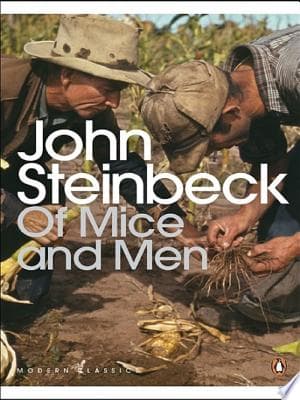
John Steinbeck (2022)
Genre
Historical Fiction
Reading Time
90 min
Key Themes
See below
Sign in to track this book
In Depression-era California, two migrant workers, bound by an unlikely friendship, chase a fragile dream of land and independence, only to confront the realities of loneliness and shattered hopes.
George Milton, a sharp but tired man, and Lennie Small, a large but intellectually disabled man, rest by the Salinas River in California. They are going to a new ranch job after leaving Weed, California, because Lennie, wanting to touch soft things, grabbed a woman's dress and would not let go. This led to accusations of attempted rape. George, often frustrated by Lennie's forgetfulness, cares for him. He makes Lennie repeat their dream: to own a small farm with rabbits and live off the 'fat o' the lan'.
George and Lennie arrive at the ranch. Candy, an old, one-handed ranch hand with an old dog, shows them their bunks. They meet Curley, the boss's son, a small but aggressive man who immediately dislikes Lennie's size. Curley's wife soon appears; the other men call her a 'tart' who flirts with everyone. George, seeing trouble, warns Lennie to stay away from both Curley and his wife, saying that if there is any trouble, Lennie should hide in the brush by the river.
Ranch life settles into a routine. George and Lennie work, while Lennie often talks about the rabbits he will tend on their future farm. Carlson, another ranch hand, complains about the smell of Candy's old, blind dog. Despite Candy's attachment, Carlson pressures him until Slim, the respected mule driver, supports Carlson's argument. Candy reluctantly allows Carlson to take the dog out and shoot it. The sound leaves Candy upset and alone.
After his dog's death, Candy is more isolated. Overhearing George and Lennie discuss their dream farm, Candy, wanting companionship and security in his old age, offers his life savings of $350—money for his lost hand—if they let him join them. This financial help makes the dream seem possible, energizing George and Lennie, who now plan to buy the farm at the end of the month. They promise to keep it a secret, fearing others might mock them or try to join.
Curley, always looking for a fight, enters the bunkhouse. Seeing Lennie smiling (thinking about the farm), he mistakenly believes Lennie is laughing at him. Curley attacks Lennie, punching him repeatedly. Lennie, confused and scared, does not fight back until George shouts at him to 'get 'im.' Lennie, remembering George's instruction to hold on, grabs Curley's hand. His strength crushes Curley's hand, breaking several bones. Slim steps in, convincing Curley to say he got his hand caught in a machine, saving Lennie from being fired or worse.
One Saturday night, while the other men visit a brothel, Lennie wanders into Crooks's room in the stable. Crooks, the black stable hand, is isolated and lonely because of racial prejudice. Initially defensive, Crooks lets Lennie stay and, interested by Lennie's talk of the farm, begins to tease him with the idea that George might not return. When Candy joins them, the three men discuss the dream farm, and Crooks, despite his doubts, briefly imagines a life of dignity and belonging on their farm. Curley's wife then interrupts, verbally abusing them.
The next afternoon, Lennie is alone in the barn, upset because he accidentally killed his new puppy by petting it too roughly. Curley's wife enters, telling Lennie about her loneliness and her dreams of becoming a movie star. She expresses her frustration with Curley and the other men, who ignore her. Lennie mentions his love for soft things, and she lets him stroke her hair. As Lennie strokes too hard, she panics and struggles. Lennie, in his fear, clamps his hand over her mouth, accidentally breaking her neck and killing her.
Lennie flees the barn, remembering George's earlier instruction to hide in the brush by the river if trouble came. Candy finds Curley's wife's body and brings George to the scene. The dream of the farm shatters. When Curley sees his wife, he vows revenge, forming a mob of ranch hands, armed with guns, to hunt down Lennie. George, knowing what Lennie has done and what Curley intends, quietly takes Carlson's Luger pistol, pretending Carlson lost it.
George finds Lennie at their meeting spot by the river, the same place they started. Lennie, unaware of what he has done, talks excitedly about the rabbits and the dream farm. George, with a heavy heart, talks to Lennie, telling their dream one last time, describing the rabbits and their future home. As Lennie looks across the river, imagining their paradise, George raises Carlson's Luger to the back of Lennie's head and shoots him, ending his life mercifully and preventing him from facing Curley's justice or continued suffering.
The mob, led by Curley and Carlson, arrives moments after George shoots Lennie. George lies, claiming Lennie had the gun and he wrestled it away, shooting him in self-defense. While Curley and Carlson remain confused and unsympathetic, Slim, understanding the bond between George and Lennie and the burden George carried, offers quiet comfort. He leads George away, leaving Carlson and Curley to wonder why George is so upset, showing their lack of empathy and understanding of real companionship.
The Protagonist
George grapples with the heavy burden of his responsibility, ultimately making a tragic choice out of love and mercy for Lennie.
The Protagonist
Lennie remains childlike and innocent throughout, tragically unaware of the consequences of his actions, leading to his demise.
The Supporting
Candy moves from lonely resignation to hopeful anticipation, only to have his final dream cruelly snatched away.
The Antagonist
Curley remains a static character, driven by insecurity and aggression, culminating in his vengeful pursuit of Lennie.
The Supporting
Curley's wife, a victim of circumstance and societal judgment, seeks connection but finds only isolation and ultimately, death.
The Supporting
Slim remains a steady, compassionate presence, offering wisdom and understanding to those around him.
The Supporting
Crooks experiences a brief flicker of hope for inclusion, only to have it extinguished by the harsh realities of prejudice and social hierarchy.
The Supporting
Carlson remains a static character, embodying a lack of empathy and emotional understanding.
The Mentioned
The Boss's presence is primarily to establish the power structure of the ranch and is not a developing character.
The American Dream, specifically owning land and being self-sufficient, is central to the novel. George and Lennie's dream of their own farm with rabbits represents hope and independence for them and later for Candy and Crooks. However, the realities of the Great Depression, economic instability, and their transient lives make this dream hard to get. The tragic ending, with Lennie's death, shatters this dream, showing the disillusionment many faced during this era. The dream is ultimately a fragile illusion, unable to withstand fate and human weakness.
“"An' live off the fatta the lan'," Lennie shouted. "An' have rabbits. Go on, George! Tell about what we're gonna have in the garden and about the rabbits in the cages and about the rain in the winter and about the stove, and how the chickens are gonna be..."”
Loneliness affects nearly every character. The transient nature of migrant work creates isolation, leaving characters like Candy, Crooks, and Curley's wife alone. George and Lennie's bond contrasts with this, showing the human need for companionship. Their dream farm is not just about money, but also about a place to escape loneliness. Ultimately, the destruction of their bond leaves George alone, showing the impact of lost companionship.
“"A guy needs somebody—to be near him. A guy goes nuts if he ain't got nobody. Don't make no difference who the guy is, long as he's with you. I tell ya," he cried, "I tell ya a guy gets too lonely an' he gets sick."”
The novel shows the vulnerability of those who are physically, mentally, or socially weak in a harsh world. Lennie, with his intellectual disability, is at risk due to his strength and inability to understand consequences. Candy, old and disabled, fears being cast aside once he is no longer useful. Crooks, as a black man, faces racial prejudice. Curley's wife, a woman in a male-dominated world, is isolated and disrespected. The powerful (Curley, Carlson) prey on the weak, showing a social hierarchy where those without power or protection face suffering or destruction.
“"I ought to of shot that dog myself, George. I shouldn't ought to of let no stranger shoot my dog."”
The story suggests a strong sense of determinism, where characters' lives seem fated, despite their efforts to make choices. George and Lennie's dream, while a product of their desires, is repeatedly undermined by Lennie's nature and outside circumstances. The repeating pattern of their troubles, starting with Weed and ending with a similar tragedy, implies that escaping their 'fate' is impossible. Even George's final act, while a choice, is presented as an inevitable, agonizing decision driven by the circumstances that have closed in around them. The hope of choice is continually crushed by an almost predetermined path to tragedy.
“"It wasn't nothing. I would of had to do it myself. I would of had to. You know that, don't you?"”
Hints and clues that predict future tragic events.
Steinbeck masterfully uses foreshadowing to build tension and a sense of impending doom. Examples include Lennie's accidental killing of the mouse and the puppy, which directly foreshadow his accidental killing of Curley's wife. George's repeated instructions to Lennie about hiding in the brush by the river explicitly sets up the tragic climax. The shooting of Candy's old dog, a mercy killing, directly foreshadows George's ultimate decision to kill Lennie, preparing the reader for the inevitability of the final act.
A recurring motif representing hope, independence, and belonging.
The dream farm, with its rabbits and self-sufficiency, symbolizes a universal longing for independence, security, and a place where one truly belongs. For George and Lennie, it's a tangible escape from their transient, lonely existence. For Candy, it represents a last chance at dignity and companionship. For Crooks, it's a brief, tantalizing vision of escaping racial isolation. Its ultimate destruction underscores the fragility of such hopes and the harsh realities that often crush the American Dream for the marginalized.
A setting that symbolizes both refuge and finality.
The Salinas River serves as a significant symbolic setting. At the beginning, it's a place of temporary peace and refuge for George and Lennie, where they can rest and dream. It's also the designated safe haven for Lennie should he get into trouble. Crucially, it becomes the place of their final, tragic encounter. The river's tranquil beginning and its role in the devastating end create a powerful sense of circularity and inevitability, symbolizing both the fleeting nature of peace and the ultimate, inescapable conclusion of their journey.
A difficult act of compassion to prevent prolonged suffering.
The concept of mercy killing is introduced explicitly with the shooting of Candy's old dog, which is suffering and no longer useful. This event directly parallels and foreshadows George's final, agonizing decision to kill Lennie. George's act is not one of malice, but of profound love and mercy, intended to spare Lennie from Curley's brutal revenge and a life of further suffering and misunderstanding. It highlights the difficult moral choices made when protecting those who cannot protect themselves.
“Guys like us, that work on ranches, are the loneliest guys in the world. They got no family. They don't belong no place.”
— George explains the life of migrant workers to Lennie.
“I got you to look after me, and you got me to look after you, and that's why.”
— Lennie reminds George of their mutual dependence.
“A guy needs somebody—to be near him. A guy goes nuts if he ain't got nobody.”
— Crooks expresses his isolation in the stable.
“I seen hundreds of men come by on the road an' on the ranches, with their bindles on their back an' that same damn thing in their heads. Hundreds of them. They come, an' they quit an' go on; an' every damn one of 'em's got a little piece of land in his head.”
— Candy describes the shared dream of land ownership among workers.
“Well, I never seen one guy take so much trouble for another guy. I just like to know what your interest is.”
— The boss questions George's relationship with Lennie.
“I could get along so easy and so nice if I didn't have you on my tail.”
— George vents frustration about caring for Lennie.
“You ain't gonna leave me, are ya, George?”
— Lennie fears abandonment after a conflict.
“Maybe ever'body in the whole damn world is scared of each other.”
— Slim reflects on human nature after a tense moment.
“I ought to of shot that dog myself, George. I shouldn't ought to of let no stranger shoot my dog.”
— Candy regrets not euthanizing his old dog himself.
“I seen 'em poison before, but I never seen no piece of jail bait worse than her.”
— George warns Lennie about Curley's wife.
“You can't keep a job and you lose me ever' job I get.”
— George scolds Lennie after they flee Weed.
“Tell me about the rabbits, George.”
— Lennie asks George to describe their dream farm.
“Ain't many guys travel around together. I don't know why. Maybe ever'body in the whole damn world is scared of each other.”
— Slim observes the rarity of companionship like George and Lennie's.
“I coulda made somethin' of myself. Maybe I will yet.”
— Curley's wife laments her lost opportunities.
Ready to see how well you understood this book? Take our interactive quiz with 10 questions.
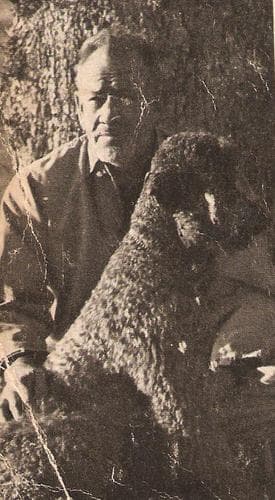
John Ernst Steinbeck was an American writer. He won the 1962 Nobel Prize in Literature "for his realistic and imaginative writings, combining as they do sympathetic humor and keen social perception". He has been called "a giant of American letters."







