“The world is a pretty crappy place, and it's full of people who are just trying to hurt you.”
— A character's cynical view on life.

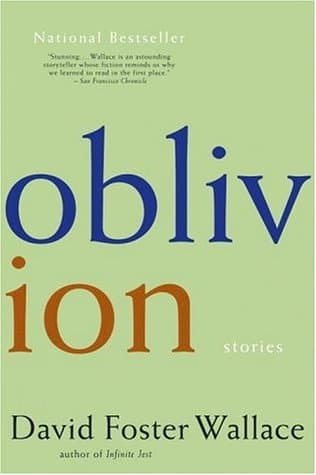
David Foster Wallace (2004)
Genre
Fantasy / Young Adult / Romance
Reading Time
Variable (likely 10-20+ hours due to complexity and density)
Key Themes
See below
Sign in to track this book
Characters struggle with the weight of their own minds, showing the beauty and normalcy of everyday life.
A focus group, including a former Olympic athlete and an anxious man, meets to evaluate 'Mr. Squishy,' a new snack. The product is designed to be very delicious and addictive, raising ethical questions among the participants about its effect on children. A detached facilitator leads the session, recording their reactions and discussions. As the group talks, the conversation moves to philosophy, looking at free will, consumer manipulation, and desire. One member, Mindy, becomes distressed by the product's implications, while a cynical academic tries to intellectualize their moral problem. Tension grows as they try to balance their enjoyment of the snack with their ethical concerns.
This story focuses on Terry, an adult with severe physical disabilities, as he remembers his traumatic childhood in a hospital. He clearly recalls the oppressive atmosphere, the condescending nurses, and the confusing medical procedures. Terry's narrative is fragmented, mirroring his broken memories and childhood disorientation. He describes trying to understand his situation, often using imagination and internal thoughts. A key memory is a nurse whose interactions with him ranged from indifferent to subtly cruel. The story explores vulnerability, loss of control, and the lasting psychological scars of childhood trauma, all seen through Terry's adult perspective as he deals with his past suffering.
This story shows a domestic tragedy. A young child, left alone for a moment, suffers severe burns from boiling water. The story puts the reader into the immediate aftermath, focusing on the frantic efforts of the child's parents to help and get medical aid. The writing is visceral, detailing the child's screams, the parents' panic, and the physical effects of the burns. The story avoids sentimentality, instead giving a raw account of their desperate actions, from cooling the burns to the agonizing drive to the hospital. It explores the overwhelming helplessness of parents facing sudden, severe injury to their child, and the immediate trauma that shatters their normal lives.
Jerome Miller, a struggling and self-aware writer, tries to create a meaningful story in a world full of information and irony. He feels stuck by the amount of data and the perceived impossibility of creating anything original or impactful. Jerome's internal thoughts are a flood of worries, philosophical ideas, and self-deprecating humor. He obsesses over the small details of his daily life, seeing deep meaning in trivial events, yet struggles to connect with real human emotion. The story looks at his creative process, or lack of it, as he constantly doubts his intentions and the truthfulness of his voice. He talks with a few other characters, including a dismissive literary agent, which increases his existential dread about his place in the literary world and culture.
Angela Mathers has a unique and unsettling ability: she can telekinetically create feces. This strange talent brings her both fame and deep personal distress. The story describes her early life, her discovery of this ability, and her attempts to understand and control it. As an adult, she becomes a subject of scientific study and media fascination, leading to her exploitation. Angela struggles with the grotesque nature of her power and the public's morbid curiosity, which takes away her dignity and turns her into a spectacle. The narrative explores body image, the commercialization of the unusual, and the search for identity when faced with an extraordinary and unwelcome gift. Her relationships are strained by her secret, and she longs for a sense of normalcy that seems out of reach.
The focus group from the earlier story meets again, and the discussion about 'Mr. Squishy' grows more intense. The participants, having thought more about the product and their initial reactions, return with deeper insights and stronger emotional responses. The facilitator, still detached, pushes them to further explain their feelings about the snack's addictive qualities and ethical implications. Personal stories and worries about consumerism and societal manipulation surface, changing the discussion from a product evaluation to a broader critique of modern life. Mindy, still troubled, expresses her moral outrage more forcefully, while the academic continues his intellectual dissection, though with growing unease. The session becomes a small example of societal worries about control, pleasure, and responsibility, leaving the group, and the reader, with no easy answers.
This story is a poignant portrayal of a son's relationship with his mentally ill mother, Mrs. Thompson. The narrator, an adult looking back, describes his mother's erratic behavior, her delusions, and the deep impact her condition had on his childhood. He recounts specific events, some darkly humorous, others disturbing, that show the challenges of living with a parent who lives in a broken reality. The narrative explores the complex emotions of love, frustration, and helplessness the son feels towards his mother. He tries to understand her perspective, even as he struggles to maintain his own sanity. The story looks at familial duty, the nature of mental illness, and the lasting effect of a difficult upbringing, all shown with empathy and detached observation.
Jerome Miller's internal struggle with writing and the overwhelming nature of modern life intensifies. He continues to deal with the perceived impossibility of true expression in a postmodern world. This section shows Jerome pushing his self-awareness to an extreme, analyzing his every thought, intention, and fear about his craft. He becomes even more focused on his analysis of irony, sincerity, and the commercial pressures of publishing. His interactions with others, particularly a new, successful but seemingly empty author, only worsen his worries about his own artistic integrity. The narrative becomes a deeply introspective look at the creative process, the burden of self-consciousness, and the search for meaning in a world that often feels meaningless. Jerome's journey is one of deep existential questioning, without a clear resolution.
The Supporting
Mindy's initial discomfort evolves into a more vocal and articulate moral opposition, highlighting the internal conflict between desire and ethics.
The Protagonist
Terry's arc is one of retrospective understanding, as he attempts to process and articulate his past pain, seeking a form of closure or explanation.
The Protagonist
Jerome's journey is one of deepening self-awareness and existential paralysis, as he grapples with the ever-increasing difficulty of finding an authentic voice.
The Protagonist
Angela's arc is one of coming to terms with her unique ability and the public's perception of her, striving for dignity amidst exploitation.
The Supporting
The facilitator remains largely static, serving as a catalyst for the participants' internal and external conflicts rather than undergoing significant personal change.
The Supporting
Her 'arc' is largely static, as her mental illness defines her, but her son's understanding of her evolves over time.
The Supporting
Their 'arc' is compressed into a single, traumatic event, showing their immediate transformation from ordinary parents to individuals in profound crisis.
The Supporting
His initial detachment gives way to a growing, albeit intellectually framed, unease as the ethical implications become more pressing.
Many characters in 'Oblivion' are weighed down by intense self-awareness. Jerome Miller in 'Another Pioneer' constantly analyzes his own motives, his writing, and his place in a postmodern world, leading to creative paralysis. This theme also appears in the focus group members in 'Mr. Squishy,' who know the product is manipulative, even as they enjoy it. The stories suggest that while consciousness can lead to insight, it can also trap individuals in a cycle of anxiety and inaction, making genuine connection or authentic creation difficult. It highlights the isolating effect of too much introspection.
“The truth will set you free, but first it will make you miserable.”
Wallace often puts the grotesque or unsettling next to the mundane parts of daily life, showing the surreal nature of existence. Angela Mathers's ability to telekinetically create feces in 'The Suffering Channel' is a perfect example, forcing her to live a normal life with an extraordinary, repulsive gift. Similarly, the horrific accident in 'Incarnations of Burned Children' happens in a domestic setting, shattering the ordinary. This theme explores how the bizarre can enter everyday life, challenging ideas of reality and forcing characters (and readers) to face uncomfortable truths about the human body, suffering, and societal reactions to the abnormal.
“It was a fact, a grotesque and undeniable fact, that her power manifested in the most ignoble way imaginable.”
Characters in 'Oblivion' often struggle to find real meaning and express true emotions in a world full of irony, commercialism, and mediated experiences. Jerome Miller's struggle to write something 'real' in 'Another Pioneer' is a main example. The focus group's debate over 'Mr. Squishy' also touches on this, as participants question the truthfulness of their desires when faced with a product designed for addiction. This theme explores the tension between surface appearances and deeper truths, and the desire for unmediated experience in an increasingly artificial world.
“The problem with irony is that it's a cage. It lets you mock, but it never lets you feel.”
Several stories look at the lasting effects of trauma and how memory shapes identity. Terry in 'The Soul is Not a Smithy' recounts his childhood hospitalization, his fragmented memories revealing the lasting psychological scars of his early experiences. The parents in 'Incarnations of Burned Children' are immediately thrown into a traumatic event that will haunt their memories. This theme explores how past suffering continues to influence the present, often twisting perceptions and forcing characters to constantly re-evaluate their understanding of themselves and their personal histories. It highlights the lasting mark that deep suffering leaves on the human mind.
“The past isn't dead. It's not even past.”
The 'Mr. Squishy' stories directly address the ethical problems of modern consumerism. The focus group participants debate the morality of creating an addictive snack, especially given its effect on children. This theme explores the tension between corporate profit and societal well-being, and the individual's responsibility to resist manipulation. It questions the nature of desire itself, and whether true free will can exist in a commodified world where products are designed to exploit human weaknesses. The stories prompt a critical look at advertising methods and the ethics of pleasure.
“Is pleasure, when manufactured and irresistible, truly pleasure, or merely a sophisticated form of control?”
Unfiltered portrayal of a character's thoughts and feelings.
Wallace frequently employs stream of consciousness, particularly in 'Another Pioneer' and 'The Soul is Not a Smithy.' This device allows the reader direct access to the character's internal monologue, often presenting thoughts, anxieties, and observations in a fragmented, non-linear fashion. It creates a sense of immediacy and intimacy, immersing the reader in the character's subjective experience. This technique is crucial for conveying the intense self-awareness and intellectual anxieties that plague many of Wallace's protagonists, mirroring the chaotic and overwhelming nature of their inner lives.
Meticulous and often uncomfortable descriptions of mundane or grotesque elements.
Wallace's prose is characterized by its hyperrealism, providing an almost overwhelming level of detail, whether describing the mechanics of a focus group in 'Mr. Squishy' or the horrific physical effects of burns in 'Incarnations of Burned Children.' This device serves to ground the often abstract or philosophical concerns in a visceral, undeniable reality. It can make the reader uncomfortable, forcing them to confront the raw, unvarnished aspects of existence, and highlights the grotesque beauty or horror found in the minutiae of life. It also contributes to the sense of an overstimulated, information-saturated world.
Story commenting on its own construction or the act of storytelling.
In stories like 'Another Pioneer,' Wallace utilizes metafiction, where the narrative explicitly comments on the act of writing, the nature of fiction, and the challenges of being an author. Jerome Miller's struggles are often reflections on the very craft of storytelling in a postmodern age. This device blurs the line between author and character, text and reality, inviting the reader to consider the artificiality and constructedness of narratives. It also serves to critique literary conventions and explore the difficulties of achieving authenticity in an era of pervasive irony and self-awareness.
Recurring scenes or themes with subtle or significant changes.
The presence of 'Mr. Squishy' and 'Another Pioneer' as distinct, yet related, stories ('Mr. Squishy' and 'Mister Squishy (reprise)', 'Another Pioneer' and 'Another Pioneer (reprise)') exemplifies this device. Wallace revisits characters, scenarios, or themes, but with subtle shifts in perspective, added detail, or heightened intensity. This technique allows for deeper exploration of complex issues, demonstrating how time and reflection can alter perception. It also underscores the idea that certain problems or anxieties are cyclical or enduring, not easily resolved in a single narrative instance, creating a sense of ongoing struggle and introspection.
“The world is a pretty crappy place, and it's full of people who are just trying to hurt you.”
— A character's cynical view on life.
“Love isn't about finding someone perfect. It's about finding someone who's perfect for you, even if they're a little broken.”
— A character's reflection on the nature of love.
“Sometimes the only way to move forward is to let go of the past, even if it hurts.”
— A moment of realization about overcoming past trauma.
“Magic isn't some grand, flashy thing. It's in the small moments, the quiet whispers, the way the light hits just right.”
— A description of how magic manifests in the world.
“Fear is a liar. It tells you you're not strong enough, not brave enough, not worthy enough. Don't believe it.”
— An encouraging statement to someone facing a challenge.
“There's a difference between being alone and being lonely. One is a choice, the other is a feeling.”
— A character contemplating solitude versus isolation.
“The most dangerous monsters aren't always the ones with fangs and claws. Sometimes they're the ones who look just like us.”
— A warning about human nature and hidden evils.
“Hope is a fragile thing, but it's also the strongest. It's what keeps us going when everything else is falling apart.”
— A character's thoughts on the importance of hope.
“Every story has a beginning, a middle, and an end. But sometimes the end is just another beginning.”
— A philosophical musing on narratives and cycles.
“What you seek is seeking you. You just have to be open enough to see it.”
— A mystical hint about finding one's path or destiny.
“The greatest battles are often fought within ourselves, in the quiet corners of our minds.”
— An observation about internal conflict.
“Sometimes the right thing to do is also the hardest thing to do.”
— A character making a difficult moral choice.
“To forget is to truly lose. To remember, even the pain, is to keep a part of them alive.”
— A reflection on memory and grief.
Ready to see how well you understood this book? Take our interactive quiz with 10 questions.

David Foster Wallace was an American novelist, short story writer, essayist, and university professor of English and creative writing. Wallace is widely known for his 1996 novel Infinite Jest, which Time magazine cited as one of the 100 best English-language novels from 1923 to 2005. His posthumous novel, The Pale King (2011), was a finalist for the Pulitzer Prize for Fiction in 2012. The Los Angeles Times's David Ulin called Wallace "one of the most influential and innovative writers of the last twenty years".







