“But now I am Six, I'm as clever as clever. So I think I'll be six now for ever and ever.”
— From the poem 'Now We Are Six', where the narrator reflects on age.

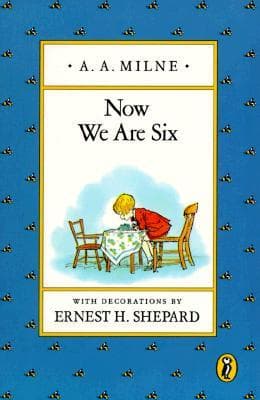
A.A. Milne (1925)
Genre
Fantasy / Children's
Reading Time
60 min
Key Themes
See below
Sign in to track this book
Enter the world of childhood with A.A. Milne's poems, where the wonder of growing up to six years old comes alive through Ernest H. Shepard's illustrations.
The poem describes King John, a 'bad' king, who has no Christmas presents. He feels sad and alone while others celebrate. Despite his reputation, having no gifts affects him deeply. A change happens when he realizes that not getting presents means he doesn't have to give any. This thought cheers him up, and he has a surprisingly happy Christmas, free from the need to give back gifts. This shows a childlike selfishness, even in a king.
The poem focuses on watching a duck by a pond. The child narrator describes the duck's routine: waddling, diving for food, and coming back up. There is a sense of wonder and calm as the child watches this ordinary scene. The poem highlights the quiet beauty of nature and the steady movements of the animal, creating a peaceful mood and showing a child's interest in the natural world.
This poem explores the imagined thoughts of a small, furry bear. The child narrator wonders if the bear is lonely or if it likes being alone. The bear is shown as quiet and thoughtful, perhaps thinking about its place. The poem looks at companionship and solitude through a child's empathy for an animal, suggesting that even a simple toy or creature might have deep feelings. This prompts the reader to think about the bear's view.
The poem introduces an old sailor who tells amazing stories of his travels. He describes strange creatures like a 'whale with a feather' and a 'fish with a hat.' His stories are clearly exaggerated and funny, meant to entertain. The sailor's tales are a mix of the impossible and the whimsical, showing the power of imagination and storytelling. The child narrator listens closely, enjoying the wild adventures, which highlights the charm of tall tales.
This poem reflects on the change from 'five' to 'six' years old. The narrator, Christopher Robin, acknowledges that he is growing up and that some parts of his younger self are fading. There is a sweet sadness as he looks back on past experiences and looks forward to new ones. The poem captures how quickly childhood passes, suggesting that while some things change, the core spirit of wonder and imagination stays, marking a gentle shift in his view as he matures.
The poem tells of Winnie-the-Pooh's 'sneezles.' Piglet, a worried friend, tries to cure him with various unusual and funny methods, like wrapping him in blankets and giving him strange drinks. Their efforts are sincere but do not work, leading to more sneezes and funny situations. The poem shows the lasting friendship between Pooh and Piglet and their innocent attempts to help each other, even when their solutions are impractical. This emphasizes their childlike thinking.
The narrator describes the constant presence and comfort of an imaginary friend. This friend is always there, offering company and understanding, even when others cannot see them. The poem captures the vividness of a child's imagination and the deep effect an imaginary friend can have on their emotional well-being. It explores loneliness and the power of inner worlds, showing how children create their own sources of support and happiness.
The poem shows a child so involved in imaginary play that they are 'too busy' for everyday chores or adult requests. Their mind is full of grand adventures and important tasks in their own world, making ordinary things seem unimportant. This poem celebrates the intensity and importance of a child's inner life and their ability to create whole worlds through play, highlighting the difference between adult priorities and the rich, all-consuming world of childhood imagination.
This poem is about the deep bond between Christopher Robin and Winnie-the-Pooh. It highlights their shared adventures, their understanding of each other, and their steady companionship. They are shown as a team, facing the world together, whether exploring or just being. The poem captures the essence of childhood friendship and loyalty, showing a relationship built on mutual affection and shared experiences. It is a sign of their lasting connection.
The poem introduces a knight whose armor does not squeak, unlike others. This small detail is a source of both pride and slight awkwardness. He is a brave knight, but his quiet armor makes him less noticeable in the noisy world of knights. The poem gently makes fun of knightly traditions while celebrating being unique. It is a humorous look at standing out by not fitting in, even in a small way, highlighting the charm of being different.
The poem focuses on a little black hen, describing its quiet life and movements. The child narrator watches the hen pecking, scratching, and doing its daily activities. There is a gentle curiosity and empathy as the child tries to understand the hen's view and routines. The poem brings to mind the simple beauty of country life and a child's natural desire to watch and connect with animals, finding wonder in the ordinary.
The poem describes a child's game of walking on the pavement by only stepping on the lines or avoiding them, creating an imaginary challenge. The lines and squares become a personal obstacle course, turning a normal walk into an adventure. This poem shows how children invent games and find entertainment in their immediate surroundings, turning ordinary objects into props for imaginary play, showing their ability to find joy and structure in simple rules.
The poem sees Christopher Robin thinking about his sixth birthday. He remembers his past age and recognizes the subtle changes in his thoughts and understanding that come with getting older. There is a gentle longing for being 'five' but also an acceptance of the new experiences and knowledge that 'six' brings. The poem captures the innocent yet deep realization of time passing from a child's view, marking a small but important step in his growth.
The poem follows a 'good little girl' who tries to follow all the rules and expectations set for her. She aims for perfection, but the effort to always be good proves to be huge and tiring. The poem gently questions the pressure on children to always conform and highlights the natural impulsiveness and curiosity that often clash with adult expectations. It is a humorous and understanding look at the challenges of childhood obedience and the occasional wish to be a little bit naughty.
This poem reflects on the end of a journey or a day, highlighting the comfort and safety of returning home. It brings a sense of peace and contentment after activity or exploration. The imagery suggests a winding down, a gentle close to adventures, and the warmth of familiar surroundings. The poem captures the feeling of coming home, a universal comfort, and the quiet satisfaction that follows a day's efforts, preparing for rest and thought.
The Protagonist
Christopher Robin progresses from the age of five to six, reflecting on the subtle changes and growth that come with maturing, while retaining his core innocence and imagination.
The Supporting
Pooh remains a constant, comforting presence, embodying unwavering friendship and simple joys without significant personal transformation.
The Supporting
Piglet consistently demonstrates his loyal and caring nature, occasionally finding courage despite his timid personality.
The Supporting
The Old Sailor's role is static; he is a storyteller, not undergoing personal development.
The Mentioned
King John experiences a humorous shift from misery to joy upon realizing the freedom from reciprocal gift-giving.
The Supporting
Furry Bear is a symbolic figure, not a character with an arc, serving to inspire reflection on solitude and companionship.
The Supporting
The knight's role is to embody a specific, humorous characteristic, not to develop personally.
The Supporting
The hen is an observed subject, not a character with an arc.
Many poems in 'Now We Are Six' celebrate the limitless imagination of a child. Christopher Robin, through his interactions with toys and observations of the world, turns ordinary things into magic. For instance, in 'Furry Bear,' he gives complex emotions to a simple toy, wondering about its inner life. Similarly, in 'Lines and Squares,' a pavement becomes an elaborate game, showing how children create detailed worlds and adventures from their immediate surroundings. This theme highlights the richness of a child's inner life and their unique way of seeing and interacting with the world, where everyday objects become deeply meaningful and full of possibility.
“What is the matter with Mary Jane? / She's perfectly well, and she hasn't a pain, / And I've been to call on the doctor and he / Says, 'Mary Jane, get up, if you please!'”
Friendship, especially the bond between Christopher Robin and Winnie-the-Pooh, is a central and comforting theme. Poems like 'Us Two' clearly show their inseparable companionship, highlighting mutual understanding and shared experiences. Even in 'Sneezles,' Piglet's well-meaning (though ineffective) attempts to cure Pooh show the loyalty and care within their friendships. These relationships offer emotional security, a sense of belonging, and a basis for shared adventures, reflecting how important early friendships are in a child's life. The poems consistently portray friendship as a source of joy, support, and steady affection.
“Wherever I am, there's always Pooh, / There's always Pooh and Me. / 'What would I do?' I said to Pooh, / 'If it wasn't for you,' and Pooh said, 'True.'”
The collection often touches on the theme of growing up and the subtle but important changes that come with time. The poem, 'Now We Are Six,' directly addresses Christopher Robin's move from five to six years old, reflecting on what he knows and understands now that he didn't before. This theme is handled with a gentle, sweet sadness, recognizing that while some parts of childhood fade, new views and experiences appear. It captures the innocent realization of maturing, marking milestones not just in age but in understanding, and highlights the ongoing journey of self-discovery in childhood.
“But now I am Six, I'm as clever as clever, / So I think I'll be six now for ever and ever.”
Many poems in the collection encourage sharp observation and appreciation for the simple, everyday parts of the world. From watching a duck by the pond in 'Down By The Pond' to observing 'The Little Black Hen,' the poems find wonder and beauty in ordinary animals and natural scenes. This theme teaches children (and reminds adults) to slow down, pay attention to their surroundings, and find joy and interest in the usual. It turns simple observations into moments of quiet thought and connection, encouraging curiosity about the natural world and the small details of daily life, emphasizing that beauty and meaning can be found everywhere.
“And he goes to the Pond, though I don't know why, / And he dives to the bottom, though I don't know where, / And he comes to the top with a fish in his eye.”
Giving human characteristics or emotions to animals or inanimate objects.
Anthropomorphism is a prevalent device, most notably with Winnie-the-Pooh, Piglet, and other animal characters who think, speak, and behave with human-like emotions and motivations. Even less central figures, like 'Furry Bear,' are imagined with complex inner lives by Christopher Robin. This device allows for the exploration of human emotions and social dynamics through the accessible and charming lens of animal characters, making complex feelings relatable to young readers and adding a layer of whimsical charm to the narratives.
Telling the story or poem through the eyes and understanding of a child.
The majority of the poems are narrated from a child's perspective, often Christopher Robin's. This allows the reader to experience the world with a sense of wonder, innocence, and imaginative freedom. The child's logic, observations, and priorities shape the narrative, offering a unique and authentic voice that resonates with young readers. This device grounds the fantastical elements in a relatable reality, making the poems feel personal and intimate, and highlighting the distinct way children perceive their surroundings and interactions.
The use of lighthearted, playful, and often absurd elements to entertain.
Humor and whimsy are central to the book's appeal. This device manifests in various ways, from the exaggerated tales of 'The Old Sailor' to the comical attempts to cure Pooh's 'Sneezles.' The gentle absurdity, wordplay, and unexpected turns of phrase create a joyful and lighthearted tone. This humor is often innocent and derived from childlike logic or exaggerated scenarios, providing entertainment while also subtly teaching about human nature and social interactions in a non-threatening way.
The use of recurring words, phrases, and rhyming patterns for musicality and memorability.
Milne frequently employs repetition and consistent rhyme schemes, giving the poems a musical quality that is highly appealing to children. This device aids in memorization, creates a rhythmic flow, and enhances the playful nature of the verses. Simple, predictable rhymes and repeated phrases, such as in 'King John's Christmas' or 'Us Two,' make the poems engaging and accessible, reinforcing key ideas and emotions while providing a comforting and familiar structure for young listeners and readers.
“But now I am Six, I'm as clever as clever. So I think I'll be six now for ever and ever.”
— From the poem 'Now We Are Six', where the narrator reflects on age.
“James James Morrison Morrison Weatherby George Dupree Took great care of his Mother, though he was only three.”
— Opening lines of the poem 'James James Morrison Morrison', introducing a very young, responsible boy.
“The more it snows (tiddely pom), the more it goes (tiddely pom) on snowing.”
— Piglet's song from 'The House At Pooh Corner', also featured in 'Now We Are Six' in a slightly different context, illustrating simple observations.
“Christopher Robin goes Hoppity, Hoppity, Hoppity. What does he do? I don't know.”
— From the poem 'Hoppity', describing Christopher Robin's energetic but mysterious movements.
“I've got a little Shadow that goes in and out with me, And what can be the use of him is more than I can see.”
— Opening lines of the poem 'My Shadow', a child's musings on their shadow.
“If I were a bear, And a big bear too, I shouldn't much care If it rained or snew.”
— From the poem 'Furry Bear', a child imagining the carefree life of a bear.
“They're changing guards at Buckingham Palace – Christopher Robin went down with Alice.”
— Opening lines of the poem 'Buckingham Palace', setting a scene of a child's outing.
“Wherever I go, there's always an I, but there's never an I where I am not.”
— From the poem 'The End', a philosophical reflection on self and presence.
“Halfway up the stairs Is a stair where I sit. There isn't any other stair Quite like it.”
— Opening lines of the poem 'Halfway Down', a child's special spot on the stairs.
“I could be a King, or a Lord, or a Knight, I could be anything, I could be right.”
— From the poem 'King John's Christmas', a child's imaginative possibilities.
“So I've got a new name, And I think it is grand, And I'm going to tell it to all of the land.”
— From the poem 'The New House', a child's excitement about a new identity or place.
“Little Bo-Peep Has lost her sheep And doesn't know where to find them. Leave them alone, And they'll come home, Wagging their tails behind them.”
— A familiar nursery rhyme recounted in the poem 'The Old Sailor', showing a child's familiarity with classic tales.
“If I were a one, And I lived in a tree, I'd climb up to the sun, And I'd wave to the sea.”
— From the poem 'One', a child's imaginative musings about being a single entity in nature.
“They're waiting outside for the end of the book, To know what the end of the book is.”
— From the poem 'The End', a meta-commentary on storytelling and anticipation.
Ready to see how well you understood this book? Take our interactive quiz with 10 questions.
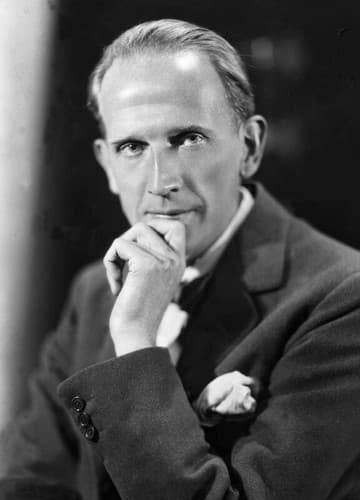
A.A. Milne was an English playwright, novelist, and poet, best known for his children's books featuring the character Winnie-the-Pooh. His collections of poems, When We Were Very Young and Now We Are Six, along with the stories Winnie-the-Pooh and The House at Pooh Corner, have become beloved classics of children's literature worldwide. Milne's work is celebrated for its gentle humor, whimsical characters, and exploration of childhood innocence.







