“I will not give up. I will not let them win.”
— Felix's internal resolve amidst hardship.

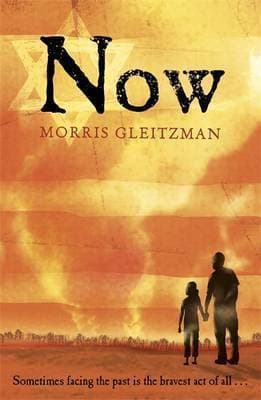
Morris Gleitzman (2010)
Genre
Children's / Historical Fiction / Young Adult
Reading Time
180 min
Key Themes
See below
Sign in to track this book
Zelda learns about her grandfather Felix's Holocaust past, understands his experiences, and forms a strong bond with him.
The story starts with young Zelda, named after her grandfather Felix's friend, living with him. Zelda is watchful and imaginative. She tries to understand Felix's odd habits and the often dark stories he tells about his past. Felix lives by routines and is very careful, often checking locks and windows, and showing a quiet sadness. Zelda notices he avoids talking directly about his childhood. Instead, he tells stories that suggest great danger and loss. She loves him but wants to know the real history behind his hidden tales and the sadness in his eyes, especially when he talks about World War II.
Felix gets sick and goes to the hospital, which worries Zelda. During her visits, Zelda meets Anya, an older patient who knows Felix and calls him 'Felix, the story-teller.' Anya's short comments about Felix's past, especially mentioning 'Zelda' in a sad way, make young Zelda more curious. Felix is still quiet or avoids details about his past. Zelda starts to connect his stories, Anya's hints, and the history she learned in school. She senses a sad history Felix has kept from her.
As Felix gets better, Zelda gently but firmly asks him to tell his real stories, not just the made-up ones. She tells him she is old enough and brave enough to hear the truth. This makes Felix start telling about his Holocaust experiences, beginning with his time in an orphanage, his escape, and his travels through war-torn Europe. He describes the terrible things he saw, losing his parents, and always fighting to survive. He talks about his friendship with the first Zelda, a brave girl, and the tragic way she died, which has bothered him for decades. This truth is hard for them both, but it brings a new level of understanding and closeness to their relationship.
Felix tells about his time with Zelda, a young Jewish girl he befriended, and how they worked together to save other Jewish children during the war. He describes how they found safety on a farm run by Mrs. Stanislawa, a kind but careful Polish woman who hid Jewish children. Felix and Zelda took on the dangerous job of moving children from hiding places to the farm. They often used Felix's storytelling to distract German soldiers or calm scared children. Their bond grew stronger through these dangerous missions. Zelda's courage and hope guided Felix. He talks about close calls and the constant fear they lived with, stressing the great responsibility they felt for the children's lives.
Felix tells the sad events that led to the first Zelda's death. He explains how a local boy, who had been friendly, turned them over to the Nazis. During a raid on the farm, Zelda, in a very brave act, created a distraction so Felix and the other children could escape. She drew the soldiers' attention, leading them away from the hiding place. Felix saw her capture and the tragic end, a memory that has filled him with guilt and sadness since. He says he deeply regrets not being able to save her, and how her death became a key moment in his life, shaping his careful nature and his commitment to protecting others.
After Zelda's death, Felix kept surviving, carrying his loss. He describes how he eventually found his way to a displaced persons' camp and then to Australia, where he built a new life. He talks about the difficulties of adjusting to peace, the lasting trauma, and the constant struggle to make sense of his past and present. He says the memory of Zelda and the other children he tried to save drove his goal to live a meaningful life. He found comfort in helping others and eventually married, though his past never fully left him. This part of the story helps young Zelda understand her grandfather's quiet strength and his deep capacity for love.
Young Zelda listens closely to Felix's stories, taking in the raw truth of his past. The revelations are painful but needed. They help her understand why Felix acts the way he does—his protective nature, his routines, and his deep sadness. She realizes his stories, though sometimes embellished, were his way of coping and sharing parts of his suffering. This shared honesty greatly strengthens their bond. Zelda, now knowing the full truth, feels a new sense of responsibility and connection to her namesake and the history she carries. She understands that her life comes from Felix's survival and strength, and from the memory of those lost.
With the truth now known, Felix and young Zelda's relationship grows deeper. Zelda no longer sees her grandfather as just an old man, but as a survivor, a hero, and someone who keeps important memories. Felix finds some peace in finally sharing his burden with someone who truly understands and accepts it. The book ends with hope and continuity. Zelda, now fully aware of her namesake's bravery and her grandfather's past, plans to honor their stories by living her own life with courage and kindness. They face the future together, stronger from their shared history and their family bond.
The Protagonist
Zelda moves from childlike curiosity and confusion to a mature understanding and acceptance of her grandfather's traumatic past, solidifying her bond with him.
The Protagonist/Mentor
Felix gradually moves from silence and veiled storytelling to openly sharing his traumatic past, finding a degree of peace and deeper connection with his granddaughter.
The Supporting/Posthumous Influence
Her story is revealed retrospectively, showing her ultimate sacrifice and enduring legacy in Felix's life.
The Supporting
Anya's minor but significant role is to provide a crucial external trigger for Zelda's quest for truth.
The Mentioned
Her story, told through Felix's memories, shows her unwavering courage and humanity amidst brutality.
The novel shows how stories, both real and made up, shape how we understand and remember. Felix first tells fantasy tales to protect young Zelda from his painful past, but these stories also hint at the truth. Young Zelda's desire for the 'real' stories helps Felix heal and share his full experiences. Telling and listening to the truth, even if painful, becomes a strong act of connection and remembrance. It shows that even fiction can hold deep truths.
“''Stories are like breathing for me, Zelda. If I stop, I'll die.''”
The lasting effect of the Holocaust on Felix is a main theme. His careful nature, his habits, and his deep sadness all come from his unresolved suffering. The book gently shows how memories, especially of loss and survival, keep shaping a person decades later. Felix's path to healing is helped by his granddaughter's love and her wish to understand. This shows that facing the past, even late, is important for emotional health and for finding peace.
“''It's like a film in my head, Zelda. I can stop it and start it, but I can never rewind it.''”
The connection between young Zelda and her grandfather Felix is the novel's emotional center. Their relationship shows how historical suffering and strength pass through generations. Young Zelda, named after Felix's lost friend, inherits his memories and keeps his story. Her understanding and acceptance of his past give Felix a sense of closure and make sure the lives and sacrifices of those lost are not forgotten. This creates a lasting legacy of remembrance and love.
“''You're like a piece of my past, Zelda, walking around in the present. You make me remember, but you also make me want to keep going.''”
The book highlights the great courage and strength of people, especially children, during the Holocaust. The first Zelda's act of sacrifice to save others, and Felix's strong will to survive and protect, show the human spirit's ability to be brave in terrible situations. Felix's continued life and his efforts to build a family after such suffering show his great strength. This emphasizes the lasting power of hope and the will to live.
“''She wasn't just brave, Zelda. She was the bravest person I ever knew.''”
Provides an innocent, curious, and empathetic perspective on Felix's past.
The story is primarily narrated by young Zelda, which allows the reader to experience the gradual unveiling of Felix's traumatic past through the eyes of a child. This perspective creates a sense of discovery and empathy, as Zelda's innocent questions and observations prompt Felix to open up. It also allows for a contrast between her present-day, relatively safe world and the horrors of Felix's past, making the historical revelations more impactful and personal.
Felix's recounted memories form a significant portion of the plot, revealing the past.
A major plot device is Felix's storytelling. Initially, he tells embellished or fantastical versions of his past. As the novel progresses, these 'stories within a story' become increasingly truthful and detailed, recounting his experiences during the Holocaust. These embedded narratives are crucial for revealing the historical context, the specific events, and the emotional weight of Felix's trauma, allowing the reader to access the past through his spoken words.
The name 'Zelda' connects the past trauma to present hope and legacy.
The fact that young Zelda is named after Felix's best friend, the original Zelda, serves as a powerful symbol. It represents the enduring memory of those lost in the Holocaust and the continuation of life and hope through subsequent generations. The name creates an immediate, profound link between Felix's traumatic past and his present love for his granddaughter, underscoring themes of legacy, remembrance, and the healing power of family connection.
A minor character's words trigger Zelda's deeper quest for truth.
Anya's brief interaction with young Zelda in the hospital, where she recognizes Felix and makes knowing comments about his past and the name 'Zelda,' acts as a crucial catalyst. Prior to this, Zelda's understanding of Felix's past was based on fragments and hints. Anya's words provide an external validation and a direct prompt for Zelda to push for the full truth, moving the plot from subtle curiosity to active investigation.
“I will not give up. I will not let them win.”
— Felix's internal resolve amidst hardship.
“It's hard to be brave when you're scared, but it's even harder to be brave when you're hungry.”
— Felix reflecting on the physical and emotional toll of his journey.
“Sometimes you have to pretend to be strong even when you're not.”
— Felix putting on a brave face for others, especially Zelda.
“I knew what a miracle was. It was when something good happened when you thought only bad things could happen.”
— Felix's understanding of small moments of kindness or luck.
“We're going to be safe now. We're going to be together.”
— Felix reassuring Zelda, trying to maintain a sense of security.
“The grown-ups were good at making things disappear. Like justice. And fairness. And food.”
— Felix's cynical view of the adult world during the war.
“I had to be brave. For Zelda. For myself. For all the people who weren't brave enough.”
— Felix's motivation to continue despite his fears.
“It's not fair. Why do they get to live and we don't?”
— Zelda's raw question about the injustice of their situation.
“You have to keep going, even when you don't know where you're going.”
— Felix's internal monologue about enduring the journey.
“I wanted to be a storyteller. To tell stories about all the good things that happened, even when there were bad things.”
— Felix's aspiration and a reflection of his coping mechanism.
“Love. That was what made people strong. Strong enough to do anything.”
— Felix's realization about the power of love, especially for Zelda.
“I promised myself I wouldn't cry. Not in front of Zelda. Not ever.”
— Felix's determination to remain strong for his companion.
“The past is gone. The future isn't here yet. All we have is now.”
— A central theme of the book, focusing on living in the present moment.
“Even in the darkest times, there's always a little bit of light.”
— Felix finding small glimmers of hope amidst despair.
Ready to see how well you understood this book? Take our interactive quiz with 10 questions.

Biography coming soon.

Dan Gemeinhart
4.5

Kate O'Hearn
4.4

Jeanne Birdsall
4.4

Jen Wang
4.4

Wendelin Van Draanen
4.3

John Marsden
4.3

Chris Van Allsburg
4.3

Jennifer A. Nielsen
4.2