“Life is a big, dark room, and we are children playing in it, fumbling for the light switch.”
— Aunt Hager's philosophical reflection on the struggles of life.


Langston Hughes (1930)
Genre
Historical Fiction
Reading Time
9 hours 58 min
Key Themes
See below
Sign in to track this book
In 1930s Kansas, young Sandy Rogers navigates adolescence and racial division, finding strength and identity through his mother's labor and his father's search for work.
The novel opens introducing young Sandy Rogers, who lives with his grandmother, Aunt Hager, in the small Kansas town of Stanton. His mother, Annjee, works as a housekeeper for the wealthy white Denby family in a nearby city, while his father, Jimboy, is a musician who is often away. Sandy's home is a gathering place for his aunts and uncles: Tempy, the ambitious aunt married to a successful porter, Willie-Mae, the lively aunt, and Uncle Dan, the irresponsible uncle. Sandy spends his days playing with his cousin Buster and watching the adult world, particularly the differences in goals and lifestyles among his relatives, all under Aunt Hager's watchful, religious eye.
Aunt Hager, deeply religious, takes Sandy to various church services and tent revivals, hoping he will share her faith. During one revival, the emotional intensity of the congregants, especially Willie-Mae, affects Sandy deeply. However, his aunts and uncles often avoid church or question its rules. Tempy, focused on social climbing, finds the emotional displays embarrassing. Willie-Mae, while sometimes caught up, prefers dancing and secular entertainment. These tensions show the generational and ideological divides within the family, as Aunt Hager tries to keep her family grounded in faith amidst worldly pleasures and the harsh realities of their lives.
Annjee, Sandy's mother, visits from her job in the city, bringing gifts and a sense of calm. Her visits are cherished moments for Sandy. Later, Jimboy, Sandy's father, returns briefly, bringing his guitar and a carefree spirit that both delights Sandy and worries Aunt Hager. Jimboy's return often involves music, laughter, and a disruption of Aunt Hager's orderly, religious household. While Sandy loves his father's charm, Jimboy's unreliability and lack of financial help cause ongoing friction with Aunt Hager, who sees his lifestyle as irresponsible. His departures are always bittersweet for Sandy, leaving him with longing.
Sandy sees the different philosophies of his aunts. Tempy, married to the successful hotel porter Mr. Rice, seeks respectability and assimilation into the middle class, often distancing herself from her working-class family and emphasizing proper behavior. She tries to guide Sandy towards a similar path. In contrast, Willie-Mae, free-spirited and passionate, works as a laundress but finds joy in dancing, parties, and love affairs, often leading to heartbreak. Sandy is drawn to Willie-Mae's energy and experiences the world of blues music and dance through her, offering a counterpoint to Aunt Hager's strict religious upbringing and Tempy's rigid social goals. These contrasting influences shape Sandy's understanding of identity and happiness.
Sandy begins attending the segregated school in Stanton, where he quickly learns about racial divisions. He observes the differences between his own school and the better-funded white schools, and experiences subtle and open prejudice. His education is shaped by both his teachers and his classmates, who share common experiences of poverty and discrimination. These early encounters with racism, though sometimes confusing, begin to solidify his understanding of his place in the world and the barriers faced by African Americans. He also develops a love for reading and learning, finding comfort and escape in books.
As Sandy grows older, Aunt Hager's health declines. Her age and the toil of her life as a washerwoman take their toll, making it harder for her to work. This decline worsens the family's already unstable financial situation. Annjee sends money regularly, but it is often not enough to cover all expenses, especially with Jimboy's continued absence. The family supports Aunt Hager, but the underlying anxiety about their future without her steady presence and income becomes clear. Sandy witnesses his grandmother's quiet dignity and strength as she faces her illness, deepening his respect and love for her.
Eventually, Aunt Hager dies, leaving a void in Sandy's life and the family. Her death marks the end of an era for the family; the central anchor of their home is gone. After her funeral, a somber but unifying event for the family, Annjee decides to take Sandy to live with her in the city where she works. This move is a turning point for Sandy, as he leaves the familiar surroundings of Stanton and the comforting, if sometimes stifling, presence of his grandmother, starting a new chapter in a different environment.
In the city, Sandy lives with Annjee in the servants' quarters of the wealthy white family she works for, the Denbys. He observes the contrast between their opulent lifestyle and his own. He attends a better-equipped, though still segregated, high school. Here, he meets new friends and teachers who encourage his intellectual curiosity and artistic interests. He experiences a different kind of racial dynamic, encountering more direct discrimination in public spaces but also finding greater opportunities for education and cultural enrichment than in Stanton. Sandy dedicates himself to his studies, seeing education as a path to a better future.
As Sandy matures, his understanding of racial injustice deepens. He witnesses the subtle condescension of the Denby family towards his mother, and experiences the broader societal limits placed on African Americans. At the same time, he discovers a talent for writing, particularly poetry. He finds inspiration in the lives of his family and community, and begins to use his art as a way to express himself and to deal with the complexities of his identity and experiences. His artistic pursuits become a source of personal fulfillment and a potential avenue for social commentary.
After high school, Sandy works various jobs – as a hotel bellboy, a waiter, and a porter – to save money for college. These experiences show him the harsh realities of labor for African Americans, often involving long hours, low pay, and demeaning treatment. Despite the physical and emotional toll, Sandy remains determined to pursue higher education. He continues to write in his spare time, his experiences fueling his artistic output. His mother, Annjee, fully supports his ambitions, sacrificing her own comfort to help him achieve his dreams, recognizing the value of education as a key to overcoming societal barriers.
Willie-Mae, still lively and experiencing her own romantic troubles, visits Sandy in the city. Her presence brings nostalgia for his childhood in Stanton and the simpler, yet often more emotionally raw, life there. She shares her stories of love, loss, and strength, often accompanied by blues music, reminding Sandy of the deep cultural roots and emotional expression that shaped his upbringing. This reunion reinforces that despite his pursuit of education and refinement, the spirit of his family and the music that filled their lives remain a part of who he is, offering both comfort and a sense of continuity.
Sandy finally enrolls in college, where he thrives academically. He is exposed to new ideas, diverse perspectives, and challenging intellectual discussions. His writing continues to develop, and he gains confidence in his voice and his ability to articulate the experiences of his people. College offers him a space for intellectual and personal growth, allowing him to bridge the gap between his working-class origins and his aspirations as an artist and intellectual. He grapples with the complexities of race, class, and identity in a more academic setting, further solidifying his commitment to using his talents for social good.
During a summer break from college, Sandy takes a job as a dishwasher in a hotel, a stark reminder of the manual labor his family endured. This experience, though physically demanding, gives him time for reflection. He thinks about Aunt Hager's unwavering faith, Annjee's tireless sacrifices, Jimboy's fleeting joys, and the different paths of Tempy and Willie-Mae. He recognizes the impact each of them had on his development and the collective strength of his family. This period of reflection solidifies his understanding of the 'laughter' and 'sorrow' that have shaped his life and the lives of African Americans.
As the novel concludes, Sandy is firmly on his path as a writer. He has learned from his past, understood his people's struggles, and found his voice. He recognizes that his art is not just personal but a way to represent and uplift the African American experience. He carries with him his family's legacy—their faith, their strength, their laughter, and their tears—and is prepared to use his talents to navigate and illuminate the complexities of a racially divided world. He is a young man coming into his own, armed with education, experience, and a clear sense of purpose.
The Protagonist
Sandy transforms from an innocent, observant boy into a self-aware, educated artist who understands his heritage and is committed to expressing the Black experience. He moves from passive observation to active engagement with his identity and purpose.
The Supporting
Aunt Hager remains steadfast in her faith and principles until her death, serving as a constant moral compass for Sandy and her family.
The Supporting
Annjee consistently prioritizes Sandy's well-being and education, embodying unwavering maternal love and sacrifice throughout the novel.
The Supporting
Jimboy remains largely unchanged throughout the story, a consistent source of fleeting joy and enduring irresponsibility, embodying the call of the road and a life lived outside conventional structures.
The Supporting
Tempy consistently prioritizes social climbing and respectability, remaining somewhat detached from the emotional core of her family.
The Supporting
Willie-Mae continues to live passionately, experiencing both joy and heartbreak, a constant reminder to Sandy of the emotional richness and resilience of life despite adversity.
The Supporting
Mr. Rice remains a stable, if somewhat static, figure, representing the aspirations of the rising Black middle class.
The Mentioned
Buster appears primarily in Sandy's early childhood memories, fading as Sandy moves to the city and his individual journey progresses.
The Supporting
The Denby family remains a static representation of white privilege and the societal structures Annjee and Sandy navigate.
The novel's title itself captures this central theme. Hughes shows the resilience and joy found within the African American community despite widespread hardship, racism, and poverty. Characters like Willie-Mae show 'laughter' through her love of dancing, music, and passionate living, even amidst personal heartbreaks. Aunt Hager's unwavering faith provides spiritual comfort and strength, a source of internal joy despite her physical toil. Conversely, 'sorrow' is clear in Annjee's endless labor and sacrifice, Jimboy's rootlessness, the family's constant financial struggles, and the systemic racial discrimination Sandy encounters. The story suggests that these two elements are linked, forming a complete and authentic experience.
“And it seemed to Sandy that if you were colored, laughter was almost as complicated as tears.”
Education is a key path to self-improvement, social mobility, and freedom from the limits of racism and poverty. Annjee's tireless work and sacrifice are driven by her desire to ensure Sandy receives a good education, seeing it as the key to a better future than her own. Sandy's dedication to his studies, from his early school days in Stanton to his college years, highlights this theme. His intellectual curiosity and eventual embrace of writing demonstrate how education empowers individuals to understand their world, express their experiences, and contribute to their community's broader advancement. It is a means of both personal and collective uplift.
“He knew that education was the key to a door he wanted to open, a door that led to a world beyond the one he knew.”
This theme is most clearly explored through Aunt Hager and her children. Aunt Hager represents deep, unwavering religious faith, finding comfort and moral guidance in the church. She tries to instill these values in Sandy and her own children, often clashing with their more secular inclinations. Willie-Mae's love for dancing and earthly pleasures, and Tempy's ambition for material success and social climbing, represent the 'worldly desires' that often compete with spiritual devotion. Sandy observes this tension, learning that different people find meaning and coping mechanisms in various aspects of life, whether in the strictures of the church or the liberating rhythm of the blues. The story explores the complexities of finding meaning in a challenging world.
“The church was the center of her life, and she tried to make it the center of theirs, but their feet seemed to lead them elsewhere.”
The novel explores what it means to be African American in early 20th-century America. Sandy's experiences, from the segregated schools in Stanton to his encounters with prejudice in the city, highlight the widespread nature of racism. The varying skin tones within the family (Tempy's lighter complexion versus others) also subtly touch upon internal colorism and its impact on social aspirations. The Denby family's condescension further illustrates the power dynamics of a racially divided society. Sandy's journey is one of coming to terms with his racial identity, understanding the systemic barriers, and finding pride and purpose in his heritage and his ability to express its complexities through art.
“He was a Negro, and that meant certain things, certain doors closed, certain paths made harder. But it also meant a strength, a laughter, a song.”
Despite their disagreements, financial struggles, and differing goals, the Rogers family shows immense strength. Aunt Hager provides a foundational sense of home and moral guidance. Annjee's unwavering love and sacrifice for Sandy are central. Even the flawed characters like Jimboy and Willie-Mae contribute to Sandy's upbringing, offering different facets of experience and emotional support. The family unit, though sometimes strained, is a support system against the harsh realities of their lives, providing both 'laughter' and comfort in times of 'sorrow.' Their collective experiences shape Sandy's identity and his understanding of belonging.
“They were poor, and colored, and sometimes sad, but they were family, and in that, there was a strength that could not be broken.”
The narrative follows Sandy's growth from childhood to young adulthood.
The novel is a classic bildungsroman, charting the physical, emotional, and intellectual development of its protagonist, Sandy Rogers. We witness Sandy's journey from an innocent, observant boy in rural Kansas to a self-aware, educated artist in the city. His experiences with family, religion, racism, and education gradually shape his understanding of himself and his place in the world. The narrative focuses on his internal and external transformations, emphasizing the formative experiences that lead to his eventual maturity and sense of purpose.
The story accurately depicts the social and economic conditions of African Americans in the early 20th century.
Hughes employs social realism to portray the daily lives, struggles, and aspirations of African Americans in 1930s Kansas and its surrounding cities. The novel meticulously details the realities of segregation, economic hardship, limited opportunities, and the pervasive impact of racism on individuals and families. It doesn't shy away from depicting the harsh working conditions, the financial anxieties, and the societal barriers, providing an authentic and unvarnished glimpse into a specific historical period and the experiences of a marginalized community. This realism grounds the emotional and thematic depth of the story.
Music (especially blues) and laughter represent resilience, expression, and cultural heritage.
Music, particularly the blues, and laughter serve as powerful symbols throughout the novel. Jimboy's guitar and Willie-Mae's love for dancing and blues music represent a vital form of emotional expression, cultural heritage, and a way to cope with hardship. Laughter, as the title suggests, is not merely superficial joy but a profound act of resilience and defiance in the face of sorrow. These elements symbolize the indomitable spirit of the African American community, their ability to find joy, express pain, and maintain their identity amidst adversity, offering a counterpoint to the pervasive struggles they face.
The use of characters with opposing values and lifestyles to highlight thematic tensions.
Hughes effectively uses contrasting characters to explore various aspects of African American experience. Aunt Hager's devout faith and traditional values are set against Willie-Mae's free-spirited, secular life and Tempy's materialistic aspirations. Jimboy's charming irresponsibility contrasts with Annjee's quiet sacrifice. These contrasts illuminate the diverse paths, coping mechanisms, and belief systems within the Black community. They also provide Sandy with a complex understanding of identity, morality, and happiness, forcing him to synthesize these different perspectives into his own worldview.
“Life is a big, dark room, and we are children playing in it, fumbling for the light switch.”
— Aunt Hager's philosophical reflection on the struggles of life.
“The blues is a feeling, not a color. It's when your heart aches so bad you can almost hear it.”
— Sandy's grandmother discussing the essence of the blues music.
“Sometimes you got to laugh to keep from crying.”
— A common saying within the community, reflecting their resilience.
“Books opened up a world to him, a world where black folks were not just servants or field hands, but kings and queens, poets and thinkers.”
— Describing Sandy's growing love for reading and its impact on his worldview.
“Poverty does not make a man less a man, only more determined.”
— An observation about the spirit of the characters facing economic hardship.
“He learned that day that there was a kind of beauty in sadness, too, a deep, quiet beauty that made you feel more alive.”
— Sandy's realization after experiencing a profound moment of sorrow.
“The church was the center of their world, a place of solace and strength, where their hopes and fears were sung into the heavens.”
— Narrator describing the role of the church in the African American community.
“White folks got their troubles, and colored folks got theirs. But troubles is troubles, no matter what color you are.”
— Aunt Hager's pragmatic view on universal human suffering.
“He wanted to be a man who could write down all the beautiful, sad, funny things he saw and felt.”
— Sandy's aspiration to become a writer, reflecting his artistic sensibility.
“Sometimes freedom ain't a place, it's a feeling inside you.”
— A character's reflection on the nature of true freedom, beyond physical location.
“The wind carried the scent of lilacs and poverty, a strange mixture that was the essence of his childhood.”
— Sandy's nostalgic reflection on the sensory memories of his upbringing.
“You can't let nobody tell you what you can't do. You got to find that out for yourself.”
— A piece of encouraging advice given to Sandy about pursuing his dreams.
“Music was the language of their souls, a way to express joy and sorrow when words were not enough.”
— Describing the profound role of music in the lives of the characters.
“He learned that there were many kinds of strength, not just the kind that could lift heavy things, but the kind that could endure, and hope, and dream.”
— Sandy's evolving understanding of true strength through his experiences.
Ready to see how well you understood this book? Take our interactive quiz with 10 questions.
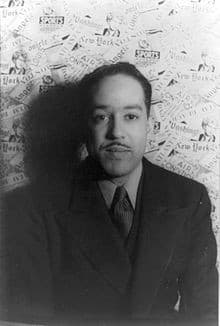
James Mercer Langston Hughes was an American poet, social activist, novelist, playwright, and columnist from Joplin, Missouri. One of the earliest innovators of the literary art form called jazz poetry, Hughes is best known as a leader of the Harlem Renaissance. He famously wrote about the period that "the Negro was in vogue", which was later paraphrased as "when Harlem was in vogue."







