“When you have nothing, you have nothing to lose.”
— Lynn reflecting on her desperate situation and the lengths she must go to.

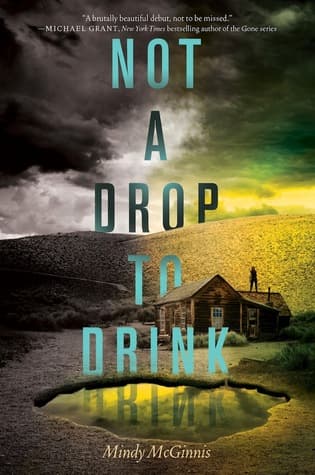
Mindy McGinnis (2013)
Genre
Fantasy / Science Fiction / Young Adult / Romance
Reading Time
300 min
Key Themes
See below
Sign in to track this book
In a dry, post-apocalyptic world, a young woman guards her family's last water source with a rifle, until desperate strangers threaten her isolated life.
Lynn lives a hard, isolated life with her Mother, guarding their pond, the only fresh water in a world with little rain. They live by strict survival rules: every stranger is a threat, and every drop of water is defended with force. Lynn is a good shot, taught by her Mother to shoot first. They constantly watch, hunt for food, and keep their home hidden. One day, Lynn meets a boy named Stebbs. She shoots him in the leg and leaves him after he tries to take water. This act shows the brutal reality of their life and Lynn's belief that survival means protecting their water at any cost.
Smoke on the horizon and footprints around the pond alert Lynn and her Mother to new threats. Someone is scouting their location. The tension grows when a woman, Lucy, appears, saying she is lost and needs water. Though Mother is suspicious, Lucy stays for a short time, always watched. Lucy offers companionship and a look at an outside world Lynn has not known. However, Lucy's real goals are unclear, adding to the unease. Lynn remains careful, remembering Mother's lessons about strangers.
The threats lead to a violent attack on their home. Raiders, led by Stebbs (the same boy Lynn shot, now seeking revenge), ambush them. In the fight, Mother is killed defending the pond. Lynn, sad but driven by instinct, fights off the attackers, getting hurt and seeing her only family die. With Mother gone, Lynn is alone, dealing with grief and the big job of protecting the pond. This event breaks her world and makes her rely only on her skills and Mother's harsh lessons.
After the attack, a boy named Eli appears near the pond. Unlike other strangers, Eli is not aggressive; he is quiet, good at finding things, and seems lost and in need. Lynn, wary and still grieving Mother's death, lets him stay, seeing his potential usefulness and perhaps a need for companionship. Eli hunts well and is a calm presence. Their relationship is based on need and survival, slowly changing from suspicion to trust. Eli helps Lynn with daily survival, and his presence starts to soften Lynn, showing her a different way to live.
Lucy returns, this time with a more urgent request. She says she is part of a community, a struggling settlement called 'The Grove,' some distance away. Their water source has dried up, and they are desperate. Lucy explains her earlier visit was to scout the pond for her people. This news challenges Lynn's isolated view, making her think about other people trying to survive, not just as threats, but as possible neighbors. Lucy's return also brings the problem of sharing their water, an idea against everything Mother taught Lynn. Lynn struggles with the moral issues and dangers of helping others.
Driven by curiosity, duty, and a new desire for connection, Lynn agrees to go with Lucy and Eli to The Grove. The journey is hard and dangerous, but it shows Lynn the dry land beyond her familiar woods. At The Grove, Lynn sees many people living together, sharing resources, and trying to rebuild society. She meets people like the kind healer, Mrs. Montgomery, and sees children playing. This experience is a big change for Lynn, who has only known isolation and violence. She sees the community's struggles and their great need for water, which makes her conflict about her pond stronger.
Even at The Grove, Stebbs and his raiders are a threat. News reaches the community that Stebbs is looking for water sources and attacking anyone in his way. Lynn realizes her pond is not just her own, but a possible target for Stebbs, who wants revenge on her. The Grove community is also vulnerable, and their low water supply makes them an easy target. This shared enemy creates a bond between Lynn and the people of The Grove, as they realize their survival is linked. Stebbs's threat makes Lynn think about group defense instead of just protecting herself.
Lynn, with her knowledge of the land and her survival skills, helps plan how to defend her pond and The Grove. She trains some community members in basic defense and ambush tactics, using her skills with guns and wilderness survival. Eli, with his quiet strength and tracking abilities, is her partner. The plan involves setting traps, placing lookouts, and preparing for a coordinated defense. Lynn thinks about the irony of teaching others to fight for a resource she once guarded for herself, showing a change in her view from isolation to community responsibility.
The fight with Stebbs and his raiders happens near Lynn's pond. It is a brutal fight. Lynn, Eli, Lucy, and the armed members of The Grove fight to protect their lives and the water. Lynn uses her shooting skills effectively, targeting Stebbs. The fight is intense, with people hurt on both sides. In a key moment, Lynn faces Stebbs, ending his attacks and avenging her Mother's death. The battle shows Lynn's growth, as she fights not just for herself, but for the community she is now part of. The victory is hard-won, but it secures their future, for now.
After the battle, peace settles over the land. Stebbs and his raiders are defeated, and the pond is safe. Lynn, though still affected by her past, begins to heal. She decides to live with The Grove, no longer isolated. She and Eli, whose bond grew during their time together, become important members of the community. Lynn teaches others her survival skills, changing from a lone protector to a valuable leader. The pond, once a symbol of isolation, becomes a symbol of shared survival and hope for a future where people can live together and rebuild, showing Lynn's journey from fierce independence to interdependence.
The Protagonist
Lynn transforms from an isolated, ruthless survivor into a leader who embraces community and interdependence, learning to trust and protect others beyond herself. She learns that true strength can be found in shared purpose.
The Supporting
Her character arc is static, serving as a foundational influence on Lynn's early life and a catalyst for Lynn's growth after her death.
The Supporting
Eli's arc is less pronounced, but he evolves from a lost boy seeking refuge to a reliable partner and a source of emotional support for Lynn, growing in confidence and contributing to the community.
The Supporting
Lucy transitions from an ambiguous figure scouting for her community to a clear ally who helps Lynn understand the value of collective action.
The Antagonist
Stebbs's arc is one of escalating villainy, driven by revenge and desperation, culminating in his ultimate defeat.
The Supporting
Mrs. Montgomery's arc is static, serving as a pillar of hope and kindness within The Grove, guiding Lynn towards a more communal understanding of life.
The Mentioned/Collective Supporting
The Grove's collective arc is one of persistent struggle and eventual resilience, strengthened by Lynn's expertise and the defeat of Stebbs.
The novel's main theme is the realities of survival in a world without clean water. Lynn's life is shaped by the need to adapt to scarcity, danger, and the harsh environment. This appears in her hunting and shooting skills, her ability to use few resources, and her defense of the pond. The novel shows how people and communities change their morals and methods to survive, often at a high personal cost. The Grove community's struggle for water and protection is another part of this theme.
“Regret was for people with nothing to defend, people who had no water.”
Lynn's life starts in extreme isolation with her Mother, where every stranger threatens their only resource. This isolation creates deep distrust of others and a belief that self-reliance is the only way to survive. However, through her interactions with Eli and Lucy, and her journey to The Grove, Lynn must face the limits and emotional cost of total isolation. The novel explores the conflict between the perceived safety of being alone and the human need for connection, cooperation, and strength in numbers. Lynn's change shows the power of community.
“The pond was hers. It was everything. And sometimes, everything wasn't enough.”
Loss is everywhere in the story. The world itself has suffered great loss, leading to water scarcity. More personally, Lynn feels deep grief after her Mother, her only family, dies. This loss makes her grow up fast and face the world alone, while also shaping her choices and feelings. The novel shows the raw pain of loss and how it can both harden and motivate someone. The collective loss felt by the people of The Grove, especially their dwindling water supply and loved ones, also highlights this theme.
“The silence was the loudest thing in the world, now that Mother was gone.”
Water scarcity forces characters to make hard, often morally unclear choices. Lynn and her Mother's 'shoot first' rule, leaving people to die of thirst, challenges common ethics. The novel asks readers to consider what lines are crossed when survival is most important. Characters like Lucy and Stebbs also operate within their own desperate moral rules. The story explores whether compassion is a luxury in a dying world, or if it is needed to rebuild society. Lynn's journey involves re-evaluating her inherited moral code and finding a balance between protection and humanity.
“Water meant life. And life meant killing to keep it.”
At its core, the novel is a coming-of-age story for Lynn. She begins as a girl following her Mother's teachings, but through traumatic events and new relationships, she becomes her own person. She learns to make her own decisions, question old beliefs, and define her own morals. Her journey from a solitary, tough protector to a leader in a community marks her change from childhood dependence to adult responsibility and self-discovery. She learns about love, loss, and the complexities of human connection.
“She was alone. She was free. She was terrified.”
Represents life, scarcity, and the central conflict of survival.
The pond is not just a geographical location but a powerful symbol in the novel. It represents life itself in a parched world, the ultimate resource to be defended at all costs. Its scarcity drives all conflict and shapes the characters' moral choices. For Lynn, it initially symbolizes her isolation and the brutal lessons of her Mother. As the story progresses, it evolves to also symbolize hope, the potential for shared future, and the reason for community. Its protection is the driving force behind every major plot point and decision.
Allows deep insight into Lynn's isolated and hardened mindset.
The story is told entirely from Lynn's perspective, providing an intimate look into her thoughts, fears, and observations. This narrative choice immerses the reader in her harsh reality and allows for a nuanced understanding of her internal struggles as she grapples with her Mother's teachings, the arrival of strangers, and the concept of community. It highlights her transformation as her worldview gradually expands beyond her isolated existence, making her emotional journey more impactful and personal.
Creates a backdrop of extreme scarcity and danger, shaping character motivations.
The novel's setting is a world devastated by drought, where environmental collapse has led to extreme resource scarcity, particularly water. This setting is crucial as it creates the high stakes for every action and decision. It justifies the characters' ruthless behavior and the constant threat of violence. The barren landscape, dried-up rivers, and the desperate search for water are not just scenery but active forces that drive the plot, define character motivations, and underscore the novel's themes of survival and morality.
Builds tension and prepares the reader for inevitable conflicts and tragedies.
The novel frequently uses foreshadowing, particularly through Mother's constant warnings about strangers and the dangers of the outside world. These warnings, often delivered with a grim certainty, build a pervasive sense of dread and prepare the reader for the inevitable attacks and betrayals. For example, Mother's insistence on constant vigilance and her lessons on shooting first strongly hint at the violent confrontations to come, making events like her own death feel both tragic and, in a way, anticipated within the established rules of their world.
“When you have nothing, you have nothing to lose.”
— Lynn reflecting on her desperate situation and the lengths she must go to.
“Water is life. Life is water.”
— A recurring mantra that underscores the central theme of the book.
“You can't save everyone, Lynn. Sometimes you just have to save yourself.”
— Eli advising Lynn on the harsh realities of their post-apocalyptic world.
“Fear is a weapon. Use it.”
— Lynn's grandmother teaching her how to protect their pond from intruders.
“The world doesn't care about your feelings. It only cares if you can survive.”
— A stark reminder of the brutal environment Lynn lives in.
“Sometimes the hardest choices are the only choices.”
— Lynn making difficult decisions to ensure her and others' survival.
“Hope is a dangerous thing in a world with no water.”
— Lynn's cynical view on hope in their desolate future.
“A promise is only as good as the person who makes it.”
— Lynn's cautious approach to trust, given the unreliable nature of people in her world.
“The silence was louder than any scream.”
— Describing the profound emptiness and isolation of their world.
“We are all just trying to make it to tomorrow.”
— A simple statement reflecting the daily struggle for existence.
“Love can be a weakness, or it can be the strongest thing you have.”
— Lynn grappling with her feelings and their implications for survival.
“Every drop counts. Every single one.”
— Emphasizing the extreme scarcity and value of water.
“You learn to read the land, to read the sky. They tell you everything you need to know.”
— Lynn's grandmother teaching her essential survival skills and observation.
“The past is gone. There's only now, and what you do with it.”
— A pragmatic view on moving forward in a world where history holds little comfort.
Ready to see how well you understood this book? Take our interactive quiz with 10 questions.







