“It’s not the outside, but the inside that counts.”
— A recurring theme about inner beauty versus outward appearance, often discussed by Terra's mother.

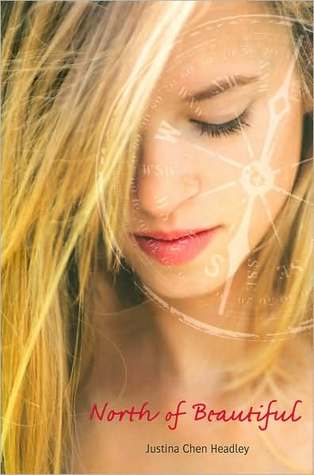
Justina Chen (2009)
Genre
Young Adult / Romance
Reading Time
370 min
Key Themes
See below
Sign in to track this book
A teen with a noticeable facial birthmark struggles with her controlling father and preconceived notions of beauty when a quirky Goth boy and an unexpected journey force her to redefine her path.
Terra Cooper lives in a small Northwestern town, feeling stifled by her controlling father, Robert, and her facial birthmark, which she calls her 'flaw.' She carefully applies makeup to hide it, a habit her father reinforces by suggesting she 'fix' her face. Her mother, Grace, seems distant, focused on her gardening. Terra dreams of escaping to an East Coast college, specifically Brown, a plan she keeps secret from her father, who expects her to attend the local university. She works part-time at a bakery, saving money, and navigates high school with a sense of detachment, often feeling invisible despite her height and blonde hair.
One rainy evening, Terra is in a minor car accident with a Goth boy named Jacob. The collision is small, but Jacob's unusual demeanor and direct gaze, which seems to see past her 'flaw,' immediately intrigue Terra. He is quirky, artistic, and unafraid to challenge her ideas about beauty and herself. Jacob's car is damaged, and he needs a ride to his grandmother's house, which Terra reluctantly provides. This unexpected meeting disrupts Terra's carefully planned world and sets her on a new path, forcing her to confront her insecurities and the superficiality she often shows.
Jacob takes Terra to his grandmother's tattoo parlor, a space filled with art and unconventional people. Here, Terra meets Jacob's grandmother, a wise and free-spirited artist who values individuality. Jacob, an artist himself, begins to sketch Terra, capturing her essence in a way no one ever has, including her birthmark, which he sees as a unique feature. This experience contrasts sharply with Terra's sterile home and her father's rigid expectations. The tattoo parlor becomes a place where Terra can explore a different kind of beauty and self-expression, away from her father's influence.
Terra's father, Robert, discovers her secret college applications to East Coast schools. Angry about her perceived defiance and deviation from his plans, he grounds her and forbids her from seeing Jacob. He believes Jacob is a bad influence and a distraction from Terra's 'proper' future. Robert's controlling nature grows, creating a deeper divide between him and Terra. This confrontation shows the extent of Robert's desire to control Terra's life and her growing desperation to break free from his suffocating grip, strengthening her resolve to follow her own path.
Despite her father's prohibition, Terra continues to secretly see Jacob. He gives her a beautiful, hand-drawn map of the world, filled with intricate details and imagined places, urging her to explore and find her own path. This map symbolizes freedom, adventure, and the idea that beauty can be found in imperfection and the unknown. It is a gesture that resonates deeply with Terra, who has always felt confined. The map becomes a physical representation of the journey she wants to take, both physically and emotionally, away from her father's control and towards self-discovery.
Terra discovers that her mother, Grace, has been secretly planning a trip to Italy, a lifelong dream she postponed. She also finds a hidden box of letters and photographs that reveal her father's past as an artist who once dreamed of traveling the world. These discoveries change Terra's view of her parents, showing them as individuals with suppressed dreams and hidden sorrows. Her father's controlling behavior is partly explained by his own unfulfilled aspirations and perhaps a desire to protect Terra from similar disappointment, though in a misguided way.
Overwhelmed by her father's control and her family's secrets, Terra decides to run away. Jacob, always supportive of her freedom, joins her on a spontaneous road trip, using the map he gave her as their guide, even if it leads to imaginary destinations. They travel North, away from her stifling home, embracing the unknown. This journey is a turning point for Terra, allowing her to experience independence and freedom for the first time. Away from the pressures of her town and family, she begins to shed her insecurities and embrace her authentic self, finding comfort and strength in Jacob's acceptance.
During their travels, Terra gradually stops relying on makeup to hide her birthmark. Jacob's consistent admiration and the freedom of the open road help her see her 'flaw' not as a defect, but as a unique part of her identity. She begins to embrace it, realizing that true beauty comes from within and from self-acceptance, not from fitting external standards. This transformation is empowering, allowing Terra to feel genuinely beautiful and confident in her own skin, a sharp contrast to her earlier self-consciousness. She learns to appreciate the details of her own face, just as Jacob always has.
After her journey with Jacob, Terra returns home, empowered and ready to confront her parents. She shares her newfound self-acceptance and challenges her father's controlling nature, revealing her understanding of his own suppressed dreams. This leads to a painful but necessary conversation, where her parents begin to acknowledge their own regrets and the impact of their actions on Terra. Her mother, inspired by Terra's courage, decides to pursue her dream of traveling to Italy. The family, though still fractured, begins to heal and understand, recognizing the need for individual freedom.
Terra ultimately decides against attending Brown, realizing that her true path is not about escaping to a prestigious university, but about embracing her own journey of self-discovery. She chooses a smaller, more artistic college that aligns with her appreciation for authenticity and creativity. Her relationship with Jacob deepens, built on mutual respect and acceptance. Terra has learned to navigate her own desires, make her own choices, and define beauty on her own terms. The novel concludes with Terra embarking on her unique future, North of Beautiful, confident in her identity and the path she has chosen, free from societal expectations and family pressures.
The Protagonist
Terra transforms from a self-conscious, controlled girl into a confident, self-accepting young woman who embraces her unique beauty and chooses her own path.
The Supporting/Love Interest
Jacob remains a consistent, supportive force, his unwavering acceptance helping Terra to grow and see her own beauty.
The Antagonist/Supporting
Robert slowly begins to understand his own past and the impact of his control, leading to a tentative step towards reconciliation with Terra.
The Supporting
Grace moves from a state of quiet resignation to finding the courage to pursue her own long-deferred dreams.
The Supporting
Jacob's Grandmother remains a steady source of wisdom and acceptance, guiding Terra indirectly.
The Mentioned
Not applicable, as she is a mentioned character.
The novel explores how beauty is seen, both externally and internally. Terra initially believes beauty is about perfection and hiding her birthmark, influenced by societal standards and her father's comments. Jacob, however, sees beauty in imperfection and uniqueness. Through their relationship and Terra's journey, the book argues that true beauty comes from self-acceptance and embracing one's authentic self, rather than conforming to superficial ideals. This is clear when Jacob sketches Terra, highlighting her birthmark as a feature, not a flaw, and when Terra eventually stops wearing makeup during their road trip.
“Maybe beauty was something you created, not something you were.”
A main theme is Terra's journey to self-acceptance. Insecure about her birthmark, Terra struggles with her identity, feeling defined by her 'flaw.' Her path involves rejecting external pressures and developing a sense of self-worth. Jacob's unconditional acceptance helps her see herself differently. The road trip symbolizes her physical and emotional journey away from a life dictated by others' expectations, leading her to embrace her unique identity, including her birthmark, as an integral part of who she is. This journey is important for her to find her own voice and make independent choices about her future.
“My face, my flaw, was part of me, and it was beautiful.”
The conflict between Terra's desire for independence and her father Robert's control is a driving force. Robert's unfulfilled dreams and anxieties lead him to micromanage Terra's life, from her college choices to her appearance. This theme highlights the generational struggle for autonomy and the damaging effects of parents projecting their own desires onto their children. Terra's decision to choose her own college and path, despite her father's disapproval, shows her triumph in establishing her independence and breaking free from his influence. The revelation of her parents' own suppressed dreams adds complexity to this theme, showing the cyclical nature of unfulfilled aspirations.
“He didn't want me to have a life, he wanted me to have his life.”
Terra initially sees her small town home as stifling and a place she desperately wants to escape. Her journey with Jacob, though geographically aimless, helps her redefine what 'home' means. It shifts from a physical location to a feeling of belonging and acceptance found within herself and with others who appreciate her authenticity. The tattoo parlor, with its unconventional inhabitants, becomes a temporary 'home' where she feels seen. By the end, Terra realizes that home is not just a place, but where she feels most true to herself, allowing her to eventually return and redefine her relationship with her actual home and family.
“Home wasn't just a place. It was a feeling. A feeling of being seen, understood, and loved.”
A visible facial 'flaw' that symbolizes Terra's insecurities and journey to self-acceptance.
Terra's birthmark is the central external conflict she faces, driving her initial self-consciousness and desire for concealment. It serves as a constant physical reminder of her perceived imperfection, exacerbated by her father's suggestion to 'fix' it. As the story progresses, the birthmark transforms from a symbol of shame into a symbol of her unique identity and strength. Jacob's acceptance of it, and Terra's eventual embrace of it, marks her significant growth and the novel's core message about true beauty and self-love.
A hand-drawn map representing freedom, imagination, and the journey of self-discovery.
Jacob's gift of a hand-drawn, fantastical map is a powerful symbol. It represents not just physical travel, but also the journey of self-discovery, the embrace of the unknown, and the idea that one's path doesn't have to be conventionally charted. For Terra, who feels trapped by her father's rigid plans, the map offers an alternative, imaginative way to navigate her life. It encourages her to explore her inner landscape and reminds her that beauty and meaning can be found in unexpected places, 'North of Beautiful'.
A bohemian space symbolizing authenticity, artistic expression, and unconventional beauty.
Jacob's grandmother's tattoo parlor serves as a sanctuary and a stark contrast to Terra's sterile home life. It's a place where individuality is celebrated, and 'flaws' are seen as unique features. The art of tattooing itself, permanently marking the body, reinforces the theme of embracing one's true self and making conscious choices about one's identity. For Terra, it's a new world that opens her eyes to different perspectives on beauty and self-expression, fostering her own journey toward authenticity.
A hidden collection revealing the suppressed dreams and past of Terra's parents.
The discovery of her father's old letters and photographs, revealing his past as an artist and his own unfulfilled dreams of travel, is a crucial plot device. It provides Terra with a deeper understanding of her parents' complexities and the roots of her father's controlling behavior. This revelation humanizes her father and helps Terra see him not just as an antagonist, but as a flawed individual with his own regrets. It also highlights the theme of suppressed dreams and the impact of parental choices on the next generation.
“It’s not the outside, but the inside that counts.”
— A recurring theme about inner beauty versus outward appearance, often discussed by Terra's mother.
“Every scar tells a story. Every story makes you who you are.”
— Terra reflecting on her birthmark and the journey it represents.
“Sometimes you have to get lost to find yourself.”
— Terra's journey to Alaska is a physical and metaphorical search for identity.
“Beauty isn't about being perfect. It's about being real.”
— Terra's evolving understanding of beauty, moving beyond conventional standards.
“The hardest part of growing up is realizing that not everyone you love is going to love you back in the same way.”
— Terra's complex relationship with her mother and her desire for unconditional acceptance.
“You can't choose your family, but you can choose how you let them affect you.”
— Terra grappling with her mother's criticisms and trying to assert her own independence.
“Love isn't about fixing someone. It's about loving them, flaws and all.”
— Terra's developing relationship with Jacob, and the acceptance she finds with him.
“Sometimes the most beautiful things are the ones that are a little broken.”
— A reflection on the unique charm of imperfections, mirroring Terra's own journey.
“Being brave isn't about not being scared. It's about doing it anyway.”
— Terra facing her fears about her appearance, her future, and new experiences.
“The world is full of beautiful places, but the most beautiful ones are the ones you share with someone you love.”
— Terra experiencing the Alaskan wilderness with Jacob, highlighting the importance of connection.
“Don't let anyone else define your worth.”
— Terra's internal struggle to overcome her mother's judgments and embrace her own self-worth.
“It’s okay to not be okay. It’s even better to ask for help.”
— Terra learning to lean on others and admit her vulnerabilities.
“The greatest adventure is finding yourself.”
— A summary of Terra's entire journey to Alaska and her personal growth.
“Sometimes the people who love you the most can hurt you the deepest.”
— Terra's painful experiences with her well-meaning but critical mother.
“True beauty shines from within, a light that no one can ever take away.”
— Terra's ultimate realization about her own inherent worth and beauty.
Ready to see how well you understood this book? Take our interactive quiz with 10 questions.