“Every time you run out there, it's like going to war. You get beaten, battered, and bruised, and then you get up and do it again next Sunday.”
— Phil Elliott reflecting on the physical toll and relentless nature of professional football.

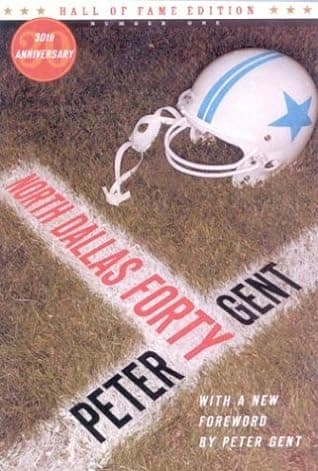
Peter Gent (1973)
Genre
Literary Fiction
Reading Time
420 min
Key Themes
See below
Sign in to track this book
In the drug-fueled, pain-riddled world of 1970s professional football, a rebellious receiver fights for survival and meaning as his body and mind are pushed to their breaking point over eight brutal days.
The novel opens with Phil Elliott, a wide receiver for the North Dallas Bulls, waking up in a haze after a night of heavy drinking and drug use. His body is a wreck, full of injuries from years of professional football – a broken nose, bad knees, and general soreness that never truly goes away. He thinks about the superficiality of his life and the lives of his teammates, many of whom also rely on pills and alcohol to cope with the pain and pressure of their careers. Phil’s girlfriend, Charlotte, is tired of his self-destructive habits and the constant presence of football in their lives. He struggles to get out of bed, the physical toll of the game always with him.
Phil goes to practice, a routine of pain and forced friendship. Coach Johnson, a quiet and demanding figure, pushes the players hard, caring about winning above all else, often at the expense of their long-term health. Phil watches how his teammates cope: some, like Seth Maxwell, the star quarterback, are charming but also depend on substances; others are quiet, their suffering kept inside. During drills, Phil is very aware of the risk of more injury, but the competitive drive and the habit of playing through pain override his concerns. Practice is a small example of their lives: intense, physically punishing, and lacking real emotional connection.
After practice, Phil visits the team doctor, a man who easily gives out painkillers, muscle relaxers, and stimulants without much concern for the players' health. This scene shows the drug culture built into professional football. Phil, like many of his teammates, has become dependent on these medications to function, both on and off the field. The doctor's office is full of injured players, all seeking temporary relief from their physical pain. Phil thinks about the irony of being paid well to destroy his body while being given the tools to numb the consequences, further blurring the lines between treatment and addiction.
Phil attends a team party, a social event meant to show success and glamour, but which quickly becomes a wild display of excess. He watches the wives and girlfriends, many of whom are as lost and dependent as the players themselves. Conversations are superficial, full of locker-room talk and hidden worries. Phil feels detached, an observer in his own life. He sees Seth Maxwell's easy charm and magnetic personality, but also the underlying emptiness that drives his pleasure-seeking life. The party is a clear reminder that even off the field, the players are still performing, keeping up a facade for themselves and the public.
Charlotte, fed up with Phil's self-destructive behavior and the all-consuming nature of his football career, gives him an ultimatum. She tells him she loves him deeply but cannot keep watching him destroy himself. She wants a life with him that goes beyond football, a future free from constant pain, pills, and superficiality. This confrontation makes Phil seriously consider his choices and their effect on those he cares about. He knows her concerns are valid but feels trapped by his profession's demands and the identity he has built around it. The conversation leaves him torn between his love for Charlotte and his ingrained commitment to the game.
Game day arrives, a mix of nervous energy and practiced routine. Phil goes through his pre-game rituals, which include a careful regimen of painkillers and injections to numb his various injuries. He thinks about the physical and psychological toll of each game, knowing that every play could be his last. The locker room is tense, filled with a mix of bravado and quiet worry. Coach Johnson gives a rousing, though clichéd, speech, reinforcing the team's win-at-all-costs mentality. Phil puts on his pads, his body protesting, but his mind focused on the task ahead, on the temporary escape the game itself provides.
The game itself is a blur of intense physicality, strategic plays, and moments of both pain and excitement. Phil makes important catches, takes brutal hits, and experiences the brief high of success. He watches his teammates' ferocity, the opposition's cunning, and the raw, animalistic nature of professional football. Despite the pain, there are moments of pure athletic grace and teamwork that remind him why he plays. However, these moments are mixed with the constant awareness of his body breaking down, the knowledge that each collision takes a toll. The crowd's roar, the pressure to perform, and the sheer violence of the sport combine into an overwhelming sensory experience.
After the game, win or lose, the immediate aftermath is a mixture of exhaustion and pain. Phil's body aches in new places, and old injuries flare up. The locker room shows both celebration and quiet suffering. The team management, represented by the general manager and owner, offers pleasantries and empty promises, showing little real concern for the players' long-term health. Phil overhears discussions about player trades and contract negotiations, reinforcing the idea that players are ultimately disposable. He begins to question the value of sacrificing his body for a system that seems to care so little about the individuals involved.
In the quiet moments after the game, Phil thinks about Charlotte's ultimatum and his growing disappointment with the football lifestyle. He realizes that his identity has become tied to the game, but that this identity is slowly destroying him. The thought of a life free from pain, constant pressure, and the superficiality of the football world begins to take hold. He imagines a future with Charlotte, one where he can pursue other interests and live a more authentic life. This contemplation is not easy, as leaving football means abandoning everything he has known, but the desire for a healthier, more meaningful existence starts to outweigh the fear of the unknown.
As the season ends, the North Dallas Bulls' performance, while not disastrous, disappoints the demanding management. Phil continues to play through pain, his body showing his resilience and the sport's brutality. He observes the fate of other players – some are cut, others face uncertain futures. The final game is played, and post-season discussions begin. Phil receives a contract offer, but also the clear reality of what another year of football would mean for his deteriorating body and his relationship with Charlotte. The decision weighs heavily on him, representing a choice between a familiar, painful path and an uncertain, but potentially healthier, future.
After much internal struggle and a deep conversation with Charlotte, Phil makes the important decision to retire from professional football. This choice is not made lightly; it means walking away from the only life he has ever truly known, the fame, the friendship, and the adrenaline. However, the prospect of a future free from chronic pain, drug dependency, and the dehumanizing aspects of the sport ultimately wins. He tells the team management of his decision; they react with a mix of pretended disappointment and practical indifference. Phil steps away from the game, ready to start a new chapter with Charlotte, uncertain of what lies ahead but hopeful for a life of real connection and well-being.
The Protagonist
Phil evolves from a resigned participant in the destructive football lifestyle to a man who chooses to reclaim his health and identity by leaving the sport.
The Supporting
Charlotte consistently challenges Phil's choices, ultimately empowering him to make a life-altering decision for their future.
The Supporting
Seth remains largely unchanged throughout the narrative, serving as a foil to Phil's journey of self-discovery.
The Antagonist
Coach Johnson's character remains static, representing the unchanging, demanding nature of the football establishment.
The Supporting
Jo Bob serves as a consistent, loyal friend, his arc reflecting the enduring nature of camaraderie amidst hardship.
The Supporting
Shaddock's character remains consistent as a symbol of the uncaring, profit-driven nature of professional sports ownership.
The Mentioned
The doctor's actions demonstrate a consistent pattern of enabling player drug use, underscoring a systemic problem.
The novel clearly shows how professional football treats players as disposable goods. Phil and his teammates are valued only for their physical performance, with their long-term health, emotional well-being, and personal lives largely ignored by management and coaches. The constant pressure to play through pain, the systemic over-medication, and the indifference of the owners (like O.W. Shaddock) all contribute to players feeling used up and discarded. This is seen in scenes where players easily receive painkillers from the team doctor, or when Phil overhears discussions about trades, reinforcing the idea that they are merely assets.
“They bought your body and they owned your mind.”
A common theme is the widespread use of drugs and alcohol among players to cope with physical pain, emotional emptiness, and career pressures. Phil's reliance on painkillers and his heavy drinking, mirrored by Seth Maxwell's pleasure-seeking, illustrate the destructive cycle. The team doctor's easy dispensing of pills highlights how the system itself encourages this addiction. The characters are caught in a spiral of seeking temporary relief, which only worsens their long-term problems, blurring the lines between treatment and abuse. This struggle is central to Phil's internal conflict and his eventual decision to leave the game.
“The pills were a crutch, a way to make it through the day, through the game, through the pain.”
The novel contrasts the public view of professional football as glamorous and heroic with the harsh, often brutal reality players experience. While there are moments of athletic glory and cheering crowds, these are overshadowed by constant physical pain, emotional isolation, and the superficiality of their lives off the field. Team parties, for instance, are shown as empty displays of excess rather than real social connection. This theme is explored through Phil's cynical observations and his growing disappointment with the 'dream' of professional sports.
“It was a pretty picture, a beautiful lie, and everybody bought it.”
Phil's journey is a search for his true self beyond his identity as a football player. He realizes that the game has defined him, but also that it is slowly consuming him. His relationship with Charlotte offers a glimpse of a more authentic life, built on real connection and personal well-being rather than physical performance and fleeting fame. His internal struggles involve letting go of the identity imposed by the sport and finding a purpose not tied to physical ability or others' approval. His decision to retire is the ultimate act of reclaiming his identity.
“He wanted to be more than just a body, more than just a number.”
Phil Elliott's thoughts and reflections provide deep insight into his struggles.
Phil Elliott's extensive internal monologues are a primary narrative device. They allow the reader to delve into his cynical observations, his physical and emotional pain, his reflections on the football world, and his growing disillusionment. These monologues reveal his intelligence, his awareness of the system's flaws, and his struggle with self-destruction. They are crucial for understanding his motivations and the emotional weight of his eventual decision to leave football, providing depth beyond the surface-level action.
Characters like Seth Maxwell highlight Phil's internal conflict and choices.
Seth Maxwell serves as a significant foil to Phil Elliott. While both are talented athletes deeply embedded in the destructive football culture, Seth embraces the hedonistic lifestyle without Phil's same level of introspection or desire for change. Seth's effortless charm and continued descent into excess highlight Phil's growing awareness and his eventual choice to seek a different path. By presenting a character who remains unchanged, the novel emphasizes the significance of Phil's personal evolution and the difficult nature of breaking free from the system.
Player injuries symbolize the dehumanizing cost of professional football.
The constant physical pain and numerous injuries suffered by Phil and his teammates serve as a powerful symbol throughout the novel. Each ache, bruise, and broken bone represents the literal and metaphorical cost of playing professional football. It highlights the dehumanizing aspect of the sport, where players' bodies are sacrificed for entertainment and profit. The reliance on painkillers to mask this pain further underscores the theme of self-destruction and the systemic disregard for player welfare, making the body a direct metaphor for the damaged lives of the athletes.
The football game symbolizes the larger struggles of life and the human condition.
Beyond being a literal event, the football game itself functions as a metaphor for the larger struggles and absurdities of life. The brutal collisions, strategic maneuvers, and fleeting moments of success and failure mirror the characters' personal battles. The win-at-all-costs mentality of the game reflects the ruthless competition and exploitation present in the wider world. It represents a confined, intense environment where individuals push their limits, often at great personal cost, for a reward that may ultimately prove hollow, echoing the existential crises faced by the players.
“Every time you run out there, it's like going to war. You get beaten, battered, and bruised, and then you get up and do it again next Sunday.”
— Phil Elliott reflecting on the physical toll and relentless nature of professional football.
“The game was the only thing that mattered, and it was a game that destroyed you, piece by piece, until there was nothing left but a memory of what you once were.”
— Elliott's internal monologue about the ultimate cost of playing in the NFL.
“We were gladiators, but our arena was made of plastic grass and our lions were other men, just as damaged and desperate as we were.”
— A cynical comparison of football players to ancient gladiators, highlighting their shared fate.
“Winning was everything, but what did you win when you lost yourself in the process?”
— Elliott questioning the true value of victory when personal integrity and health are compromised.
“They owned us, body and soul. We were commodities, to be used up and discarded when our usefulness ran out.”
— A player's bitter realization about the team owners' control and the players' expendability.
“The pain was a constant companion, a dull ache that never truly went away, only faded enough to let you forget it for a while.”
— Description of the chronic pain experienced by football players.
“We lived in a world of artificial turf and synthetic smiles, where the truth was as rare as a clean hit.”
— Elliott's observation on the artificiality and deception prevalent in the football world.
“There was a certain beauty in the violence, a brutal ballet of colliding bodies and shattered dreams.”
— A paradoxical view of the aesthetic appeal of football's inherent aggression.
“Every Sunday was a test of will, a battle against your own body and the men trying to break it.”
— Phil Elliott describing the weekly challenge of playing football.
“The money was good, but it didn't buy you back the parts of yourself you left on the field.”
— A reflection on the financial rewards versus the personal cost of playing professional football.
“We were heroes on Sunday and forgotten men by Monday, until the next game, the next chance to prove ourselves.”
— The fleeting nature of fame and recognition in professional sports.
“The locker room was a sanctuary and a cage, a place where you could be yourself and where you were constantly judged.”
— A dual perspective on the atmosphere of the football locker room.
“It wasn't just a game; it was a way of life, a brutal, beautiful, self-destructive way of life.”
— Elliott's summary of what football meant to him and his teammates.
“You learned to live with the fear, to embrace it, to let it drive you, because the alternative was to quit, and quitting wasn't an option.”
— The mindset required to continue playing despite the risks and fear of injury.
Ready to see how well you understood this book? Take our interactive quiz with 10 questions.

Biography coming soon.







