“Connell, what's wrong with you? Why are you like this?”
— Lorraine asks Connell why he is so reserved and avoids talking about his feelings.

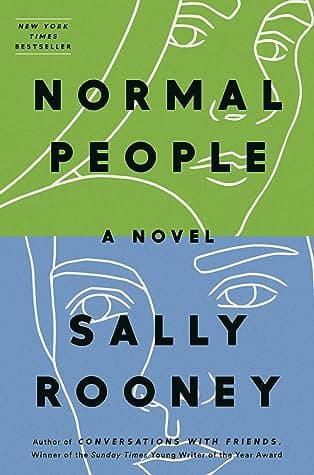
Sally Rooney (2018)
Genre
Literary Fiction / Romance
Reading Time
360 min
Key Themes
See below
Sign in to track this book
Two Irish teenagers from opposite social worlds navigate an on-again-off-again romance through college, drawn together by a strong connection despite their struggles with class and self-discovery.
In Carricklea, County Sligo, Connell Waldron is a popular, athletic student, while Marianne Sheridan is a smart but ostracized loner from a wealthy family. Connell's mother, Lorraine, cleans for Marianne's family. When Connell picks Lorraine up one day, he and Marianne have their first real conversation, revealing an unexpected intellectual and emotional connection. Despite their different social standings at school, they begin a secret sexual relationship. They meet at Marianne's house, where they can be themselves without judgment from their peers. This arrangement highlights the class difference between them and sets up the theme of their relationship being hidden.
The school's end-of-year formal dance, the Debs, approaches. Connell, pressured by his friends and wanting to keep his social status, does not want to invite Marianne publicly. Instead, he invites Rachel Moran, a popular girl. Marianne is deeply hurt and humiliated by his decision, feeling rejected and used. This public denial ends their secret relationship. Marianne, though devastated, stays composed, while Connell immediately regrets his choice, realizing he prioritized superficial social acceptance over his real feelings for Marianne. This breakup is a turning point, setting a pattern of miscommunication and emotional pain in their dynamic.
Both Marianne and Connell enroll at Trinity College Dublin. Marianne quickly finds her place among a bohemian, intellectual group, becoming confident and socially skilled, though she tends to have self-destructive relationships. She embraces her intelligence and unconventionality. Connell, in contrast, feels like an outsider. He struggles with the intellectual environment, the different social rules, and the financial pressures of living in Dublin. He misses Sligo and feels isolated, showing a reversal of their high school social dynamics. Their paths initially diverge, with Marianne enjoying her new freedom and Connell dealing with feelings of inadequacy and loneliness.
After some time apart, Connell and Marianne reconnect at Trinity. Marianne is dating Gareth, a seemingly sophisticated but rude student. Connell, still struggling with his finances and social integration, watches Marianne's new life. Eventually, Marianne breaks up with Gareth, feeling unfulfilled. She and Connell begin to spend time together again, and their emotional and physical intimacy returns. This reunion shows their lasting connection, despite changes in their individual lives and social circles. They find comfort and understanding in each other, a sharp contrast to their other relationships.
During a summer break, Connell and Marianne return to Sligo. Connell works a summer job, while Marianne is back at her family home. They continue their on-again, off-again relationship, marked by strong emotional intimacy and physical closeness. However, their future is uncertain. Connell says he cannot afford rent in Dublin for the next academic year, hinting he might not return. Marianne, feeling vulnerable and fearing abandonment, misunderstands this as Connell not wanting to be with her. Their communication fails, leading to another painful separation, made worse by financial worries and unspoken assumptions.
Marianne studies abroad in Sweden, where she starts a relationship with Lukas, a photographer. This relationship quickly becomes abusive and exploitative, with Lukas using Marianne's vulnerability and encouraging her self-destructive tendencies. Marianne, still carrying emotional scars from her past and family issues, falls into a pattern of submission and self-harm. She feels isolated and increasingly detached from herself. Meanwhile, Connell dates Helen, a kind and stable woman, though he often thinks of Marianne. This period shows Marianne's deep-seated trauma and her difficulty forming healthy relationships.
Connell experiences deep depression after a close friend from Sligo, Rob Hegarty, dies by suicide. He feels immense guilt, loneliness, and a sense of dread. He struggles to tell his girlfriend, Helen, how he feels; she tries to be supportive but cannot fully understand his despair. In his lowest moments, Connell reaches out to Marianne, who immediately understands his pain and offers strong support and empathy. Her presence is a crucial help for him, showing the unique and deep connection they share, where they can be truly vulnerable with each other.
Marianne's family life is revealed to be deeply dysfunctional and abusive. Her brother, Alan, physically and verbally abuses her, and her mother, Denise, is emotionally distant and allows the abuse by not acting. Connell, seeing Alan's cruelty during a visit, steps in and defends Marianne, threatening Alan. This moment is a turning point, as Connell's protective stance helps Marianne confront her family's toxic environment. It also strengthens their bond, showing Connell's commitment to Marianne's well-being and her gradual steps toward self-preservation.
After dealing with their individual struggles and reconnecting, Connell and Marianne spend a summer together in Dublin. This period is shown as one of their happiest and most stable. They live together, support each other's academic and personal goals, and enjoy a deep sense of intimacy and understanding. Marianne begins to heal from her past traumas, and Connell finds a sense of belonging and intellectual fulfillment. They communicate openly, sharing their thoughts and feelings freely. This summer represents a possible future where their relationship could thrive without outside pressures and internal insecurities.
Toward the end of their time at Trinity, Connell receives an offer to attend an MFA program in creative writing in New York. This is a big opportunity for his growing literary career but also means a possible separation from Marianne. He is torn between his ambition and his deep emotional connection to her. Marianne, despite her fears of abandonment, encourages him to go, recognizing how important this opportunity is for his personal and professional growth. This decision shows their growth, as they prioritize each other's well-being and future, even if it means temporary distance.
As Connell prepares to leave for New York, he and Marianne share a poignant farewell. Their conversation is full of unspoken emotions and the weight of their shared history. While their future together is uncertain, there is a sense of mutual respect, deep love, and understanding between them. Marianne acknowledges that Connell's departure is important for his growth and expresses her strong belief in him. The ending leaves their relationship open-ended, suggesting their connection will last and likely continue to grow, even across continents. It emphasizes the maturity they have both gained in supporting each other's individual paths.
The Protagonist
Marianne transforms from a socially awkward pariah into a confident but emotionally scarred woman, eventually finding some healing through her relationship with Connell and confronting her family trauma.
The Protagonist
Connell evolves from a socially anxious teenager prioritizing external validation to a more self-aware young man who learns to express his emotions and embrace his intellectual identity, ultimately pursuing a writing career.
The Supporting
Her character remains consistently supportive, serving as a moral compass and a source of strength for Connell.
The Antagonist
Alan remains a consistently abusive figure, serving as a catalyst for Marianne's self-destructive tendencies and Connell's protective instincts.
The Supporting
Denise's character remains largely static, symbolizing the unchanging source of Marianne's early trauma.
The Supporting
Helen serves as a foil to Marianne, demonstrating a more conventional relationship that ultimately doesn't fulfill Connell's emotional needs.
The Mentioned
Rob's death is a pivotal event that drives Connell's emotional arc.
The Supporting
Lukas serves as an antagonist, exacerbating Marianne's self-harm and highlighting her need for healing.
The novel explores how class background and perceived social status affect Connell and Marianne's lives and their relationship. In Sligo, Connell's popularity comes from his athletic ability, while Marianne is an outcast despite her wealth. This changes at Trinity, where Marianne's background and intelligence help her succeed in an elite environment, while Connell feels out of place and struggles with money. Their initial secret relationship is a direct result of their different social standing in high school, and Connell's Debs decision is driven by fear of social judgment. The novel shows how class shapes their opportunities, worries, and self-perception, often creating barriers to their emotional connection.
“Connell found that he was still thinking about Marianne. He was thinking about the way she never asked for anything, the way she just accepted whatever happened to her. He was thinking about the poverty of his own emotional life, the way he was always trying to keep things private.”
A central theme is the difficulty Connell and Marianne have in openly and honestly communicating their feelings, desires, and fears to each other. Their relationship is full of unspoken assumptions, misinterpreted actions, and an inability to say what they deeply need. Connell's emotional silence and Marianne's tendency to expect the worst often lead to painful separations, such as the Debs incident or the summer breakup over rent. Even when they are deeply connected, a fear of vulnerability or a lack of the right words stops them from fully understanding each other, leading to cycles of intimacy and estrangement.
“They've done a lot of damage to each other, but they've also made each other very happy. They don't know why they can't make it work. They just can't.”
Marianne's story is deeply linked to her experiences of trauma, especially the abuse from her brother and her mother's neglect. This trauma shows up in her self-destructive tendencies, her willingness to enter abusive relationships (like with Lukas and Jamie), and her feelings of unworthiness. She often seeks partners who will treat her badly, reinforcing her belief that she deserves punishment. Connell also experiences trauma, notably the suicide of his friend Rob, which causes severe depression. The novel explores how these past wounds shape their current behavior and hinder their ability to form healthy, stable relationships, often requiring them to face their deepest insecurities.
“She felt an intense need to be punished, to be made to feel small and worthless, and this need was so strong that it almost obliterated everything else.”
Despite their communication struggles, Connell and Marianne share an unmatched level of intimacy and vulnerability that they cannot find with anyone else. They can be their true selves with each other, understanding each other's thoughts and feelings without much explanation. This deep connection allows them to offer great comfort and support during their hardest times, such as when Marianne helps Connell through his depression or when Connell protects Marianne from her brother. Their physical intimacy often reflects this emotional bond, a place where they feel truly seen and accepted, even when their verbal communication fails.
“It was as if all the bad feelings they had about themselves were only temporary, and the real feelings, the ones that connected them, were permanent.”
Both Connell and Marianne struggle with their identities and how they see themselves versus how others see them. Connell, first defined by his popularity and later by his working-class background, deals with imposter syndrome at Trinity and questions his intellectual worth. Marianne's identity is shaped by her early isolation and family abuse, leading to a fragmented sense of self and a tendency to adopt different roles in different social settings. Their relationship often acts as a mirror, letting them see parts of themselves that others cannot, helping them develop a more authentic sense of self over time. The novel explores the long and often painful process of self-discovery.
“She had never told anyone the full extent of the things that had happened to her. She didn't want to be seen as a victim. She wanted to be seen as strong, as someone who could handle anything.”
The narrative shifts between Connell and Marianne's internal thoughts and experiences.
The novel primarily uses a third-person limited omniscient perspective, alternating between Connell and Marianne's viewpoints. This allows the reader deep insight into their individual thoughts, anxieties, and motivations, often revealing their internal monologues and unspoken feelings. This device is crucial for highlighting their communication failures, as the reader is privy to what each character is thinking but not expressing to the other. It fosters empathy for both protagonists and underscores the theme of miscommunication, as we see how their separate interpretations of events often lead to conflict.
The story jumps forward in time, often skipping months or years between chapters.
The narrative progresses in a non-linear fashion, frequently jumping forward in time, sometimes by several months or even a year between chapters. This device creates a sense of the passage of time and the enduring nature of their connection, even through periods of separation. It also forces the reader to fill in the gaps, highlighting the moments of reunion and the underlying magnetic pull that continually draws Connell and Marianne back together. This structure mirrors the episodic, on-again-off-again nature of their relationship, emphasizing that certain periods are more significant than others.
The story heavily relies on realistic and often understated dialogue.
Sally Rooney's prose is characterized by its minimalist, dialogue-driven style. Conversations between characters, particularly between Connell and Marianne, are central to the narrative, often conveying more through subtext and unspoken implications than explicit statements. The dialogue is realistic and often features short, clipped sentences, reflecting the characters' struggles with emotional expression. This device allows the reader to infer much about the characters' internal states and the dynamics of their relationships, making the unspoken as important as the spoken word. It contributes to the novel's raw and intimate feel.
Brief mentions of texts and Facebook hint at communication in the digital age.
While not a primary focus, the novel subtly uses mentions of text messages, Facebook, and emails to reflect contemporary communication methods. These brief references often highlight the distance or closeness between characters, or the ways in which communication can be both easier and more fraught in the digital age. For instance, Connell's use of email to seek advice from Marianne, or their occasional texts, shows how technology facilitates their connection even when they are physically apart, while also underscoring the limitations of such exchanges for truly conveying complex emotions.
“Connell, what's wrong with you? Why are you like this?”
— Lorraine asks Connell why he is so reserved and avoids talking about his feelings.
“It was culture as a kind of status, an in-group signifier, and not something of intrinsic value.”
— Marianne reflects on how people at university use cultural knowledge to assert social standing.
“Most people go through their whole lives without feeling that close to anyone.”
— Marianne thinks about the unique intimacy she shares with Connell.
“He brought his head down to her shoulder and rested it there. He felt like a different person when he was with her.”
— Connell finds solace and a sense of self when he is with Marianne.
“She had never believed herself to be a good person. It was an idea that had never occurred to her.”
— Marianne's self-perception is often negative, influenced by her family and past experiences.
“He felt like he was standing at a window, watching his own life pass by.”
— Connell experiences a period of depression and detachment during his time at university.
“You can't be a person in the world without being in some way a person among other people.”
— Marianne and Connell discuss the impact of social interaction and external perception.
“They've done so much good for each other. Really, they have.”
— Connell's mother, Lorraine, comments on the positive influence Marianne and Connell have had on each other's lives.
“He had never known how to be a person, how to live. He just knew how to be Connell.”
— Connell struggles with his identity and sense of purpose outside of his relationship with Marianne.
“Private things were not for public consumption. They were for feeling.”
— Connell's internal struggle with expressing his emotions and the societal pressure to maintain a certain image.
“She closed her eyes and felt the familiar pressure of tears behind them. She had always been like this.”
— Marianne's recurring emotional vulnerability and her tendency to cry, even when trying to suppress it.
“He would have to go to New York, and she would stay here, and they would be apart.”
— The concluding thought of the novel, as Connell prepares to move to New York for his writing program, leaving Marianne in Dublin.
“Her body was an object for them, and her mind was an object for her.”
— Marianne's experience with unhealthy relationships where she feels objectified, highlighting her dissociation.
“He told her he loved her. He didn't say it in a rushed way, or in a pleading way, but in a way that sounded like a statement of fact.”
— Connell finally expresses his love for Marianne with sincerity and certainty.
Ready to see how well you understood this book? Take our interactive quiz with 10 questions.

Biography coming soon.







