“There is no safety in numbers, only the illusion of it.”
— A character reflects on the false sense of security in the quarantined mall.

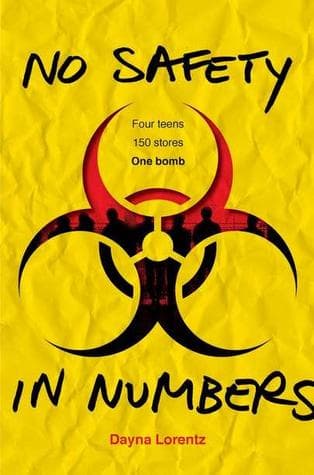
Dayna Lorentz (2012)
Genre
Thriller / Science Fiction / Young Adult
Reading Time
263 min
Key Themes
See below
Sign in to track this book
Trapped in a suburban mega-mall under mysterious lockdown, four teens must navigate dwindling supplies, escalating panic, and a deadly illness to survive as civilization crumbles around them.
Marco, a popular jock, is at the Hawthorne Mall with his girlfriend, Ashley, when a strange device is found in the air ducts. At the same time, Ryan, a quiet tech enthusiast, is browsing the electronics store. Lexi, an artist, is shoplifting, and Shay, a determined girl, is working at the food court. Suddenly, an announcement declares the mall under lockdown due to a national security threat. All exits are sealed, and military personnel surround the building. Initially, many shoppers, including Marco and Ashley, are in disbelief or find amusement in the situation, as food and supplies are plentiful. However, the novelty quickly fades as days turn into weeks with no clear information, and the reality of their confinement sets in.
The mall management, led by Mr. Henderson, and the military keep up a facade of control, providing food, water, and gift certificates. However, the lack of information from outside and the constant presence of armed guards creates an atmosphere of unease. Marco initially tries to maintain his social status, while Ryan observes the deteriorating situation, analyzing inconsistencies in the official story. Lexi continues to challenge authority, and Shay, practical and resourceful, tries to organize some order in her section of the food court. As the lockdown stretches on, supplies dwindle, and the first coughs and fevers start to spread, raising alarm bells about an unseen threat.
The initial scattered cases of illness quickly become an epidemic. People develop high fevers, respiratory problems, and organ failure. The mall's medical staff, overwhelmed and under-equipped, cannot cope. The military establishes a quarantine zone within the mall, isolating the sick in the department stores, but the infection rate continues to climb. Panic grips the mall as people realize they are not only trapped but also dying from an unknown pathogen. Ryan, using his tech skills, tries to hack into the mall's systems for information. Lexi witnesses the suffering, which fuels her desire to expose the truth, while Shay focuses on protecting her younger brother, Carlos, from the spreading disease.
As the death toll rises and supplies dwindle, the social order collapses. Looting becomes common, and different groups begin to hoard resources. Mr. Henderson loses control, and factions emerge: the 'Mall Rats' who scavenge and take what they want, and those who try to maintain a community. Marco, initially part of the popular crowd, struggles to adapt to the new reality, his leadership skills proving inadequate. Shay, with her practical nature, tries to organize a rationing system, but her efforts are met with resistance. Ryan, isolated, focuses on his technological investigation, believing the military is withholding information. Lexi uses her artistic skills to document the worsening conditions, drawing the attention of both the desperate and the powerful.
Driven by a need for answers, Ryan manages to bypass the mall's security systems and access hidden files. He discovers that the device found in the air ducts was not a bomb, but a biological weapon, a genetically engineered virus. The lockdown is not to protect the outside world from an external threat, but to contain the infected people within the mall. The military's prolonged silence and the lack of a cure now make sense. He realizes they are all part of an experiment, or worse, sacrifices. This discovery creates urgency in Ryan, who feels compelled to share this information, but who to trust, and how, becomes important.
News of Ryan's discovery, or at least the growing suspicion of the military's true intentions, spreads quickly. A desperate group of survivors, led by some of the more aggressive 'Mall Rats,' decides to try and break out of the mall. They gather makeshift weapons and attempt to overwhelm the military checkpoints at one of the main entrances. The confrontation is brutal; the military, armed with live ammunition, fires upon the escaping crowd. Many are killed or wounded, showing the brutal reality that there is no escape. Marco witnesses the carnage, which shatters his remaining illusions of safety and order. Shay, protecting Carlos, keeps a low profile, while Lexi is horrified but more determined to expose the truth.
Amidst the despair, a new development emerges. A scientist, Dr. Albright, contacts the mall's inhabitants through a secured line, claiming to be part of a humanitarian effort to develop a cure. She offers hope, promising a vaccine, but her demeanor and the military's continued secrecy raise suspicions. Ryan, using his hacking skills, tries to verify her claims. Marco, desperate for any solution, initially trusts her. Shay remains cautious, focusing on practical survival. Lexi, however, is deeply distrustful, sensing manipulation. Dr. Albright begins to send specific instructions for medical supplies and procedures, subtly directing the remaining survivors towards an unknown goal.
Eventually, vials of what is claimed to be a vaccine are delivered into the mall. However, there is not enough for everyone, and the distribution is heavily controlled by the remaining military personnel and Dr. Albright's instructions. This creates an ethical dilemma: who gets the vaccine? The healthy? The sick? The young? Marco, witnessing the desperation, makes difficult choices. Shay fights for Carlos to receive it. Lexi, suspicious of the entire process, tries to uncover the true nature of the vaccine and the motives behind its limited supply. Ryan, having looked deeper into the data, suspects the 'cure' might be another part of the experiment, possibly a way to track or further manipulate them.
Lexi, fueled by anger and a sense of justice, decides she must expose the truth to the outside world. With Ryan's technical expertise, they manage to rig a way to broadcast a message beyond the mall's jammed signals. Lexi uses her artistic talent to create powerful visuals and her clear voice to describe the horror within – the virus, the deaths, the military's deception, and the fact that they are prisoners. Marco helps distract the remaining security, creating a window for the broadcast. The broadcast, though brief, gets through, creating awareness and outrage outside the mall, potentially jeopardizing the government's containment plan.
Following Lexi's broadcast and mounting external pressure, the military finally opens the mall. The survivors, a fraction of the original population, emerge into a world that views them with a mixture of fear and sympathy. They are immediately quarantined and subjected to extensive medical tests. While physically free, they carry the psychological scars of their ordeal. The future remains uncertain; the origin of the virus, the full extent of the government's involvement, and the long-term health implications for the survivors are still unclear. Marco, Ryan, Lexi, and Shay are changed, their lives altered by their choices and the horrors they witnessed within the sealed walls of the Hawthorne Mall.
The Protagonist
From a self-absorbed jock, Marco transforms into a more responsible and empathetic leader, forced to make difficult moral choices.
The Protagonist
Ryan evolves from a passive observer to an active truth-seeker, using his unique skills to fight against deception.
The Protagonist
Lexi transforms from a self-focused rebel to a courageous advocate for truth and justice, using her art and voice to expose corruption.
The Protagonist
Shay's arc is one of unwavering dedication to her brother's survival, demonstrating immense resilience and resourcefulness.
The Supporting
Ashley's character demonstrates a decline from naive normalcy to a state of increasing vulnerability and despair.
The Supporting
Mr. Henderson's arc shows a rapid decline from a position of perceived authority to one of helplessness and irrelevance.
The Supporting
Carlos's arc is primarily static, serving as a symbol of innocence and vulnerability, driving his sister's actions.
The Antagonist/Mentioned
Dr. Albright's role is to introduce a false sense of hope while furthering the true, sinister agenda of the external forces.
The Antagonist
The military's role is consistently antagonistic, representing the oppressive and deceptive forces controlling the lockdown.
The novel shows how social order collapses when basic needs like food, water, and safety are threatened. Initially, the mall provides a false sense of security, but as resources dwindle and a deadly virus spreads, civility gives way to desperation, looting, and division. Characters like Marco struggle to adapt to this new reality, while Shay's focus on her brother shows the primal drive for survival. The mall becomes a small society unraveling under extreme pressure, forcing ordinary people to make impossible choices.
“''It was amazing how quickly the thin veneer of civilization peeled away when people were hungry and scared.''”
A central theme is the deliberate hiding of truth by those in power. The military and government maintain a strict information blockade, initially claiming a national security threat and later offering a deceptive 'cure.' Ryan's hacking and Lexi's artistic documentation are important in uncovering the reality: the mall residents are not being protected, but contained as part of an experiment or sacrifice. The novel explores the ethics of government secrecy and the dangers of unchecked authority, showing how easily the public can be manipulated and exploited.
“''They weren't protecting us. They were protecting themselves from us.''”
The extreme conditions within the mall force the protagonists to change their identities and confront who they truly are. Marco, the popular jock, loses his social standing and is forced to grow up, making difficult decisions. Lexi, the rebellious artist, finds a voice for justice. Ryan, the tech whiz, becomes a truth-teller. Shay, the practical worker, transforms into a protector. The narrative shows how adversity can either break individuals or make them stronger, more self-aware versions of themselves, revealing their core values and resilience.
“''The mall had stripped them bare, showing them who they really were when everything else was gone.''”
The novel explores the moral dilemma of sacrificing a few for the presumed safety of the many. The government's decision to seal off the mall, knowing a deadly virus was inside, raises questions about the value of individual lives versus public health. The limited 'cure' and the choices about who receives it intensify this ethical debate. The protagonists grapple with these impossible decisions, showing the brutal calculations of survival and the dehumanizing effects of being deemed expendable by those in power.
“''Were they saving the world, or just condemning us?''”
The confined space reflects broader societal collapse and human behavior under duress.
The Hawthorne Mall serves as a contained environment where the breakdown of society, the spread of disease, and the struggle for survival can be observed in an accelerated, intensified manner. It allows the author to explore themes of social order, authority, and human nature without the complexities of the outside world. The mall's diverse stores and functions also provide natural settings for different aspects of the crisis, from medical bays in department stores to fortified food courts, mirroring a small, isolated city.
Offers a multi-faceted view of the unfolding crisis and character development.
The story is told through the alternating viewpoints of Marco, Ryan, Lexi, and Shay. This allows the reader to experience the lockdown from different social strata, skill sets, and emotional responses. Marco represents the popular but naive, Ryan the analytical and tech-savvy, Lexi the rebellious and artistic, and Shay the practical and protective. This technique provides a comprehensive and nuanced understanding of the events, character motivations, and the psychological impact of the crisis on diverse individuals, enriching the narrative's depth and tension.
The central catalyst for the plot and the source of the story's primary conflict.
The discovery of the 'strange device' in the air ducts is the inciting incident that triggers the lockdown. Initially ambiguous, its true nature as a biological weapon and the source of a deadly virus becomes the driving mystery of the plot. This device is not just a plot trigger but a symbol of the unseen dangers of technological advancement and the potential for human-made catastrophes, directly fueling the themes of government deception and the ethics of containment.
A primary driver of conflict, desperation, and moral compromise.
The gradual depletion of food, water, medicine, and other essential supplies is a constant, tangible threat that fuels much of the internal conflict within the mall. It forces characters to make increasingly desperate decisions, leads to rationing, hoarding, looting, and the breakdown of communal trust. This device effectively illustrates how basic human needs, when unmet, can quickly erode civility and expose the darker aspects of human nature, highlighting the raw struggle for survival.
“There is no safety in numbers, only the illusion of it.”
— A character reflects on the false sense of security in the quarantined mall.
“In a crisis, people show their true colors, and they're not always pretty.”
— Observing the breakdown of social order as resources dwindle.
“The mall was a cage, and we were the rats.”
— Describing the claustrophobic and dehumanizing environment.
“Fear is a virus more contagious than any disease.”
— Commenting on the spread of panic among the trapped individuals.
“We thought we were safe because we were together. We were wrong.”
— Realizing that proximity does not guarantee protection.
“In the end, it's every person for themselves.”
— A moment of desperation as alliances crumble.
“The walls that were meant to protect us became our prison.”
— Reflecting on the irony of the quarantine measures.
“Trust is the first casualty in a disaster.”
— Noting how suspicion grows as the situation worsens.
“We were all just waiting for someone to save us, but no one was coming.”
— A realization of abandonment by the outside world.
“The silence was louder than any scream.”
— Describing the eerie quiet in the mall during a tense moment.
“Sometimes, the only way out is through.”
— A character decides to face the danger head-on.
“In the darkness, we found who we really were.”
— A moment of self-discovery under extreme stress.
“The rules of civilization don't apply when you're fighting to survive.”
— Observing the breakdown of societal norms.
“We were all connected by our fear, but divided by our instincts.”
— Highlighting the paradox of shared experience versus individual actions.
Ready to see how well you understood this book? Take our interactive quiz with 10 questions.







