“There are no promises in the wind, but there is always hope.”
— A recurring theme, often said by Mama, reflecting their resilience during the Depression.

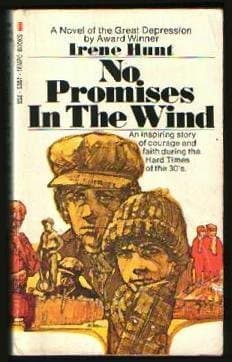
Irene Hunt (1970)
Genre
Children's / Historical Fiction / Young Adult
Reading Time
223 min
Key Themes
See below
Sign in to track this book
In 1932, during the 'Clutch Plague,' fifteen-year-old Josh searches for survival in a fractured America, showing resilience amidst despair.
In 1932, during the Great Depression, fifteen-year-old Josh Grondowski lives with his family in Chicago, dealing with extreme poverty. His father, Stefan, is jobless and often irritable, blaming Josh for not helping enough. Josh's younger brother, Joey, is often sick, and their mother, Mama, tries to keep peace. The family's small food supply and constant tension become too much for Josh. After a harsh argument with his father, Josh decides he can no longer be a burden and impulsively runs away, hoping to find work and send money home.
As Josh gets ready to leave, he finds that his younger brother, Joey, has secretly followed him. Josh initially tries to send Joey back, but Joey's loyalty and fragile health convince Josh to let him stay. Together, the two brothers begin a journey as hobos. They quickly learn to ride trains, beg for food, and live a dangerous, unpredictable life on the road. Their first experiences involve hunger, fear, and the constant threat of being caught or meeting hostile people, but they support each other for survival.
While riding a freight train, Josh and Joey meet Lonnie Bromer, an older, experienced hobo who helps them. Lonnie teaches them survival skills, like finding food, avoiding trouble, and understanding hobo rules. Lonnie's kindness and wisdom give the boys a sense of security and guidance. They also meet other kind strangers, including a woman who gives them food, showing that compassion exists even in desperate times. These early encounters on the road shape Josh's view of people and the importance of helping others.
Their journey takes a bad turn when Josh and Joey get separated during a chaotic event involving a train yard and a suspicious hobo named Charley. Josh jumps off a moving train, thinking Joey is behind him, only to realize he is alone. Overwhelmed with guilt and fear, Josh starts a frantic search for his younger brother. He travels through towns, asking questions and following leads, driven by his promise to protect Joey. This time is marked by intense loneliness and despair for Josh as he considers the possibility of having lost Joey forever.
During his search for Joey, Josh finds temporary work on a farm run by a kind, elderly couple, the Streeters. They offer him food, shelter, and a small wage for his work. Josh values the stability and the chance to earn money, but he remains sad about Joey's absence. He keeps asking about his brother, always listening for any news. The Streeters, who lost their own son, treat Josh with warmth and understanding, giving him a brief break from the harsh realities of the road, though his longing for Joey never truly goes away.
Josh leaves the farm and later meets an artist named Emily. She sees his talent for drawing and encourages him, giving him a new view of his abilities. Later, Josh works for a traveling circus, where he finds he is good at performing. He uses his agility and strength for acrobatic acts, earning a living and gaining a sense of purpose. Despite these new experiences and temporary distractions, Josh's main goal is still finding Joey, and every new town or person he meets is a possible lead in his search.
After many months of searching, Josh has a chance reunion with Lonnie Bromer. Lonnie, who had also been looking for the boys, shares news: Joey is safe and has been taken in by a kind, elderly couple. Lonnie explains that Joey, after being separated from Josh, had fallen ill and was cared for by strangers. This reunion brings Josh immense relief, replacing his long-standing worry with hope and joy. Lonnie and Josh decide to travel together to find Joey, strengthening their bond and Lonnie's role as a mentor.
Josh and Lonnie arrive at the home of the couple who took in Joey. Josh is very happy to find his brother alive and well, though Joey is at first hesitant, having found comfort and stability with his new caregivers. The couple, Mr. and Mrs. Williams, are good people who have given Joey a loving home, a contrast to the hardships he faced on the road. Josh realizes that Joey has found a better life than he could currently offer, and with a heavy heart, he makes the selfless decision to leave Joey in their care, knowing it is for his brother's good.
After reuniting with Joey, Josh and Lonnie continue their journey. Lonnie, who has been sick during their travels, makes a sacrifice for Josh. He uses his remaining strength and resources to help Josh get a stable job, ensuring Josh has a chance at a better life. Lonnie then disappears, leading Josh to believe he died. This event is a turning point for Josh, forcing him to fully embrace his independence and the lessons Lonnie taught him. Josh is now more resilient, mature, and determined to make a life for himself.
Josh finds steady work in a small town, using the skills he learned and his new maturity. He works hard, saves money, and begins to build a stable life for himself. He often thinks of Joey and his family, and he sends letters and money home when he can, keeping his original promise. While the difficulties of his journey remain, Josh has changed from a frightened boy into a capable and resilient young man. He remembers Lonnie and the lessons of the road, looking towards the future with hope and self-reliance, having found his own strength amidst the Depression's challenges.
The Protagonist
From a fearful, burdened boy seeking escape, Josh transforms into a resilient, independent young man capable of fending for himself and making selfless decisions.
The Supporting
Joey starts as a dependent, sickly child and finds stability and a loving home through the kindness of strangers.
The Supporting
Lonnie serves as a mentor, guiding Josh until he makes a final, selfless act that solidifies Josh's independence.
The Supporting
Remains a static character, representing the despair of the working man during the Depression, whose actions catalyze Josh's journey.
The Supporting
Remains a static character, representing the enduring strength and love of a mother during hardship, providing a moral compass for Josh.
The Supporting
Serve as static characters who provide temporary shelter and kindness, reinforcing Josh's understanding of human compassion.
The Supporting
Serves as a static character who briefly inspires Josh to acknowledge his artistic talent.
The Supporting
Serve as static characters who provide a loving, permanent home for Joey, fulfilling his need for stability.
The novel shows the realities of survival during the Great Depression, showing the characters' resilience in extreme poverty, hunger, and homelessness. Josh and Joey learn to ride trains, beg for food, and endure harsh weather, showing their ability to adapt and persist. Lonnie's help in navigating hobo life and Josh's determination to find work and protect his brother show the human spirit's ability to endure and overcome difficulty. Their journey shows the strength found when desperate.
“A man's got to take care of himself out here. No promises in the wind.”
The bond between Josh and Joey is central to the story, showing the strength of family love. Despite Josh's initial hesitation, he takes on the responsibility of protecting his younger, weaker brother. Their shared journey has many challenges, but their reliance on each other and affection keep them going. The pain of their separation and Josh's search for Joey show how deep his devotion is. Ultimately, Josh's selfless choice to leave Joey in a better home shows a mature understanding of what is best for his brother, even if it means personal sacrifice.
“I promised Mama I'd take care of you, Joey. And I will.”
Josh's journey involves losing his innocence as he is forced into the realities of the adult world. At fifteen, he faces poverty, hunger, danger, and the selfishness and kindness of strangers. He quickly loses his youthful naivety, becoming resourceful, independent, and understanding people better. The experiences on the road, especially the separation from Joey and Lonnie's sacrifice, force him to mature quickly, changing him from a dependent boy into a responsible, self-reliant young man.
“There was no room for a boy in the world he had entered. He had to be a man.”
The novel explores human nature during times of crisis. Josh and Joey meet both great cruelty, such as hostile railroad guards and exploitative people, and great kindness, from Lonnie Bromer's generosity to the Streeter family and the Williams couple. These encounters shape Josh's view of the world, teaching him to be careful yet also to recognize and value genuine human empathy. The acts of kindness provide important moments of relief and hope, showing that even in dark times, compassion can win.
“You meet all kinds on the road, son. Some good, some bad. You learn to tell the difference.”
The Great Depression creates a constant tension between despair and hope. The Grondowski family's initial situation is hopeless, leading Josh to run away. On the road, Josh experiences deep despair, especially when separated from Joey. However, hope appears through acts of kindness, the promise of work, and the reunion with Joey. The novel ends with a sense of cautious hope, as Josh finds stability and begins a new life, showing that even in difficult circumstances, people strive for a better future.
“He knew that the road ahead would be long and hard, but for the first time in a long time, he felt a flicker of hope.”
The physical journey as a metaphor for personal growth and discovery.
The extended journey Josh and Joey undertake as hobos is a central plot device. The 'road' represents not just a physical path through Depression-era America but also a metaphorical journey of self-discovery, maturation, and survival. Each new town, train car, and encounter on the road contributes to Josh's education and development, forcing him to confront harsh realities and build resilience. The constant movement and uncertainty of the road mirror the instability of their lives and the broader societal upheaval.
Symbol of opportunity, danger, and the transient nature of life.
Freight trains serve as a powerful symbol throughout the novel. They represent both a means of escape and potential opportunity for the hobos, carrying them towards unknown futures. However, they are also symbols of danger, with the constant threat of injury, arrest, or separation. The transient nature of life on the rails, where people come and go, reflects the fleeting connections and unpredictable circumstances faced by those displaced during the Depression. The sound of a train often signals a new chapter or a moment of crisis for Josh and Joey.
An unwritten set of rules and a symbol of community.
The 'hobo code' is an unwritten set of rules and signals shared among hobos, which Lonnie teaches Josh. This device highlights the existence of a unique subculture and community that formed out of necessity during the Depression. It provides structure and a moral compass within an otherwise lawless existence, demonstrating that even in desperation, people create systems of mutual support and understanding. The code symbolizes the resilience and ingenuity of the marginalized and offers Josh a framework for survival beyond mere instinct.
Highlighting different forms of hardship and kindness.
The novel uses the contrast between urban Chicago and the various rural landscapes Josh travels through. Chicago represents the initial, suffocating poverty and despair that drives Josh away. Rural areas, while still economically depressed, often offer different forms of hardship (farm labor, isolation) but also different forms of kindness (the Streeters, the Williams family). This contrast illustrates the varied impact of the Depression across different environments and shows Josh encountering different facets of American life and human nature during his journey.
“There are no promises in the wind, but there is always hope.”
— A recurring theme, often said by Mama, reflecting their resilience during the Depression.
“Sometimes you have to leave what you love to find what you need.”
— Josh's internal struggle and justification for leaving home to find work.
“A man's worth isn't in his pockets, but in his heart and the work of his hands.”
— Mama's wisdom to the children, particularly Josh, about true value amidst their financial hardship.
“The wind could carry away your dreams if you didn't hold onto them tight.”
— Richie's childlike understanding of the harsh realities, often influenced by the literal wind and dust.
“Hunger is a teacher that doesn't let you forget its lessons.”
— Josh's grim reflection on the constant struggle for food and its impact on his character.
“Even in the darkest times, there are stars if you only look up.”
— Mama's attempt to instill optimism in her children during their most difficult moments.
“Home isn't just a place; it's the people you share it with.”
— Josh's realization after being away from his family and experiencing loneliness.
“A kindness given when you have nothing to give is the greatest kindness of all.”
— Josh reflecting on the generosity of strangers he meets on his journey, despite their own poverty.
“The dust was a constant reminder of what they had lost and what they still had to fight for.”
— Describing the pervasive dust of the Dust Bowl and its symbolic weight for the family.
“Sometimes silence speaks louder than any words.”
— Often used to describe the unspoken understanding or pain between family members.
“You can't choose your hardships, but you can choose how you face them.”
— A lesson learned by Josh as he encounters various challenges on his journey.
“Every sunrise is a chance to start over, no matter what yesterday brought.”
— Mama's enduring philosophy that encourages her children to keep moving forward.
“The world outside our fence is bigger and harder than you can imagine, but it also holds more chances.”
— Josh's internal monologue about leaving the familiar confines of his home for the unknown.
Ready to see how well you understood this book? Take our interactive quiz with 10 questions.

Dan Gemeinhart
4.5

Kate O'Hearn
4.4

Jeanne Birdsall
4.4

Jen Wang
4.4

Wendelin Van Draanen
4.3

John Marsden
4.3

Chris Van Allsburg
4.3
Jennifer A. Nielsen
4.2