“All of us, in our lives, have one or two things that are very important to us. And if you lose them, you feel like you've lost everything. But you haven't. You've just lost one or two things.”
— Reflecting on loss and resilience, a recurring theme.

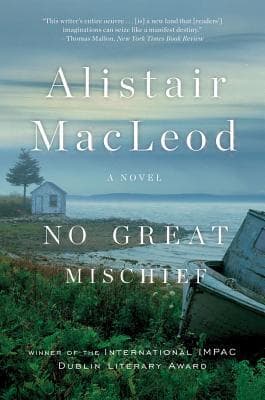
Alistair MacLeod (1999)
Genre
Literary Fiction / Historical Fiction
Reading Time
360 min
Key Themes
See below
Sign in to track this book
From the windswept shores of Cape Breton to the gritty streets of Toronto, the MacDonald brothers, scarred by tragedy and sustained by ancestral tales, navigate the enduring, often brutal, pull of family and the sea that defines them.
The novel opens with Alexander MacDonald, a prosperous orthodontist living in Windsor, Ontario, making his annual trip to Toronto to visit his older brother, Calum. Calum, a former miner, is now an alcoholic living in a decrepit rooming house on the city's skid row. Their reunion is a somber ritual, marked by Calum's physical decline and Alexander's quiet caretaking. Alexander brings gifts of food and drink, cleans Calum's room, and attempts to talk with him, often recalling their shared past and the history of their Gaelic-speaking clan from Cape Breton Island. This annual visit shows the vast socio-economic distance between the brothers, but also an unbreakable familial bond rooted in their shared heritage and the tragedies they've endured.
During his visit with Calum, Alexander's thoughts drift back to their childhood in Cape Breton, specifically to the defining tragedy that shaped their lives. He vividly recalls the day their parents, James and Mary, both died in a coal mine accident. Their father was a miner, and their mother, in a desperate attempt to save him after a collapse, entered the mine herself, only to be caught in a subsequent explosion. This event left young Alexander and Calum orphaned and scarred, forcing them to be raised by their grandparents and a close-knit extended family. The memory of the mine, its darkness, and the sudden, violent loss of their parents remains a haunting presence in Alexander's mind, explaining much of his drive and Calum's despair.
As Alexander tends to Calum, he mentally connects their family's history, a narrative passed down through generations. He recounts the MacDonald clan's origins in the Scottish Highlands, their forced displacement during the Highland Clearances, and their arduous journey across the Atlantic to settle in Cape Breton. This history has tales of fierce loyalty, clan battles, emigration, and the constant struggle against harsh lands and economic hardship. He details their ancestors' participation in historical events, their strong Gaelic identity, and their connection to the land and the sea. These stories, filled with both pride and sorrow, are the foundational myth of their family, shaping their identities and providing a sense of belonging amidst displacement and loss.
After the death of their parents, Alexander and Calum were raised by their paternal grandparents, 'The Grandfather' and 'The Grandmother,' in their small, isolated community on Cape Breton Island. Alexander describes a childhood immersed in Gaelic culture, surrounded by a large, supportive extended family of aunts, uncles, and cousins. Life was hard, marked by fishing, farming, and the dangers of the coal mines. He remembers the warmth of his grandparents' home, the stories told by the fire, the music, and the strong sense of community that bound them all together. This period of his life instilled in him a deep appreciation for his heritage and the resilience of his people, even as he wanted something beyond the confines of the island.
The narrative shows the contrasting paths of Alexander and Calum. Calum, the older brother, followed in his father's footsteps, becoming a coal miner. He was known for his strength and loyalty, enduring the perilous conditions of the mines. His life was one of physical labor, hard drinking, and a deep, unspoken connection to the land and his community. Alexander, however, was encouraged by his family, particularly his grandfather, to pursue education as a means of escaping the harsh realities of Cape Breton. He left the island to attend university, eventually becoming an orthodontist, a profession that brought him material success and a life far removed from his origins. Their differing choices show themes of tradition versus modernity and the cost of both staying and leaving.
A significant portion of Alexander's reflections focuses on his grandfather, a powerful and stoic figure who was the patriarch and oral historian of the MacDonald clan. The Grandfather, a man of few words but deep wisdom, was the primary source of the family's extensive history, recounting tales of their Scottish ancestors, their struggles, and their triumphs. He instilled in Alexander a strong sense of identity and loyalty to his heritage. Alexander remembers sitting by the fire, listening to his grandfather's stories, which often were lessons in resilience, pride, and the importance of remembering where they came from. The Grandfather's influence is central to Alexander's understanding of himself and his place within the long lineage of the MacDonalds.
Alexander's narrative extends beyond his immediate family to include the numerous cousins who populated his childhood. He details the tragic lives of several, such as Seumas, who was lost at sea, and the others who faced similar hardships in the mines or through emigration. He vividly remembers the communal grief and support that followed each loss, showing the deep-seated loyalty and interconnectedness of the MacDonald clan. These stories illustrate the pervasive nature of hardship and loss in their community, but also the strength derived from their collective identity and their willingness to support one another through adversity. The cousins represent the wider fate of the MacDonalds, scattered but always bound by blood and memory.
The novel repeatedly returns to the present-day ritual of Alexander's annual visits to Calum in Toronto. Each year, Alexander arrives, cleans his brother's room, shaves him, feeds him, and listens patiently, even when Calum is largely unresponsive. These visits are not just about physical care; they are acts of brotherly love and a quiet acknowledgment of their shared past. Alexander recognizes that Calum, despite his decline, still carries the weight of their family's history and their personal tragedies. Through these visits, Alexander attempts to bridge the gap between their vastly different lives, offering a connection to their roots and a silent promise that Calum is not forgotten, reinforcing the theme of unbreakable familial bonds.
Throughout his reflections, Alexander continuously grapples with the tension between his modern, professional life and his deep-rooted Gaelic heritage. He has achieved material success and integrated into mainstream Canadian society, yet the stories, the language, and the tragedies of his ancestors and childhood remain an indelible part of him. He feels the weight of memory, the responsibility of being a keeper of his family's history, even as he lives far from its physical origins. This internal conflict is a central aspect of his character, as he navigates how to honor his past while living in the present, recognizing that his identity is linked to both his personal experiences and the collective memory of the MacDonald clan.
The novel concludes with Alexander's last visit to Calum, who is now in an advanced state of deterioration, nearing death. While Calum's physical and mental state has worsened, the silent communication and deep understanding between the brothers remain. Alexander performs his usual acts of care, reflecting on the entirety of their shared history and the long lineage of their clan. There is a sense of quiet acceptance and sorrow, but also an enduring love. Alexander understands that Calum's life, despite its tragic path, is an integral part of their family's story. The ending emphasizes the enduring power of blood ties, memory, and the unspoken 'mischief' that binds them, suggesting that even in decline, the spirit of the clan persists.
The Protagonist
Alexander begins as a man divided between his past and present, but through his reflections and care for Calum, he comes to a deeper acceptance of his identity and the enduring power of his heritage.
The Supporting
Calum's arc is one of physical and mental decline, yet his enduring presence symbolizes the unbroken, albeit tragic, link to his family's past.
The Supporting
His arc is largely static in the narrative, serving as a foundational figure whose wisdom and stories continue to influence Alexander long after his death.
The Supporting
Her arc is largely static, representing the consistent, nurturing force within the family's past.
The Supporting
His arc is tragic and formative, as his death is the catalyst for the brothers' upbringing and divergent paths.
The Supporting
Her arc is tragic, as her heroic death is a defining moment in the family's history.
The Mentioned
His arc is a brief, tragic highlight of the dangers inherent in the clan's traditional way of life.
The Supporting
Their collective presence remains a constant, supportive force in Alexander's childhood memories, representing the enduring strength of the clan.
The novel deeply explores how one's identity is shaped by their heritage, particularly the Gaelic, Scottish, and Cape Breton MacDonald clan history. Alexander, despite his modern life as an orthodontist, is constantly reflecting on the stories, language, and tragedies of his ancestors. His sense of self is linked to the 'blood' of his clan, understanding his personal experiences within the context of generations of struggle, migration, and loyalty. The theme questions how much of one's identity is inherited and how much is forged, and whether one can truly escape their origins.
“For us, the past was not something to be escaped from or to be forgotten, but something to be carried, a burden that was also a blessing, defining who we were and where we came from.”
Memory, both personal and collective, drives the narrative. Alexander's visits to Calum trigger a cascade of recollections, ranging from his childhood tragedies to the centuries-old history of the MacDonalds. Storytelling, particularly the oral tradition passed down by his grandfather, is important for preserving identity and meaning. These stories are not merely anecdotes but are moral lessons, historical records, and emotional anchors, shaping the characters' understanding of themselves and their place in the world. The novel itself shows the power of narrative to connect past and present.
“We were a people who came to know ourselves through our stories, and in a place where little else remained, our memories were our only true possessions.”
The relationship between Alexander and Calum forms the emotional core of the novel. Despite their vastly different lives and Calum's decline, Alexander's unwavering loyalty and care for his brother show the bonds of family. Their connection goes beyond words, rooted in shared trauma, heritage, and an unspoken understanding. This loyalty is also extended to the broader MacDonald clan, whose members consistently support each other through hardship and loss. The theme explores the enduring strength of fraternal love and the communal responsibility inherent in their culture.
“He was my brother, and we had shared so much, the good and the bad, the joy and the sorrow, and there were no words that could ever truly explain what that meant.”
The novel explores the costs associated with modernity and the erosion of traditional ways of life. Alexander's success as an orthodontist represents a departure from the harsh, traditional existence of his ancestors, yet he carries the weight of that past. Calum, conversely, is a casualty of both the dangerous traditional industry (mining) and the displacement that often accompanies economic change. The decline of the Gaelic language, the scattering of the clan, and the physical decay of places like Cape Breton show a sense of loss. The theme questions whether progress truly brings happiness or if it sacrifices something vital in the process.
“We were a people who had lost almost everything, our land, our language, our pride, but we still had our memories and our blood.”
The MacDonald clan's history is steeped in tragedy, from the Highland Clearances and emigration to the daily dangers of coal mining and fishing. The personal tragedies of Alexander and Calum, particularly the loss of their parents, are central. Interwoven with these losses is an extraordinary resilience. The characters continually show an ability to endure, to find strength in their heritage, and to carry on despite grief. The novel suggests that while tragedy leaves scars, it also forges an unbreakable spirit and deepens the bonds of community and family.
“We were a people who had learned to live with loss, to carry it like a stone in our pockets, but never to let it weigh us down completely.”
The story constantly shifts between the present and various points in the past.
The novel primarily unfolds through Alexander's stream of consciousness, as his present-day interactions with Calum trigger extensive flashbacks to his childhood in Cape Breton and the centuries-old history of the MacDonald clan. This non-linear structure allows MacLeod to weave together personal memory with historical narrative, demonstrating how the past constantly informs and shapes the present. It creates a rich, layered understanding of Alexander's identity and the forces that have shaped his family, blurring the lines between individual experience and collective memory.
The narrative is structured around the recounting of family stories and historical tales.
The act of storytelling itself is a central plot device. Alexander's narrative is a continuous act of recounting, often echoing the oral tradition of his Gaelic ancestors and particularly his grandfather. These stories, whether personal anecdotes or historical accounts of the clan, are not merely descriptive but are integral to the characters' understanding of their identity, values, and resilience. The novel implicitly argues for the power of narrative to preserve culture, connect generations, and provide meaning in the face of hardship and displacement.
Representations of danger, livelihood, and the inescapable forces of nature.
The coal mine and the sea are powerful, recurring symbols. The mine represents both the livelihood and the ultimate danger for many MacDonald men, including Alexander's father and Calum. It is a place of darkness, sacrifice, and community. The sea symbolizes both sustenance (fishing) and unpredictable loss (drownings, emigration). Both elements represent the harsh, unforgiving environment that shaped the clan's character and dictated their existence. They are inescapable forces that claim lives but also define the resilience and determination of the people connected to them.
A symbol of cultural identity, loss, and enduring connection.
Though the novel is written in English, the Gaelic language is a pervasive symbolic presence. It is the ancestral tongue, spoken by Alexander's grandparents and many of his relatives, and its decline mirrors the erosion of the traditional way of life. For Alexander, the few Gaelic phrases he knows are potent reminders of his heritage and a direct link to his past. It symbolizes the deep cultural roots of the MacDonalds, the beauty of their tradition, and the profound sadness of its gradual disappearance, yet its memory continues to resonate within the narrative.
“All of us, in our lives, have one or two things that are very important to us. And if you lose them, you feel like you've lost everything. But you haven't. You've just lost one or two things.”
— Reflecting on loss and resilience, a recurring theme.
“We are all of us a little bit crazy. And if we weren't, we wouldn't be human.”
— A character's observation on the eccentricities that define humanity.
“It is a terrible thing to feel that you are not able to do what you want to do, or what you think you should do.”
— A feeling of helplessness and unfulfilled potential.
“Sometimes the things that hurt us the most are the things that we love the most.”
— Exploring the bittersweet nature of deep attachments.
“The past is never dead. It's not even past.”
— A poignant reflection on how history and ancestry continue to influence the present.
“It is a great thing to be able to do what you want to do, and to be able to do it well.”
— On the satisfaction of skill and purposeful work.
“We carry our landscape inside us.”
— A powerful statement on the indelible connection between people and their environment, particularly the Scottish Highlands and Cape Breton.
“There are some things that you never forget, no matter how hard you try.”
— The persistence of traumatic or significant memories.
“The truth is a very powerful thing, and it can hurt a lot of people.”
— Considering the impact and often painful consequences of honesty.
“Family is not just blood. It's also the people who are there for you, no matter what.”
— Broadening the definition of family beyond biological ties.
“We are all of us, in our own way, trying to find our way home.”
— A universal yearning for belonging and a sense of place.
“Sometimes you have to do things that you don't want to do, because it's the right thing to do.”
— A reflection on duty and moral obligation, even when difficult.
“The wind carries the voices of the dead, if you listen closely enough.”
— A poetic and mystical connection to ancestors and the past, often heard in the natural world.
“There is a great comfort in knowing who you are, and where you come from.”
— The solace found in understanding one's heritage and identity.
Ready to see how well you understood this book? Take our interactive quiz with 10 questions.

Alistair MacLeod was a celebrated Canadian author known for his evocative short stories and novels. His works, including "The Lost Salt Gift of Blood" and the award-winning "No Great Mischief," are renowned for their lyrical prose and profound explorations of Scottish-Canadian identity and life in Cape Breton. MacLeod's writing often delves into themes of family, memory, and the sea.







