“Mama Ya-Ya says, 'Magic is real. It's in the air, in the water, in the earth.'”
— Lanesha learns about her grandmother's spiritual beliefs.

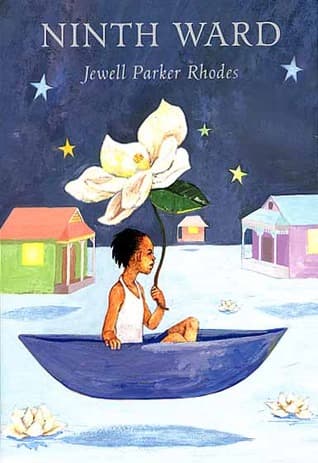
Jewell Parker Rhodes (2010)
Genre
Children's / Historical Fiction / Young Adult
Reading Time
240 min
Key Themes
See below
Sign in to track this book
In New Orleans' Ninth Ward, twelve-year-old Lanesha and her clairvoyant caretaker Mama Ya-Ya must use their hope and resilience to survive Hurricane Katrina.
Lanesha, a twelve-year-old girl, lives in the Ninth Ward, New Orleans, with her caretaker, Mama Ya-Ya. Lanesha is an orphan, left at Mama Ya-Ya's door as a baby, and grew up with Mama Ya-Ya's wisdom. Lanesha sees and talks to spirits, but she mostly keeps this to herself. Mama Ya-Ya, a respected elder, starts having vivid visions of a hurricane. She warns Lanesha that this storm will be different, making Lanesha uneasy because she trusts Mama Ya-Ya's premonitions.
As news confirms a hurricane forming in the Gulf, Mama Ya-Ya's premonitions grow stronger. She tells Lanesha to prepare, stressing the need for supplies and a plan, and also inner strength. The Ninth Ward community, used to hurricanes, remains mostly calm. Neighbors like Miss Tee and Mr. Riley talk about the storm but do not seem to understand Mama Ya-Ya's warnings. Lanesha feels fear and frustration, sensing the disaster more than others. She tries to help Mama Ya-Ya gather supplies, feeling she needs to be strong for her caretaker.
Mandatory evacuation orders are issued for New Orleans, and many people leave. Lanesha's Aunt Lena calls, asking Lanesha and Mama Ya-Ya to evacuate and stay with her. However, Mama Ya-Ya is deeply attached to her home. She believes her house, which has stood for generations, will protect them, and she refuses to leave. Lanesha, loyal to Mama Ya-Ya and trusting her wisdom, decides to stay with her, even as warnings grow more serious and streets empty. She feels responsible for Mama Ya-Ya's safety.
Hurricane Katrina makes landfall, and its power quickly exceeds anything the Ninth Ward has seen. The levees break, and floodwaters rise fast, covering homes and streets. Lanesha and Mama Ya-Ya are trapped in their house as water pours in. They climb into the attic, but the water keeps rising. Lanesha, showing courage, helps Mama Ya-Ya break through the attic ceiling and climb onto the roof. From there, they see the devastation, with houses being swept away and the neighborhood underwater.
As Lanesha and Mama Ya-Ya huddle on their roof, they see another survivor: Tashon, a boy Lanesha's age, also on his roof. Lanesha calls to him, and he makes his way to their house. Tashon brings a piece of wood and some rope, which helps them. Together, Lanesha, Mama Ya-Ya, and Tashon make a raft from debris in the water. Tashon's presence brings hope and a shared purpose, and Lanesha feels a connection with him as they face the disaster.
With their raft ready, the three begin a dangerous journey through the flooded Ninth Ward. The water is full of debris, power lines, and parts of homes. Lanesha, with her good eyesight and Mama Ya-Ya's guidance, helps steer the raft. Tashon uses his strength to navigate currents and push past obstacles. They see other stranded people calling for help, but the vast water and strong currents make rescue hard. Lanesha's ability to see spirits grows, as she feels the presence of those who have died, adding to the somber mood of their journey.
As days pass, Mama Ya-Ya's strength fades. The cold, hunger, and emotional stress affect her elderly body. She becomes weaker, but her spirit stays strong, guiding Lanesha. Mama Ya-Ya senses her end is near and prepares Lanesha. She gives Lanesha a final blessing, passing on her love, strength, and spiritual knowledge. She tells Lanesha she is ready and Lanesha must live on and carry her spirit, stressing Lanesha's own inner power. Lanesha, sad but determined, accepts her fate.
Soon after her blessing, Mama Ya-Ya dies peacefully on the raft, her hand in Lanesha's. Lanesha feels deep grief, losing her caretaker, who was like a mother, friend, and guide. Tashon offers comfort, understanding Lanesha's pain. Despite her sorrow, Lanesha remembers Mama Ya-Ya's words and the strength she gave her. She knows she must survive, not just for herself, but to honor Mama Ya-Ya's memory and legacy of hope. Mama Ya-Ya's spirit becomes a comforting guide for Lanesha.
After days adrift, Lanesha and Tashon find dry land. They steer their raft to it, tired but relieved. From there, they meet other survivors and emergency workers who send them to the Louisiana Superdome, a shelter for those displaced. The journey to the Superdome is hard, with more signs of destruction and suffering. Lanesha carries Mama Ya-Ya's spirit, feeling her presence guiding her. The Superdome, while a refuge, also shows the disaster's huge scale and the uncertain future.
Life inside the Superdome is chaotic, with thousands of displaced people, few resources, and despair. Lanesha and Tashon stay together, finding comfort in each other. Lanesha, using Mama Ya-Ya's teachings, tries to find calm and connection amid the chaos. She eventually sees her Aunt Lena, who had been looking for her. The reunion is sad and happy, with tears of relief and sorrow. Lanesha introduces Tashon to her aunt, feeling a strong bond of chosen family with him. The future is uncertain, but Lanesha carries Mama Ya-Ya's spirit, ready to rebuild her life with new strength and connections.
The Protagonist
Lanesha transforms from a somewhat timid girl reliant on Mama Ya-Ya to a strong, independent survivor who embraces her spiritual gifts and becomes a beacon of hope and resilience.
The Supporting
Mama Ya-Ya, though physically declining, spiritually empowers Lanesha, passing on her wisdom and strength before her peaceful passing.
The Supporting
Tashon becomes a steadfast companion, offering practical aid and emotional support, embodying the power of friendship during crisis.
The Supporting
Aunt Lena, initially a distant figure, becomes a source of relief and a connection to Lanesha's biological family, offering a path forward after the disaster.
The Mentioned
His character serves as a minor example of the initial community disbelief regarding the hurricane's severity.
The Mentioned
Her character helps establish the community's initial, somewhat dismissive, reaction to the hurricane warnings.
The novel shows resilience through Lanesha's journey. Despite losing her home, caretaker, and facing danger, Lanesha uses Mama Ya-Ya's teachings and her own strength to survive. Her ability to adapt, build a raft, and navigate the flooded city with Tashon shows how people can endure and find hope in disaster. The Ninth Ward community, though devastated, shows this resilience as survivors begin rebuilding their lives.
“"Mama Ya-Ya said, 'You gotta carry the good inside you, Lanesha. You gotta carry it.'"”
Family in 'Ninth Ward' means more than blood relatives. Lanesha's bond with Mama Ya-Ya is the center of this theme, showing a deep, loving chosen family. The close-knit Ninth Ward community, where neighbors care for each other, also shows this. Even in disaster, community bonds are tested but grow stronger, as seen when Tashon joins Lanesha and Mama Ya-Ya. The novel says family is defined by love, support, and shared experience, and these connections are important for survival and recovery.
“"We were family, Mama Ya-Ya and me, linked by something deeper than blood."”
Spirituality is a main part of Lanesha's life and the Ninth Ward. Mama Ya-Ya's wisdom, premonitions, and connection to spirits guide Lanesha. Lanesha's ability to see ghosts connects her to the spiritual world and her community's history. This theme highlights the lasting power of faith, tradition, and belief in unseen forces, offering comfort and guidance during extreme crisis. It suggests that spirits of the past, especially Mama Ya-Ya's, continue to protect and empower the living.
“"The spirits were always there, like a hum under the world. Mama Ya-Ya taught me to listen."”
Lanesha's journey through Hurricane Katrina is a coming-of-age story. She starts as a girl dependent on Mama Ya-Ya and shy about her gift. The hurricane forces her to use her inner strength, make hard choices, and accept her abilities and the wisdom passed to her. Mama Ya-Ya's death marks a big change, pushing Lanesha to become more independent and carry on her caretaker's legacy. By the end, Lanesha is a resilient young woman, sure of her identity and place in the world.
“"I was Lanesha, and I had Mama Ya-Ya's spirit inside me. I was strong. I was brave."”
Provides an intimate, personal perspective of the disaster through Lanesha's eyes.
The story is told from Lanesha's first-person perspective, allowing readers to experience the events of Hurricane Katrina directly through her thoughts, feelings, and unique spiritual perceptions. This narrative choice creates an immediate and intimate connection with Lanesha, making her fear, grief, and resilience deeply personal and impactful. It also provides a child's-eye view of a catastrophic event, emphasizing the innocence and vulnerability, as well as the extraordinary strength, of young survivors. Her voice is authentic and deeply engaging, drawing the reader into the heart of the Ninth Ward.
Builds suspense and highlights the impending doom of Hurricane Katrina.
Mama Ya-Ya's increasingly vivid and disturbing premonitions of the 'big one' serve as a powerful plot device. From the early chapters, her warnings create a sense of impending doom and suspense, signaling that this hurricane will be different from any other. This foreshadowing not only prepares the reader for the tragedy but also underscores Mama Ya-Ya's spiritual wisdom and the community's initial disbelief, making the eventual devastation even more impactful. It establishes a spiritual connection to the natural world and the consequences of ignoring its signs.
Represents both destruction and cleansing/renewal.
Water is a powerful symbol throughout the novel. Initially, it represents overwhelming destruction and loss, as the floodwaters of Katrina engulf homes, lives, and the familiar landscape of the Ninth Ward. However, water also carries connotations of cleansing and renewal. As Lanesha and Tashon navigate the waters, it becomes a path to survival and a catalyst for Lanesha's transformation. The act of being 'baptized' by the storm, though tragic, ultimately leads Lanesha to embrace her spiritual gifts and step into her own power, suggesting that from the depths of devastation, new life and strength can emerge.
Adds a magical realism element and deeper connection to the community's history.
Lanesha's ability to see and communicate with spirits functions as a key plot device that blends magical realism with historical fiction. This gift not only provides Lanesha with a unique way of understanding the world and processing loss but also connects her to the past and the collective memory of her community. It allows her to feel Mama Ya-Ya's continued presence and guidance after her death, providing comfort and reinforcing the theme of enduring spiritual connections. It also subtly hints at the untold stories of those lost in the storm, giving voice to the unseen.
“Mama Ya-Ya says, 'Magic is real. It's in the air, in the water, in the earth.'”
— Lanesha learns about her grandmother's spiritual beliefs.
“I see ghosts. Mama Ya-Ya says it's a gift, but sometimes it feels like a curse.”
— Lanesha reflects on her ability to see spirits.
“The Ninth Ward is my home. It's where I belong, even when the water rises.”
— Lanesha expresses her connection to her neighborhood.
“Mama Ya-Ya taught me to read the signs—in the sky, in the animals, in my dreams.”
— Lanesha recalls her grandmother's teachings about intuition.
“Sometimes you have to be your own family.”
— Lanesha, an orphan, finds strength in self-reliance.
“The water doesn't scare me. It's the people who don't see us that do.”
— Lanesha comments on societal neglect during Hurricane Katrina.
“Mama Ya-Ya says, 'Love is the strongest magic of all.'”
— A lesson from her grandmother about emotional strength.
“I count the numbers in my head to keep calm. Math is my safe place.”
— Lanesha uses mathematics as a coping mechanism.
“We are not leaving. This is our home, and we will fight for it.”
— Lanesha's determination to stay during the hurricane.
“Ghosts are just people who haven't finished their stories.”
— Lanesha's perspective on the spirits she sees.
“In the Ninth Ward, we look out for each other. That's how we survive.”
— Lanesha describes the community's solidarity.
“Mama Ya-Ya's hands are old, but they hold all the wisdom of the world.”
— Lanesha reflects on her grandmother's guidance.
“The storm took everything, but it couldn't take my spirit.”
— Lanesha's resilience after Hurricane Katrina.
“I see the future in my dreams, but living it is harder.”
— Lanesha struggles with her premonitions.
Ready to see how well you understood this book? Take our interactive quiz with 10 questions.
Biography coming soon.

Dan Gemeinhart
4.5

Kate O'Hearn
4.4

Jeanne Birdsall
4.4

Jen Wang
4.4

Wendelin Van Draanen
4.3

John Marsden
4.3

Chris Van Allsburg
4.3
Jennifer A. Nielsen
4.2