“There are nine coaches waiting for the dead man, and one for the bride.”
— A recurring, ominous nursery rhyme that sets a dark tone for the story.

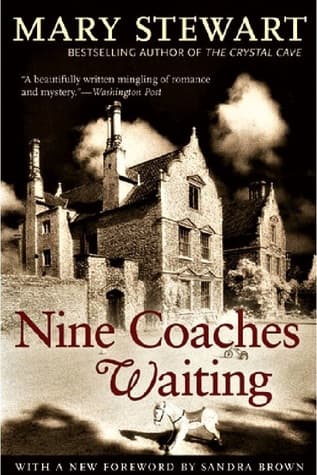
Mary Stewart (1958)
Genre
Thriller / Historical Fiction / Mystery / Romance
Reading Time
570 min
Key Themes
See below
Sign in to track this book
In a secluded French chateau, a young governess uncovers a sinister plot against her orphaned charge, forcing her to distinguish between genuine protectors and charming manipulators amidst a web of family secrets and burgeoning romance.
Linda Martin, an orphaned English governess, arrives at the isolated Château Valmy in the French Alps. Madame de Valmy, the boy's grandmother, hired her to care for nine-year-old Philippe, the current Count de Valmy, whose parents died in a car crash. Linda is immediately struck by the château's grandeur and its slightly eerie atmosphere. She meets Madame de Valmy, a frail but kind woman, and later encounters Léon de Valmy, Philippe's uncle and guardian. Léon is a charismatic but intimidating man confined to a wheelchair. Linda quickly bonds with the sensitive and artistic Philippe, who is the sole heir to the Valmy estate.
Linda's initial days are spent exploring the château and getting to know Philippe. She soon meets Raoul de Valmy, Léon's son and Philippe's cousin, a handsome, sardonic man who is often absent. Raoul's manner is both charming and unsettling, making Linda feel both attracted and wary. She observes the complex and often strained relationships within the family: Léon's domineering presence, Madame de Valmy's quiet sorrow, and Raoul's rebellious nature. Linda also learns that Philippe has a heart condition, which adds to her concern for his well-being. A sense of foreboding begins to settle over her as she overhears snippets of conversations and notices strange occurrences.
While on a nature walk with Linda, Philippe falls from a steep path into a ravine, narrowly escaping death. Linda manages to rescue him, but the incident deeply disturbs her. The path was recently cleared, and she suspects foul play rather than a mere accident, especially given Philippe's delicate health. Léon dismisses her concerns, attributing it to a child's clumsiness, but Linda's instinct tells her otherwise. This event is a turning point, solidifying her belief that Philippe's life is in danger and that someone within the château is trying to harm him. She becomes very protective of her young charge.
Driven by her suspicions, Linda begins to investigate the château's secrets. She discovers hidden passages and learns about the Valmy family's tumultuous history, including past tragedies and a curse associated with the estate. She finds a hidden letter from Philippe's deceased mother, hinting at her fears for her son's safety. Linda also learns that Léon is heavily in debt, giving him a strong motive to inherit Philippe's fortune. She realizes that the 'accident' was likely an attempt on Philippe's life, and that the danger is real and close at hand. Her trust in the family, particularly Léon, disappears.
Despite her growing fear, Linda finds herself increasingly drawn to Raoul. He is enigmatic, sometimes helpful, sometimes distant, and often seems to mock her concerns. He challenges her, yet also offers moments of unexpected kindness and protection. Linda is torn between her attraction to him and her suspicion that he might be involved in the plot against Philippe, or at least knows more than he lets on. Their relationship is full of tension and unspoken questions, adding romantic suspense to the overall mystery. She desperately wants to trust him, but the stakes are too high to be careless.
Philippe falls gravely ill after drinking a glass of milk. Linda immediately suspects poisoning and rushes to get help. Dr. Lavalle, the family doctor, confirms her fears, stating that Philippe was given a slow-acting poison. This incident leaves no doubt in Linda's mind that there is a deliberate plot to murder Philippe. The immediate suspect is Léon, who stands to gain everything. Linda realizes she must act quickly to protect Philippe, as the danger has escalated from 'accidents' to direct attempts on his life. She feels increasingly isolated and vulnerable, yet more determined than ever.
Fearing for Philippe's life, Linda devises a plan to escape the château with him. She confides in Madame de Valmy, who, despite her frailty, agrees to help. However, Léon discovers their escape attempt. He confronts Linda, revealing his manipulative and ruthless nature. Linda realizes she is trapped within the château, with no one to turn to for outside help. The phone lines are cut, and the gates are locked. The situation becomes desperate, and Linda feels the walls closing in around her and Philippe. She knows she must find another way to expose Léon and save Philippe.
Through deductions and discoveries, including a detail about Philippe's heart condition and a hidden birth certificate, Linda uncovers the shocking truth: the boy she knows as Philippe is not the true Count de Valmy. The real Philippe died shortly after birth, and the current 'Philippe' is an imposter, possibly a child Léon substituted to ensure his eventual inheritance. This revelation completely reframes the entire plot, explaining Léon's motive and the lengths he would go to protect his secret. The 'accidents' and poisoning were attempts to eliminate a child who could expose his fraud.
Armed with the truth, Linda confronts Léon. He initially denies everything, but as Linda presents her evidence, his facade crumbles. He confesses to the deception, driven by his desire to secure the Valmy fortune and ensure it didn't pass to a distant branch of the family. He reveals that the original Philippe died and he substituted a peasant child, intending to remove him once he came of age and claim the inheritance himself. The tension reaches its peak as Léon becomes desperate and dangerous, realizing his elaborate plan is unraveling. Linda fears for her life and the imposter Philippe's.
Just as Léon's desperation escalates, Raoul intervenes. He reveals that he has known about his father's scheme all along and has been secretly gathering evidence against him, while also protecting Linda and Philippe. Raoul explains his cryptic behavior, admitting he had to maintain his father's trust to expose him. A struggle ensues, and Léon is finally apprehended. With Léon's plot exposed, the imposter Philippe's life is safe, and the true heir to Valmy, a distant relative, is identified. Linda and Raoul's relationship solidifies, built on trust and mutual respect after the ordeal.
In the aftermath, Léon is arrested and faces the consequences of his fraud and attempted murder. The imposter Philippe, though no longer the Count, is cared for by Raoul and Linda, finding a new, safer life away from the château. Madame de Valmy, though heartbroken by her son's betrayal, finds peace in the truth. Linda decides to stay in France, now free from the threat and deeply in love with Raoul. The château, once a place of terror, begins to heal. Linda, no longer just a governess, finds a home and a future with Raoul, embracing the challenges and joys that lie ahead.
The Protagonist
Linda transforms from a vulnerable, displaced governess into a brave detective and protector, ultimately finding love and a sense of belonging.
The Supporting
Philippe remains largely a catalyst for the plot, but his eventual safety and new identity represent a hopeful future.
The Antagonist
Léon's arc is one of escalating desperation and exposure, leading to his downfall.
The Supporting
Raoul moves from an enigmatic, suspicious figure to a clear ally and romantic partner, revealing his hidden integrity.
The Supporting
Madame de Valmy moves from a passive observer to a quiet ally, facing the painful truth about her son.
The Supporting
Dr. Lavalle serves as a medical authority figure whose professional findings support Linda's theories, aiding the plot's progression.
The Mentioned
Only mentioned, her story foreshadows Linda's perilous situation.
This theme is central to the novel, appearing in several ways. The opulent Château Valmy, initially a romantic, historical setting, quickly reveals a sinister side of secrets and danger. Léon de Valmy embodies this theme; his charming, sophisticated exterior hides a ruthless, calculating murderer. Even Raoul's sardonic detachment is a facade for his deeper integrity and his secret efforts to expose his father. The most important example is the identity of Philippe himself, who seems to be the rightful heir but is, in reality, an imposter. Linda must constantly look beyond appearances to uncover the truth, as seen when she realizes Philippe's 'accidents' are deliberate attempts on his life.
“One learned quickly at Valmy that there were always two sides to everything, the one that showed and the one that was concealed.”
The theme of vulnerable innocence is primarily shown by young Philippe. His youth, delicate health, and trusting nature make him an easy target for Léon's plans. Linda, as his governess, becomes his sole protector, showing how easily a child can be exploited and harmed when surrounded by malice. The repeated attempts on Philippe's life – from the fall in the woods to the poisoning – show the reality of his peril. This vulnerability extends to Linda herself, who, as an orphaned outsider, is initially alone and unprotected in a foreign, dangerous environment, relying only on her wits to survive and protect her charge.
“He was so small, so trusting, and the world was so full of traps.”
Greed is the main reason for Léon de Valmy's elaborate and murderous plot. His desperate desire to secure the Valmy fortune and maintain the family's prestige, coupled with his significant debts, drives him to commit fraud and attempt murder. He sees Philippe not as a nephew, but as an obstacle to his financial salvation. The theme explores how the pursuit of wealth can change a person's morality, leading them to commit heinous acts without remorse. Léon's character is a chilling example of how avarice can consume a person, turning family bonds into opportunities for exploitation and violence.
“Money, it seemed, was the root of all evil, and Valmy had plenty of it.”
This theme explores the powerful bonds of love and loyalty that emerge when facing danger. Linda's fierce, protective love for Philippe drives her every action, compelling her to risk her own life to save him. Her loyalty to the innocent child is unwavering, even when she is isolated and terrified. Similarly, Raoul's hidden loyalty to justice and his ultimate devotion to Linda and Philippe reveal his true character. Madame de Valmy, despite her frailties, shows loyalty to Philippe and Linda by attempting to aid their escape. These emotional connections contrast with Léon's cold-hearted betrayal, showing the strength and redemptive power of genuine human connection.
“I had given my word to a child. And I would keep it, no matter what.”
Château Valmy's remote location amplifies suspense and danger.
The remote and ancient Château Valmy, nestled in the French Alps, serves as a classic gothic setting. Its isolation cuts Linda off from outside help and reinforces a sense of entrapment. The vastness of the château, with its secret passages and hidden rooms, creates an atmosphere of claustrophobia and paranoia, making it difficult for Linda to trust anyone. This isolation amplifies the suspense, as Linda and Philippe are effectively at the mercy of their captors, with no easy means of escape or communication with the outside world. The setting itself becomes a character, contributing significantly to the mood and plot.
Linda's initial lack of knowledge creates suspense and mystery.
While Linda is the protagonist and her narration is ultimately reliable in conveying her discoveries, her initial lack of knowledge about the Valmy family history and the true nature of its inhabitants functions as a form of 'unreliable perception' for the reader. We experience the château and its residents through her initial, often naive, impressions. This device builds suspense as Linda (and the reader) slowly uncover the sinister truths hidden beneath the surface, questioning everyone's motives, including Raoul's. Her journey of discovery mirrors the reader's, making the revelations more impactful.
Philippe's supposed heart condition distracts from the true plot.
Philippe's recurring heart condition serves as a significant red herring. It provides a plausible explanation for his frail health and the 'accidents' he experiences, diverting suspicion from deliberate attempts on his life. The family, particularly Léon, often attributes Philippe's weakness and any mishaps to his delicate health, making it harder for Linda to convince others of foul play. This device cleverly misdirects both Linda and the reader, until the true nature of the plot (the imposter's identity and the poisoning) is revealed, making the earlier 'accidents' even more chilling in retrospect.
Discovery of a hidden letter and birth certificate reveals crucial plot twists.
The discovery of hidden documents, specifically a letter from Philippe's deceased mother and later a hidden birth certificate, is a critical plot device. These documents provide Linda with concrete evidence and crucial information that allows her to piece together Léon's elaborate scheme. The letter hints at the mother's fears, while the birth certificate ultimately exposes the truth about Philippe's identity as an imposter. These revelations are pivotal turning points, moving the plot forward from suspicion to confirmed conspiracy and providing the means for Linda to expose the antagonist.
“There are nine coaches waiting for the dead man, and one for the bride.”
— A recurring, ominous nursery rhyme that sets a dark tone for the story.
“It was not a house, but a castle. It was not a home, but a trap.”
— Catherine's initial impression of the Château de Valmy, highlighting its grandeur and underlying menace.
“I was an orphan; I had learned to be self-sufficient. I had learned to hide.”
— Catherine's reflection on her past, explaining her resilience and guarded nature.
“Love, I thought, was a kind of madness. And I was mad.”
— Catherine's internal struggle with her growing feelings for Raoul, despite the danger.
“There was a game being played here, and I was one of the pawns.”
— Catherine's realization that she is an unwitting participant in a dangerous plot.
“The past was not merely prologue; it was present, and it was demanding its due.”
— Catherine's understanding that the historical events and family secrets of Valmy directly impact her current situation.
“Fear is a cold companion, but it can also be a sharp weapon.”
— Catherine's internal monologue about how fear, while debilitating, can also sharpen one's senses and drive.
“I was a governess, not a heroine. But sometimes, even a governess has to fight.”
— Catherine's acceptance of her role in protecting Philippe, despite her ordinary position.
“Secrets are like shadows; they grow longer and darker in the twilight.”
— A reflection on the increasing complexity and danger of the hidden truths within the château.
“The truth, when it came, was not a sudden explosion, but a slow, agonizing unraveling.”
— Describes the gradual revelation of the plot and the true nature of the characters.
“One does not simply walk away from Valmy. One is either consumed by it, or one escapes.”
— Emphasizes the powerful, almost sentient hold the château has on its inhabitants.
“He was a man carved from granite, with a heart of fire.”
— Catherine's description of Raoul, capturing his stoic exterior and passionate nature.
“To love was to be vulnerable. To be vulnerable was to be alive.”
— Catherine's ultimate acceptance of her feelings, despite the risks involved.
“Sometimes the greatest courage is simply to endure.”
— A quiet reflection on the strength required to face continuous threats and uncertainty.
Ready to see how well you understood this book? Take our interactive quiz with 10 questions.
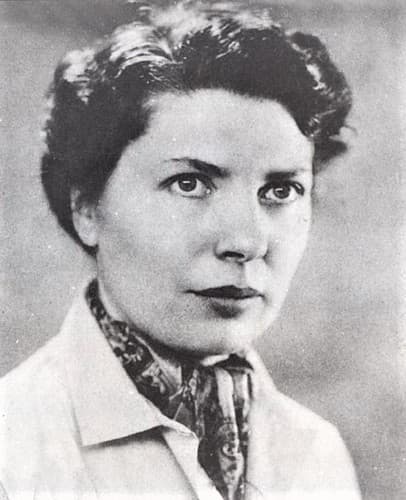
Biography coming soon.







