“The mind can play tricks on you, especially when you’re alone in the dark.”
— A common theme throughout the collection, reflecting the psychological aspect of horror.

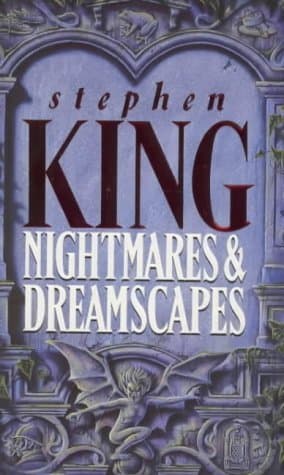
Genre
Thriller / Fantasy / Mystery
Reading Time
1500 min (approx. for 836 pages)
Key Themes
See below
Sign in to track this book
Stephen King's third collection takes readers into a vast cave of imagination, where fingers emerge from drains, novelty teeth become deadly, and Castle Rock's legend grows, promising sleepless nights as he crafts your nightmares and triumphs.
Robinson, a mild-mannered schoolteacher, is consumed by grief and a desire for revenge. His wife, Janet, was murdered by the ruthless Las Vegas mob boss, Dolan, because she witnessed one of his crimes. For seven years, Robinson meticulously plans his revenge, driven by Janet's ghost. He discovers Dolan’s route through the Nevada desert, where Dolan drives his custom Cadillac without stopping. Robinson spends years digging a trench across a deserted stretch of road, knowing Dolan will eventually drive over it. He uses his teaching salary to fund the excavation, working in secret and enduring immense physical and psychological strain. His obsession grows, and he becomes increasingly isolated, his life revolving solely around this single, deadly goal.
Howard Fornoy tells the story of his younger brother, Robert, a child genius. At a young age, Robert develops a chemical compound he believes can eliminate human aggression. Driven by a desire to end all conflict and suffering, Robert secretly introduces the compound into the world's water supply. Initially, the world seems to become a utopia, with crime rates plummeting and wars ending. However, the unexpected side effect is a complete loss of initiative and ambition; people become passive and content to do nothing, leading to a slow, gentle decline of civilization. The story explores the unintended consequences of well-meaning scientific intervention.
Miss Sidley, an elderly, strict elementary school teacher, notices disturbing changes in her students. They seem to transform, momentarily, into monstrous, ancient creatures when she looks away or blinks. Initially dismissing it as a symptom of her old age or stress, the horrifying reality slowly becomes clear: her students are shapeshifting beings. Terrified, she begins to murder the children, believing she is protecting humanity. Her actions lead to her eventual institutionalization, as the authorities believe she has gone insane. The story leaves the reader questioning the line between madness and a terrifying, unseen reality.
In a pastiche of Arthur Conan Doyle, Dr. Watson narrates a case where Sherlock Holmes is presented with a seemingly impossible murder. Lord Albert Hull, a notorious miser, is found dead in his study, locked from the inside, with no apparent way for a killer to enter or exit. The only other person in the house is his estranged son, who is also locked in his room. Holmes, using his deductive reasoning, carefully examines every detail, from the body's position to the room's small features. He ultimately uncovers the clever method used by the killer, revealing an unexpected solution to the locked-room mystery.
Sheridan, a desperate and superstitious gambler, is deeply in debt to a dangerous loan shark. He believes the only way to repay his debt is to kidnap children for a mysterious man named 'Popsy,' who pays well for them. Sheridan is a professional kidnapper, luring children with promises of fun and then delivering them to Popsy at a specific meeting point. During one kidnapping, he takes a young boy who claims his 'grandpa' is coming for him. Sheridan dismisses this, but as he drives to the drop-off, he realizes the boy’s ‘grandpa’ is something far older and more powerful than he could have imagined, leading to a terrifying confrontation.
Four siblings—Buddy, Lorrie, Trent, and Melinda—live in fear of their abusive stepfather, Lewis. They discover that their old house is slowly changing, seemingly growing and developing mechanical parts in the basement. The children realize the house is alive and responding to their wishes. They begin to actively encourage the house to grow and consume Lewis, feeding it his personal belongings and even his abusive words. The house becomes a sentient weapon, ending in a gruesome scene where it incorporates and destroys Lewis, fulfilling the children's desperate desire for freedom and revenge.
Jerry Taller is a small-time criminal who, after a botched robbery, finds himself dying from a gunshot wound. Before he dies, his partner, Keenan, gives him a map to a hidden stash of money. This money represents a 'fifth quarter' of their loot that was supposed to be split among four men. Taller, driven by a desire for revenge against the other three partners who betrayed him, uses his last hours to hunt them down. He is a man near death, fueled solely by his hatred and the promise of a final, bloody reckoning, methodically eliminating each man responsible for his demise.
An elderly man, suffering from dementia and haunted by the constant ticking of time, tries to teach a crucial lesson to his young grandson. He uses the metaphor of a pretty pony, explaining how time constantly chases and eventually catches everything, taking away youth, memories, and life itself. The old man, in his fragmented state, describes time as a predatory force, emphasizing its unstoppable nature. He tries to help his grandson understand that one must learn to measure and manage time before it consumes them entirely. This is a desperate attempt to pass on wisdom before his own mind completely fades.
An American couple, Lonnie and Doris Freeman, on their honeymoon in London, decide to visit Crouch End. They soon find themselves disoriented, unable to find their way out of the seemingly normal neighborhood. As they wander, the area becomes increasingly bizarre and terrifying. They encounter strange, non-human entities, distorted architecture, and a sense of pervasive evil. Doris eventually tells her horrifying experiences to a police officer, describing how Lonnie was taken by unimaginable creatures from another dimension. The story, a homage to H.P. Lovecraft, depicts a place where reality is thin, and cosmic horrors lurk just beneath the surface.
Brandon Pearson, a man trying to quit smoking, discovers a terrifying side effect of his addiction. For ten minutes every day, at 10:00 AM and 10:00 PM, he can see that many non-smokers are actually monstrous, bat-like creatures disguised as humans. These 'Ten O'Clock People' are slowly infiltrating society, holding positions of power. Brandon, along with other smokers who share this unique vision, forms a secret group to fight back against this alien invasion. The story uses smoking as a bizarre way to perceive a hidden, horrifying reality and explores themes of addiction, paranoia, and secret societies.
The Protagonist
Robinson transforms from a grieving widower into a single-minded avenger, ultimately achieving his revenge but at a profound personal cost.
The Antagonist
Dolan remains a static, villainous figure, ultimately falling victim to the consequences of his own hubris and cruelty.
The Protagonist/Innovator
Robert attempts to 'fix' humanity, only to inadvertently usher in a different form of societal decline.
The Protagonist
Miss Sidley descends into paranoia and violence as she grapples with a horrifying, unseen reality, ending in her perceived madness.
The Protagonist/Antagonist
Sheridan's desperate actions lead him to confront an ancient evil, resulting in his ultimate demise.
The Antagonist
Lewis remains a static, abusive figure, ultimately consumed by the very forces he unwittingly provokes.
The Protagonist
Taller uses his last moments to exact revenge, finding a grim form of closure in his final, violent acts.
The Protagonist
Brandon transforms from an ordinary smoker into a reluctant warrior against a hidden alien menace.
This theme explores how revenge consumes and changes people. It often shows revenge as a double-edged sword that can destroy both the person seeking it and the person it is sought against. In 'Dolan's Cadillac,' Robinson's seven-year quest for revenge completely takes over his life, turning him into a shadow of his former self, even after he achieves his gruesome goal. Similarly, Jerry Taller in 'The Fifth Quarter' uses his dying breaths to get bloody retribution, finding a grim purpose in his final moments. The stories often question if revenge truly brings peace or just continues a cycle of violence and suffering.
“For seven years, Dolan, I've been waiting for you. And now you're mine.”
Many stories in the collection explore the idea that the ordinary world is just a thin layer over a much darker, more monstrous reality. In 'Crouch End,' a normal London neighborhood warps into a Lovecraftian nightmare, revealing cosmic horrors beyond human understanding. 'Suffer the Little Children' shows an elderly teacher realizing her students are shapeshifting monsters, challenging her sanity. 'The Ten O'Clock People' uses smoking as a way to perceive disguised aliens. This theme suggests that the mundane can quickly become terrifying, and that humanity is often unaware of the true nature of the world around it.
“He thought of the curtain that hangs between the world of ordinary life and the world of the supernatural, how thin it was, how easily it could be torn.”
This theme examines the unforeseen and often disastrous results of scientific or human attempts to control or 'perfect' natural processes or human nature. In 'The End of the Whole Mess,' Robert Fornoy's invention to eliminate aggression leads to a global state of passive apathy and the slow, gentle decline of civilization. The story highlights the arrogance in believing one can 'fix' fundamental parts of existence without understanding the complex balance of consequences. It is a cautionary tale about playing God and the unintended side effects of even well-meaning interventions.
“We cured humanity, Howard. And in doing so, we killed it.”
Several stories look at the dark consequences of abuse, especially in homes, and the desperate measures victims take to get justice or freedom. 'The House on Maple Street' is a clear example, where children suffering under an abusive stepfather find a terrifying ally in their sentient home, which ultimately consumes their tormentor. This theme explores the psychological impact of ongoing abuse and the basic human desire for justice, even if it appears in supernatural or horrific ways. It often shows children as vulnerable yet capable of extreme actions when pushed too far.
“The house was hungry, and it was hungry for Lewis.”
A narrator whose credibility is compromised, blurring the line between reality and delusion.
This device is used to create suspense, ambiguity, and to challenge the reader's perception of events. In 'Suffer the Little Children,' Miss Sidley's account of her students transforming into monsters is presented through her increasingly unstable perspective, leaving the reader to question whether she is truly seeing monsters or succumbing to madness. Similarly, in 'The End of the Whole Mess,' Howard Fornoy's recounting of his brother's actions carries a tone of retrospective regret and altered reality, making the reader consider the subjective nature of his narrative.
The introduction of incomprehensible, ancient, and indifferent entities that threaten human sanity.
King frequently employs elements of cosmic horror to evoke a sense of profound dread and insignificance. In 'Crouch End,' the American couple encounters entities and spatial distortions that defy human understanding, suggesting a vast, terrifying universe beyond our comprehension. The 'grandpa' in 'Popsy' is another example, an ancient, non-human entity that preys on children, representing a primal, unknowable evil. This device emphasizes humanity's fragility and the thinness of the barrier between our world and unspeakable, alien realities.
Supernatural events or entities that embody characters' psychological states or desires.
This device often externalizes characters' internal struggles, fears, or desires into tangible supernatural phenomena. In 'The House on Maple Street,' the house itself becomes a sentient entity that responds to the children's desperate desire for revenge against their abusive stepfather, literally consuming him. The house's transformation mirrors the children's suppressed rage and their yearning for liberation. Similarly, Robinson's relentless pursuit of Dolan in 'Dolan's Cadillac' is fueled by the spectral presence of his deceased wife, making his revenge a manifestation of his grief and obsession.
Exploring extreme hypothetical situations to examine human nature or societal structures.
King often uses a central 'what if' premise to drive a story and explore profound philosophical or societal questions. 'The End of the Whole Mess' is a prime example: 'What if human aggression could be completely eliminated?' The story then meticulously explores the unexpected and devastating consequences of such a seemingly utopian intervention. This device allows King to delve into the complexities of human nature, ethics, and the potential pitfalls of tampering with fundamental aspects of existence, often leading to ironic or tragic outcomes.
“The mind can play tricks on you, especially when you’re alone in the dark.”
— A common theme throughout the collection, reflecting the psychological aspect of horror.
“Sometimes the things we imagine are far worse than anything that could actually happen.”
— Reflecting on the power of the human imagination to create terror.
“The world is full of wonders, but also full of things that can make your blood run cold.”
— A general observation on the duality of life and the presence of horror.
“There are more things in heaven and earth, Horatio, than are dreamt of in your philosophy.”
— A direct quote from Hamlet, used within a story to emphasize the unknown and supernatural.
“It’s not the monsters under the bed that you should be afraid of, it’s the ones inside your head.”
— Highlighting internal struggles and psychological horror over external threats.
“The past is a stubborn thing, and it often refuses to stay buried.”
— Referencing how past events or memories can haunt characters.
“Some dreams are so vivid, so real, that you can’t help but wonder if they were more than just dreams.”
— Explores the blurred line between dreams, reality, and the supernatural.
“Even in the brightest day, shadows can lurk just out of sight.”
— A metaphorical statement about hidden dangers and the omnipresence of darkness.
“Fear is a powerful motivator, capable of making people do things they never thought possible.”
— Observing the extreme actions driven by fear in various stories.
“The greatest trick the devil ever pulled was convincing the world he didn't exist.”
— A classic quote, often used to suggest hidden evils or insidious threats.
“Sometimes the only way to escape a nightmare is to wake up. But what if you can't?”
— Pondering the inescapable nature of some horrors, especially mental ones.
“The mundane can become terrifying with just a slight shift in perspective.”
— Highlighting how everyday objects or situations can turn sinister.
“There's a thin line between genius and madness, and sometimes it's impossible to tell the difference.”
— Exploring characters who teeter on the edge of sanity.
“Every secret has its price, and some are paid in blood.”
— Referring to the deadly consequences of hidden truths and dark secrets.
Ready to see how well you understood this book? Take our interactive quiz with 10 questions.
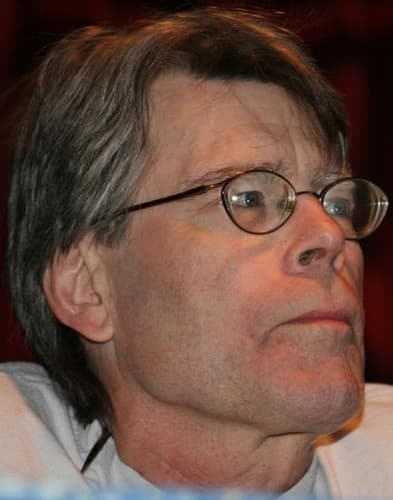
Stephen Edwin King is an American author of horror, supernatural fiction, suspense, crime, science-fiction, and fantasy novels. Described as the "King of Horror", his books have sold more than 350 million copies as of 2006, and many have been adapted into films, television series, miniseries, and comic books. King has published over 65 novels/novellas, including seven under the pen name Richard Bachman, and five non-fiction books. He has also written approximately 200 short stories, most of which have been published in book collections.







