“The wind was a living thing, a malevolent entity that shrieked and clawed at the aircraft, trying to tear it apart.”
— Describing the extreme weather conditions during the plane crash.

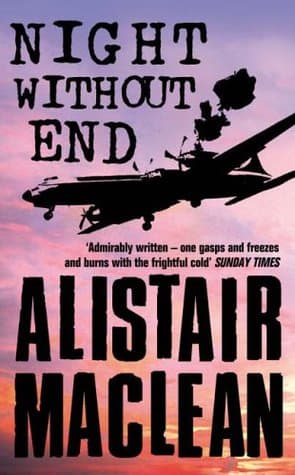
Alistair MacLean (1960)
Genre
Thriller / Mystery
Reading Time
240 min
Key Themes
See below
Sign in to track this book
In the deadly Arctic, a remote research station finds a crashed airliner. The pilot was shot, and the killer is among the ten survivors.
Dr. Mason, leader of the British IGY (International Geophysical Year) weather station, Station Zebra, in the Greenland ice cap, receives a distress call from an experimental British airliner, the 'Polar Queen,' carrying a new inertial navigation system. The plane crashes near the station. Despite a blizzard and extreme cold, Mason and his two assistants, laboratory technician Peter Braden and radio operator Johnnie Zagero, go on a dangerous rescue mission. They find ten survivors: six men and four women. Among them are an injured pilot, a stewardess, an American millionaire, and an unconscious man. The survivors are brought back to the station, but the pilot dies shortly after saying he was shot.
The pilot's dying words, 'They shot me,' confirm Mason's suspicion: this was no ordinary crash. He finds a bullet hole in the pilot's body, showing murder. Mason, a former RAF pilot and doctor, takes charge, realizing one of the ten survivors is a killer and possibly a spy. The survivors include millionaire J. R. Carpenter, his secretary Joss, his personal physician Dr. Brooks, fashion model Helene Fleming, stewardess Patricia Rollins, and the seemingly invalid Mr. Travers. Also present are three other men: Dr. Zeffer, Mr. Smith, and the unconscious Mr. Corazzini. Mason must find the murderer before they strike again or sabotage the station.
Mason's investigation is made harder by 'accidents' and sabotage. The station's radio equipment is tampered with, cutting them off. Important medical supplies are destroyed, and a snowmobile is disabled. These acts suggest an organized effort among the survivors, confirming Mason's belief that a dangerous spy ring is present. He scrutinizes each survivor, noting their reactions and inconsistencies. The harsh environment and limited resources increase paranoia, as Mason realizes the group hides not just a murderer, but individuals with a larger, more sinister plan involving the plane's secret cargo.
Through observation and questioning, Mason starts to learn the truth. He learns that the 'Polar Queen' was not just an experimental airliner but a cover for transporting a sensitive, experimental navigation system (the 'Jupiter' inertial guidance system) and valuable industrial diamonds. The passengers are not who they say they are; many are agents in an espionage plot to hijack the system and the diamonds. The 'invalid' Mr. Travers is a key player, and the 'millionaire' Carpenter and his group are involved. Mason realizes he is dealing with a professional, ruthless organization.
The previously unconscious Mr. Corazzini wakes up. To Mason's surprise, Corazzini is a British Secret Service agent, working to protect the Jupiter system. He reveals that the plane was hijacked mid-flight, and the crash was planned to land it near a pre-arranged pick-up point on the ice. Corazzini's awakening changes the dynamics at the station, as he immediately identifies several 'survivors' as enemy agents. His presence gives Mason an ally, but also increases the danger, as the enemy agents now know they are exposed.
With Corazzini's revelation, the truth is out. Carpenter, Dr. Brooks, Joss, and Helene Fleming are Soviet agents. They overpower Mason, Braden, and Zagero, taking control of Station Zebra. Their goal is to get the Jupiter system and the diamonds, then signal a waiting submarine for extraction. They are ruthless, ready to kill anyone in their way. Mason and his team are held captive, but Mason plans their counter-attack, knowing time is short before the enemy finishes their mission and escapes the desolate ice cap.
Despite being held captive, Mason, Braden, and Zagero, with Corazzini's help, plan a daring escape and counter-attack. Using their knowledge of the station and the environment, they systematically disable the enemy agents. Mason, strong despite his academic appearance, is a formidable opponent. The fight is brutal and happens inside the station and in the blizzard. They neutralize several agents, but the fight continues, and the remaining agents are desperate.
Carpenter and the remaining agents escape into the blizzard, taking the Jupiter system and the industrial diamonds. Their plan is to meet a waiting submarine. Mason, Corazzini, Braden, and Zagero pursue them, braving extreme weather and treacherous ice. The chase is a race against time and the elements, pushing both sides to their limits. Mason knows that if the agents reach their pick-up point, the valuable technology will be lost, and their efforts will have been for nothing.
The pursuit ends in a tense, violent confrontation on the vast ice. Mason, using his ingenuity and knowledge of the terrain, corners the remaining agents. In a brutal hand-to-hand fight, he incapacitates them, getting back the Jupiter system and the diamonds. The battle shows Mason's resilience and determination. The extreme cold and isolation make every move critical. With the enemy neutralized and the stolen items secured, Mason and his exhausted team begin the hard journey back to the station, hoping to contact the outside world.
After neutralizing the enemy agents and securing the stolen technology, Mason repairs the radio and sends a distress signal. A rescue team arrives, ending their ordeal. The remaining survivors, Patricia Rollins and Dr. Zeffer (who were truly innocent passengers), are questioned. Mason, Braden, and Zagero are heroes. The Jupiter system is recovered, and the spy ring is broken. The experience affects everyone involved, showing human endurance and courage in extreme danger and betrayal in the desolate polar landscape.
The Protagonist
Mason transforms from a quiet scientist into a decisive action hero, demonstrating hidden depths of courage and combat skill.
The Supporting
Braden grows from a diligent technician into a capable and courageous participant in a life-or-death struggle.
The Supporting
Zagero evolves from a routine radio operator into an active participant in a high-stakes espionage thriller.
The Antagonist
Carpenter's facade of a rich civilian crumbles, revealing him as the cold, calculating mastermind of the espionage plot.
The Supporting
Corazzini transitions from a seemingly incapacitated victim to a crucial intelligence asset and active ally.
The Antagonist
Dr. Brooks's professional facade dissipates, revealing him as a ruthless and calculating enemy agent.
The Antagonist
Joss's role as a secretary is unmasked, revealing her as a dedicated and dangerous spy.
The Antagonist
Helene's image as a helpless model is shattered, revealing her as a cold and effective spy.
The Supporting
Patricia endures a terrifying ordeal, emerging as a survivor who witnesses the full extent of the conspiracy.
The Antagonist
Travers's portrayal as a helpless invalid is exposed as a calculated deception, revealing his true, sinister role.
Survival is central to 'Night Without End,' seen in the characters' struggle against the Arctic environment and human threats. From the initial plane crash survivors battling sub-zero temperatures to Mason and his team's fight against sabotage and attacks, every moment tests their endurance. The ice cap acts as an antagonist, pushing characters to their physical and mental limits. The characters' ingenuity in finding warmth, food, and defense shows humanity's will to live even in extreme circumstances.
“The wind howled like a thousand banshees, tearing at the flimsy fabric of the tent, threatening to rip it to shreds and expose them to the forty-below-zero death outside.”
The plot of 'Night Without End' relies on layers of deception and betrayal. The plane crash is not an accident but a planned act of sabotage. The survivors are not who they seem, with several posing as innocent victims while secretly being spies. Mason constantly has to tell truth from lies, leading to paranoia and distrust among the group. The betrayal of trust, both personal and national, drives the story, as enemy agents use the rescuers' good will for their goals, making the psychological tension as strong as the physical threats.
“He looked at the faces around him, the faces of men and women he had risked his life to save, and knew that at least half of them were lying, and that one was a murderer.”
Dr. Mason shows heroism and duty. Despite being a scientist, he rises to the occasion, showing courage, resourcefulness, and a strong moral compass. His initial duty is to rescue survivors, but it quickly grows to protecting his country's interests and ensuring justice. His assistants, Braden and Zagero, also show loyalty and bravery, supporting Mason in danger. The book celebrates the quiet heroism of individuals who, facing overwhelming odds, fight for what is right, risking their lives for a greater cause.
“His primary duty was to his station, to his country, and to the truth. Everything else, even his own survival, came second.”
The book explores the nature of identity, as almost every character first presents a false persona. The 'millionaire' is a spy, the 'invalid' is an agent, and the 'fashion model' is a killer. This theme explores how easily identities can be made and kept, especially in extreme circumstances. Mason's challenge is to uncover the true identities and motives of the crash survivors. This makes readers question appearances and consider hidden depths or sinister intentions beneath a carefully built facade.
“They were all strangers, yet intimately bound by the ice and the lie. He wondered which face was real, and which was merely a mask.”
A limited group of suspects trapped in an isolated location.
The novel employs a classic closed circle mystery setup. The ten plane crash survivors, along with the three members of Station Zebra, are isolated in the remote Arctic. This physical confinement means that the killer (and later, the entire spy ring) must be one of the people present. This device intensifies the paranoia, suspicion, and claustrophobia, as there is no escape and no outside help, forcing Dr. Mason to investigate and confront the threat from within the limited group.
The 'Jupiter' inertial guidance system and industrial diamonds as the object of desire.
The 'Jupiter' inertial guidance system and the industrial diamonds serve as the MacGuffin in 'Night Without End.' These items are the central objects that drive the plot forward and motivate the antagonists. While their specific technical details are not extensively explored, their immense value and strategic importance are sufficient to justify the elaborate espionage plot, the plane crash, and the subsequent acts of murder and sabotage. They are the 'prize' that everyone is fighting for, giving concrete stakes to the high-tension narrative.
The extreme Arctic environment as a constant threat.
The brutal Arctic environment is not just a setting but a powerful antagonist in itself. The sub-zero temperatures, raging blizzards, treacherous ice, and vast, desolate landscape constantly threaten the lives of all characters, regardless of their allegiances. It amplifies the danger of the human conflict, making survival a constant struggle even without the added threat of spies and murderers. This device adds an extra layer of tension and urgency, as characters must battle both human enemies and the unforgiving forces of nature.
The initial focus on the 'invalid' Mr. Travers as a victim, masking his true nature.
The character of Mr. Travers initially acts as a red herring and a kind of 'false protagonist' in terms of vulnerability. He is presented as the most critically injured and helpless survivor, drawing Mason's immediate medical attention and sympathy. This misdirection diverts suspicion from him, only for him to be revealed later as a key, active member of the spy ring. This device highlights the theme of deception and keeps the reader guessing about the true identities and motives of the crash survivors.
“The wind was a living thing, a malevolent entity that shrieked and clawed at the aircraft, trying to tear it apart.”
— Describing the extreme weather conditions during the plane crash.
“In this kind of country, if you're not careful, you can lose more than your way.”
— A character warning about the dangers of the Arctic wilderness.
“Fear, like pain, is a great revealer of character.”
— A reflection on how extreme situations expose true personalities.
“There are some things you just don't do, not even to save your own life.”
— A character expressing a moral boundary in a desperate situation.
“The Arctic doesn't forgive mistakes. It just buries them.”
— Emphasizing the unforgiving nature of the Arctic environment.
“Suspicion is a corrosive acid, eating away at trust and reason.”
— Describing the psychological toll of not knowing who to trust.
“It's amazing what the human body can endure when the mind refuses to give up.”
— Observing human resilience in the face of extreme hardship.
“The silence was not peaceful, but heavy, pregnant with unspoken threats.”
— Describing the tense atmosphere at the remote research station.
“Sometimes the most dangerous weapon is the one you least expect.”
— A realization about the unexpected nature of the threats faced.
“Truth, like ice, can be very slippery when you're trying to grasp it.”
— Reflecting on the difficulty of uncovering the truth amidst deception.
“In a world without law, the only law is survival.”
— A character's grim assessment of their situation in the isolated wilderness.
“The cold was a constant companion, a reminder of their precarious existence.”
— Highlighting the pervasive threat of the Arctic cold.
“There are no accidents in this game, only carefully planned moves.”
— A character realizing the incidents are part of a larger conspiracy.
“Every man has his breaking point. The trick is to find it before he does.”
— A manipulative character's thought process.
Ready to see how well you understood this book? Take our interactive quiz with 10 questions.
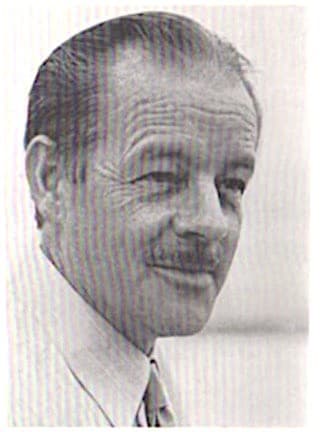
Alistair MacLean was a celebrated Scottish author renowned for his gripping thrillers and adventure novels. His most famous works, including "Ice Station Zebra" and "The Guns of Navarone," masterfully blend suspense, action, and intricate plots, often set in exotic or perilous locales. MacLean's prolific career established him as a titan of the espionage and military fiction genres.







