BookBrief
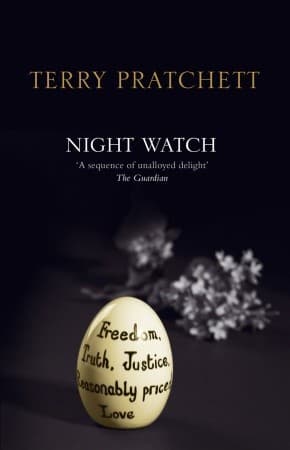
Night Watch cover
Archivist's Choice

Night Watch

Terry Pratchett (2002)

Genre

Fantasy / Science Fiction

Reading Time

480 min

Key Themes

See below

Track Your Reading

Sign in to track this book

A time-traveling policeman hunts a serial killer targeting his younger self in a city on the verge of revolution, confronting the cycles of societal change and the meaning of justice.

Synopsis

On the eve of the Glorious Twenty-Fifth of May, Commander Sam Vimes of the Ankh-Morpork City Watch pursues the murderer Carcer, who preys on Watchmen. A magical storm during the chase sends Vimes and Carcer back thirty years to the day of the Glorious Revolution. Injured, Vimes is mistaken for Sergeant-at-Arms John Keel, a legendary figure who trained future Watch leaders. Vimes assumes Keel's identity, knowing the real Keel is fated to die in the revolution. He takes charge of young, inexperienced Watchmen, including his younger self and a young Havelock Vetinari, the future Patrician. As Carcer's destructive influence grows, inciting riots and murders, Vimes must navigate the past, ensure the revolution unfolds as history dictates, and train his younger self and colleagues to become the officers they are meant to be. He faces the impossible task of preserving the past while trying to prevent unnecessary tragedy, all while his own existence is a paradox. The story ends with the Battle of Cable Street, where Vimes confronts Carcer and ensures his younger self survives, setting him on the path to becoming the Commander he is. After ensuring the revolution's key events and Keel's 'death,' Vimes returns to his present with new understanding.
Reading time
480 min
Difficulty
Medium
Pacing
Moderate
Mood
Witty, Philosophical, Suspenseful, Darkly Humorous, Reflective
✓ Read this if...
You enjoy thought-provoking fantasy that blends humor with profound social commentary, police procedurals, and time travel paradoxes.
✗ Skip this if...
You prefer straightforward fantasy without satirical elements or complex philosophical undertones.

Plot Summary

The Patrician's Birthday and a Chase

The story begins on the eve of the Glorious Revolution, the 30th anniversary of the day Commander Sam Vimes almost died. On Lord Vetinari's birthday, Vimes relentlessly pursues Carcer, a murderer and former Unmentionable, through Ankh-Morpork's streets. Carcer, responsible for several Watchmen's deaths, is brutally efficient. The chase ends at Unseen University, where Carcer tries to escape using a magical artifact. The struggle with Vimes causes a powerful magical discharge, tearing a hole in reality and sending both Vimes and Carcer through time.

Arrival in the Past

Vimes awakens in the past, on May 25th, 1968 (Ankh-Morpork calendar), the day the Glorious Revolution starts. He quickly realizes he is thirty years in the past, when he was a young recruit to the Night Watch. Disoriented but practical, Vimes sees the murder of Sergeant-at-Arms John Keel, his mentor from that time. To prevent a paradox and keep the timeline, Vimes must assume Keel's identity, using the 'Sergeant-at-Arms' sash he finds. This puts him directly in the city's revolutionary fervor, with the added pressure of knowing his younger self is also there.

Assuming Keel's Role and Shaping the Young Watchmen

As Sergeant-at-Arms John Keel, Vimes immediately takes charge of the Night Watch at Treacle Mine Road. He meets his younger, naive self, Corporal Vimes, along with other future Watch members like Nobby Nobbs and Fred Colon. Recognizing the period's historical importance, Vimes begins to teach his past colleagues policing wisdom and a sense of duty. He instructs them on proper investigation, evidence collection, and protecting the innocent, regardless of their social standing or revolutionary alignment. He also subtly guides his younger self, instilling the principles that will define Commander Vimes in the future, all while dealing with the city's rising tensions.

Carcer's Destructive Influence

Meanwhile, Carcer, also in the past, quickly adapts to the chaos. He uses his psychopathic tendencies and tactical skill to infiltrate and manipulate various revolutionary factions. He incites violence, plants false evidence, and creates distrust between revolutionaries and the existing authorities, the Unmentionables. Carcer's actions are driven by a desire for power and chaos, and he enjoys shaping history in a more brutal way. His presence worsens the already unstable situation, turning discontent into bloody conflict, creating a more dangerous past for Vimes.

The Barricades Rise

The discontent in Ankh-Morpork finally erupts into full revolution. Barricades go up across the city, dividing districts and creating zones for various revolutionary factions. The Palace Guard and the Unmentionables, representing the Patrician's rule, use brutal suppression tactics, causing more civilian casualties. The Night Watch, under 'Keel's' guidance, finds itself in a difficult position, trying to keep order and protect the innocent amid the rising violence. Vimes, as Keel, struggles to uphold the law and prevent more bloodshed, knowing the historical outcome of these events and trying to lessen the suffering.

Confronting the Unmentionables

Vimes, as Sergeant Keel, opposes the brutal and corrupt Unmentionables, the Patrician's secret police. He sees their atrocities and, using his future knowledge and resolve, protects citizens from their arbitrary violence. This defiance puts him in direct conflict with figures like the sadistic Reg Shoe and other Unmentionables. His actions inspire the younger Watchmen and earn him the respect of common people, who see him as a symbol of justice in a time of tyranny. This defiance also sets the stage for the confrontation that will decide the revolution's outcome.

The Truth About the Revolution

As 'Keel,' Vimes looks closer at the revolution's workings, realizing the 'Glorious Revolution' he remembers is not entirely as it seems. He finds evidence of manipulation and opportunism, particularly by figures like the lawyer, Roberts, who exploit people's grievances for their own gain. Vimes learns that the revolution was not a clean uprising but a complex, messy event with many shades of grey, and that history's 'heroes' were often flawed. This revelation challenges his understanding of his own past and the foundation of modern Ankh-Morpork.

The Battle of Cable Street

The revolution's climax sees 'Keel' leading a small group of Night Watchmen and civilian volunteers in a stand at Cable Street. They face overwhelming odds against the Unmentionables and the Palace Guard, who want to crush the rebellion. Vimes, using his future experience and tactical skill, organizes a defense, prioritizing the protection of innocent lives over any political agenda. This battle shapes the young Watchmen into true officers and shows the power of principled policing even against tyranny.

Confronting Carcer and the Time Paradox

During the revolution's chaos, Vimes, as 'Keel,' finally confronts Carcer. Their encounter is brutal and personal, with Vimes knowing he must eliminate Carcer to prevent him from changing history and to ensure his own future. The fight is intense, ending in Carcer's defeat and implied death by 'Keel's' hands, fulfilling the historical record. This confrontation is important for the timeline and for Vimes's emotional journey, as he deals with the morality of his actions and the need to ensure the past unfolds as it should, even if it means personal sacrifice.

The Patrician's Fall and the New Order

After the revolution, the tyrannical Patrician, Lord Winder, is overthrown, leading to instability before Lord Vetinari's eventual rise. 'Keel' plays a subtle but important role in this transition, ensuring that key figures and events match the history Vimes knows. While the revolution does not immediately bring the stable Ankh-Morpork of his time, Vimes ensures the groundwork for future progress and a more just society is laid. He observes the immediate aftermath, knowing his mission to preserve the timeline is almost complete.

A Final Goodbye and Return

With historical events secured, Vimes, as 'Keel,' has a final, emotional meeting with his younger self, Corporal Vimes. He offers wisdom and encouragement, subtly shaping the young officer's destiny and reinforcing the values that will define the future Commander. This interaction is a powerful moment of self-reflection and mentorship. Soon after, the magical anomaly that brought him to the past reactivates, pulling him back to his own time. He leaves the past knowing he has done his duty, preserving the timeline and ensuring the Ankh-Morpork he knows.

Back to the Present

Vimes returns to the present, reappearing on the rooftop of Unseen University. He faces Carcer, who has also returned, disoriented and weakened by the temporal journey. The past has deeply affected Vimes; he is now more resolute, his understanding of justice and policing deepened by living through the events that shaped his city. The chase continues, but Vimes is no longer just pursuing a killer; he is completing a cycle, bringing the full weight of his past and present experience to bear on his enemy. He apprehends Carcer, bringing him to justice in his own time.

Principal Figures

Commander Samuel Vimes

The Protagonist

Vimes travels to his past, relives and shapes the revolution that defined his youth, and returns with an even deeper understanding of justice and his own identity.

Carcer

The Antagonist

Carcer travels to the past, attempts to reshape history through increased violence, but is ultimately defeated and brought to justice by Vimes.

John Keel

The Supporting/Mentioned

Keel is murdered early in the past, allowing Vimes to step into his shoes and fulfill his historical role, thereby ensuring his own development.

Young Sam Vimes

The Supporting

Young Vimes is mentored by his future self (as Keel), learning crucial lessons about policing and justice that forge him into the man he will become.

Fred Colon (past)

The Supporting

Colon, under Keel's influence, develops a stronger sense of duty and courage, contributing to the Night Watch's stand.

Nobby Nobbs (past)

The Supporting

Nobby navigates the revolution with his usual blend of opportunism and loyalty, subtly growing under Keel's influence.

Lord Winder

The Antagonist/Mentioned

Winder's oppressive rule leads to his overthrow during the revolution, fulfilling his historical role.

Lady Sybil Ramkin (past)

The Supporting

Sybil continues her charitable work during the revolution, demonstrating her inherent strength and compassion.

Reg Shoe (past)

The Supporting/Antagonist

Reg Shoe leads revolutionary efforts, demonstrating his idealism and commitment to change, ultimately dying for the cause.

Themes & Insights

The Nature of Justice and Law

The novel explores what justice truly means, especially during revolution and lawlessness. Vimes, as 'Keel,' struggles with upholding a tyrannical regime's 'law' versus protecting the innocent and doing what is right. He teaches his young self and other Watchmen that true justice involves principled action, empathy, and defending the vulnerable, even if it means defying authority. The theme questions whether law serves justice, or if justice must sometimes go beyond law. This is clear in Vimes's insistence on proper procedure even when facing revolutionaries or the corrupt Unmentionables, as he demands evidence and fair treatment for all.

One day, all this will be history, and you'll remember it as the good old days. Or not. It'll be history, anyway.

Samuel Vimes (as Keel)

Identity and Self-Discovery

Vimes's journey into his past forces him into deep self-reflection. By taking on his mentor John Keel's identity, Vimes mentors his younger self, shaping who he will become. He sees his own youthful idealism and confronts the historical events that formed his cynicism and moral code. The experience strengthens his understanding of who he is and why he fights for justice, showing that his present self is a result of his past experiences and choices. This is clear in his struggle with his 'beast' and his understanding of how Keel's teachings shaped him.

He knew that he was Keel. He also knew he was Vimes. And the one thing he knew absolutely was that they were the same man.

Narrator

The Cycle of Revolution and Change

The novel examines revolutions, questioning if they bring lasting change or just replace one oppression with another. Vimes's cynical view that 'revolutions always come round again' is explored as he sees the messy, often brutal, realities of the Glorious Revolution. He sees how idealism can be corrupted, how power vacuums are filled, and how people's genuine grievances can be exploited. While the revolution does lead to Lord Winder's downfall, Vimes knows it is only a temporary step towards the more stable, yet flawed, Ankh-Morpork of his future, showing the cyclical nature of political upheaval.

Don't put your trust in revolutions. They always come round again. That's why they're called revolutions. People die, and nothing changes.

Samuel Vimes

Memory, History, and Truth

Night Watch looks at how unreliable memory is and how history is made. Vimes, having lived through his past, realizes that the 'Glorious Revolution' as remembered is a clean and simple version of events. He faces the truth that heroes are often flawed, and that important moments are messier than history books suggest. His presence in the past actively shapes the historical narrative, blurring the lines between observer and participant. This theme questions what 'truth' means in historical events and personal memory, as Vimes must ensure the past he remembers is the one that happens.

History was a story, after all, and the people who told the story were the ones who had won.

Narrator

The Banality of Evil

While Carcer is a psychopath, the novel also touches on the more ordinary, bureaucratic evil of the Unmentionables and Lord Winder's regime. The casual cruelty, indifference to suffering, and systematic oppression are presented as equally, if not more, harmful than Carcer's overt violence. Vimes confronts the chilling reality that many atrocities are committed by people just following orders or upholding a corrupt system. This theme shows how ordinary people can become involved in evil, and how fighting for justice often means challenging institutional abuses of power, not just individual villains.

It was not evil that won the day, but the indifference of good men.

Samuel Vimes (internal thought)

Plot Devices & Literary Techniques

Time Travel / Temporal Displacement

The primary mechanism for sending Vimes and Carcer into the past.

The magical discharge during the chase between Vimes and Carcer at Unseen University serves as the catalyst for their temporal displacement. This device is crucial for setting up the entire narrative, allowing Vimes to revisit and subtly influence his own past. It's not a precise, controlled form of time travel, but rather a chaotic, accidental jump that places the characters directly into the pivotal events of the Glorious Revolution. The temporal displacement creates the central conflict and the paradoxes Vimes must navigate, forcing him to become the very mentor he remembers.

Assumed Identity

Vimes takes on the role of his deceased mentor, John Keel.

Upon arriving in the past and witnessing the murder of John Keel, Vimes immediately assumes Keel's identity. This device is vital for several reasons: it prevents a historical paradox (as Keel must be present for young Vimes), it allows Vimes to operate within the Night Watch without revealing his true identity, and it places him directly in a position of authority and influence over his past self and colleagues. The assumed identity forces Vimes to embody the legend of Keel, making him confront his own memories and the expectations placed upon his mentor, further shaping his character.

Paradox Avoidance

Vimes's conscious effort to ensure history unfolds as it 'should'.

Throughout his time in the past, Vimes is acutely aware of the need to preserve the timeline, even if it means making difficult choices. This device drives many of his actions, as he subtly guides events and individuals to ensure that the Glorious Revolution, and his own formative experiences, unfold in a way that leads to the present he knows. He must ensure Keel's legend is upheld, that certain characters live or die at their appointed times, and that the revolution's outcome aligns with history, despite his personal desires to intervene more drastically. This creates tension and moral dilemmas for Vimes.

The 'Beast'

Vimes's internal struggle with his primal, violent urges for justice.

The 'Beast' is an internal plot device representing the raw, violent, and often vengeful side of Vimes's nature, a primal instinct for justice that he constantly struggles to control. In the past, this 'beast' is more untamed in his younger self, and Vimes (as Keel) must confront and manage both his own latent urges and the burgeoning beast within young Vimes. It highlights his constant battle to maintain his humanity and adhere to the rule of law, rather than succumbing to pure retribution. The beast is a manifestation of his deep-seated desire for justice, often pushing him to the brink.

Historical Revisionism (in-universe)

The contrast between remembered history and lived experience.

This device is central to the novel's exploration of memory and truth. Vimes's experience in the past reveals that the 'Glorious Revolution' as recorded and remembered in his present is a simplified, almost mythical version of the complex, brutal reality. The historical narrative has been streamlined and certain inconvenient truths or messy details have been omitted. This device allows Pratchett to comment on how history is written by the victors and how collective memory can gloss over the harsh realities of the past, challenging both Vimes's and the reader's preconceived notions.

Critical analysis

Notable Quotes

The past was not a country that had been lived in. It was a country that had been invented. And then, and only then, could it be lived in.

Sam Vimes reflects on history and memory, particularly in relation to the 'Glorious Revolution' and the nature of historical narratives.

All that was necessary for evil to triumph was for good men to do nothing. And then he'd added, 'And for bad men to do a whole hell of a lot.'

Sam Vimes, as Sergeant-at-Arms, adds his own cynical but pragmatic amendment to a common saying about evil.

He'd always been a copper, through and through. The kind who knew that the world was a dark and dangerous place, and that the only way to make it less so was to stand in the darkness yourself.

Reflecting on Sam Vimes's core identity and his commitment to his duty as a Watchman.

The point of a revolution wasn't to get rid of a bad government. It was to get rid of a good one that had gone bad.

Vimes muses on the nature of revolutions and the cycle of power, during the time of the Cable Street Particulars.

No one is actually dead until the ripples they cause in the world die away...

Vimes thinks about the lasting impact of people, particularly in the context of the revolutionaries and their legacy.

You can't go around arresting people just for thinking. Not unless you want to live in a world where thinking is against the law.

Young Sam Vimes expresses a fundamental principle of justice and freedom of thought to a superior.

A man's a man. You can't change that. But you can change what a man thinks. And what he thinks can change the world.

Vimes considers the power of ideas and how they can shape individuals and society.

The uniform was just a symbol. The man inside it... he was the Watch.

Vimes reflects on the true essence of the City Watch, beyond mere uniforms and regulations.

He was a good man. Not a nice man, but a good man. And there was a difference.

Description of John Keel, or rather, Sam Vimes's perception of the man he has to impersonate.

Sometimes it was better to light a flamethrower than curse the darkness.

A darkly humorous and pragmatic thought from Vimes about dealing with overwhelming problems.

He knew about the rules. He just knew that some of them had to be broken, sometimes, for the greater good.

Vimes's internal conflict between following rules and doing what is right, especially during a chaotic time.

The past was a foreign country, but it wasn't just different, it was dangerous.

Vimes's personal experience of being trapped in the past, highlighting its volatile and unpredictable nature.

It was a dark and stormy night. Which was just fine, because it made the shadows longer and the villains more shadowy.

A classic opening line, with a Pratchett-esque twist, setting the mood for the grittier aspects of Ankh-Morpork.

He'd learned that the trick to being a copper was to make sure you were the only one who didn't know you were a copper.

Vimes reflecting on the art of undercover work and blending in, even when you are the authority.

Quiz

Test Your Knowledge

Ready to see how well you understood this book? Take our interactive quiz with 10 questions.

10
Questions
~5
Minutes
?
Best Score

Key Questions (FAQ)

The central premise involves Commander Sam Vimes being thrown back in time 30 years to a younger Ankh-Morpork on the eve of a violent revolution. He must impersonate his own former mentor, Sergeant-at-Arms John Keel, to train a younger version of himself and prevent a disastrous future, all while a serial killer targets policemen.

About the author

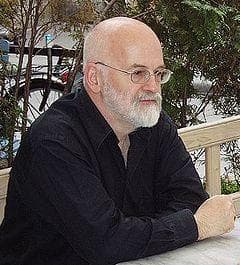
Terry Pratchett

Sir Terence David John Pratchett was an English humorist, satirist, and author of fantasy novels, especially comical works. He is best known for his Discworld series of 41 novels.