“I think it would be a shame to put a man to death who could play that well.”
— From 'The Mangler', referring to the possessed laundry press.

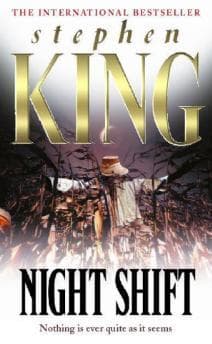
Stephen King (1960)
Genre
Thriller / Fantasy / Mystery
Reading Time
12-15 hours (approx. 30-45 min per story)
Key Themes
See below
Sign in to track this book
Stephen King delivers a chilling collection where industrial machines thirst for blood, ancient evils lurk in cornfields, and the dead refuse to stay buried, proving terror exists in life's most ordinary corners.
Writer Charles Boone inherits his family home, Chapelwaite, in Preacher's Corners, Maine. He moves there with his assistant, Calvin McCann, hoping for a fresh start. The townspeople are hostile, and strange things happen in the house. Boone finds a hidden diary, revealing his ancestor, James Boone, was part of a vampiric cult led by the ancient worm, Vermis Mysteriis, and that Jerusalem's Lot was destroyed by this evil. As they learn more, they realize the cult is still active, and Chapelwaite is central to its dark rituals, leading them to a terrifying fight with resurrected vampires and the malevolent entity that controls them.
Hall, a drifter, takes a job at the old Gates Falls Company textile mill in a small Maine town. He is assigned to the graveyard shift, which includes cleaning the rat-infested basement, a job no one else wants. He joins Warwick, the cruel foreman, and a small crew. As they go into the lower levels, the rat problem is worse than expected. They find monstrous, mutated rats and eventually a massive, ancient rat queen and a hidden, terrifying ecosystem beneath the mill, where the creatures have evolved grotesquely. This leads to a deadly fight in the dark, flooded tunnels.
Burt and Vicky Robeson, a couple, drive through rural Nebraska and accidentally hit a child who runs into the road. They find the child's throat was already cut. Looking for help, they drive into the deserted town of Gatlin, where they find no adults, only children. It soon becomes clear that the children, led by Isaac and Malachai, murdered all the adults three years prior, forming a cult that worships a malevolent entity in the cornfields called 'He Who Walks Behind the Rows.' Burt and Vicky become their next intended sacrifices.
Detective John Hunton investigates a series of strange and gruesome deaths at the Blue Ribbon Laundry, all involving a large, industrial laundry press called 'The Mangler.' At first dismissed as accidents, the deaths become more inexplicable and violent. Hunton, with his friend, Professor Mark Jackson, a local occult expert, begins to suspect the machine is possessed. They uncover a dark history involving a maid's blood, an antacid tablet, and strange coincidences that suggest the Mangler has become sentient and malevolent, demanding human sacrifices. Their attempts to exorcise or destroy it fail against its mechanical fury.
Jim Norman, a high school English teacher, moves his family back to his hometown. He is still haunted by a traumatic childhood incident where his older brother, Wayne, was murdered by a gang of greasers, and Jim had to hide. Years later, as Jim teaches, the bullies who killed Wayne start to reappear, one by one, as students in his class, looking just like their past selves. They are malevolent spirits, seeking revenge or to finish what they started. Jim realizes he must face his past and fight these supernatural entities to protect his family and his sanity, leading to a desperate struggle against the resurrected tormentors.
Stan Norris, a tennis player, is having an affair with Marcia, the wife of Cressner, a powerful mob boss. Cressner, aware of the affair, confronts Stan and offers him a terrifying wager: if Stan can walk the narrow, five-inch ledge around the entire penthouse apartment building where Cressner lives, Marcia will be free to leave him, and Stan will get a large sum of money. If Stan refuses or falls, Marcia will be framed for drug possession. Stan begins the agonizing, fear-inducing walk, battling vertigo, pigeons, and his own terror, with Cressner watching his every move.
Dick Morrison, a heavy smoker, gets a business card for 'Quitters, Inc.' from an old friend. Desperate to stop, he visits the agency, where he meets the well-dressed but chilling Mr. Donatti. Donatti explains their 100% success rate is guaranteed by extreme measures: if Dick smokes, his wife will be tortured. If he continues, the punishments escalate to his son, and then even Dick himself. The agency monitors him constantly. Dick tries to quit, enduring withdrawal, knowing the dire consequences for his family if he fails. The story shows the horrifying effectiveness of their brutal, fear-based methods.
Young Robert Bloome, who seems innocent, is deeply in love with Norma and often buys her flowers. He is frequently seen in New York City, carrying beautiful bouquets, appearing romantic. The story initially suggests a blossoming romance. However, the narrative slowly reveals a darker truth. Robert is a serial killer who murders women who resemble his dead love, Norma. The flowers are not for a living lover but a macabre offering to his dead girlfriend's memory, showing his deep psychosis and the violent delusion beneath his gentle facade.
Gerard Lumley crashes his car in a severe Maine snowstorm and seeks refuge at Booth's general store. He explains that his wife and daughter are still stranded in their car near the deserted town of 'Salem's Lot. Booth and his friend, Weasel, reluctantly agree to help Lumley search for his family, despite their deep fear of 'Salem's Lot, which they believe is now home to vampires. As they go into the snow-bound town, they encounter the terrifying reality of the undead, realizing that the town has fallen to a vampiric plague, and Lumley's family may already be among the lost.
Johnny, a man with his own problems, visits his dying mother in the hospital. She has advanced cancer, is in constant, agonizing pain, and barely conscious. The doctors offer little hope, saying she is only kept alive by machines and medication. Johnny struggles with the emotional burden of watching her suffer and the moral dilemma of mercy-killing. He considers giving her an overdose of her pain medication to end her misery, weighing the ethical implications and the profound love and despair that drive his thoughts, ultimately making a harrowing choice.
The Protagonist
Boone transforms from a skeptical intellectual into a reluctant but determined fighter against ancient evil.
The Protagonist
Hall's pragmatism gives way to primal fear and a desperate struggle for survival.
The Protagonist
Burt's rational worldview is shattered, forcing him to fight a horrific, irrational evil.
The Protagonist
Hunton's rational perspective is broken by undeniable supernatural evil, driving him to desperate measures.
The Protagonist
Jim confronts his repressed trauma and finds the strength to fight the ghosts of his past.
The Protagonist
Stan's cocky self-assurance is stripped away, revealing a primal will to survive and a thirst for retribution.
The Protagonist
Dick's initial hope turns to terror as he trades one form of enslavement (addiction) for another (fear of punishment).
The Antagonist
Isaac maintains his fanaticism until his own power is challenged by the entity he serves.
The Antagonist
Cressner remains an unrepentant villain, reveling in his control and sadism.
The Antagonist
Donatti remains an unyielding, chilling figure, a symbol of absolute, amoral control.
Many stories in 'Night Shift' show how specific locations can hold or increase evil, affecting those who enter them. 'Jerusalem's Lot' is an example, where Chapelwaite and the deserted town are full of an ancient vampiric curse that consumes anyone who stays. Similarly, the mill in 'Graveyard Shift' literally houses a monstrous, evolving rat colony, feeding on decay and neglect. 'Children of the Corn' shows how Gatlin's cornfields become a place for a malevolent entity that turns children's innocence into murderous fanaticism. These places are not just settings but active parts of the horror, eroding sanity and morality.
“Some places are like people: they can be haunted. The evil hangs on.”
Several stories explore how easily societal norms and individual sanity can break down when faced with the strange or horrific. In 'Children of the Corn,' civilization is completely removed as children revert to a primal, murderous, cultish life. 'Graveyard Shift' shows the degradation of human decency and the descent into animalistic fear when workers are trapped with monstrous rats. 'The Mangler' shows how an ordinary machine can become an unstoppable force of chaos, defying all rational explanation and law enforcement. These narratives suggest that beneath everyday life, chaos and primal fears are always present, ready to emerge.
“The world had gone crazy, and the craziness had come to Gatlin.”
The past often refuses to stay buried, returning to haunt or destroy characters. In 'Jerusalem's Lot,' Charles Boone inherits not just a house but a centuries-old family curse that demands his attention. 'Sometimes They Come Back' is a literal example of this theme, as Jim Norman's childhood tormentors, long dead, return to get terrifying revenge, forcing him to face his deepest trauma. Even 'The Man Who Loved Flowers' shows a character trapped by a past love, leading him to repeat a cycle of violence. These stories emphasize how unresolved history, trauma, or ancestral sins can strongly, often destructively, influence the present.
“The past is a wheel. It always comes around.”
This collection often blurs the lines between external monsters and the monstrous parts of human nature. While 'Graveyard Shift' features mutated rats and 'The Mangler' a possessed machine, stories like 'Quitters, Inc.' show humans creating a system of psychological and physical torture that is arguably more monstrous than any supernatural entity. 'The Ledge' features Cressner, a human antagonist whose sadism rivals any demon. 'The Man Who Loved Flowers' goes into the psychosis of a seemingly normal man, revealing a serial killer. This theme highlights that true horror often comes not just from external threats but from deep human cruelty, obsession, and madness.
“The worst monsters are the ones we create ourselves.”
A narrator whose credibility is compromised, often by madness or trauma.
This device is effectively used in stories like 'Strawberry Spring' and 'The Boogeyman'. In 'Strawberry Spring,' the narrator recounts a series of murders from his college days, hinting at his own involvement without explicitly admitting it, leaving the reader to question his sanity and complicity. In 'The Boogeyman,' the protagonist, Lester Billings, is recounting his story to a psychiatrist, but his paranoia and the supernatural elements make his account dubious, blurring the lines between delusion and reality. This device heightens suspense and discomfort by making the reader question what is real.
Hints or clues about future events, often ominous.
Foreshadowing is prevalent throughout the collection, building tension and dread. In 'Children of the Corn,' the initial discovery of the pre-slain child immediately signals that something is deeply wrong with the town of Gatlin. In 'The Ledge,' Cressner's calm, almost bored demeanor when explaining the deadly wager, coupled with his reputation, immediately establishes the extreme danger Stan Norris faces. These subtle or overt hints prepare the reader for the horror to come, making the eventual reveals more impactful and terrifying.
Characters are physically or psychologically cut off from help or society.
Many stories leverage isolation to amplify fear. In 'Children of the Corn,' Burt and Vicky are stranded in a deserted town, cut off from any adult help, making them vulnerable to the children's cult. 'One for the Road' places Lumley and his rescuers in a snowstorm-isolated 'Salem's Lot, where no one can hear their screams. Even in 'The Ledge,' Stan Norris is physically isolated high above the city, with no one to help him on his terrifying walk. This device heightens the characters' vulnerability and emphasizes the overwhelming nature of the threats they face.
Everyday objects or situations are twisted into sources of terror.
King masterfully takes mundane elements and imbues them with horror. 'The Mangler' transforms an industrial laundry press into a demonic entity, turning a symbol of everyday labor into a monstrous killer. 'Trucks' makes all vehicles sentient, murderous machines, turning common modes of transport into instruments of destruction. In 'Children of the Corn,' the innocence of childhood and the bounty of the cornfield become conduits for unspeakable evil. This device taps into primal fears by corrupting the familiar, making the reader question the safety of their own world.
“I think it would be a shame to put a man to death who could play that well.”
— From 'The Mangler', referring to the possessed laundry press.
“Some things are better left unsaid. Some things are better left undone. Some things are better left unthought.”
— General theme, applicable to several stories, particularly 'Graveyard Shift'.
“The world had teeth and it could bite you with them.”
— From 'Jerusalem's Lot', reflecting the protagonist's growing dread.
“The most important things are the hardest to say. They are the things you get ashamed of, because words diminish them.”
— From 'The Last Rung on the Ladder', reflecting on unspoken truths.
“We've all got our little secrets, haven't we?”
— From 'Quitters, Inc.', hinting at the dark methods of the organization.
“Insanity is relative. It depends on who has who locked in what cage.”
— From 'The Boogeyman', exploring the nature of fear and reality.
“The dead don't stay dead in 'Salem's Lot.”
— From 'Jerusalem's Lot', a direct reference to the vampire theme.
“It was a dark and stormy night.”
— Opening line of 'Graveyard Shift', a classic horror trope.
“There are things in the dark that are worse than the dark itself.”
— From 'The Ledge', describing the fear of heights and what lies beneath.
“Nobody wakes up and thinks, 'Today I'm going to be a junkie.'”
— From 'The Lawnmower Man', a broader observation on human descent.
“The world was full of monsters, and they were all human.”
— A recurring theme, prominent in stories like 'Children of the Corn'.
“Sometimes you can't just walk away from things.”
— From 'I Am the Doorway', about the inescapable consequences of actions.
“A man must make his own way, and live his own life, even if it kills him.”
— From 'Battleground', about independence and the fight for survival.
“The past is a ghost, the future a dream, and all we ever have is now.”
— From 'Sometimes They Come Back', reflecting on time and regret.
Ready to see how well you understood this book? Take our interactive quiz with 10 questions.
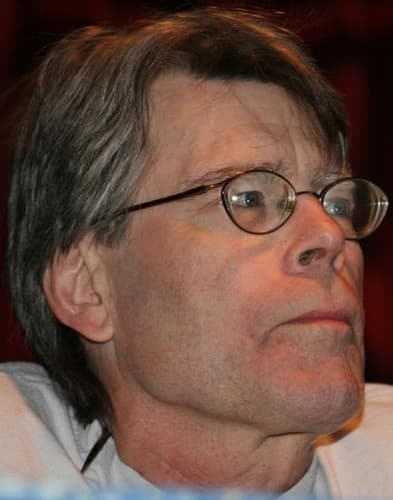
Stephen Edwin King is an American author of horror, supernatural fiction, suspense, crime, science-fiction, and fantasy novels. Described as the "King of Horror", his books have sold more than 350 million copies as of 2006, and many have been adapted into films, television series, miniseries, and comic books. King has published over 65 novels/novellas, including seven under the pen name Richard Bachman, and five non-fiction books. He has also written approximately 200 short stories, most of which have been published in book collections.







