“The past is a master of the present.”
— A recurring theme about how past events, particularly those involving Cordova, continue to influence the present-day investigation.

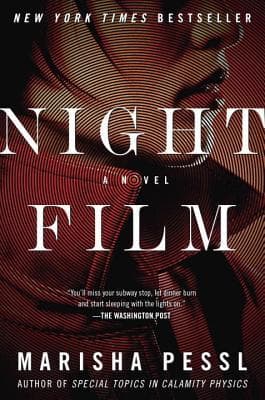
Marisha Pessl (2013)
Genre
Thriller / Mystery
Reading Time
1280 min
Key Themes
See below
Sign in to track this book
A disgraced journalist enters the cult-like world around a reclusive horror film director and his mysteriously dead daughter, risking his sanity and life to solve a decades-old mystery.
On a rainy October night in lower Manhattan, 24-year-old Ashley Cordova is found dead in an abandoned warehouse. Police quickly rule her death a suicide, but veteran investigative journalist Scott McGrath, who has a long-standing interest in Ashley's reclusive father, cult horror film director Stanislaus Cordova, immediately suspects foul play. McGrath's career ended years earlier when he tried to expose Cordova, leading to a public scandal and the end of his marriage. Despite the official ruling, McGrath believes Ashley's death is connected to the director's dark world, prompting him to restart his own investigation into the Cordova family.
McGrath begins his new investigation by contacting old sources and following faint leads. He soon meets two other people who were also looking into Ashley's death: Hopper, a young man with a history of drug use who says he knew Ashley, and Nora, a mysterious and seemingly cynical young woman. Hopper reveals that he and Ashley had a complicated relationship, and Nora provides cryptic clues suggesting a deeper conspiracy. The three form an uneasy alliance, each driven by their own reasons, to explore the hidden world around Stanislaus Cordova and his daughter.
The trio's investigation leads them to 'The Black Place,' an isolated, run-down building believed to be a former set or hideout for Stanislaus Cordova and his most loyal followers. They find unsettling artifacts, cryptic messages, and evidence of strange rituals, all pointing to a cult-like devotion around Cordova and his films. The atmosphere is oppressive and disorienting, reinforcing the director's reputation for creating disturbing and psychologically manipulative art. This visit strengthens McGrath's belief that Cordova has a powerful, sinister influence over those who enter his orbit.
As they dig deeper, McGrath, Hopper, and Nora meet a series of eccentric and often unsettling individuals who have been affected by Stanislaus Cordova. These include former crew members, actors, and devotees, many of whom speak in riddles or act strangely, seemingly still under the director's spell. Each encounter provides fragmented information, painting a picture of Cordova as a manipulative genius who blurred the lines between art and reality, often at the expense of his collaborators and family. The interviews are often unsettling, hinting at the psychological cost of being close to Cordova.
The team uncovers disturbing details about Ashley Cordova's childhood, marked by extreme isolation and her father's unconventional, often cruel, artistic methods. There are hints of psychological manipulation and emotional abuse, suggesting that Ashley was a subject in her father's elaborate, real-life experiments. These revelations cast a dark shadow over Stanislaus Cordova, transforming him from a reclusive genius into a potentially malevolent figure who exploited his own daughter for his art. McGrath feels a growing urgency to understand the full extent of this abuse.
Following a clue, the trio finds a stash of hidden film reels, different from Cordova's publicly released works. These films are even more disturbing, featuring raw, unedited footage that appears to document not just fictional narratives but actual events, blurring the lines between performance and reality. The content is deeply unsettling, hinting at the psychological torment Ashley endured and the dark rituals associated with Cordova's inner circle. The discovery of these films suggests a meta-narrative, where Cordova's art extends beyond the screen into the lives of his subjects.
As McGrath and his companions piece together clues, they realize they are not simply investigating a death, but are being drawn into a complex game orchestrated by Stanislaus Cordova himself. The director, though unseen, appears to be manipulating events from afar, leaving a trail of breadcrumbs and misdirections. McGrath recognizes this as a familiar pattern from his previous encounters with Cordova, a psychological trap designed to test and break those who seek to expose him. The line between reality and Cordova's cinematic world becomes increasingly blurred.
The fragile alliance between McGrath, Hopper, and Nora begins to break down. Nora's behavior becomes increasingly erratic and suspicious, leading to a revelation that she has been working for Cordova all along, feeding him information and guiding McGrath into his elaborate trap. Shortly after this betrayal, Hopper, who had become increasingly distressed by the revelations, mysteriously disappears. McGrath is left alone, feeling manipulated and betrayed, questioning the reality of everything he has uncovered and the motivations of everyone he has met, deepening his isolation and resolve.
McGrath, now alone, is led to what appears to be the final stage of Cordova's elaborate game. He finds himself in a meticulously constructed environment, filled with symbols and artifacts from Cordova's films and Ashley's life. It is a psychological trap, designed to evoke maximum dread and confusion. While he never directly confronts Stanislaus Cordova, McGrath experiences a profound, indirect encounter with the director's mind and methods. He realizes that Cordova's true art is not just his films, but the manipulation of reality and the minds of those who dare to investigate him.
The truth about Ashley Cordova's death is revealed to be far more complex than a simple suicide. It is implied that Ashley, deeply involved in her father's world and perhaps seeking a final act of agency or defiance, orchestrated her own death as a performance, a final 'film' directed by herself, yet undeniably influenced by her father's dark teachings. It is a tragic culmination of her life, a blend of despair, art, and possibly a desperate attempt to break free by becoming the ultimate subject. Her death becomes a final, ambiguous piece of Cordova's work.
McGrath emerges from the investigation deeply changed, his understanding of reality and truth shattered. While he has uncovered a version of the truth about Ashley's death and her father's methods, the experience has left him scarred. He has not fully 'exposed' Cordova in the traditional sense, but has instead become another one of his subjects, drawn into his psychological web. The book concludes with McGrath still haunted by Stanislaus Cordova's influence, forever marked by his journey into the night film, his obsession unbroken, though perhaps redefined.
The Protagonist
McGrath starts as a cynical journalist seeking objective truth, but his journey forces him to confront the subjective nature of reality and the corrosive power of obsession, leaving him profoundly changed but still under Cordova's spell.
The Deceased catalyst
Ashley's arc is revealed posthumously, showing her transformation from a child subject to her father's experiments into an artist attempting to reclaim agency through her own dark creations and ultimately, her death.
The Antagonist/Eminence Grise
Cordova's 'arc' is not one of development but of revelation, as McGrath uncovers the full extent of his manipulative genius and the insidious nature of his artistic and personal control.
The Supporting
Hopper begins as a hopeful but troubled informant, but his journey into Cordova's world leads to increasing paranoia and ultimately, his mysterious disappearance.
The Supporting/Antagonist
Nora's arc reveals her as a deceptive agent, exposing the extent of Cordova's pervasive network and the manipulation inherent in the investigation.
The Supporting
Lucca's arc is static, serving as a living testament to Cordova's past influence and the lingering fear he instills.
The Supporting/Collective
The Cordovites remain steadfast in their devotion, collectively illustrating the enduring and insidious nature of Cordova's influence.
The Mentioned
Sam's arc is off-page, serving as a touchstone for Scott's personal failings and the consequences of his obsession.
The novel constantly blurs the lines between fiction and reality, challenging the reader (and McGrath) to question what is real. Stanislaus Cordova's films are designed to manipulate perception, and his real-life 'art' extends this manipulation into the lives of his subjects. Events often have multiple interpretations, and characters' testimonies are frequently unreliable. This theme is evident in the ambiguous nature of Ashley's death, the surreal environments McGrath encounters, and the ultimate revelation that the entire investigation might be another of Cordova's elaborate films. The book suggests that reality itself is a construct, easily shaped by powerful narratives.
“What if the world is a film? What if it's all a film?”
Obsession is a central driving force for many characters, especially Scott McGrath. His previous fixation on Stanislaus Cordova cost him his marriage and career, and his renewed pursuit threatens to destroy him entirely. Ashley Cordova's life and death are also products of her father's obsessive artistic vision and her own desperate attempts to break free or define herself within it. The novel explores how obsession can consume individuals, warp their judgment, and lead them down dark, self-destructive paths, often becoming indistinguishable from the object of their fixation. McGrath's inability to let go of Cordova is the engine of the entire plot.
“Sometimes the only way to be free is to let go of what you think you are.”
Stanislaus Cordova holds a cult-like grip over his followers, known as the Cordovites, and even those who simply encounter his work. His reclusive nature only amplifies his mystique, making him an almost mythical figure. The novel explores how a charismatic, manipulative artist can exert psychological control over others, blurring the lines between admiration, devotion, and psychological servitude. This theme is clear in the unquestioning loyalty of the Cordovites, the way Nora acts as Cordova's agent, and the insidious influence Cordova held over Ashley, shaping her entire life as part of his artistic vision. His art is inseparable from his control.
“He didn't make films; he made people.”
The novel explores the lasting impact of trauma and abuse, particularly through Ashley Cordova's story. Her childhood was marked by severe psychological manipulation and emotional cruelty from her father, who viewed her as a subject for his art rather than a daughter. This abuse shows itself in Ashley's isolation, her dark artistic expressions, and her tragic fate. The novel also examines the idea of a toxic legacy, where the sins of the father are visited upon the child, and how trauma can shape generations. McGrath's own past trauma from his Cordova investigation also fuels his current actions, showing how past wounds never truly heal.
“The past is a foreign country. They do things differently there.”
McGrath's initial goal is to uncover objective truth, but the novel constantly undermines this pursuit. Every piece of information is filtered through unreliable narrators, fragmented documents, and Cordova's own carefully constructed narratives. The 'truth' about Ashley's death and Cordova's life becomes less a factual revelation and more a subjective interpretation within a larger, unfolding story. The novel suggests that in a world dominated by powerful storytellers, the search for truth often leads not to definitive answers, but to a deeper entanglement within a compelling, often terrifying, narrative. The book itself, with its multimedia elements, reinforces this idea.
“We are all the main character in our own movie.”
The narrative is interspersed with various non-traditional text formats.
The novel extensively uses 'found footage' elements, including photographs, newspaper clippings, police reports, interview transcripts, website printouts, and film stills. These multimedia insertions serve to immerse the reader in McGrath's investigation, mimicking the experience of a journalist piecing together evidence. They also reinforce the theme of blurred reality, making the fictional world feel more tangible and 'real.' However, their fragmented nature also highlights the unreliability of information and the difficulty of constructing a cohesive truth, echoing Cordova's own manipulative filmmaking techniques.
Scott McGrath's perspective is often compromised by his personal biases and the events he experiences.
Scott McGrath serves as the primary narrator, but his perspective is inherently unreliable. His deep-seated obsession with Stanislaus Cordova, his history of mental and emotional strain, and the psychologically disorienting nature of his investigation all contribute to his compromised viewpoint. The reader is constantly forced to question McGrath's interpretations, memories, and even his sanity, as he delves deeper into Cordova's world. This device heightens the suspense and reinforces the theme of subjective reality, as the 'truth' is filtered through a character who is himself being manipulated.
Ashley Cordova's death serves as the initial catalyst for the plot.
Ashley Cordova's mysterious death functions as a classic MacGuffin, an initial plot device that sets the story in motion and drives the protagonist's actions. While the investigation into her death is the central focus, the ultimate 'answer' to her demise is less important than the journey it takes McGrath on. The true purpose of the MacGuffin is to propel McGrath into the deeper, more complex world of Stanislaus Cordova and to explore themes of obsession, manipulation, and the nature of reality, rather than simply solving a crime. Her death is a gateway to a larger mystery.
The novel frequently comments on its own nature as a constructed narrative.
Night Film employs metafiction by drawing attention to its own artificiality as a story. The use of 'found footage' and the constant questioning of reality within the narrative itself invite the reader to consider the act of storytelling. Stanislaus Cordova's art blurs fiction and reality, and the entire investigation can be seen as another one of his 'films,' with McGrath as an unwitting actor. This device challenges the reader to analyze the conventions of mystery and thriller genres, and to reflect on how narratives shape our understanding of the world, much like Cordova's films shape his followers.
Recurring symbols enhance thematic depth and foreshadow events.
The novel is rich with recurring symbols that deepen its thematic resonance. 'The Black Place' symbolizes the dark, hidden recesses of Cordova's influence and the psychological abyss. Birds, particularly crows or ravens, often represent surveillance, ill omens, or the spirits of the dead. Masks and disguises frequently appear, symbolizing hidden identities, performance, and the deceptive nature of appearances. These symbols are woven throughout the narrative, subtly foreshadowing events, highlighting character motivations, and reinforcing the pervasive sense of dread and mystery that permeates Cordova's world.
“The past is a master of the present.”
— A recurring theme about how past events, particularly those involving Cordova, continue to influence the present-day investigation.
“What is real? What is not? The line blurs when you're dealing with a legend.”
— Scott McGrath grappling with the elusive nature of Stanislas Cordova and the stories surrounding him.
“Every secret has a shelf life.”
— Reflecting on the inevitable exposure of hidden truths, central to the investigative plot.
“Some doors, once opened, can never be closed.”
— The irreversible consequences of delving into dangerous or forbidden knowledge.
“The greatest trick the devil ever pulled was convincing the world he didn't exist. The greatest trick Cordova ever pulled was convincing the world he was just a filmmaker.”
— McGrath's realization that Cordova's public persona as a filmmaker masked something far more sinister and influential.
“We are all spectators in the cinema of our own lives.”
— A meta-commentary on the narrative structure and the characters' roles in the unfolding mystery, reminiscent of Cordova's filmmaking.
“Fear is a storyteller.”
— Exploring how fear can shape perceptions, create myths, and influence the narrative of events.
“There are no coincidences, only the illusion of coincidences.”
— McGrath's growing suspicion that seemingly random events are interconnected and part of a larger design.
“The labyrinth of the mind is far more intricate than any physical maze.”
— Delving into the psychological complexities of the characters and the twisted motivations behind Cordova's actions.
“Every picture tells a story, but not always the truth.”
— Highlighting the unreliable nature of visual evidence and the manipulation of images, a key element in the investigation.
“Sometimes the most terrifying things are those we cannot see.”
— Emphasizing the power of the unknown and the psychological horror that stems from what is hinted at rather than explicitly shown.
“The world is full of ghosts, if you know where to look.”
— A reflection on the lingering presence of past events, people, and their influence on the present.
“To truly understand a monster, you must walk in its shadow.”
— McGrath's immersive and often dangerous journey into Cordova's world to comprehend his motivations and methods.
“We all have our monsters, some more visible than others.”
— Exploring the internal struggles and dark aspects within each character, not just the external 'monster' of Cordova.
Ready to see how well you understood this book? Take our interactive quiz with 10 questions.







