“The world is a lively place, where much goes on, and where people of all sorts are to be met with.”
— A general observation on the variety of life and people.

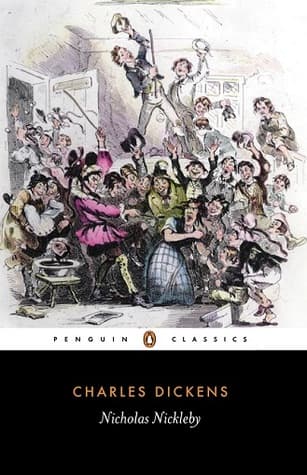
Charles Dickens (2016)
Genre
Historical Fiction
Reading Time
1500 min
Key Themes
See below
Sign in to track this book
Penniless but principled, young Nicholas Nickleby navigates a world of Dickensian rogues, theatrical eccentrics, and cruel injustices to protect his family and forge his own path.
When his father dies, Nicholas Nickleby, his gentle mother, and his beautiful sister Kate become poor. With no other choice, they go to London to ask their uncle, Ralph Nickleby, a rich but known greedy and uncaring moneylender, for help. Ralph, wanting to avoid public shame and keep his social standing, reluctantly agrees to give minimal help. He gets Nicholas a job as an usher at a Yorkshire boarding school called Dotheboys Hall, run by the cruel Wackford Squeers. He also finds Mrs. Nickleby and Kate lodging in a run-down house. Ralph's true nature is clear right away as he treats his relatives with disrespect and plans to use Kate's beauty for his own social and financial gain, introducing her to his bad friends.
Nicholas travels to Dotheboys Hall, a lonely and dirty institution in Yorkshire. He is shocked by the brutal and uncaring treatment of the boys by the one-eyed headmaster, Wackford Squeers, and his equally cruel wife and children. The boys are starved, beaten, and not given any real education; they are basically slave labor. Among them is Smike, a sick, simple-minded, and always abused boy who has been at the school for years and seems to have no family. Nicholas feels sorry for Smike, offering him kindness and protection. He sees Squeers's cruelty directly and tries to help, but his efforts are met with anger and more abuse towards the boys, especially Smike. Nicholas's anger grows each day as he puts up with the bad conditions.
Nicholas reaches his limit when he finds Squeers savagely beating Smike for something he didn't do. Unable to stand the unfairness any longer, Nicholas bravely steps in, grabs Squeers, and gives him a severe beating, much to the other boys' joy. This act of defiance makes it impossible for him to stay working at Dotheboys Hall. Nicholas, with no money or clear place to go, decides to leave the school. Smike, who has become very devoted to Nicholas as his only protector, begs to go with him. Nicholas, moved by Smike's desperate plea and seeing his great need, agrees to take the boy with him, starting their journey as poor wanderers. They set off walking towards London, unsure of what their future holds.
Meanwhile, in London, Kate Nickleby finds herself more and more open to the advances of her uncle Ralph's bad friends. Ralph, using Kate to help his social goals, often puts her in the company of men like the wasteful Lord Frederick Verisopht and his bad friend, Sir Mulberry Hawk. Sir Mulberry becomes obsessed with Kate, harassing her constantly and shaming her in public. Despite Kate's distress and her mother's requests, Ralph does not care, even encouraging these men's attention for his own benefit. Kate's attempts to resist are met with scorn from Ralph, making her feel alone and unprotected in the corrupt society her uncle has introduced her to. She endures public insults and constant fear.
As Nicholas and Smike travel towards London, they meet Vincent Crummles, the manager of a country theater company. Crummles, impressed by Nicholas's looks and spirit, offers him a job as an actor and playwright. Nicholas, needing work and a safe place for Smike, accepts. They join the Crummles group, finding a lively, if strange, community. Nicholas quickly gets used to theater life, writing plays and acting with the Crummles family, including the 'Infant Phenomenon' Miss Ninetta Crummles. Smike also finds a small role and does well in the supportive environment; his health and spirits get better with Nicholas's care and the company's kindness. This time gives them a much-needed break from their problems and lets Nicholas see a different side of life.
News of Kate's suffering from Sir Mulberry Hawk eventually reaches Nicholas through letters from Newman Noggs, Ralph's clerk, who secretly feels for the Nicklebys. Angry about his sister's situation and his uncle's uncaring attitude, Nicholas immediately leaves the Crummles group and returns to London with Smike. He confronts Sir Mulberry Hawk in a public place, demanding that he stop harassing Kate. When Hawk responds with arrogance and insult, Nicholas publicly beats him, breaking his arm and completely humiliating him. This act of righteous anger makes Nicholas Kate's protector and earns him the respect of many, while making the bad feelings between him and his uncle, Ralph, even stronger, as Ralph sees Nicholas's actions as a challenge to his power.
After confronting Sir Mulberry Hawk, Nicholas finds himself without a job but with a renewed resolve to support his family. By chance, he meets the kind Cheeryble brothers, Charles and Ned, rich and giving merchants. Impressed by Nicholas's honesty, good character, and his defense of his sister, the Cheerybles offer him a job in their office. They also extend their generosity to Smike, giving him a comfortable home and chances for education. This is a big change for Nicholas, offering him stability, respect, and the chance to build a new life for himself and his loved ones, free from Ralph Nickleby's plots and his past difficulties.
As Smike settles into his new life with the Cheerybles, his past starts to appear. It is slowly revealed that he is the lost son of an unknown gentleman, left at Dotheboys Hall years ago. However, Smike's weak health, made worse by years of abuse and neglect, begins to decline quickly. Despite the loving care of Nicholas and the Cheerybles, he dies from consumption. Before his death, Smike admits his unreturned love for Kate Nickleby, a sad moment that shows his gentle nature and his deep connection to the family. His death is a deep sorrow for Nicholas, who had come to see Smike as a beloved brother, and a clear reminder of the cruelty he suffered at Dotheboys Hall.
The full sadness of Smike's life is revealed soon after his death. Through the work of the Cheeryble brothers and their clerk, Tim Linkinwater, it is discovered that Smike was, in fact, Ralph Nickleby's son born outside of marriage, left at Dotheboys Hall by Ralph years ago to avoid public shame. This revelation is planned by Ralph's old friend, Gride, and the bad Arthur Gride, who had planned to get money from Ralph. The news upsets Ralph, not from fatherly grief, but because it shows his deep hypocrisy and cruelty to his own child. Facing financial ruin, public disgrace, and the heavy weight of his wrongdoings, Ralph Nickleby takes his own life, hanging himself in his lonely house. His death is the final result of his greed and heartlessness.
With Ralph Nickleby's death and the truth about his badness revealed, the way is clear for the Nickleby family's happiness. Nicholas, having shown his worth and good character, marries the beautiful and good Madeline Bray, a young woman he had earlier helped save from an unwanted marriage to the old Arthur Gride, arranged by Ralph. Kate Nickleby, after going through her own difficulties, finds love and marries Frank Cheeryble, the nephew of the kind brothers who had helped her family so much. Wackford Squeers is eventually punished for his cruelty and fraud, and other smaller bad guys meet various bad ends. The novel ends with the Nickleby family settled in good fortune and happiness, showing their strength and goodness winning over trouble and evil.
The Protagonist
Nicholas transforms from a naive young man forced into hardship to a mature, respected gentleman who achieves personal happiness and brings justice to those he loves.
The Antagonist
Ralph begins as a seemingly powerful and untouchable figure, but his schemes unravel, leading to his financial ruin, public disgrace, and eventual suicide.
The Supporting
Kate endures severe social trials and emotional distress but emerges stronger, eventually finding love and security.
The Supporting
Smike is rescued from utter misery, experiences love and kindness for the first time, but ultimately succumbs to his past suffering, revealing his true parentage in death.
The Antagonist
Squeers reigns supreme in his cruel domain but is eventually thwarted by Nicholas and later brought to justice for his crimes.
The Supporting
Mrs. Nickleby remains largely static in her personality but benefits from her children's eventual success and security.
The Supporting
They remain steadfastly good throughout the story, serving as a constant source of aid and moral guidance.
The Antagonist
Hawk's reign of social terror is abruptly ended by Nicholas's physical retaliation, leading to his eventual disgrace and financial ruin.
The Supporting
Madeline endures hardship and the threat of an unwanted marriage but is ultimately rescued and finds happiness with Nicholas.
The Supporting
Noggs remains loyal to the Nicklebys and assists in Ralph's downfall, eventually finding peace and respect.
This theme is present throughout, especially through the picture of Dotheboys Hall, where Wackford Squeers's brutal treatment of children, including starvation, beatings, and neglect, shows the terrible abuses in unregulated schools. Ralph Nickleby's greed and use of his own family, and the harassment Kate endures from bad rich men like Sir Mulberry Hawk, further show the widespread cruelty and lack of protection for the weak in society. Dickens uses these examples to criticize the system's failures and moral decay that let such unfairness happen.
“''We live and learn, but by no means do we learn that it is right to be cruel.'”
In strong contrast to the cruelty, the novel supports the power of kindness and caring. The Cheeryble brothers show this theme, offering unconditional kindness, jobs, and support to Nicholas and Smike, showing how wealth can be used for good. Nicholas himself, by protecting Smike and defending Kate, shows active compassion. These acts of kindness provide hope and in the end lead to good winning over evil, suggesting that individual acts of generosity can fight against social unfairness and bring back faith in people.
“'The brothers Cheeryble were an estimable pair... whose hearts were as open as their purses.'”
The lasting strength of family ties, especially between Nicholas and Kate, is a main theme. Despite poverty, being separated, and their uncle Ralph's plots, their mutual love and loyalty stay strong. Nicholas's fierce protection of Kate and Smike (whom he treats as a brother) drives much of the story. Ralph's complete lack of family feeling, ending in the sad truth of his abandonment of his own son, acts as a dark opposite, showing the destructive results when these ties are missing or purposely broken. The novel in the end celebrates the healing power of true family connection.
“'I shall never regret doing as I have—never, if I starve or beg in consequence'”
Nicholas's journey is about finding himself, as he learns about the world's harsh realities and his own ability for courage and leadership. Smike's search for who he is and the eventual revealing of his parents are important to the story, showing how important it is to know where one comes from, even if sad. Ralph Nickleby's identity as a respectable man is in the end destroyed by the revealing of his true character and his past actions. The characters' true selves are shown through their actions under pressure, leading to either being saved or ruined.
“'There is a world of agony in every thought of the past.'”
Many characters in the novel show a front that hides their true nature. Ralph Nickleby keeps an outward show of respectability and wealth while doing morally wrong things. Wackford Squeers presents Dotheboys Hall as a school, when in reality it is a place of torture and neglect. The 'fashionable' society Ralph introduces Kate to, with figures like Sir Mulberry Hawk, looks refined but is morally corrupt. Dickens consistently shows the emptiness and danger of valuing appearances over real goodness and honesty.
“'He was a man of business, and nothing more.'”
Nicholas's travels serve as a journey of moral and personal development.
Nicholas's physical journey from London to Yorkshire, then back to London with the Crummles troupe, and finally settling with the Cheerybles, mirrors his moral and personal growth. Each location exposes him to different facets of society and forces him to confront injustice, develop resilience, and discover his own strength of character. This narrative structure allows Dickens to explore various social strata and allows Nicholas to mature from a naive youth into a responsible and virtuous man, ready for marriage and a stable life. The journey is not just geographical but an internal transformation.
A recurring Dickensian archetype representing innocent suffering and social neglect.
Smike embodies the classic Dickensian 'doomed orphan' trope. His character serves to highlight the extreme cruelty and neglect prevalent in certain institutions and society's failure to protect its most vulnerable. His pathetic state, deep loyalty to Nicholas, and tragic decline evoke immense sympathy from the reader. Furthermore, the revelation of his true parentage as Ralph Nickleby's son adds a powerful layer of dramatic irony and moral condemnation to Ralph's character, making Smike's suffering even more poignant and impactful on the narrative's themes of justice and retribution.
Eccentric figures providing humor and social commentary amidst the melodrama.
Dickens masterfully intersperses the novel's serious themes and melodramatic plot with a range of eccentric and often verbose characters who provide significant comic relief. Mrs. Nickleby's rambling monologues, Newman Noggs's odd habits and cryptic pronouncements, and the entire Crummles theatrical troupe with their exaggerated theatricality, all serve to lighten the tone. These characters not only offer humor but also often subtly comment on social foibles or, in Noggs's case, provide crucial insights and aid to the protagonists, demonstrating Dickens's ability to blend humor with purpose.
Character names often reflect their personality or role.
Dickens frequently uses symbolic names to provide immediate insight into his characters. 'Ralph Nickleby' suggests a 'niggardly' or miserly nature. 'Wackford Squeers' evokes the idea of 'squeezing' or exploiting the boys under his charge, and the 'wack' implies a brutal beating. The 'Cheeryble' brothers are explicitly named to reflect their cheerful and benevolent dispositions. This device allows Dickens to quickly establish character traits and reinforce thematic elements, guiding the reader's perception of good and evil within the narrative.
“The world is a lively place, where much goes on, and where people of all sorts are to be met with.”
— A general observation on the variety of life and people.
“There are no such things as small acts of kindness. Every act of kindness is a giant.”
— A reflection on the impact of kindness, often attributed to Ralph Nickleby.
“It is an old saying, and a true one, that a living dog is better than a dead lion.”
— Used to justify practical decisions over grand, but ultimately futile, gestures.
“Subdue your appetites, my dears, and you've conquered human nature.”
— Spoken by Squeers, hypocritically, to his students at Dotheboys Hall.
“Poverty and such misfortunes as these, are not new to me; and I can bear them, and bear up against them, as I have borne them many a time before.”
— Nicholas reflecting on his resilience in the face of hardship.
“But it is the way of the world, that when a man has got a good name, he may be as bad as he likes, and nobody will believe it.”
— A cynical view on reputation and public perception.
“The greatest pleasure I know, is to do a good action by stealth, and to have it found out by accident.”
— A sentiment expressing the joy of selfless good deeds.
“There are some men who are never merry when they are sober, and who are never sober when they are merry.”
— A witty observation on certain character types and their relationship with alcohol.
“The course of true love never did run smooth.”
— A classic idiom used to describe the difficulties often faced in romantic relationships.
“He was a man who, if he had a good thought, was sure to keep it to himself.”
— Describing a character who is secretive or ungenerous with positive feelings.
“A man who had been soaked in water, and powdered with flour, and covered with soot, and whitewashed with lime, would have looked like a bride by comparison.”
— A humorous and vivid description of someone's dishevelled appearance.
“Money makes the man, and want of it the fellow.”
— A cynical view on the importance of wealth in determining social standing.
“The law is a ass—a idiot.”
— Mr. Bumble in 'Oliver Twist', but the sentiment about the law's shortcomings is echoed in 'Nicholas Nickleby' and common in Dickens.
“He was a creature of habit, and of the worst habits.”
— Describing a character whose life is dominated by negative routines.
Ready to see how well you understood this book? Take our interactive quiz with 10 questions.
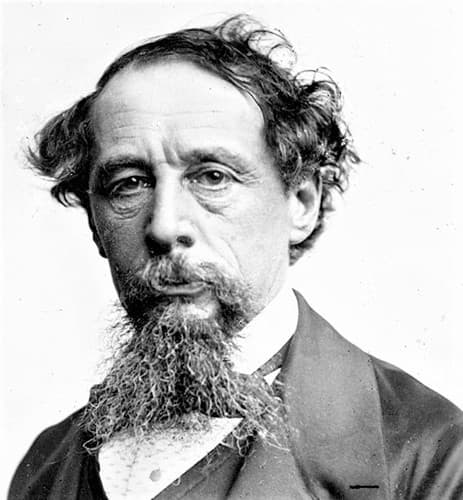
Charles John Huffam Dickens was an English writer and social critic who created some of the world's best-known fictional characters and is regarded by many as the greatest novelist of the Victorian era. His works enjoyed unprecedented popularity during his lifetime and, by the 20th century, critics and scholars had recognised him as a literary genius. His novels and short stories are widely read today.







