“The university is a factory for the production of knowledge, and like any factory it has its assembly lines, its quality control, its management structure, and its industrial disputes.”
— Vic Wilcox's cynical view of academia as an industrialist.

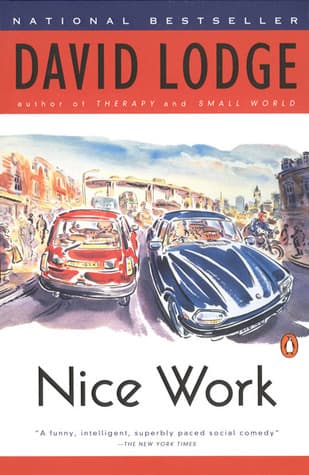
David Lodge (1988)
Genre
Literary Fiction
Reading Time
360 min
Key Themes
See below
Sign in to track this book
A pragmatic factory boss and an idealistic feminist academic clash over industrial efficiency and literary theory, only to find their worlds, and themselves, surprisingly intertwined.
Dr. Robyn Penrose, a temporary lecturer in English Literature at the University of Rummidge, struggles with her postmodern feminist theories and a lack of practical experience. Her department head, Professor Philip Swallow, informs her that she has been selected for the 'Industry Year' scheme. This requires her to shadow a local industrial manager for a term. Reluctantly, Robyn agrees. She is paired with Vic Wilcox, the Managing Director of Pringle's, a struggling engineering firm in the industrial Black Country. Their first meeting is tense; Robyn, with her academic jargon and casual dress, immediately clashes with Vic's pragmatic, no-nonsense approach and traditional masculine demeanor. Vic views the scheme as a waste of his time, while Robyn sees it as an anthropological study of an alien culture.
Robyn begins her weekly visits to Pringle's. She observes the factory floor, the production processes, and the office dynamics, taking notes. She attempts to apply her semiotic and deconstructionist theories to the factory environment, viewing machines as 'texts' and the workers' interactions as 'discourses.' However, she finds it difficult to reconcile her abstract academic framework with the realities of manufacturing, industrial relations, and the constant pressure of profit margins. Vic, initially dismissive, finds Robyn's presence mildly irritating but also occasionally thought-provoking, as she asks questions he has never considered about his own world. Their conversations are often arguments, showing their different perspectives on language, work, and value.
Vic's company faces a critical period. He must secure a contract for new machinery from a German firm, Rheinhardt & Sohn. He decides to take Robyn with him on the business trip to Düsseldorf, partly to show her the 'real' world of international business and partly out of a sense of responsibility for the scheme. During the trip, away from their usual environments, their guards drop. Robyn sees the intense pressure Vic is under. Vic, in turn, gets a glimpse into Robyn's intellectual world as she discusses art and culture. A shared meal and drinks lead to a more relaxed, almost intimate conversation, revealing their personal lives and vulnerabilities. This subtly shifts their dynamic from antagonism to something more complex.
Back in Rummidge, Robyn's relationship with her live-in boyfriend, Neil, a sociologist, becomes strained. Neil is frustrated by Robyn's focus on Vic and the Industry Year project, and her academic work on the 'text' of the factory. Meanwhile, Vic's marriage to Marjorie is also under stress. Marjorie feels neglected and unappreciated. She suspects Vic's growing interest in Robyn. The contrasting demands of Vic's business (securing the Rheinhardt & Sohn contract) and Robyn's academic career (writing her paper on the factory) create parallel pressures. Their weekly meetings become a shared escape or confessional for their anxieties.
After a stressful week for both of them, and following a celebratory drink after Vic successfully secures the Rheinhardt & Sohn contract, Robyn and Vic find themselves in a moment of unexpected intimacy. Fueled by alcohol and a strange sense of camaraderie from their shared experiences, they end up in bed together. The encounter is not passionate or romantic, but a clumsy, almost inevitable physical manifestation of their intense, complex relationship. The morning after, both are awkward and uncertain how to proceed. Robyn, despite her feminist theories, is disoriented by the experience. Vic, though initially pleased, quickly becomes concerned about the implications for his marriage and career.
The sexual encounter casts a shadow over their subsequent meetings. Robyn tries to intellectualize it, while Vic tries to ignore it. Vic's wife, Marjorie, grows suspicious and eventually confronts him. Vic confesses to the affair, leading to a major marital crisis. Robyn feels a strange mix of guilt and intellectual curiosity about the experience. Her relationship with Neil further deteriorates as he senses her emotional distance and preoccupation. The 'Industry Year' scheme, initially a professional obligation, has now deeply entangled their personal lives. This forces both to confront uncomfortable truths about their desires, values, and identities.
Pringle's faces a crisis when a strike erupts over proposed redundancies and new working practices mandated by the Rheinhardt & Sohn contract. Vic is consumed by the industrial dispute, experiencing immense pressure to save his company and the jobs of his workers. Robyn observes the strike from a new perspective. Her academic theories about power and class confront the human cost of economic struggle. Vic's stress levels are immense, and the affair with Robyn now feels like an added burden. The strike shows the chasm between Robyn's theoretical understanding of capitalism and Vic's lived experience of its realities. This further complicates their already strained relationship.
Despite the strike and ongoing economic challenges, Vic's handling of the Rheinhardt & Sohn deal and his overall performance are recognized by his superiors. He is offered a promotion to a more senior position within the company's parent group, which would mean relocating away from Rummidge. This career advancement offers a potential escape from the marital and emotional turmoil. Simultaneously, Robyn is nearing the deadline for her Industry Year paper. She struggles to synthesize her observations of Pringle's with her postmodern theories. She finds the lived experience too complex and messy to fit neatly into her academic framework. The gap between theory and practice is a central theme of her intellectual struggle.
Robyn presents her paper, 'The Semiotics of the Factory,' at an academic conference. Vic, surprisingly, attends the presentation, sitting anonymously at the back. Robyn's paper is an intellectualized, deconstructionist analysis of Pringle's, interpreting the factory as a 'text.' Her presentation, while academically rigorous, feels detached from the human reality of the factory and Vic's struggles. Vic listens, both intrigued and bewildered, recognizing aspects of his world but filtered through a language he barely understands. This public display of their intertwined worlds, from different perspectives, marks a culmination of their 'Industry Year' journey. It highlights the unbridgeable gap between their professional spheres, even as their personal lives had briefly intersected.
Vic accepts the promotion, which means moving away from Rummidge and Pringle's. He and Marjorie begin the difficult process of mending their marriage, acknowledging the challenges and seeking a fresh start. Robyn, having completed her Industry Year obligations, decides not to pursue a permanent academic position. She realizes that her theoretical approach might be too detached from real-world applicability. She accepts a job in publishing, a field where her analytical skills can be applied in a more tangible way. Their paths diverge. Each has been changed by their forced interaction. They exchange a final, somewhat melancholic goodbye, recognizing the unique, transformative impact they've had on each other's lives, even as they move on to separate futures.
The Protagonist
Robyn begins as an ivory-tower academic but ends up questioning her theoretical frameworks and embracing a more practical career path after experiencing the 'real world.'
The Protagonist
Vic starts as a rigid, traditional businessman but learns to question his own values and gains a broader perspective on the world through his interactions with Robyn.
The Supporting
Marjorie endures the strain of her husband's affair and eventually works with him to rebuild their marriage.
The Supporting
Neil witnesses the slow dissolution of his relationship with Robyn as she undergoes personal and professional transformation.
The Supporting
Remains a relatively static character, representing the established academic order.
The Supporting
Dave remains a steadfast and reliable presence within the factory setting.
The Mentioned
Her character does not have an arc; she serves primarily to illustrate the family context for Vic.
The Mentioned
Her character does not have an arc; she fulfills a functional role in the office setting.
The central theme explores the cultural differences and misunderstandings between the academic world of literary theory and the practical world of industrial manufacturing. Robyn's abstract, language-focused perspective clashes with Vic's concrete, profit-driven reality. The novel shows how each side views the other with suspicion and condescension. However, their forced interaction leads to respect and a broadening of horizons for both. It questions the 'value' of different kinds of knowledge and work, showing how both are essential but often fail to communicate effectively.
“What had they in common, these two? Nothing, except that they inhabited the same country, the same century, and were both, in their different ways, intelligent, articulate, and curious.”
Both Robyn and Vic undergo self-discovery because of their interaction. Robyn, initially secure in her academic identity, finds her theories challenged and her understanding of 'reality' expanded, leading her to question her career path. Vic, a man defined by his work and traditional masculinity, re-evaluates his values, his marriage, and his perception of intellectual life. The novel suggests that true self-understanding often comes from encountering and grappling with perspectives different from one's own, leading to personal growth and a redefinition of identity.
“He knew her, and she knew him, in a way that no one else did, or ever would. They had seen each other naked, not just physically, but morally, intellectually.”
David Lodge, a literary critic himself, explores the theme of language and its limitations. Robyn's postmodern theories emphasize language as a construct, while Vic uses language for direct, pragmatic communication. Their initial inability to understand each other's 'discourse' shows how language can be a barrier as much as a bridge. The novel satirizes academic jargon and industrial slang. It also shows how, through sustained effort, they begin to decode each other's linguistic worlds, leading to deeper understanding and even intimacy, despite their different uses of words.
“She was talking about texts, and he was talking about things. She was talking about meaning, and he was talking about money.”
A core theme is the tension between abstract theory and lived practice. Robyn applies her literary theories to the realities of a factory floor, often finding them inadequate or simplistic. Vic, on the other hand, operates purely on practical experience, initially dismissing theory as useless. The novel demonstrates that while theory can offer frameworks for understanding, it often falls short in explaining the complexities of human behavior and economic pressures. Conversely, pure practice without reflection can lead to stagnation. The book suggests a need for synthesis or at least a respectful dialogue between the two.
“She had theories, but he had facts. She could deconstruct a text, but he could build a machine.”
The novel examines traditional gender roles and expectations through the characters of Robyn, Vic, and Marjorie. Robyn challenges traditional female academic roles and confronts Vic's masculine assumptions about women and work. Vic embodies a working-class male identity, struggling with the emotional demands of his wife and the intellectual challenge of Robyn. Marjorie represents the traditional wife whose identity is tied to her husband's career and family. The affair itself, and its aftermath, forces all three characters to confront societal and personal expectations about gender, fidelity, and power dynamics in relationships.
“He was a man who made things, she was a woman who thought about things. The division seemed absolute.”
Structuring the narrative around contrasting pairs of characters, ideas, and settings.
Lodge uses binary opposition as a fundamental structural device, most prominently in the pairing of Robyn Penrose (academia, theory, female, intellectual, deconstructionist) and Vic Wilcox (industry, practice, male, pragmatic, capitalist). This device highlights the cultural chasm between their worlds, fueling their initial antagonism and subsequent mutual education. Other oppositions include Rummidge University vs. Pringle's factory, abstract language vs. concrete action, and intellectual value vs. monetary value, all of which drive the plot and thematic exploration. The device allows for a clear comparison and contrast, emphasizing the novel's central conflict.
Alternating between the perspectives of Robyn and Vic, blending their thoughts with the narrator's voice.
The narrative frequently shifts between Robyn's and Vic's internal monologues and observations, often blending their specific vocabularies and thought patterns with the narrator's voice. This allows the reader deep access into both characters' minds, fostering empathy and understanding for their vastly different viewpoints. For example, when Vic observes Robyn's academic discussions, the narrative might briefly adopt his pragmatic, slightly bewildered tone, even while remaining in the third person. This technique effectively immerses the reader in the 'clash of cultures' by presenting both sides from an intimate, internal perspective.
Using humor and exaggeration to critique academic jargon and industrial pragmatism.
Lodge employs satire and irony to critique the excesses and limitations of both academic discourse and industrial culture. Robyn's attempts to apply complex postmodern theories (e.g., 'the factory as text') to mundane realities are often presented humorously, highlighting the disconnect between theory and practice. Similarly, Vic's initial dismissiveness of anything non-commercial is gently satirized. The irony often arises from the characters' unwitting adoption of aspects of the other's world, or the unexpected outcomes of their interactions. This device makes the novel entertaining while subtly conveying its serious thematic concerns about communication and understanding.
A real-world government initiative serving as the central plot catalyst.
The 'Industry Year' scheme is a specific, real-world government initiative from the 1980s that provides the central premise for the novel. It acts as a clever plot device to force the two protagonists, Robyn and Vic, together despite their vastly different backgrounds and inclinations. Without this external mandate, their paths would never have crossed. The scheme is not just a backdrop but an active catalyst, creating the initial conflict, providing the structure for their weekly meetings, and justifying their continued interaction, ultimately leading to their personal and professional transformations. Its 'artificiality' highlights the natural human tendency to remain in one's own cultural silo.
Incorporating excerpts from Robyn's academic notes and final paper.
Lodge occasionally includes direct excerpts from Robyn's detailed notes and her eventual academic paper, 'The Semiotics of the Factory.' These sections serve as a meta-commentary on the narrative itself, showing Robyn's intellectual process and her attempt to 'make sense' of Vic's world through her theoretical lens. This device not only provides insight into Robyn's character and her academic struggles but also allows Lodge to playfully critique and illustrate the very academic theories he is exploring within the novel, further emphasizing the theme of language and interpretation. It provides an 'inside look' at the academic's perspective.
“The university is a factory for the production of knowledge, and like any factory it has its assembly lines, its quality control, its management structure, and its industrial disputes.”
— Vic Wilcox's cynical view of academia as an industrialist.
“Literature is not a mirror held up to reality but a hammer with which to shape it.”
— Robyn Penrose quoting Bertolt Brecht in a lecture.
“The trouble with you academics is that you think you're above the grubby business of making money.”
— Vic criticizing Robyn's idealistic views.
“I'm a post-structuralist. I don't believe in the author, only in the text.”
— Robyn explaining her literary theory stance.
“You can't run a factory on theory. You need practical men who know how to make things work.”
— Vic defending his pragmatic approach to industry.
“The world is a text, and we are all engaged in reading it, but we can never agree on what it means.”
— Robyn discussing her philosophical views on interpretation.
“If you want to understand how the world works, study economics, not literature.”
— Vic's blunt advice to Robyn.
“There is no such thing as a self-made man. We are all products of our circumstances.”
— Robyn challenging Vic's individualistic beliefs.
“A factory is a community, not just a machine for making profits.”
— Vic revealing a more nuanced view of his work.
“Language is not a transparent medium for conveying truth; it shapes and distorts what we perceive.”
— Robyn lecturing on linguistic theory.
“You have to adapt or die. That's the law of the market.”
— Vic explaining business realities.
“The personal is political, and the political is personal.”
— Robyn discussing feminist theory.
“We're all selling something, whether it's ideas or products.”
— Vic drawing a parallel between academia and business.
“There is no fixed meaning in a text; it changes with every reader.”
— Robyn on the instability of interpretation.
“Sometimes you have to get your hands dirty to get things done.”
— Vic advocating for practical action over theory.
Ready to see how well you understood this book? Take our interactive quiz with 10 questions.
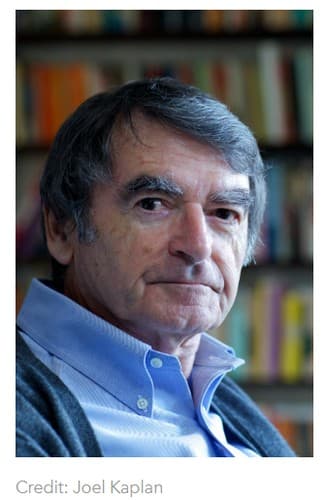
David Lodge is a celebrated British novelist and critic known for his satirical explorations of academic life. His acclaimed works, including "Small World," "Nice Work," and "Changing Places," humorously dissect the absurdities of university culture and the literary world. Lodge's sharp wit and intellectual depth have earned him a significant place in contemporary British fiction.







