““I wished she’d never been born, but I never wished she were dead.””
— Isobel's internal struggle over Varen's sister, Lilith.

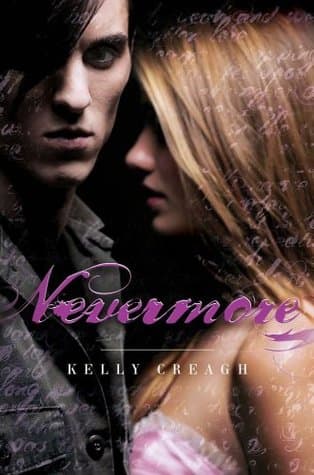
Kelly Creagh (2010)
Genre
Thriller / Historical Fiction / Mystery
Reading Time
10-12 hours
Key Themes
See below
Sign in to track this book
A cheerleader's world unravels when she is drawn into the dark, Edgar Allan Poe-inspired dreamscape of a mysterious classmate's journal, where nightmares become terrifying realities and his life hangs in the balance.
Isobel Lanley, a popular cheerleader, is upset when her English teacher, Ms. Crabtree, assigns her to work with Varen Nethers, the school's Goth outcast, on a poetry project. The assignment is due on the day of the important football game against the rival team, adding to Isobel's frustration. Varen is distant and uninterested in collaborating. During a study session at his house, Isobel finds strange, almost illegible writing in Varen's journal. Intrigued by the cryptic text and Varen's unusual behavior, she starts to wonder about the mysterious boy, sparking an unexpected curiosity despite her initial reluctance.
As Isobel and Varen continue their project, Isobel becomes more drawn to Varen's perspective and Edgar Allan Poe's unsettling poetry. She starts having vivid, disturbing dreams and waking visions, often featuring images from Poe's works, especially 'The Raven.' Varen, sensing her connection to the dream world, cautiously begins to open up, explaining that his journal entries are not just writing, but a way to shape and enter a shared subconscious realm. Isobel's initial doubt slowly turns into fascination as the lines between reality and dream blur, making her question her perception of the world.
Isobel's growing connection with Varen and her focus on the dream world start to strain her relationships with her boyfriend, Brad, and her best friends, Gwen and Dani. Brad becomes increasingly possessive and jealous of Varen, leading to frequent arguments. Isobel makes excuses to be with Varen, prioritizing their project and her understanding of his world over her social life. The 'real world' feels dull compared to the dangerous alternate reality Varen introduces her to, further isolating her and pushing her closer to Varen.
Varen tells Isobel that the dream world is not just a shared space for creativity, but also a battleground against malevolent entities called 'Nightmares' that feed on emotions and can manipulate reality. They encounter a powerful and seductive Nightmare embodying Ligeia from Poe's story. Ligeia tries to lure Varen, preying on his weaknesses and past trauma. Isobel, despite her fear, feels she needs to protect Varen, using her own developing abilities to influence the dreamscape. This encounter confirms the danger of their explorations and the true risks involved.
As dangers grow, Varen reluctantly tells Isobel about his family's long history with the dream world and the tragedy that befell his mother, who became lost within it. He explains that his father, Mr. Nethers, also has the ability but chose to suppress it after his wife's disappearance. Varen believes his mother is not truly gone but trapped, and he wants to find her. This revelation explains Varen's reclusive nature and his deep understanding of the dream world, adding depth to his character and increasing Isobel's empathy for him.
Brad, increasingly suspicious and angry about Isobel's relationship with Varen, follows them and confronts Varen in a fit of rage. His physical interference, combined with his strong negative emotions, accidentally creates a rift in the dream world, allowing a powerful Nightmare to gain more influence in their waking reality. This act of jealousy not only isolates Isobel further from her former life but also puts her and Varen in greater peril, showing the dangerous results of unchecked emotions and blurring boundaries between worlds.
The Nightmare, now stronger due to Brad's actions and the students' collective anxieties, begins to infest the school. Hallways become gothic corridors, classrooms become eerie reflections of Poe's tales, and students experience vivid, terrifying hallucinations. The football game, meant to be normal, turns into a chaotic and frightening event as players and spectators are affected. Isobel and Varen realize the Nightmare is trying to merge the dream world with reality, threatening to consume everyone within its dark story, and they must act quickly to stop it.
Varen, overwhelmed by the Nightmare's power and his own internal struggles, begins to give in, his mind becoming a battleground. Isobel, realizing he is slipping away, bravely enters his deepest, most personal dreamscape. Here, she confronts the Nightmare directly, which has taken a form that preys on Varen's greatest fears and guilt, particularly concerning his mother. Isobel must use her courage, her growing understanding of the dream world, and her strong connection with Varen to pull him back from the edge of oblivion, facing her own fears in the process.
Within Varen's mind, Isobel discovers the true identity of the dominant Nightmare: it is the distorted essence of Varen's mother, trapped and corrupted within the dream world for years. The 'Ligeia' entity was a manifestation of this larger, more personal horror. This Nightmare has been feeding on Varen's grief and his desire to find her, twisting his love into a tool for its own power. Isobel realizes that to save Varen, she must not only defeat the Nightmare but also help Varen accept the reality of his mother's fate.
Using her knowledge of the dream world and the power of language, Isobel confronts the Nightmare, not with violence, but with truth and emotion. She reminds Varen of who he is and the love they share, using their shared experiences and the beauty of words to counteract the Nightmare's influence. By helping Varen accept the past and embrace their bond, Isobel weakens the Nightmare's hold. Together, they manage to sever the corrupted connection, freeing Varen from its grasp and restoring order to the dream world, though the scars remain.
With the Nightmare defeated, the dream world's influence recedes from the school, leaving only vague, unsettling memories for most. Isobel and Varen emerge changed by their ordeal. Their relationship is stronger, built on shared trauma and deep understanding. Isobel has grown from a cheerleader into a brave, insightful young woman, while Varen has found a companion who truly understands him. The novel ends with them facing a new, uncertain future, knowing the dream world still exists, but now they are better equipped to navigate its complexities, together.
The Protagonist
Transforms from a superficial cheerleader into a brave and empathetic individual, embracing her unique connection to the dream world and finding her true identity.
The Love Interest/Co-Protagonist
Learns to trust and rely on another person, overcoming his isolation and confronting his past traumas with Isobel's help.
The Antagonist (initially)/Supporting
Remains largely static, unable to comprehend or accept Isobel's transformation, leading to the dissolution of their relationship.
The Supporting
Remains a grounding force for Isobel, though their friendship is strained by Isobel's increasingly unusual experiences.
The Supporting
Remains a static background character, serving as a catalyst for the initial plot.
The Supporting
Slowly opens up about his past and abilities, offering cryptic warnings and limited support to Isobel.
The Antagonist
Serves as a recurring manifestation of the larger Nightmare, ultimately defeated when the Master Nightmare is confronted.
The Antagonist
Is ultimately confronted and its corrupted influence severed, though its tragic origin remains.
The novel explores how imagination and words, especially poetry, can shape reality. Varen's journal entries literally create a dream world, and Edgar Allan Poe's works become living landscapes and characters within this realm. Isobel's initial doubt gives way to understanding as she sees how language can create and destroy, heal and harm. The story's climax relies on Isobel using her own words and shared stories to fight the Nightmare, showing that words hold immense power, capable of both creation and destruction, depending on their intent and the emotions they carry. This theme is central to the narrative, as the dream world itself is a construct of subconscious thoughts and expressions.
““Words are power. Words can hurt, or they can heal. They can create, or they can destroy. They can make you laugh, or they can make you cry.””
Isobel's journey is one of self-discovery. Initially defined by her social status as a cheerleader and her relationship with Brad, she confronts who she is when she enters Varen's world. She sheds her superficial concerns, embraces her connection to the dreamscape, and discovers inner strength and courage. Her transformation involves challenging societal expectations and finding her own voice and purpose outside of what others define for her. This theme is also reflected in Varen, who, through Isobel, begins to heal from his past and embrace a less isolated identity.
““You can’t stay in the shallow end forever. Sometimes you have to dive in and see how deep it goes.””
A core theme is the boundary between what is real and what is imagined. As Isobel explores Varen's world, her perception of reality becomes fractured. The dream world bleeds into the waking world, appearing as hallucinations, transformed environments, and physical dangers. This blurring challenges the characters, especially Isobel, to question their senses and trust their intuition. The novel suggests that reality is not as fixed as we perceive it, and that the mind, through imagination and belief, can influence what is real, making the 'most frightening realities those of the mind.'
““Dreams are just stories we tell ourselves when we’re asleep. But sometimes… sometimes they bleed into the waking world.””
The novel explores the impact of love, loss, and unresolved grief. Varen is driven by the loss of his mother, who he believes is trapped in the dream world, and his inability to process this grief makes him vulnerable to the Nightmare. His father, Mr. Nethers, also suffers from this unresolved loss, leading him to suppress his abilities. Isobel's growing love for Varen becomes a powerful force against the Nightmare, showing how genuine connection can combat the destructive power of sorrow. The climax involves confronting the twisted manifestation of Varen's mother, highlighting how grief, when unaddressed, can become a monstrous entity.
““Grief is a monster. It can twist you, change you, make you do things you never thought you would.””
The destructive nature of obsession and possessiveness is clear through Brad's character. His jealousy over Isobel's relationship with Varen and his inability to accept her changing interests lead him to confront Varen, accidentally empowering the Nightmare. His actions show how unchecked negative emotions can have tangible and dangerous consequences, not just for the individuals involved but for the wider environment. This contrasts with the evolving, healthy connection between Isobel and Varen, which is built on understanding and mutual respect rather than control.
““Jealousy is a poison. It eats away at you until there’s nothing left but bitterness.””
Varen's notebook, which acts as a gateway and tool for shaping the dream world.
Varen's journal is more than just a diary; it is a central magical artifact. The cryptic script within its pages is not merely writing but a means of manifesting and manipulating the dream world. It serves as a literal and metaphorical bridge between the conscious and subconscious, reality and illusion. Isobel's discovery of it is the initial catalyst for her involvement, and its entries provide clues and insights into the dangers and rules of the dreamscape. Its power underscores the theme of words as creation.
The poetry and stories of Poe, which provide the thematic and atmospheric foundation for the dream world.
Poe's works are not just a literary reference; they are an integral part of the plot and setting. The assigned English project centers on Poe, and his dark, gothic themes, characters, and imagery directly manifest within the dream world. 'The Raven,' 'Ligeia,' and other tales provide the framework for the Nightmares and the terrifying aesthetics of the corrupted dreamscape. This device grounds the supernatural elements in a recognizable literary context, enhancing the sense of dread and mystery while also highlighting the power of narrative.
A shared subconscious dimension where thoughts and fears manifest.
The dream world is a parallel dimension that exists alongside reality, accessible to those with the ability to perceive and influence it. It is a fluid, mutable landscape where emotions and narratives take on physical form. It acts as both a source of danger, due to the malevolent Nightmares that feed on fear and grief, and a canvas for creativity and connection. This device allows for the exploration of psychological themes in a tangible way, making internal struggles external and creating a highly visual and atmospheric setting for the story's conflicts.
Malevolent beings within the dream world that feed on negative emotions.
The Nightmare entities are the primary antagonists of the story, personifying fear, grief, and other negative emotions. They are not merely monsters but intelligent, manipulative beings that exploit the characters' vulnerabilities. The 'Ligeia' entity and the ultimate Master Nightmare (Varen's corrupted mother) demonstrate how these beings can be both seductive and terrifying, blurring the lines between external threat and internal struggle. They serve to externalize the psychological battles faced by Varen and Isobel.
““I wished she’d never been born, but I never wished she were dead.””
— Isobel's internal struggle over Varen's sister, Lilith.
““Some things, when they’re lost, can never be found again.””
— A reflection on the permanence of loss.
““The line between sanity and madness is a very thin one, and sometimes, it’s invisible.””
— Exploring the psychological deterioration of characters.
““Fear is a powerful tool, even when it’s imagined.””
— Highlighting the impact of perceived threats.
““There are some doors that, once opened, can never truly be closed.””
— Referring to the irreversible consequences of certain actions.
““The past is never truly gone; it just waits for the right moment to reappear.””
— The lingering influence of historical events and personal histories.
““Sometimes, the greatest monsters are the ones we create ourselves.””
— A comment on internal demons and self-inflicted torment.
““Love, even in its darkest forms, can be a prison.””
— Examining the darker side of obsessive love.
““Silence can be a scream, if you listen closely enough.””
— Describing unspoken suffering and desperation.
““The truth is a tricky thing. It can set you free, or it can destroy you.””
— The dual nature of uncovering difficult truths.
““Hope is a dangerous thing, but sometimes, it’s all we have.””
— The fragility and necessity of hope in dire situations.
““Every story has a villain, but sometimes, the villain isn’t who you expect.””
— A meta-commentary on narrative expectations and twists.
““The shadows hold more secrets than the light ever will.””
— Emphasizing the hidden aspects and mysteries of the world.
““To truly understand someone, you must walk in their nightmares.””
— A profound statement on empathy and understanding suffering.
Ready to see how well you understood this book? Take our interactive quiz with 10 questions.







