“I was a little afraid of it, the way I was afraid of a lot of things at Hailsham. But I was also drawn to it, the way I was drawn to a lot of things.”
— Kathy reflects on her feelings towards the 'possible' future and unspoken truths at Hailsham.


Kazuo Ishiguro (2009)
Genre
Literary Fiction / Science Fiction / Romance
Reading Time
365 min
Key Themes
See below
Sign in to track this book
Three friends raised in a secluded boarding school uncover the truth about their existence and face their predetermined purpose as organ donors, finding bittersweet comfort in their memories and bond.
Kathy H., the narrator, recalls her childhood at Hailsham, a boarding school in the English countryside. Students are taught art, history, and literature, and their artwork is sometimes chosen by a mysterious woman named Madame for her 'Gallery.' Despite the beautiful grounds and caring guardians, there is an underlying unease and unspoken rules. Students are often told they have a unique and important purpose, though its exact nature is hinted at with vague terms. They are told they are 'special' and must stay healthy, especially by not smoking. Kathy describes her close friendships with Ruth and Tommy D., and the subtle social structures and jealousies that appear even in their sheltered world.
As students get older at Hailsham, parts of the truth about their lives emerge through rumors and veiled comments from guardians. They understand they are 'clones' made for a specific purpose: to become 'donors' as adults. They are fascinated by 'possibles' – the ordinary people they were copied from – and often try to find their own 'possible' in magazines or on television. Miss Lucy, a guardian, tries to be more direct with students about their fate, warning them that their health is most important because they are raised only to donate organs. Her honesty is met with disapproval from other guardians, who prefer to maintain the illusion of a normal childhood.
After leaving Hailsham at sixteen, Kathy, Ruth, Tommy, and other former Hailsham students move to the Cottages, a living facility. Here, they have more freedom and can interact with 'veterans' – older students from other institutions who are already donating organs. The Cottages are a step into the wider world, a place where they learn to cook, clean, and manage their own lives, though still supervised. Hailsham students feel superior to those from other, less prestigious institutions. During this time, Ruth and Tommy become a couple, which quietly disappoints Kathy, who secretly likes Tommy.
At the Cottages, students become obsessed with finding their 'possibles,' believing that finding the person they were cloned from might give them insight into their identities or future. Ruth convinces Kathy and Tommy to go with her to Norfolk, a place she thinks holds clues to her 'possible.' They visit an abandoned boat and a decaying house, looking for any resemblance. During this trip, they meet a woman they think is Ruth's 'possible,' an office worker. The meeting is brief and unclear, leaving Ruth disappointed and questioning her identity. The trip shows their desire for connection to the outside world and their desperate search for meaning.
During their time at the Cottages, a rumor spreads among the students: that genuinely loving couples, especially from Hailsham, can apply for a 'deferral' on their donations. This deferral would give them a few years of normal life together before their donation cycles begin. Ruth, holding onto this hope, believes she and Tommy, as a Hailsham couple, might be eligible. Kathy, though doubtful, secretly wishes it were true for Tommy's sake. This rumor becomes a significant source of hope and worry, affecting their decisions and relationships, especially among Kathy, Ruth, and Tommy, as it offers a tempting, though likely false, escape from their predetermined fate.
After the Cottages, Kathy becomes a 'carer,' a role she has held for nearly twelve years. Carers support donors during their donation cycles, providing companionship and ensuring their physical and emotional well-being between donations. This role allows Kathy to delay her own donation cycle, as carers are exempt until they are no longer needed. She describes the demanding and draining nature of her work, seeing the gradual decline of her fellow clones. Her narrative often mixes reflections on her past with descriptions of her current duties, showing the stark reality of their lives and the inevitability of their shared fate.
Years later, Kathy is assigned to care for Ruth, who is undergoing her second donation and is visibly weak. Their reunion is sad but sweet, marked by Ruth's physical decline and her regret over past actions, especially how she treated Kathy and Tommy. Ruth confesses that she deliberately kept Kathy and Tommy apart, fearing that if they became a couple, their bond would overshadow her own. She reveals that she and Tommy were never truly in love and that their relationship was partly a pretense. This reunion allows for a painful but necessary reconciliation between the two friends, as Ruth tries to make amends before her inevitable 'completion.'
During their time together, Ruth encourages Kathy and Tommy to pursue the 'deferral' rumor, confessing that she believes it might be true for them, given their real connection. She also shares a key piece of information: the location of Madame's house and that Miss Emily, Hailsham's former head guardian, lives there. Ruth believes Madame and Miss Emily hold the answers to the deferral and Hailsham's true purpose. This confession is Ruth's final act of redemption, giving Kathy and Tommy a desperate, last hope for a different future, even as Ruth herself is near her 'completion.'
Following Ruth's dying wish, Kathy and Tommy travel to the isolated house where Madame and Miss Emily now live. They present their case for a deferral, explaining their love for each other and their shared history at Hailsham. They believe that if they can prove their genuine love through Tommy's artwork, which Madame had collected, they might get a few extra years together. Madame and Miss Emily listen patiently, their expressions serious and resigned. This meeting is filled with desperate hope for Kathy and Tommy, contrasted with the quiet despair of the two older women who carry the weight of their secrets.
Madame and Miss Emily finally tell Kathy and Tommy the full, heartbreaking truth. They explain that Hailsham was an experiment, a last attempt by a small group of idealists to prove that clones had souls and deserved humane treatment. The artwork collected by Madame was meant to show their humanity to the public. However, the experiment failed, and the public never truly cared. They confirm that the rumors of deferrals for truly in-love couples were always false; such a thing never existed. Their purpose, from birth, was always to be donors, and nothing could change that. Hailsham's closure meant the end of even that small hope for their kind.
Devastated by the truth, Kathy and Tommy return to their lives, their hope shattered. Tommy's health quickly worsens as he undergoes his final donations. Kathy cares for him, witnessing his gradual physical and emotional decline. Tommy dies after his fourth donation, reaching 'completion,' leaving Kathy to mourn him and the future they could never have. His death is presented with a quiet, deep sadness, showing the tragic inevitability of their lives and their lack of control. Kathy is left to cope with the loss of her closest friend and the finality of their shared fate.
With Tommy gone, Kathy accepts her own role as a donor, knowing her time as a carer is ending. She reflects on her life, her friendships, and the unique, yet predetermined, path she has followed. She visits a field in Norfolk, a place she associated with the lost boat from her past, a symbol of what was unattainable and unfulfilled. There, she quietly mourns Tommy and the children of Hailsham. While there is deep sadness, there is also a sense of quiet acceptance and dignity. She acknowledges the beauty and love she experienced, despite the tragic circumstances, and prepares for her own 'completion,' embracing the memories that define her.
The Protagonist
Kathy moves from naive curiosity to quiet acceptance, finding dignity and meaning in her predetermined life despite profound loss.
The Supporting
Ruth's initial assertiveness and manipulations give way to remorse and a desire for redemption before her 'completion'.
The Supporting
Tommy evolves from an angry, frustrated child into a hopeful artist, only to face the crushing reality of his fate with quiet dignity.
The Supporting
Madame transitions from a mysterious, feared figure to a somber truth-teller, revealing the failed hopes of Hailsham.
The Supporting
Miss Emily is initially seen as a strict authority figure, later revealing her role as a tragic idealist who fought for the clones' humanity.
The Supporting
Miss Lucy's attempts to be honest with the students lead to her dismissal, highlighting the futility of individual resistance.
The Supporting
Their initial hope for a deferral slowly fades as they face the reality of their donations, symbolizing the dashed hopes of many clones.
The novel asks what it means to be human and if clones have souls. The Hailsham experiment itself tried to prove the clones' humanity through their art, showing their ability for creativity, emotion, and individuality. Despite having identical genes to 'normals,' clones are denied basic human rights and dignity, destined for organ donation. Their search for identity, their ability to love, form friendships, and feel sorrow, and their quiet acceptance of their fate all highlight their deep humanity, making the reader confront the ethical issues of their existence. The revelation that the experiment failed shows society's ultimate disregard for their inner lives.
““We were Hailsham students. We had been brought up to believe that we were special. It hadn't been a lie, exactly. We were special. But not in the way we'd been brought up to believe.””
The entire story is Kathy H. looking back on her childhood and youth. Memory is not just a plot point but a central theme, as Kathy carefully reconstructs her past, seeking meaning and understanding in her experiences. She holds onto memories of Hailsham, the Cottages, and her friends, finding comfort and identity in them even when they bring pain. Remembering helps her process grief and accept her fate. The novel suggests that memory truly defines an individual, especially for those whose future is predetermined and limited. The pleasant, yet unsettling, memories of Hailsham act as a bittersweet anchor for the characters.
““I'm a carer now. It's been nearly twelve years since I started, and I'm pretty good at it. My donors have always done well, and I've hardly ever had to cut short a recovery. I'm not boasting, just stating a fact. I'm proud of it. But I'm not sure if that's what I'm supposed to be proud of. I keep thinking about Hailsham, about the good times, about the bad times, about all the unanswered questions.””
The complex relationships among Kathy, Ruth, and Tommy form the emotional core of the novel. Their lasting friendship, despite jealousy, misunderstanding, and manipulation (especially from Ruth), shows the deep human need for connection. Kathy's unrequited love for Tommy, Ruth's relationship with Tommy, and the eventual reconciliation between the friends highlight the power of these bonds in the face of a predetermined, tragic existence. The betrayals, such as Ruth keeping Kathy and Tommy apart, come from insecurity and a desperate wish for a normal life, making them understandable given their limited choices. Ultimately, their love and friendship are the only things they truly possess.
““We all know it. We're not going to be like the people in the magazines. We're not going to be like the film stars. We're not going to be like anybody. We're just going to be us. And we're going to be donors. That's all there is to it.””
A constant theme is the conflict between the characters' predetermined fate as donors and their desire for control and choice. From birth, their lives are planned, their purpose fixed. Despite this, they cling to rumors of 'deferrals' and search for their 'possibles,' desperately seeking a way to change their destiny or find meaning beyond their function. The guardians at Hailsham, especially Miss Lucy, struggle with the morality of this lack of choice. Ultimately, the novel suggests that while their physical fate is sealed, their internal lives – their capacity for love, memory, and dignity – are where their true freedom lies. Their quiet acceptance of their fate is not resignation, but a deep, internal choice.
““I keep thinking about this river somewhere, full of white water, roaring past, and these two people in the water, trying to hold onto each other, holding on as hard as they can, but in the end it's no good. The current's too strong. They've got to let go, drift apart. That's how I think about us. It's a shame, Kath, because we've loved each other all our lives. But in the end, we can't stay together forever.””
The entire story is told from Kathy H.'s perspective, looking back on her life.
The novel is narrated by Kathy H. in the first person, as she recounts her memories from her childhood at Hailsham through her adult life as a carer. This retrospective narration allows for a reflective and often melancholic tone, as Kathy processes events with the wisdom and sadness of hindsight. It also creates a sense of intimacy, drawing the reader directly into her thoughts and feelings. The reliability of her memory and her subjective interpretations of events are central to the narrative, shaping how the reader understands the world of the clones and their tragic fate. This perspective emphasizes the importance of memory as a source of identity and comfort.
Key terms like 'donors,' 'completion,' and 'possibles' are used to obscure the brutal reality.
Throughout the novel, the harsh realities of the clones' existence are masked by euphemistic language. They are 'donors' rather than 'organ sources,' they 'complete' rather than 'die,' and they have 'possibles' instead of 'originals.' This linguistic obfuscation reflects the way society, and even the guardians at Hailsham, attempt to soften the grim truth and maintain a facade of normalcy. It also highlights the children's gradual, often painful, realization of their fate as they slowly decode these euphemisms. The unspoken truths create a pervasive sense of unease and dread, building suspense and emphasizing the characters' powerlessness.
Madame's collection of student art serves as a symbol of their humanity and a failed experiment.
The 'Gallery' where Madame collects the students' artwork is a central symbol. Initially, it's a mysterious place that inspires the students to create, believing their art holds special significance. Later, it's revealed that the Gallery was part of the Hailsham experiment, intended to prove the clones possessed souls and were worthy of humane treatment through their capacity for artistic expression. Tommy's unique, often abstract, artwork becomes particularly significant in his and Kathy's desperate search for a deferral. The ultimate failure of the Gallery to change society's perception underscores the futility of the Hailsham experiment and the tragic disregard for the clones' humanity.
A persistent, false hope that offers a temporary escape from their fate.
The rumor that genuinely in-love couples, especially from Hailsham, can apply for a 'deferral' on their donations is a powerful plot device. It provides a glimmer of hope for the characters, particularly Ruth and later Kathy and Tommy, offering a potential escape from their predetermined fate and a chance for a normal life, however brief. This rumor drives much of the narrative in the latter half of the book, influencing character decisions and creating a sense of urgency. Its ultimate debunking by Madame and Miss Emily serves as a devastating climax, shattering the last vestiges of hope and reinforcing the tragic inevitability of their lives as donors.
“I was a little afraid of it, the way I was afraid of a lot of things at Hailsham. But I was also drawn to it, the way I was drawn to a lot of things.”
— Kathy reflects on her feelings towards the 'possible' future and unspoken truths at Hailsham.
“You have to understand, Kath, that we were all afraid of you. We were afraid of what you represented.”
— Ruth explains to Kathy why the veterans at the Cottages treated the Hailsham students differently.
“We’d grown up with it, of course, so it wasn’t a big shock. But it was still a shock.”
— Kathy describes the revelation of their true purpose as clones destined for organ donation.
“It was like we’d all been told to give up on something important, but no one had actually said the words.”
— Kathy observes the unspoken resignation among her peers at the Cottages.
“I keep thinking about this river, this river somewhere, full of things that people have lost. And it’s not just things, either. It’s feelings.”
— Kathy muses on the idea of a lost and found for emotions and memories.
“We were different from them, yes, but we were the same too. We were human.”
— Kathy reflects on the similarities and differences between clones and 'originals'.
“I realised, for the first time in my life, that I was not a child.”
— Kathy's moment of self-realization and growing up.
“The problem, as I see it, is that you've been told and not told.”
— Miss Emily explains the deliberate ambiguity in how Hailsham students were informed of their future.
“A part of me will always be waiting for you, no matter what.”
— Kathy's internal thought about Tommy, expressing her enduring affection.
“We all know it. We're not stupid. We know what's waiting for us, even if they don't spell it out.”
— Tommy expresses the students' unspoken understanding of their fate.
“You were told, that's what Miss Emily always said. But you weren't told enough.”
— Kathy reflects on the incomplete truths they received at Hailsham.
“It’s not just me. All of us. We’re all just waiting to be told what to do.”
— Ruth's poignant observation about their lack of agency and control over their lives.
“Maybe I did, maybe I didn't. I've forgotten a lot of things.”
— Kathy's reflection on past events, highlighting the fallibility of memory.
“I’m not like you, Kathy. I don’t have your memories.”
— Ruth expresses her regret and envy of Kathy's capacity for memory and emotional depth.
“We were lucky, you know, to have had Hailsham. To have had those years.”
— Kathy reflects on the value of their childhood at Hailsham despite their ultimate fate.
Ready to see how well you understood this book? Take our interactive quiz with 10 questions.
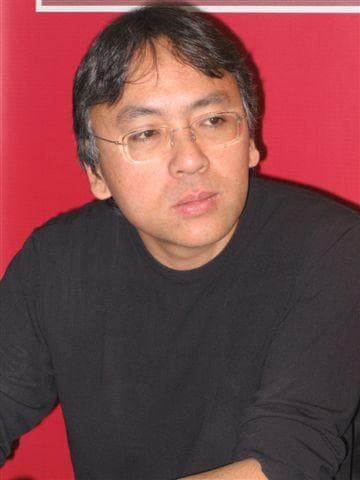
Sir Kazuo Ishiguro is a Japanese-born British novelist, screenwriter, musician, and short-story writer. He is one of the most critically acclaimed and praised contemporary fiction authors writing in English, having been awarded the 2017 Nobel Prize in Literature. In its citation, the Swedish Academy described Ishiguro as a writer "who, in novels of great emotional force, has uncovered the abyss beneath our illusory sense of connection with the world".







