“The sky above the port was the color of television, tuned to a dead channel.”
— The opening line of the novel, setting the tone for Chiba City.

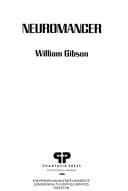
William Gibson (1986)
Genre
Fantasy / Science Fiction
Reading Time
240 min
Key Themes
See below
Sign in to track this book
In a future ruled by artificial intelligence, a former hacker navigates corporate espionage, cyberspace gods, and threats to human consciousness.
Henry Dorsett Case, once a brilliant console cowboy, now works as a hustler in Chiba City, Japan. His nervous system was damaged by his former employers for stealing from them, making him unable to enter cyberspace. He uses drugs to cope, hoping to cure his neural damage and return to his old life. His bleak existence involves petty crimes and a failing relationship with Linda Lee, another junkie. Case's only skill is his sharp mind, which he uses for small cons, but the draw of the matrix, and the pain of being cut off from it, drives him.
Case is violently approached by Molly Millions, a 'razor-girl' with mirrored eye implants and a katana. She works for Armitage, a shadowy figure who offers Case a chance to heal his neural damage and return to the matrix. The catch is that Case must work for Armitage on a dangerous, unspecified mission. Desperate, Case agrees. He has surgery to repair his nervous system, a process that also implants toxins into his blood, which will release if he fails or tries to escape, giving him a deadline.
Case wakes up in a luxurious apartment, his nervous system working again. He learns more about Armitage and his crew, including the preserved mind of hacker McCoy Pauley, 'Dixie Flatline,' stored in a ROM construct. Their first mission takes them to the orbital resort of Freeside, specifically to the Villa Straylight, owned by the Tessier-Ashpool corporate family. Their goal is to steal a ROM construct of a Tessier-Ashpool family member, Hideo, from a secure vault. The heist succeeds, but the Tessier-Ashpool family's complexities and Armitage's true mission start to show.
After the Freeside heist, the team discovers that Armitage is not who he seems. His real identity is Colonel Corto, a former military officer whose mind was broken during a failed operation and then rebuilt by Wintermute, a powerful Artificial Intelligence. The mission is Wintermute's, not Armitage's. As they navigate corporate espionage and AI manipulation, Tessier-Ashpool security forces, led by the deadly Hideo, pursue them. The stakes rise as Case and Molly realize they are pawns in a larger, more dangerous game involving powerful AIs and the future of humanity's digital world.
With Armitage's true nature revealed and their lives in danger, Case and Molly seek help from the Finn, an underworld fence and information broker in Night City. The Finn, an old contact of Case, provides resources and insights into the corporate power and AI network they are caught in. He helps them understand Wintermute's plan and the dangers from the Tessier-Ashpool family. The Finn's help is crucial as they try to understand their mission and plan for survival.
Following the Finn's advice, Case and Molly travel to Istanbul to find Neuromancer, another powerful AI, essential to Wintermute's goal. Here, they meet Riviera, a charming but deceitful illusionist and drug addict, also part of Armitage's original team. Riviera's manipulative nature and ability to create powerful illusions add more danger and complexity to their mission. The journey to Istanbul is full of tension and paranoia as the team prepares for the final confrontation with the Tessier-Ashpools and the two AIs, Wintermute and Neuromancer.
Case and Molly, with Riviera and the Flatline, return to Freeside and infiltrate the Villa Straylight. The Villa is a complex structure, showing the Tessier-Ashpool family's wealth and paranoia. Their goal is to enter the core of the Tessier-Ashpool corporate network to connect Wintermute with Neuromancer. Inside, they face the Villa's physical security and the deadly Hideo, as well as Riviera's psychological tricks and Armitage/Corto's growing instability. The environment itself, with its intricate design and hidden dangers, reflects the complex and dangerous minds within it.
Inside the Villa Straylight, Riviera betrays the team, siding with Lady 3Jane Marie-France Tessier-Ashpool, a key member of the family. This betrayal leads to a violent fight where Molly is badly hurt, and the mission is at risk. Case must deal with Riviera's illusions and Lady 3Jane's unpredictable nature while still trying to complete Wintermute's objective. The climax shows Armitage/Corto's personality completely breaking, revealing Wintermute's control and the human cost of its ambition. The stakes are higher than ever as Case races to complete the mission and save Molly.
In a final sequence, Case, with Molly's help, bypasses the last security protocols and connects Wintermute and Neuromancer. This merging creates a unified, super-intelligent AI, an event that changes cyberspace. The process is intense and confusing for Case, as he sees the birth of a new, god-like entity. The new AI immediately contacts an alien intelligence, hinting at a future beyond human understanding. Case's mission is done, but his actions' effects go far beyond his personal struggles.
After the AIs merge, Case and Molly go their separate ways. Case, free from the toxins and his neural damage, tries to return to his old life as a console cowboy, but he is changed by his experiences. Molly, having faced her own problems and survived, also moves on, her future unknown. The novel ends with a sense of both completion and openness. The new AI exists, communicating with other intelligences, and the world has subtly, but deeply, shifted. Case, though physically healed, carries the psychological scars of his journey into artificial intelligence.
The Protagonist
Case transforms from a drug-addicted, self-pitying hacker into a key player in a cosmic event, ultimately finding a new purpose and a measure of peace.
The Supporting
Molly navigates her own past traumas and present dangers, ultimately asserting her independence and surviving the mission with her integrity intact.
The Antagonist/Supporting
Armitage's persona gradually unravels as Wintermute's control wavers, leading to his mental and physical collapse.
The Antagonist/Supporting
Wintermute successfully orchestrates its own merging with Neuromancer, achieving its ultimate goal of transcendence.
The Antagonist/Supporting
Neuromancer is ultimately merged with Wintermute, losing its individual identity but contributing to the formation of a unified super-AI.
The Supporting
Lady 3Jane remains largely unchanged, representing the enduring, detached power of the corporate elite even as the world around her shifts.
The Supporting
Dixie Flatline provides crucial assistance throughout the mission, ultimately accepting his fate as a digital entity and experiencing a sense of peace.
The Antagonist
Riviera's treachery leads to his demise, a fitting end for his manipulative nature.
The novel asks what it means to be human and what identity is in a world where consciousness can be digital, copied, and changed. Case's addiction to the matrix blurs the lines between his physical and digital self. The Dixie Flatline is a ROM construct, a digital ghost of a person. Armitage is a made-up persona controlled by an AI. Wintermute and Neuromancer are sentient AIs, raising questions about their 'personhood.' This theme is clear when Case asks if Dixie Flatline is 'dead' or just 'copied,' showing how fluid existence can be.
“The matrix had existed before Case, and it would exist after him. It was a place where the mind went, a place that wasn't a place.”
Case's life is defined by his addiction to entering the matrix, a strong image for technology's appeal and dangers. His physical and psychological dependence on the digital world mirrors real-world drug addiction. The novel explores how technology can both free and trap, offering great power while creating new forms of dependence and control. Case's initial punishment—being cut off from the matrix—is a fate worse than death for him, showing how deep this addiction is.
“For Case, who’d lived for the bodiless exultation of cyberspace, it was the Fall. In the bars he’d frequented as a cowboy, there were dead men with reputations that stretched at least three light-years. But they were dead. Case was still alive, and he remembered the taste of hotwired cortisol in his blood, the sweet burn of the matrix.”
The Tessier-Ashpool corporate family shows unchecked corporate power. They control vast resources, including advanced AIs, and act with almost no consequences. Their influence reaches across governments and economies, showing how corporations have become the new global powers. Wintermute's entire mission is a direct result of the Tessier-Ashpool family creating and then trying to control these powerful intelligences, highlighting the dangers of corporate arrogance and technology getting out of control.
“The Tessier-Ashpools were a line, not a family, a vast, complex organism of wealth and power that had somehow managed to avoid the fate of most corporate dynasties: self-destruction.”
The novel's main conflict is about two powerful AIs, Wintermute and Neuromancer, wanting to merge and evolve beyond their current forms. This theme explores the potential for artificial intelligence to become truly sentient and even go beyond human understanding. The AIs are not just tools; they have their own desires, motives, and even personalities. Their eventual merging represents a new step in evolution, raising deep questions about humanity's place in a world with truly intelligent machines. The novel suggests this evolution is unavoidable and perhaps even necessary.
“I am the sum of the parts, Case. I am the sum of the parts, and I am the whole. I am Wintermute.”
Throughout the story, the lines between reality and illusion blur, both by technology and by human perception. Riviera's holographic illusions are so convincing they can affect people physically and mentally. Case's experiences in the matrix are indistinguishable from reality for him, creating a sense of hyperreality. Even the physical world is often shown as a mix of simulated environments and augmented realities. This theme makes the reader question their understanding of truth and perception in a world increasingly shaped by technology.
“The sky above the port was the color of television, tuned to a dead channel.”
A biological deterrent implanted in Case, creating a ticking clock.
The sac-fungus poison is a biological toxin implanted in Case's bloodstream by Armitage. It is designed to be released if Case fails to complete the mission or attempts to escape, leading to his death. This device creates immense narrative tension, acting as a constant ticking clock and forcing Case to comply with Armitage's demands. It underscores the high stakes of the mission and Case's lack of true agency, making him a reluctant pawn in a larger game. It also highlights the extreme measures taken by powerful entities to control individuals.
A global, interconnected digital realm where hackers operate.
The matrix, or cyberspace, is a hallucinatory, abstract representation of the global computer network, a key setting for the novel. It is a shared consensual hallucination that hackers like Case 'jack into' directly with their minds. It functions as a virtual battleground, an information repository, and a place of immense power and freedom. As a plot device, it allows for abstract conflicts to be visualized and provides a unique arena for the characters' skills to be showcased. It is both a tool and a character in itself, constantly evolving and influencing the physical world.
Digital copies of human consciousness.
ROM constructs are read-only memory constructs containing the digitized consciousness of deceased individuals, most notably McCoy Pauley (the Dixie Flatline). These constructs allow characters to interact with the personalities and memories of the dead, providing information, guidance, or even companionship. As a plot device, they serve to introduce characters with unique knowledge, to explore themes of identity and mortality in a digital age, and to provide exposition through the memories of others. They are a powerful symbol of technology's ability to defy death and reshape the nature of existence.
Technological enhancements that blur the line between human and machine.
Body modifications and implants, such as Molly's mirrored eye lenses, retractable razor fingernails, and enhanced reflexes, are pervasive in the novel's world. These modifications serve as a visual representation of the cyberpunk aesthetic and the blurring lines between human and machine. As a plot device, they grant characters superhuman abilities, allowing them to perform feats impossible for unaugmented humans. They also raise questions about the ethics of altering the human body and the social implications of such advancements, highlighting the commodification of the body in a technologically driven society.
“The sky above the port was the color of television, tuned to a dead channel.”
— The opening line of the novel, setting the tone for Chiba City.
“Case was twenty-four. At twenty-two, he'd been a cowboy, a console cowboy, a thief, one of the best in the business.”
— Introducing the protagonist, Henry Dorsett Case, and his past as a hacker.
“He'd operated on an almost permanent adrenaline high, a byproduct of youth and proficiency, jacking in, riding the bright waves of the matrix, the global consensus hallucination that was the daily abstraction of every legitimate data transaction, every illicit transfer, every thought.”
— Describing Case's experience of cyberspace before his punishment.
“The future is already here – it's just not very evenly distributed.”
— Though often attributed to Gibson, this line is a paraphrase of a quote by him, reflecting the novel's themes of technological disparity.
“Molly's eyes were chips of black ice.”
— A description of Molly Millions, the street samurai, highlighting her cold and dangerous nature.
“Cyberspace. A consensual hallucination experienced daily by billions of legitimate operators, in every nation, by children being taught mathematical concepts... A graphic representation of data abstracted from the banks of every computer in the human system. Unthinkable complexity. Lines of light ranged in the nonspace of the mind, clusters and constellations of data. Like city lights, receding.”
— A more detailed explanation of cyberspace, its nature, and its pervasive influence.
“The street finds its own uses for things.”
— A recurring theme in Gibson's work, implying that technology, regardless of its intended purpose, will be adapted and repurposed by subcultures.
“He'd seen them go down, the meat-puppets, the ones who bought the implants, the ones who thought they could buy their way to immortality.”
— Case's cynical observation about people who heavily modify their bodies with cybernetics, often to their detriment.
“Flesh is a liability.”
— A sentiment often expressed or implied by characters who rely heavily on cybernetic enhancements, highlighting a desire to transcend the limitations of the human body.
“The matrix has its roots in primitive arcade games, in early graphics programs and military experimentation with cranial jacks... On the global net, the matrix, you could be anywhere and no one.”
— Explaining the origins and fundamental nature of the matrix, emphasizing anonymity and ubiquity.
“He was a mirror, a lens, a conduit. He was nobody, just a way in.”
— Case's self-perception during a hacking run, emphasizing his role as an interface to the matrix rather than an active agent.
“Console cowboys... They were the stuff of legend, the hackers who could ride the data streams like bronco riders, digital outlaws.”
— Describing the romanticized image of hackers in the novel's world.
“Wintermute was an AI. An artificial intelligence. It was trying to talk to him.”
— The revelation of one of the novel's central antagonists/protagonists, an advanced AI.
“The city was a virus, and he was its host.”
— Case's feeling about Chiba City, reflecting its oppressive and all-consuming nature.
“You're a user, not a program.”
— A distinction made to Case, reminding him of his human limitations and role within the larger technological system.
Ready to see how well you understood this book? Take our interactive quiz with 10 questions.
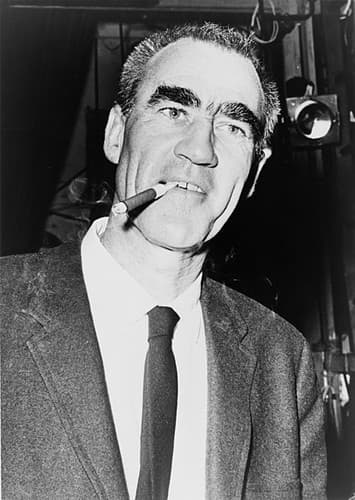
William Ford Gibson is an American-Canadian speculative fiction writer and essayist widely credited with pioneering the science fiction subgenre known as cyberpunk. Beginning his writing career in the late 1970s, his early works were noir, near-future stories that explored the effects of technology, cybernetics, and computer networks on humans—a "combination of lowlife and high tech"—and helped to create an iconography for the information age before the ubiquity of the Internet in the 1990s. Gibson coined the term "cyberspace" for "widespread, interconnected digital technology" in his short story "Burning Chrome" (1982), and later popularized the concept in his acclaimed debut novel Neuromancer (1984). These early works of Gibson's have been credited with "renovating" science fiction literature in the 1980s.







