“The price of freedom is eternal vigilance.”
— A recurring theme about the constant threat to liberty.

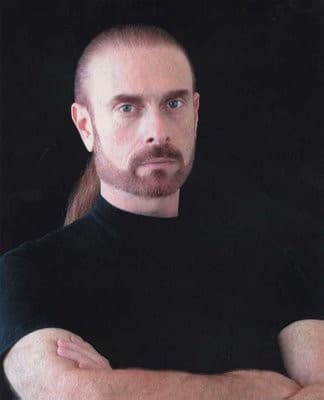
Terry Goodkind (2016)
Genre
Thriller / Fantasy / Mystery / Science Fiction
Reading Time
9 hours 30 min
Key Themes
See below
Sign in to track this book
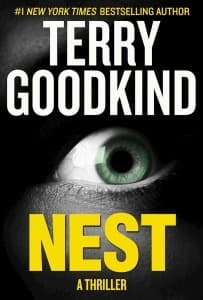
A woman discovers she can identify killers by looking into their eyes, plunging her into a deadly game of cat and mouse with super-predators and a mysterious ally whose true intentions remain a terrifying enigma.
Kate Bishop, an ordinary woman in Chicago, finds her life changed after a murder investigation. While helping the police, she discovers she can identify a killer by looking into their eyes. This ability appears as a distinct, unsettling darkness within the killer's gaze. This first encounter leaves Kate disturbed and questioning her sanity, as her world shatters. She struggles to understand this power, fearing what it means for her future and how she can cope with such a gift.
Still reeling from her discovery, Kate is approached by Jack Raines, a mysterious author. Jack reveals that he shares her ability and has been tracking her. He explains that her 'gift' makes her a target for a group of dangerous individuals, 'super-predators,' who seek to eliminate anyone with such a power. Jack insists he is her only hope for survival, offering to teach her to understand and control her ability, and how to defend herself. His sudden appearance and cryptic knowledge leave Kate wary and desperate for answers.
Jack's warnings prove accurate when Kate and Jack are attacked by super-predators. These individuals are not just ordinary killers; they have enhanced strength, speed, and a lack of empathy, making them formidable. The encounter is brutal, forcing Kate to confront the deadly reality of her situation. Jack shows his combat skills and knowledge of their enemy, reinforcing his role as her protector. This confrontation solidifies for Kate the extreme danger she is in and the threat posed by the Nest, leaving her no choice but to trust Jack, despite lingering suspicions.
As they flee, Jack gives Kate more details about the 'nest' and their shared ability. He explains that their power is a genetic anomaly, a latent human trait that allows them to perceive the true nature of evil in others. The super-predators, he reveals, are not just killers but individuals who have embraced their inner darkness, becoming apex predators who feed on fear. Jack details the history of this hidden war, a secret society of these predators who have infiltrated society, controlling power and preying on the weak. Kate struggles to comprehend this vast, hidden world of terror.
To show the scope of their enemy's influence, Jack exposes Kate to the darknet, a hidden part of the internet where the super-predators communicate, organize, and conduct their activities. He shows her encrypted forums, disturbing videos, and coded messages that reveal the predators' vast network and their disregard for human life. This exposure is a terrifying realization for Kate, showing how deeply embedded these individuals are in society and how sophisticated their operations are. It reinforces the idea that this is not just a few rogue killers, but an entrenched, organized evil.
Jack trains Kate in self-defense and in understanding her abilities. He teaches her to interpret the visual cues of the 'nest' and anticipate the predators' movements. During this intense period, Kate struggles with her distrust of Jack. His secretive nature, his past, and his ruthlessness leave her questioning his true motives. She constantly evaluates whether he is genuinely her savior or just another predator. This internal conflict adds psychological tension to their dangerous journey.
As Kate's understanding and skills develop, the super-predators intensify their pursuit. They use more resources and cunning tactics, forcing Kate and Jack into escalating confrontations. These encounters are physically demanding and psychologically draining, as the predators try to exploit Kate's fears. The chases take them through urban and rural landscapes, showing the relentless nature of their enemies. Each escape is narrow, pushing Kate to her limits and further solidifying her reliance, however reluctant, on Jack's expertise.
During a brief respite, Jack discusses the philosophical and biological implications of their shared ability and the super-predators' existence. He posits that the 'nest' is a primal aspect of humanity, a dormant potential for extreme evil that some individuals embrace. He explains that their ability allows them to perceive this 'true self' in others, unmasked by societal conventions. He discusses the predators' complete lack of conscience and their view of humanity as prey. This intellectual exploration gives Kate a broader context for the horror she faces, making the threat more profound.
Their investigations lead Kate and Jack to uncover evidence of a larger conspiracy. They discover that the super-predators have infiltrated not just the darknet but also positions of power and influence within legitimate society, government, corporations, and law enforcement. This revelation is chilling, as it means their enemies are not just street-level killers but powerful figures who can manipulate events on a grand scale. The scope of this conspiracy makes their fight more desperate, as they realize they are up against an almost invisible enemy embedded in the world.
Through clues and intercepted communications, Kate and Jack deduce that their pursuers are manipulating them towards a specific location, a trap. The predators, using their resources and intelligence, have orchestrated a scenario to corner and eliminate them. This forces Kate and Jack to re-evaluate their strategies and anticipate their enemies' moves. The tension mounts as they know they are walking into a deadly ambush, but they must face it to uncover the full truth and fight back effectively.
The ambush culminates in a brutal showdown between Kate, Jack, and a powerful faction of the super-predators. The battle is fierce, testing all of Kate's newfound skills and Jack's experience. They face multiple dangerous adversaries, each showing enhanced abilities and ruthless nature. The setting is strategic and dangerous, adding to the peril. Kate is forced to make split-second decisions and push her abilities to their limit, fighting for her life and for the potential to expose the predators' existence to the world. The confrontation is a desperate struggle for survival against overwhelming odds.
During or immediately after the battle, Kate and Jack uncover critical information that leads them to the true mastermind behind the super-predators' organization. This individual is a powerful and influential figure, operating from the shadows, orchestrating the hunt and manipulating events for their sinister agenda. The revelation is shocking, adding another layer of complexity to the conspiracy and highlighting the deep-seated evil they are fighting. This discovery provides a new, focused target for their ongoing struggle.
Kate and Jack achieve a precarious victory against the immediate threat, thwarting a major operation or eliminating a key figure among the super-predators. However, it is clear that this is merely a battle won, not the war. The larger organization of the Nest remains intact, their influence still pervasive, and their true numbers unknown. The ending leaves Kate with an understanding of her place in this secret war and the ongoing responsibility that comes with her ability. She and Jack are now committed to continuing the fight, knowing that the world remains largely unaware of the silent horror that preys upon it.
The Protagonist
Kate transforms from a terrified, ordinary woman into a skilled, resolute fighter who accepts her power and her role in the secret war against evil.
The Supporting Protagonist/Mentor
Jack moves from a solitary, guarded existence to finding renewed purpose and connection through his partnership with Kate, though his internal struggles persist.
The Antagonists
The Nest maintains its powerful, pervasive threat throughout the narrative, though some key figures may be defeated, their overall influence remains.
The Antagonist (Primary)
The Architect remains largely a hidden force, their existence revealed but their full power and goals are only partially understood by the end, setting up future conflict.
The Mentioned/Supporting
They remain largely unaware of the true nature of the threats, representing the world Kate leaves behind.
The novel explores evil, not as an external force, but as an inherent potential within humanity. The 'nest' in the eyes of killers symbolizes this latent darkness, suggesting that some individuals choose to embrace it, transforming into super-predators. The book posits that this evil is not merely psychological but almost biological, a fundamental aspect of existence that can be perceived by those with the ability. This theme is central to Jack's philosophical discussions and Kate's struggle to reconcile the horror she sees with her understanding of humanity.
““Evil isn’t a choice. It’s a nature. A nature that some embrace, and others are born with, waiting to bloom.””
A core theme is the contrast between the perceived reality of the ordinary world and the hidden, terrifying truth that Kate discovers. Her ability allows her to see beyond the facade of normalcy, revealing a secret society of super-predators embedded within everyday life. This theme highlights how much human evil goes unnoticed or misunderstood. Kate's journey is one of continually tearing down her preconceived notions of reality, forcing her to confront a world far more dangerous and complex than she ever imagined, where appearances are deceiving and true monsters walk among us.
““You see what others can’t. And what they can’t see, they can’t believe, until it’s too late.””
Kate's unique ability, while a powerful tool, is also a curse. The knowledge of who the killers are, the constant awareness of evil lurking beneath society's surface, and the responsibility to act upon this knowledge weigh heavily on her. This theme explores the psychological toll of being privy to such a terrifying truth, the isolation it brings, and the moral dilemmas it presents. Kate struggles with the desire to ignore what she sees versus the imperative to fight it, transforming her from an ordinary woman into a reluctant hero burdened by extraordinary sight.
““Some truths are too heavy to carry, but you can’t put them down once you’ve seen them.””
The desperate struggle for survival against an overwhelming, hidden enemy forms the backbone of the plot. Kate and Jack are constantly on the run, fighting for their lives against the relentless super-predators. Intertwined with this is the theme of trust. Kate must learn to trust Jack, despite his mysterious past and sometimes ruthless methods, because her survival depends on it. Their journey forces them to forge a bond built on shared danger and a common enemy, navigating the fine line between ally and potential threat in a world where betrayal can mean death.
““In this world, trust is a weapon, and a shield. Choose wisely who you give it to.””
Kate's unique visual perception of evil within a killer's eyes.
The 'Nest' ability is the central plot device, driving Kate's transformation and the entire conflict. It serves as both a literal and metaphorical manifestation of evil. Visually, it's a distinct mark in the eyes of killers, allowing Kate to instantly identify them. Metaphorically, it represents the inherent darkness within certain individuals. This ability not only propels Kate into the story but also makes her a prime target, setting up the chase narrative. It's the catalyst for her meeting Jack and understanding the hidden world of super-predators, and it dictates the terms of engagement with her enemies.
A hidden online network used by the super-predators for communication and coordination.
The darknet functions as a crucial plot device to illustrate the vast, organized nature of the super-predators' network. It provides a modern, chilling backdrop for their activities, showing how they leverage technology to operate covertly. Jack uses it to gather intelligence, track enemies, and expose Kate to the true scope of the threat. This device grounds the fantastical elements of the 'Nest' ability in a contemporary, relatable fear of online anonymity and the dark corners of the internet, making the conspiracy feel more immediate and plausible.
An experienced individual who guides the protagonist through a new, dangerous world.
Jack Raines serves as the classic mentor figure, providing Kate with essential knowledge, training, and protection in a world she never knew existed. His role is to explain the rules of this hidden war, teach her to harness her abilities, and offer strategic guidance. However, his character also subverts the typical mentor trope by maintaining an air of mystery and moral ambiguity, making Kate (and the reader) question his true intentions. This creates narrative tension and forces Kate to develop her own judgment rather than simply following orders blindly.
A secret, widespread network of antagonists operating within legitimate society.
The conspiracy of the super-predators, or The Nest, is a fundamental plot device that elevates the threat beyond individual killers. It establishes that the antagonists are not just random criminals but a highly organized, influential force deeply embedded in societal power structures. This device creates a sense of overwhelming odds and paranoia, as Kate and Jack realize their enemies could be anyone, anywhere. It fuels the mystery element of the plot, as they must uncover the extent of this conspiracy and identify its key players, adding layers of intrigue and danger to their mission.
“The price of freedom is eternal vigilance.”
— A recurring theme about the constant threat to liberty.
“Sometimes the only way to save a life is to take one.”
— Reflecting on difficult choices made in the face of grave danger.
“Truth is not a matter of consensus, but of reality.”
— A character's assertion about the objective nature of truth, regardless of popular opinion.
“Fear is the mind-killer. It is the little-death that brings total obliteration.”
— While similar to Dune, Goodkind often explores the paralyzing nature of fear.
“The greatest evil is that which parades as good.”
— Discussing the deceptive nature of antagonists who believe their actions are justified.
“A lie, no matter how small, always requires another to cover it.”
— Exploring the cascading consequences of dishonesty.
“The only real power you have is over yourself.”
— A character imparting wisdom about self-control and personal responsibility.
“Hope is a powerful weapon, but despair is an even more potent one.”
— Contemplating the psychological warfare and the impact of hope and despair.
“The world is not black and white, but shades of gray, and sometimes, those shades are indistinguishable.”
— Navigating complex moral dilemmas where clear answers are absent.
“To surrender your mind is to surrender your life.”
— Emphasizing the importance of independent thought and resisting manipulation.
“There are no easy answers, only hard choices.”
— Acknowledging the difficult decisions characters face throughout their journey.
“Even in the darkest night, a single spark of defiance can ignite a revolution.”
— A moment of inspiration amidst overwhelming odds.
“Logic is a tool, not a master.”
— Warning against the pitfalls of relying solely on logic without considering other factors.
“The past is a lesson, not a life sentence.”
— Encouraging characters to learn from mistakes without being defined by them.
Ready to see how well you understood this book? Take our interactive quiz with 10 questions.
Biography coming soon.







